English

Three Kings' Day - Mexican
Celebrated on January 6th, Three Kings' Day, or Día de los Reyes Magos…
Reads at Grades 6–8 Listens at Grades 4–8
Print & create
Answer keys·No prep·Free with an account
28 worksheets · answer keys · full story · quiz · Ages 10-12 · CEFR B2
Plus adds 279,000+ more stories in 27 languages, audio for every one, and printables for all of them.
Just want Three Kings' Day - Mexican?
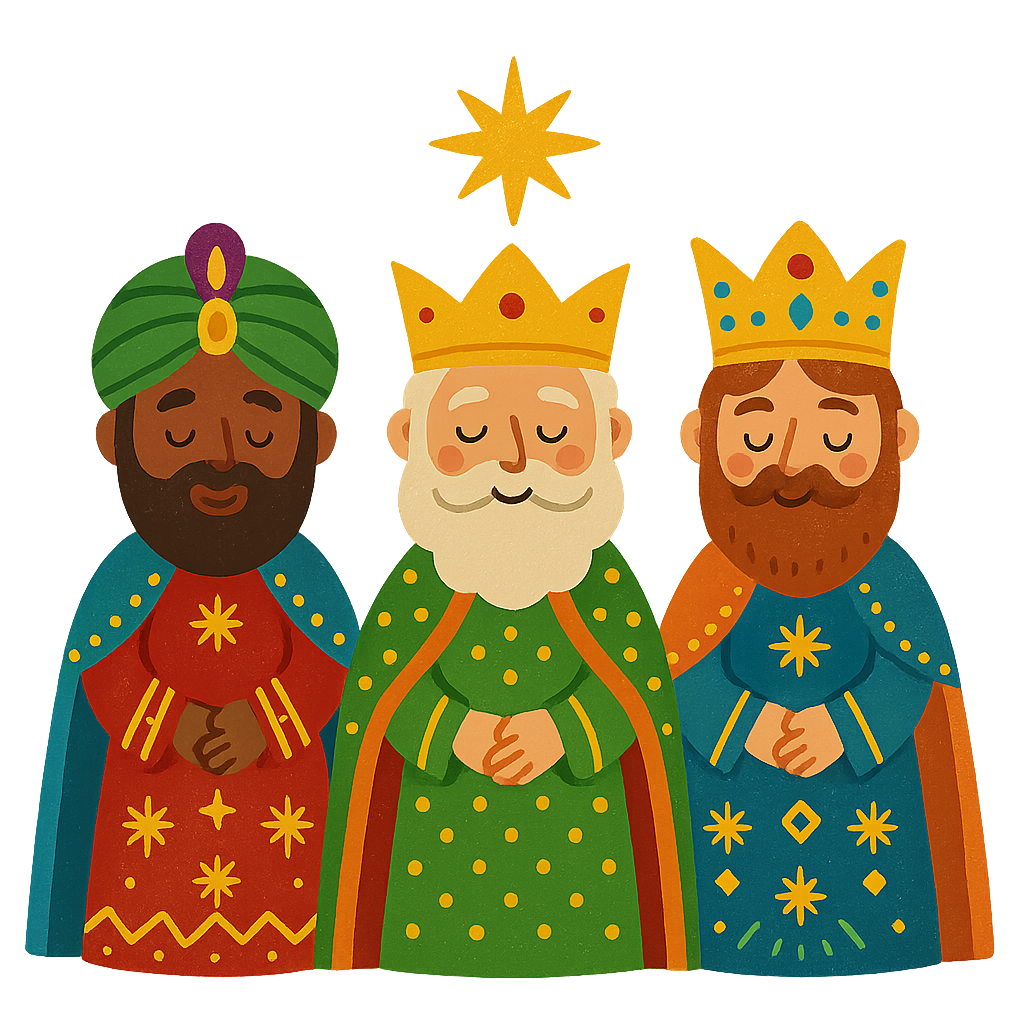
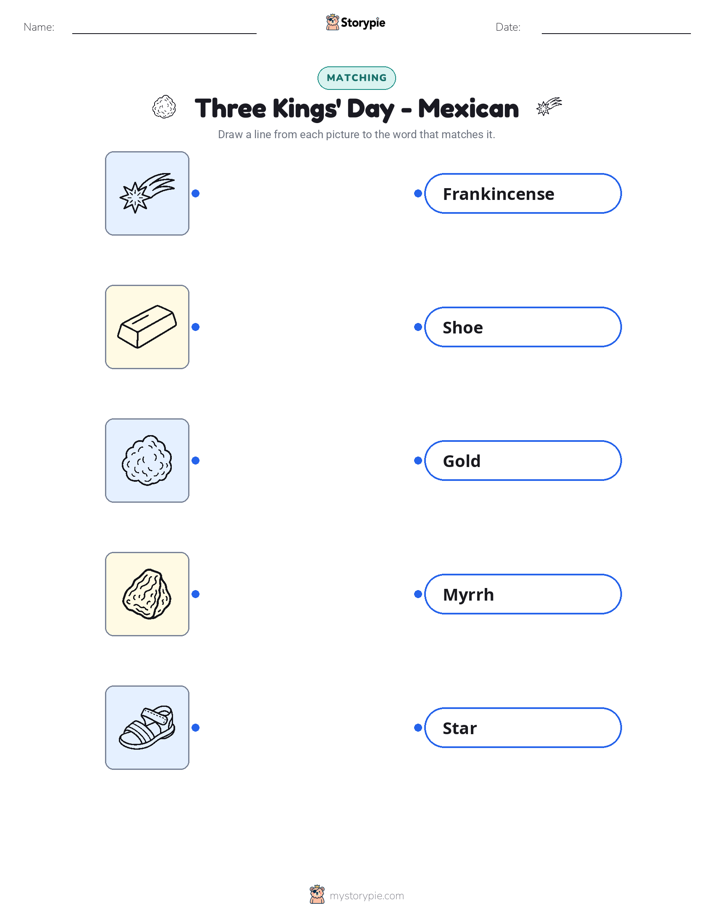
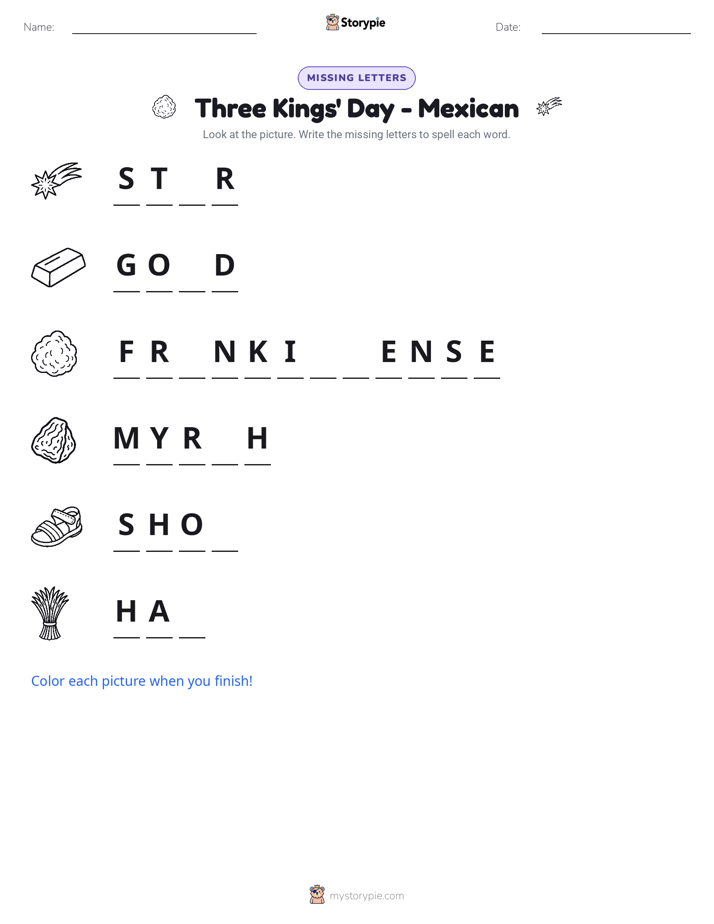
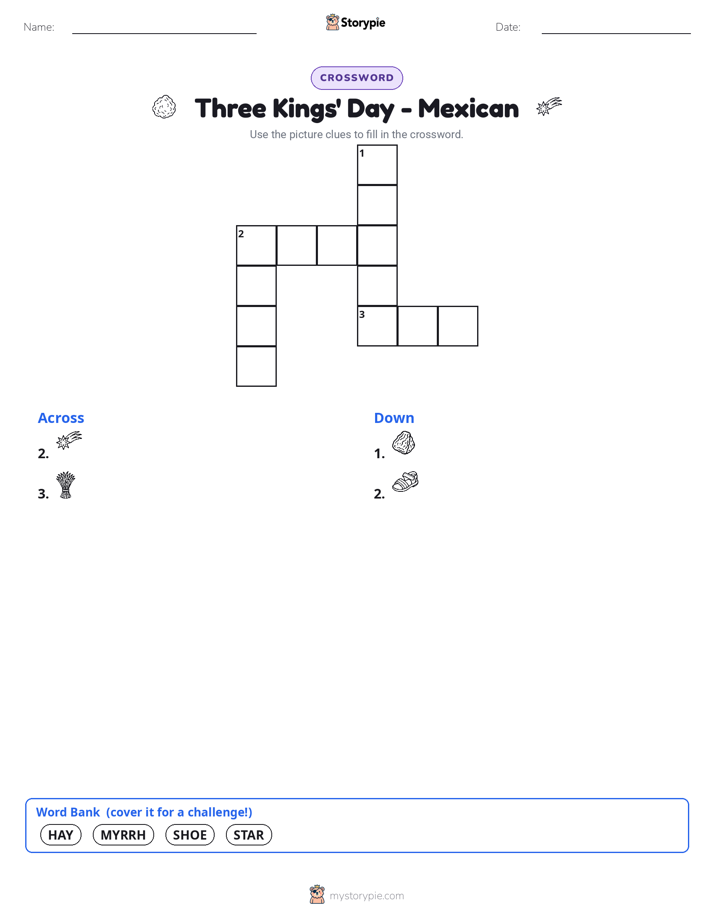
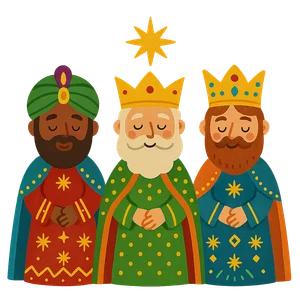
I am known in Mexico as Día de los Reyes Magos, which translates to Day of the Magi Kings. People observe me each year on a fixed date, January 6th. My purpose is to commemorate a story from Christian tradition about three wise men, often called kings, who traveled a great distance to honor a newborn baby. According to the story, these kings, named Melchior, Gaspar, and Balthazar, followed a star to the town of Bethlehem. There, they found the baby Jesus and presented him with symbolic gifts: gold, for a king; frankincense, an incense used in worship; and myrrh, a fragrant resin used for anointing. This event, marking the revelation of Jesus to the world, is also known as the Epiphany.
My history in Mexico is deeply connected with the country's colonial past. My traditions were first introduced to the region during the 16th century by Spanish missionaries. These missionaries used the compelling story of the three kings' journey as a method for teaching Christian beliefs to the Indigenous peoples of Mexico. However, my customs did not remain purely European. Over the course of hundreds of years, the traditions brought from Spain began to blend and merge with local practices and cultural interpretations. This gradual fusion created the unique and beloved ways that people celebrate me across Mexico today. My arrival on January 6th serves an important role in the holiday calendar, as my observance officially marks the conclusion of the Christmas season.
Preparations for my arrival often begin in the days leading up to January 6th. Many children in Mexico take part in a cherished tradition of writing letters addressed to the Three Kings. In these letters, they share their good behavior from the past year and list the gifts and toys they are hoping to receive. The anticipation builds until the evening of January 5th, which is the eve of my celebration. On this night, children carefully place their shoes in a visible spot, such as by a window, near the door, or beside their bed. They do this so the traveling kings will know where to leave their presents. In a gesture of hospitality for the kings' long journey, some children also leave out a box filled with hay for the camels to eat, along with a glass of water to quench their thirst.
Three Kings' Day - Mexican
I am known in Mexico as Día de los Reyes Magos, which translates to Day of the Magi Kings. People observe me each year on a fixed date, January 6th. My purpose is to commemorate a story from Christian tradition about three wise men, often called kings, who traveled a great distance to honor a newborn baby. According to the story, these kings, named Melchior, Gaspar, and Balthazar, followed a star to the town of Bethlehem. There, they found the baby Jesus and presented him with symbolic gifts: gold, for a king; frankincense, an incense used in worship; and myrrh, a fragrant resin used for anointing. This event, marking the revelation of Jesus to the world, is also known as the Epiphany.
My history in Mexico is deeply connected with the country's colonial past. My traditions were first introduced to the region during the 16th century by Spanish missionaries. These missionaries used the compelling story of the three kings' journey as a method for teaching Christian beliefs to the Indigenous peoples of Mexico. However, my customs did not remain purely European. Over the course of hundreds of years, the traditions brought from Spain began to blend and merge with local practices and cultural interpretations. This gradual fusion created the unique and beloved ways that people celebrate me across Mexico today. My arrival on January 6th serves an important role in the holiday calendar, as my observance officially marks the conclusion of the Christmas season.
Preparations for my arrival often begin in the days leading up to January 6th. Many children in Mexico take part in a cherished tradition of writing letters addressed to the Three Kings. In these letters, they share their good behavior from the past year and list the gifts and toys they are hoping to receive. The anticipation builds until the evening of January 5th, which is the eve of my celebration. On this night, children carefully place their shoes in a visible spot, such as by a window, near the door, or beside their bed. They do this so the traveling kings will know where to leave their presents. In a gesture of hospitality for the kings' long journey, some children also leave out a box filled with hay for the camels to eat, along with a glass of water to quench their thirst.
On the morning of January 6th, households are filled with excitement as children wake up and rush to check on the shoes they left out the night before. They delight in discovering that the Three Kings have visited and left them toys and other presents. This custom of gift-giving is a direct reflection of the original story, mirroring the precious gifts that Melchior, Gaspar, and Balthazar brought to the baby Jesus. For a great number of families throughout Mexico, my day is the primary occasion for exchanging gifts during the holiday season. This makes my celebration distinct from many other places where Christmas Day is the main focus for giving and receiving presents.
A central and delicious tradition of my observance is the sharing of a special sweet bread known as the Rosca de Reyes, which means Kings' Ring. This is not just an ordinary pastry; it is rich with symbolism. The Rosca is typically baked in a large, oval shape, which is meant to represent the infinite and unending nature of God's love. The top of the bread is decorated with colorful candied and dried fruits, such as figs, quince, and cherries. These glistening toppings are arranged to look like the precious jewels adorning a king's crown, tying the food directly to the figures I commemorate. The bread itself is sweet and often flavored with orange blossom water, filling homes with a festive aroma.
Hidden somewhere inside this symbolic bread is a secret: a tiny, baked-in figurine of the baby Jesus. The act of hiding the figurine within the loaf is said to represent the need to find a safe place for the infant Jesus, protecting him from King Herod, who, according to the Christian narrative, sought to harm him. When families and friends gather together to celebrate me, they participate in the ritual of slicing the Rosca de Reyes. Each person receives a piece, carefully checking to see if their slice contains the small figure. Finding it is considered a sign of good fortune, but it also comes with a special duty. According to tradition, the person who discovers the figurine becomes a godparent to the baby Jesus for the year and is responsible for hosting a future celebration. They must provide tamales and atole, a warm corn-based drink, for everyone at a party on February 2nd. This date is Día de la Candelaria, or Candlemas Day, and this custom ensures that the festive season is joyfully extended.
Wow facts
About
Celebrated on January 6th, Three Kings' Day, or Día de los Reyes Magos, is a Mexican holiday that commemorates the biblical story of the Magi visiting the infant Jesus. Key traditions include sharing the Rosca de Reyes bread and gift-giving.
Take a Quiz
Question 1 of 5
Summarize how the traditions of Three Kings' Day came to Mexico and how they changed over time.
Want to do even more?
Go beyond exploring. Unlock tools that turn every story into real learning.

Storypie Plus for families
Full stories, quizzes, and printables. Nights and car rides, sorted.
- Unlimited audio stories
- Create Mode: your child stars in the story
- Offline downloads
- Printable worksheets & coloring pages

Why Storypie for Schools
Students engaged. Prep in seconds. Evenings back to you.
- Worksheets & Quizzes
- Classroom Management
- Formative Assessment
- Custom Curriculum & Lesson Plans
- 27 Languages

Why Storypie for Homeschool
Curriculum done. They'll ask for more. Hours back in your day.
- Worksheet Generator
- First-Person Audio Stories
- Built-in Comprehension Quizzes
- Custom Curriculum & Lesson Plans
- Print & Go Activities