English

Aryabhata
Aryabhata was an influential mathematician and astronomer from the classical age of Indian mathematics and…
Reads at Grades 6–8 Listens at Grades 4–8
Print & create
Answer keys·No prep·Free with an account
28 worksheets · answer keys · full story · quiz · Ages 10-12 · CEFR B2
Plus adds 244,000+ more stories in 27 languages, audio for every one, and printables for all of them.
Just want Aryabhata?
My name is Aryabhata, and my story begins not with a great discovery, but with a simple feeling of wonder. I was born around the year 476 CE, during a time of great learning and art in India known as the Gupta Empire. As a boy, the world was a fascinating place, but nothing captured my imagination like the night sky. From my home in Kusumapura, I would spend countless hours staring into the deep, dark velvet of the heavens, watching the stars drift in their silent, perfect paths. I saw the moon wax and wane, and I tracked the planets, those special stars that the Greeks called ‘wanderers’ because they refused to follow the same fixed pattern as the others. To me, they were not just lights; they were a grand puzzle, a cosmic riddle written in a language I was determined to understand. In my time, nearly everyone believed the same thing: that our Earth was a grand, unmoving stage at the very center of the universe, and everything else—the sun, the moon, the planets, and all the stars—revolved around us. It was a comforting idea, placing humanity at the heart of creation. But the more I watched, the more questions I had. If everything moved around us, why did the planets sometimes appear to slow down, stop, and even move backward in the sky? Why did the stars wheel overhead with such perfect, clockwork regularity? My heart told me there was a simpler, more elegant explanation, and I felt a pull to find it, hidden somewhere in the language of numbers.
That pull led me to create my life's work, a book I completed around the year 499 CE. I did not call it a textbook or a manual; I called it the Aryabhatiya, and it was my attempt to capture the poetry of the universe in the precise language of mathematics. I wrote it not in dry prose, but in 118 concise Sanskrit verses, designed to be easy for scholars and students to memorize and recite. Knowledge, I believed, should be shared and remembered, like a favorite song. I divided my book into four main sections, or padas. The first was a tribute to the grand scale of the cosmos, defining the great cycles of time and the constants I used to measure the heavens. The second part was a deep dive into mathematics, or ‘Ganitapada,’ where I explored everything from square roots to solving complex equations. The third section was about keeping time and the principles of chronology, the ‘Kalakriyapada.’ The final and most important part was the ‘Golapada,’ the section on the celestial sphere. It was here that I laid out my most daring and controversial idea. After years of calculations and observations, I proposed that the stars did not actually move across the sky each night. Instead, I wrote that our Earth was a sphere that spins on its own axis, turning once every day. I explained it with an analogy I hoped everyone could understand: a person in a boat moving down a river sees the unmoving trees on the bank as if they are moving in the opposite direction. So it is with us on our spinning Earth; we see the fixed stars as if they are the ones moving. This was a radical departure from what was believed, a quiet revolution whispered in verse.
Aryabhata: The Star Watcher of Ancient India
My name is Aryabhata, and my story begins not with a great discovery, but with a simple feeling of wonder. I was born around the year 476 CE, during a time of great learning and art in India known as the Gupta Empire. As a boy, the world was a fascinating place, but nothing captured my imagination like the night sky. From my home in Kusumapura, I would spend countless hours staring into the deep, dark velvet of the heavens, watching the stars drift in their silent, perfect paths. I saw the moon wax and wane, and I tracked the planets, those special stars that the Greeks called ‘wanderers’ because they refused to follow the same fixed pattern as the others. To me, they were not just lights; they were a grand puzzle, a cosmic riddle written in a language I was determined to understand. In my time, nearly everyone believed the same thing: that our Earth was a grand, unmoving stage at the very center of the universe, and everything else—the sun, the moon, the planets, and all the stars—revolved around us. It was a comforting idea, placing humanity at the heart of creation. But the more I watched, the more questions I had. If everything moved around us, why did the planets sometimes appear to slow down, stop, and even move backward in the sky? Why did the stars wheel overhead with such perfect, clockwork regularity? My heart told me there was a simpler, more elegant explanation, and I felt a pull to find it, hidden somewhere in the language of numbers.
That pull led me to create my life's work, a book I completed around the year 499 CE. I did not call it a textbook or a manual; I called it the Aryabhatiya, and it was my attempt to capture the poetry of the universe in the precise language of mathematics. I wrote it not in dry prose, but in 118 concise Sanskrit verses, designed to be easy for scholars and students to memorize and recite. Knowledge, I believed, should be shared and remembered, like a favorite song. I divided my book into four main sections, or padas. The first was a tribute to the grand scale of the cosmos, defining the great cycles of time and the constants I used to measure the heavens. The second part was a deep dive into mathematics, or ‘Ganitapada,’ where I explored everything from square roots to solving complex equations. The third section was about keeping time and the principles of chronology, the ‘Kalakriyapada.’ The final and most important part was the ‘Golapada,’ the section on the celestial sphere. It was here that I laid out my most daring and controversial idea. After years of calculations and observations, I proposed that the stars did not actually move across the sky each night. Instead, I wrote that our Earth was a sphere that spins on its own axis, turning once every day. I explained it with an analogy I hoped everyone could understand: a person in a boat moving down a river sees the unmoving trees on the bank as if they are moving in the opposite direction. So it is with us on our spinning Earth; we see the fixed stars as if they are the ones moving. This was a radical departure from what was believed, a quiet revolution whispered in verse.
To make such a bold claim, I knew I needed more than just a clever idea; I needed proof, and the only proof the universe accepts is mathematics. So, I dedicated myself to creating the tools I would need to measure the heavens with unparalleled accuracy. My work in the Aryabhatiya was about building a new language to speak with the stars. For instance, I turned my attention to the circle, the shape of the sun, the moon, and the orbits I studied. I knew that understanding the circle depended on a special number we now call Pi. Through meticulous calculation, I arrived at an approximation of 3.1416, a value so precise it would not be surpassed for centuries. This number was a key that unlocked countless doors, allowing me to calculate the circumference of the Earth with remarkable accuracy. I also calculated the length of a solar year—the time it takes for the Earth to travel around the sun—as 365.358 days. Modern science, with all its powerful instruments, has found the value to be just a few minutes different. I developed new methods in what you would call algebra and trigonometry. My sine tables, which helped calculate angles and distances, were like a secret decoder for the cosmos. They allowed me to predict the timing of solar and lunar eclipses, not as random acts of the gods, but as the predictable, beautiful results of the shadows of the Earth and moon falling upon each other in their celestial dance. This mathematics was not just for scholars; it was a practical tool for creating accurate calendars and for navigating our world.
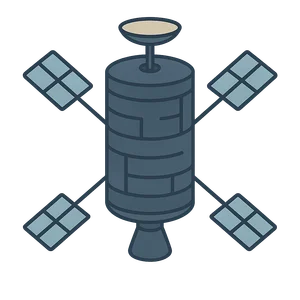
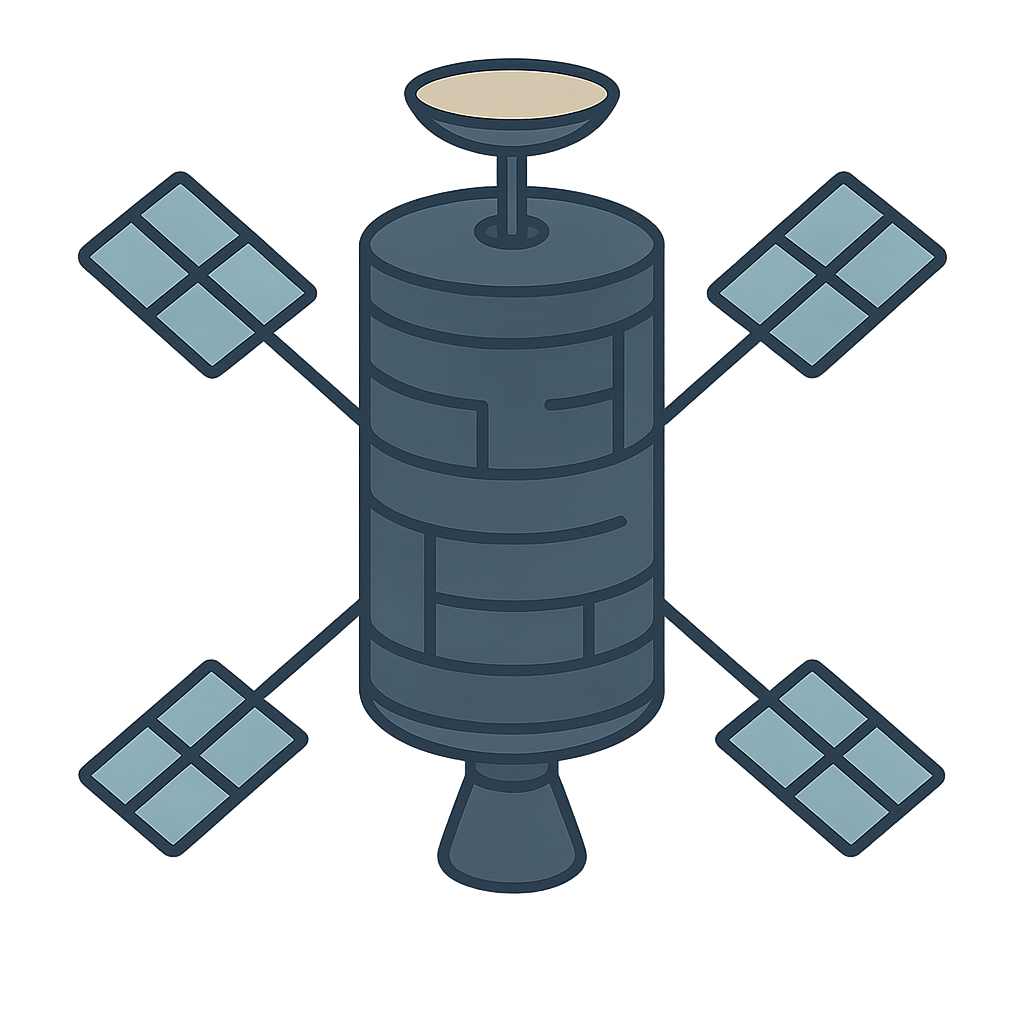
As you might imagine, the idea of a spinning Earth was not accepted by everyone. It was a strange and unsettling thought for many, and some later astronomers even wrote arguments against it. Change, especially in our most fundamental beliefs, often comes slowly. Yet, I was not discouraged. I had planted a seed of curiosity and given it the rich soil of mathematics in which to grow. I knew that ideas, if they are true and useful, have a life of their own. My book, the Aryabhatiya, was carefully copied by scribes and studied by generations of Indian astronomers who came after me. They refined my work, debated my theories, and carried the torch of knowledge forward. In time, my book traveled along trade routes, reaching the great minds of the Arab world, where it was translated and studied intensely. From there, my mathematical ideas, including the concepts of sine and a placeholder system that was fundamental to the development of the number zero, eventually journeyed to Europe. I never knew how far my thoughts would travel, but I held onto the belief that the pursuit of knowledge is a timeless and universal quest. Centuries later, on April 19th, 1975, my country of India launched its very first satellite into space. They named it Aryabhata. As it orbited our spinning Earth, it carried my name as a tribute, a symbol that the human spirit of discovery, which began with a boy looking up at the stars, will forever continue its journey into the unknown.
Wow facts
About
Aryabhata was an influential mathematician and astronomer from the classical age of Indian mathematics and astronomy. He is credited with major contributions, including the use of a place-value system, an approximation of pi, and theories on the Earth's rotation and the causes of eclipses.
Take a Quiz
Question 1 of 5
In your own words, describe Aryabhata's revolutionary idea about the Earth and the analogy he used to explain it.
Explore next





Want to do even more?
Go beyond exploring. Unlock tools that turn every story into real learning.

Storypie Plus for families
Full stories, quizzes, and printables. Nights and car rides, sorted.
- Unlimited audio stories
- Create Mode: your child stars in the story
- Offline downloads
- Printable worksheets & coloring pages

Why Storypie for Schools
Students engaged. Prep in seconds. Evenings back to you.
- Worksheets & Quizzes
- Classroom Management
- Formative Assessment
- Custom Curriculum & Lesson Plans
- 27 Languages

Why Storypie for Homeschool
Curriculum done. They'll ask for more. Hours back in your day.
- Worksheet Generator
- First-Person Audio Stories
- Built-in Comprehension Quizzes
- Custom Curriculum & Lesson Plans
- Print & Go Activities