English

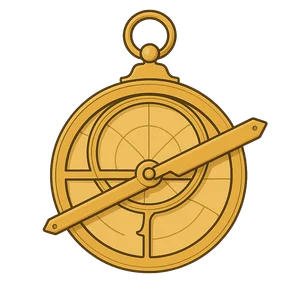
Astrolabe
An ancient astronomical instrument used to measure the position of celestial bodies, tell time…
Reads at Grades 3–5 Listens at Grades 1–5
Print & create
Answer keys·No prep·Free with an account
28 worksheets · answer keys · full story · quiz · Ages 8-10 · CEFR B1
Plus adds 164,000+ more stories in 27 languages, audio for every one, and printables for all of them.
Just want Astrolabe?
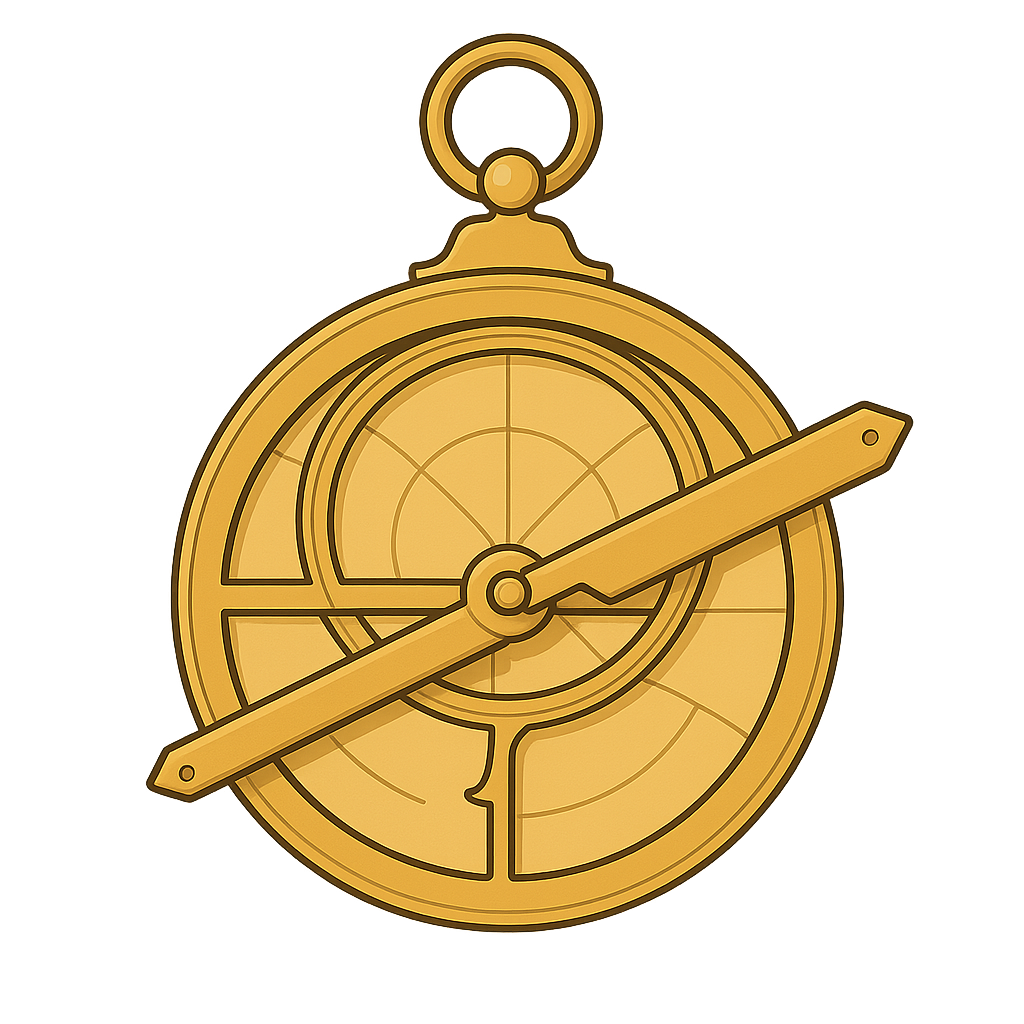
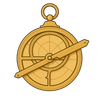
Hello. I might look like just a beautiful metal disc, full of intricate lines and mysterious symbols, but I am so much more. I am an astrolabe, a universe you can hold in your hand. I am a map of the sky, a clock that tells time by the sun and stars, and a guide that has helped travelers find their way for thousands of years. Before there were phones or computers, there was me. My story is written in the stars themselves, a journey of human curiosity. I was born from a desire to understand the heavens and our place beneath them. For centuries, I was the key that unlocked secrets about the sun’s path, the time of day, and a person’s location on this vast Earth. My polished brass surface has reflected the faces of scholars, sailors, and kings, all of them looking to me for answers.
My story begins a very long time ago, in ancient Greece. Long before I was a physical object, I was an idea in the mind of a brilliant thinker named Hipparchus. Around the 2nd century BCE, he discovered the mathematical principles that could project the giant, round sphere of the sky onto a flat, two-dimensional surface. It was a revolutionary idea, like figuring out how to draw a perfect, flat map of the whole round world. His work laid the foundation for my existence. It took a few hundred years for his ideas to become something you could hold. In the 4th century CE, scholars in places like Alexandria, Egypt, began to build upon his work. A wise man named Theon of Alexandria wrote a detailed treatise about me, explaining how to make and use me. These early versions were the first true astrolabes, bringing the complex mathematics of the stars into a practical, usable tool.
The Story of the Astrolabe
Hello. I might look like just a beautiful metal disc, full of intricate lines and mysterious symbols, but I am so much more. I am an astrolabe, a universe you can hold in your hand. I am a map of the sky, a clock that tells time by the sun and stars, and a guide that has helped travelers find their way for thousands of years. Before there were phones or computers, there was me. My story is written in the stars themselves, a journey of human curiosity. I was born from a desire to understand the heavens and our place beneath them. For centuries, I was the key that unlocked secrets about the sun’s path, the time of day, and a person’s location on this vast Earth. My polished brass surface has reflected the faces of scholars, sailors, and kings, all of them looking to me for answers.
My story begins a very long time ago, in ancient Greece. Long before I was a physical object, I was an idea in the mind of a brilliant thinker named Hipparchus. Around the 2nd century BCE, he discovered the mathematical principles that could project the giant, round sphere of the sky onto a flat, two-dimensional surface. It was a revolutionary idea, like figuring out how to draw a perfect, flat map of the whole round world. His work laid the foundation for my existence. It took a few hundred years for his ideas to become something you could hold. In the 4th century CE, scholars in places like Alexandria, Egypt, began to build upon his work. A wise man named Theon of Alexandria wrote a detailed treatise about me, explaining how to make and use me. These early versions were the first true astrolabes, bringing the complex mathematics of the stars into a practical, usable tool.
My most glorious days arrived during what is known as the Islamic Golden Age, which spanned from the 8th to the 13th centuries. During this incredible time of learning and discovery, scholars and craftspeople across the Middle East, North Africa, and Spain took my simple design and perfected it. They turned me into a work of art and a precise scientific instrument. In cities like Baghdad and Córdoba, artisans engraved my plates with beautiful calligraphy and complex star charts. I became incredibly accurate. I was so proud to be in the hands of a skilled maker named Mariam al-Asṭurlābiyya, a woman in 10th-century Syria who was famous for crafting exceptional astrolabes. During this era, I was used for everything. Astronomers used me to map the stars, while everyday people used me to tell time for prayers and find the direction of Mecca. I wasn't just a tool for science; I was a part of daily life.
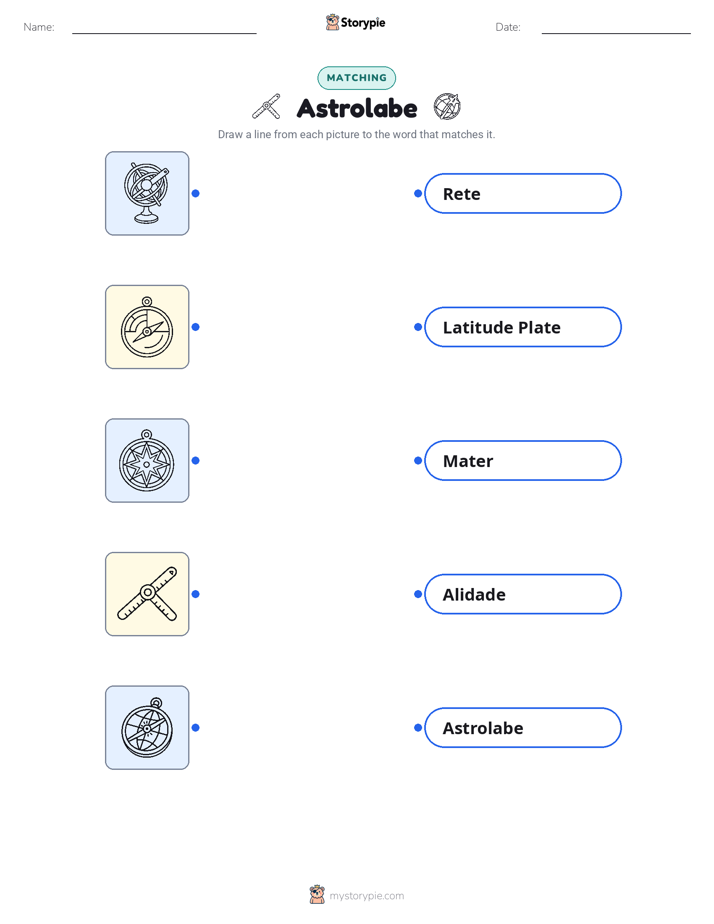
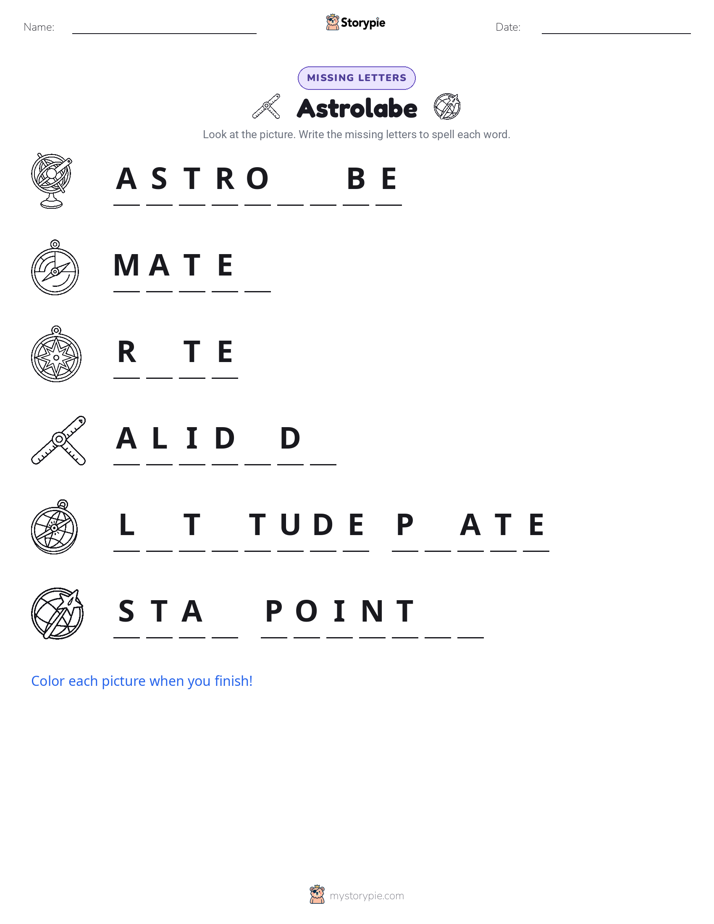
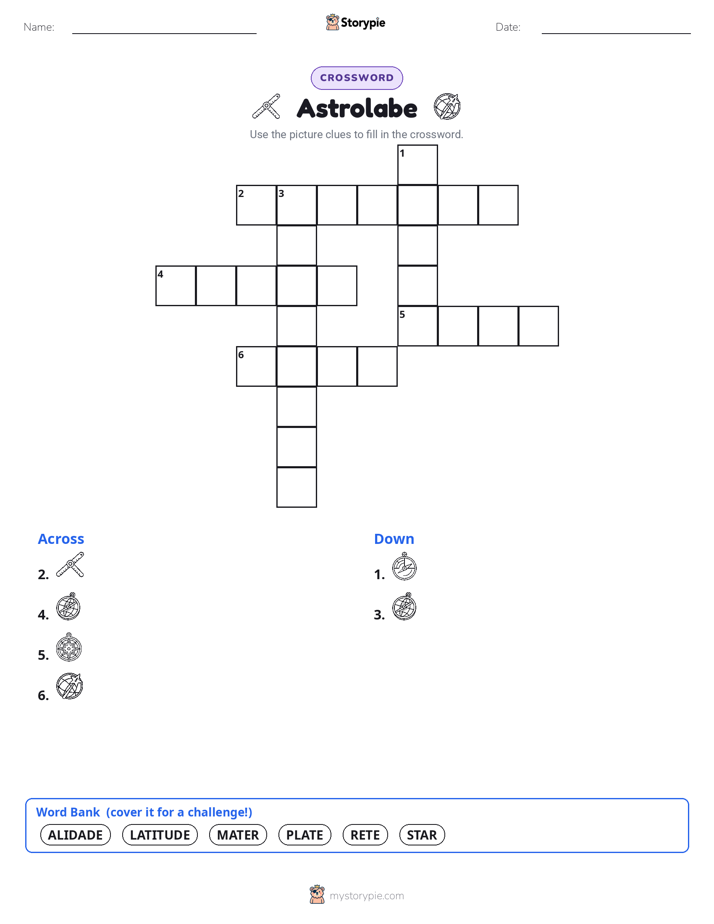
How do I do all of these amazing things. It seems like magic, but it’s really clever design. My main body is a hollow disc called the 'mater,' which is Latin for mother, because it holds all my other parts. Inside the mater, I hold flat plates called 'tympans.' Each tympan is a map of the sky as seen from a specific latitude, or location, on Earth. So, if you were in Cairo, you would use a different tympan than if you were in London. Over the tympans sits my most beautiful part, the 'rete.' The rete is a delicate, web-like metal plate that shows the positions of the brightest stars. By rotating the rete and lining up the stars with the markings on the tympan below, a user could solve all sorts of problems, like telling the time at night or finding out when the sun would rise.
As centuries passed, my purpose evolved. During the Age of Discovery in the 1400s and 1500s, I became a crucial tool for sailors. Brave explorers setting out across unknown oceans relied on me to navigate. By measuring the height of the sun or a star above the horizon, they could figure out their latitude and make sure they weren't lost in the middle of the vast sea. I guided ships to new lands and helped create the maps of the world we know today. Eventually, newer inventions like the sextant and accurate clocks came along, and I was used less and less. But my story didn't end. My legacy lives on in the tools you use today. The same curiosity about the stars that led to my creation is what fuels modern science, from the GPS in your car that uses satellites to the powerful telescopes that explore distant galaxies. I am a reminder that a simple tool, born from a brilliant idea, can change the world.
Wow facts
About
An ancient astronomical instrument used to measure the position of celestial bodies, tell time, and determine latitude, effectively serving as an analog computer and a model of the universe.
Take a Quiz
Question 1 of 5
Who was the ancient Greek thinker whose ideas laid the foundation for the astrolabe?
Explore next





Want to do even more?
Go beyond exploring. Unlock tools that turn every story into real learning.

Storypie Plus for families
Full stories, quizzes, and printables. Nights and car rides, sorted.
- Unlimited audio stories
- Create Mode: your child stars in the story
- Offline downloads
- Printable worksheets & coloring pages

Why Storypie for Schools
Students engaged. Prep in seconds. Evenings back to you.
- Worksheets & Quizzes
- Classroom Management
- Formative Assessment
- Custom Curriculum & Lesson Plans
- 27 Languages

Why Storypie for Homeschool
Curriculum done. They'll ask for more. Hours back in your day.
- Worksheet Generator
- First-Person Audio Stories
- Built-in Comprehension Quizzes
- Custom Curriculum & Lesson Plans
- Print & Go Activities