English

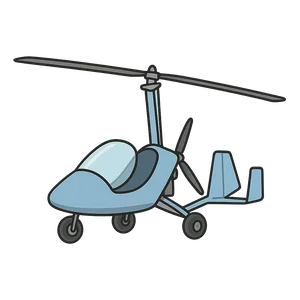
Autogyro
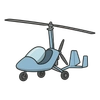
The Autogyro is an aircraft with an unpowered, free-spinning rotor and an engine-powered propeller…
Reads at Grades 3–5 Listens at Grades 1–5
Print & create
Answer keys·No prep·Free with an account
28 worksheets · answer keys · full story · quiz · Ages 8-10 · CEFR B1
Plus adds 164,000+ more stories in 27 languages, audio for every one, and printables for all of them.
Just want Autogyro?
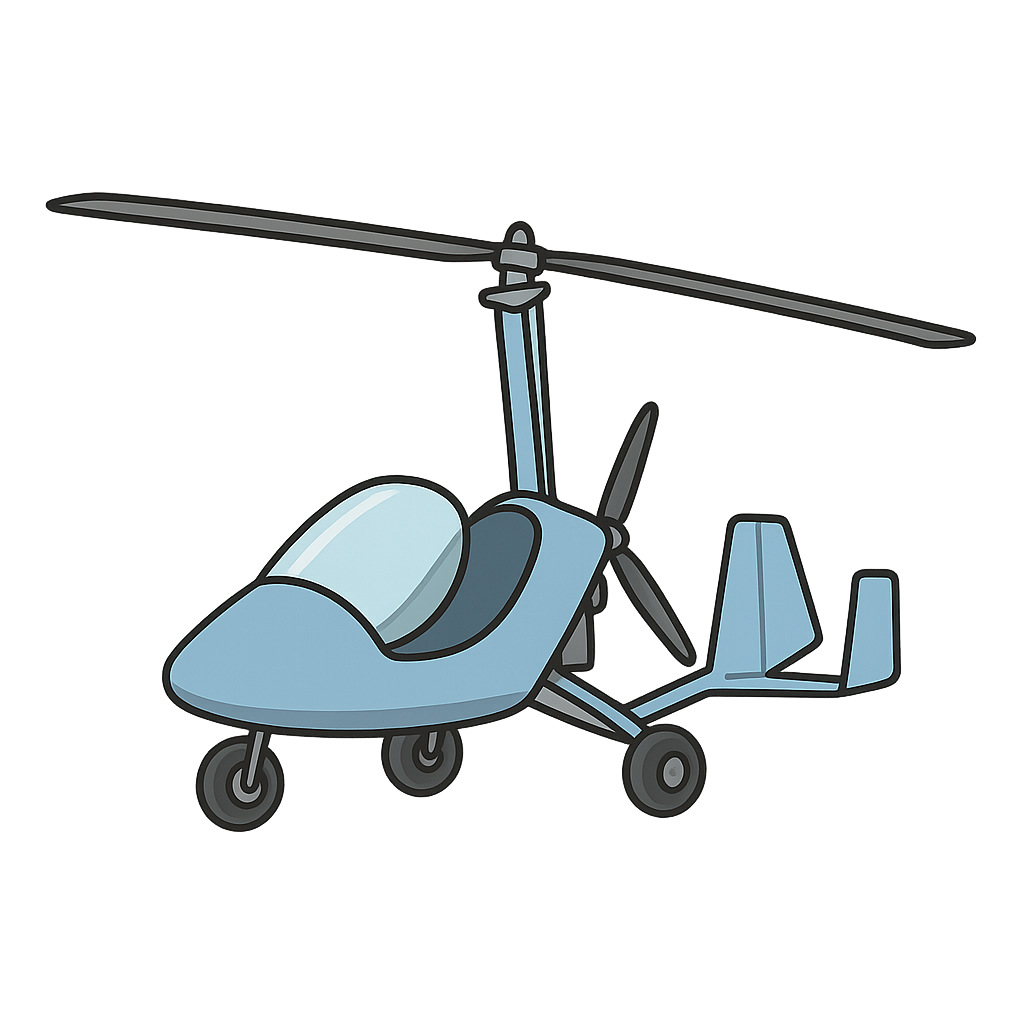
Hello there. My name is the Autogyro, and I am a very special kind of flying machine. If you saw me, you might think I look like a small airplane with a giant, spinning pinwheel on my head. I have wings and a propeller on my nose like a plane, but I also have a large rotor on top, like my cousin, the helicopter. I was born from a dream of a safer sky. In the early 1900s, airplanes were the most exciting things in the world. They were noisy, daring, and soared like eagles. But they had a dangerous secret. Sometimes, if they flew too slowly, their wings would stop holding them up, and they would stall and fall. My creator, a brilliant Spanish engineer named Juan de la Cierva, loved airplanes more than anything. But in 1919, his heart was broken when a very large airplane he had designed crashed. He knew there had to be a way to fly without the fear of falling from the sky. That sad day gave him a powerful idea, and that idea was me.
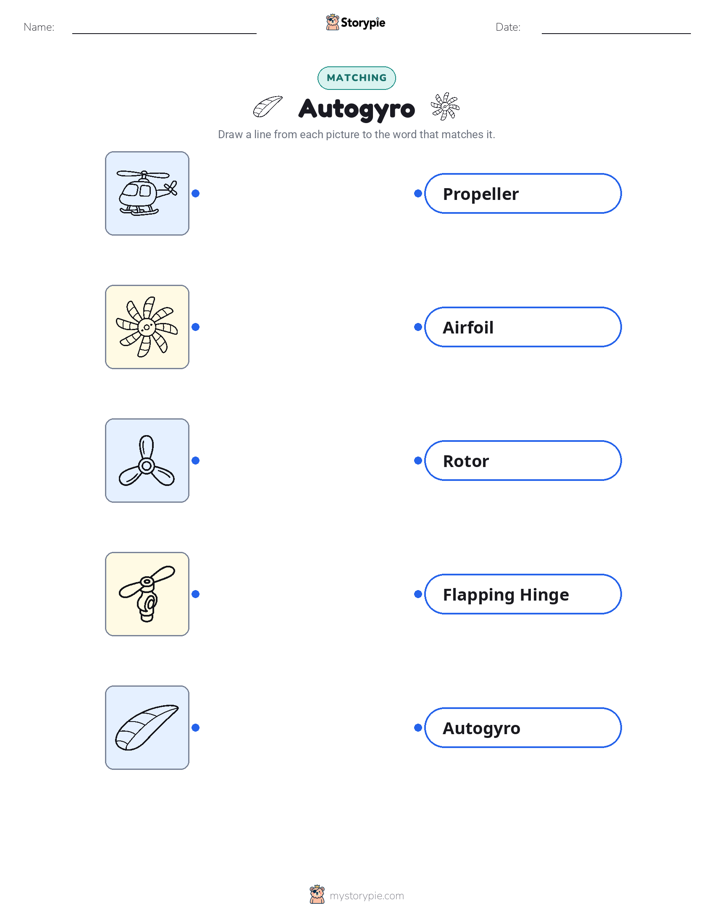
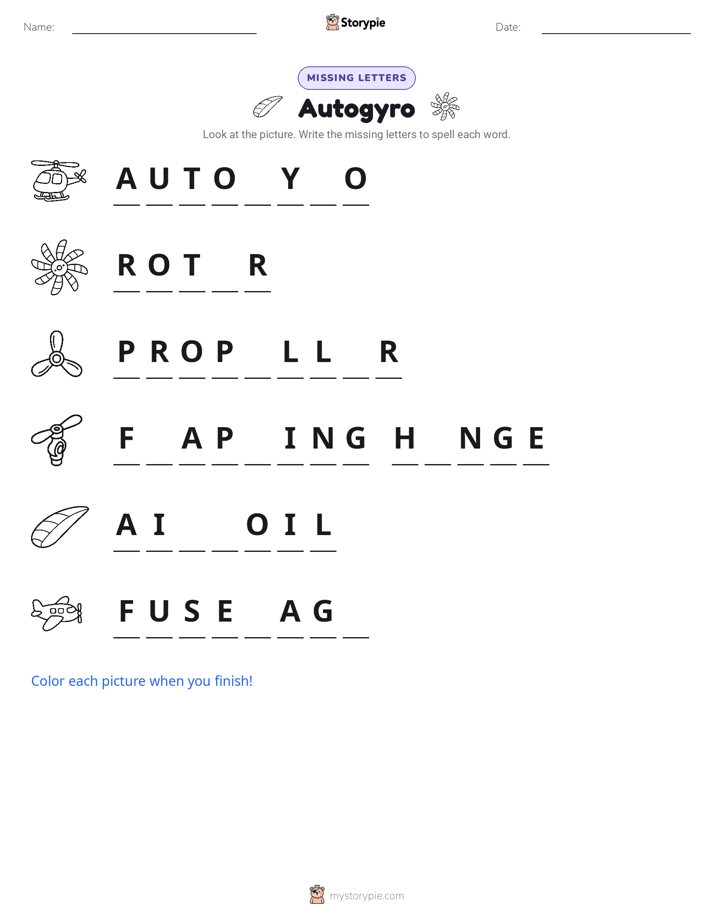
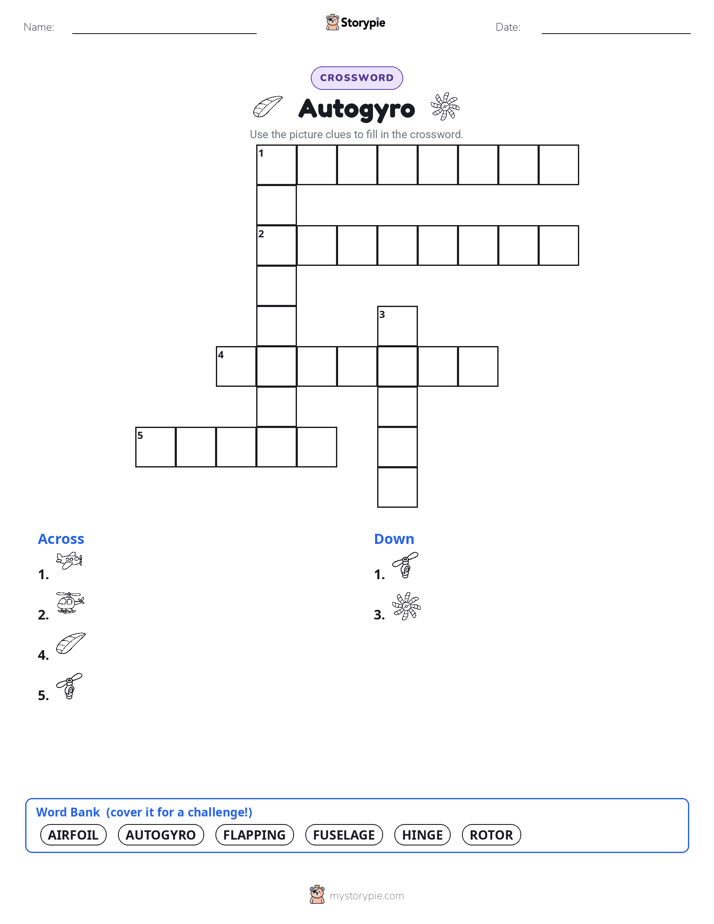
Juan de la Cierva began building me around 1920. My first few attempts at life were quite clumsy. Juan would start my engine, and my big rotor on top would begin to whirl. But as it spun faster and faster, I would get a terrible wobble. I wanted to tip over and fall right on my side. Juan realized that the powerful spinning force of my rotor was unbalanced. He tried over and over to fix me, building new versions of me, each one a little better than the last. But the wobble remained my biggest enemy. Then, one day, Juan had a breakthrough. He gave my rotor blades something like flexible wrists, little hinges right where they connected to the center. This was the secret. The hinges allowed my blades to flap up and down just a tiny bit as they spun around, perfectly balancing the forces that had tried to tip me over. On January 9th, 1923, at an airfield in Madrid, Spain, it was time for the real test. My engine roared to life. My rotor spun into a blur. I rolled forward, and then, a wonderful feeling. I lifted gently into the air. I was flying. I flew steadily and smoothly in a big circle, proving to everyone watching that Juan's amazing idea worked. I had been born.
I Am the Autogyro: The Flying Machine That Taught the World to Fly Safely
Hello there. My name is the Autogyro, and I am a very special kind of flying machine. If you saw me, you might think I look like a small airplane with a giant, spinning pinwheel on my head. I have wings and a propeller on my nose like a plane, but I also have a large rotor on top, like my cousin, the helicopter. I was born from a dream of a safer sky. In the early 1900s, airplanes were the most exciting things in the world. They were noisy, daring, and soared like eagles. But they had a dangerous secret. Sometimes, if they flew too slowly, their wings would stop holding them up, and they would stall and fall. My creator, a brilliant Spanish engineer named Juan de la Cierva, loved airplanes more than anything. But in 1919, his heart was broken when a very large airplane he had designed crashed. He knew there had to be a way to fly without the fear of falling from the sky. That sad day gave him a powerful idea, and that idea was me.
Juan de la Cierva began building me around 1920. My first few attempts at life were quite clumsy. Juan would start my engine, and my big rotor on top would begin to whirl. But as it spun faster and faster, I would get a terrible wobble. I wanted to tip over and fall right on my side. Juan realized that the powerful spinning force of my rotor was unbalanced. He tried over and over to fix me, building new versions of me, each one a little better than the last. But the wobble remained my biggest enemy. Then, one day, Juan had a breakthrough. He gave my rotor blades something like flexible wrists, little hinges right where they connected to the center. This was the secret. The hinges allowed my blades to flap up and down just a tiny bit as they spun around, perfectly balancing the forces that had tried to tip me over. On January 9th, 1923, at an airfield in Madrid, Spain, it was time for the real test. My engine roared to life. My rotor spun into a blur. I rolled forward, and then, a wonderful feeling. I lifted gently into the air. I was flying. I flew steadily and smoothly in a big circle, proving to everyone watching that Juan's amazing idea worked. I had been born.
After my first flight, I became quite famous. My creator and I traveled to different countries to show people what I could do. I couldn't hover in one spot like a helicopter, because my engine only powered the propeller on my nose, not my top rotor. That rotor spun freely in the wind, a trick called autorotation, which always kept me safe from stalling. Because of this, I could fly incredibly slowly and land in very small spaces where no airplane could go. But my most important job wasn't just to fly, it was to be a teacher. My flapping rotor and the principle of autorotation were the key lessons that engineers needed to learn to build the helicopter. I showed them how a large, spinning wing could lift a machine into the air safely and reliably. Looking back, I am so proud. I was the bridge between the airplane and the helicopter. I fulfilled Juan de la Cierva's dream of making the skies safer, and I helped inspire the amazing flying machines that fill our skies today.
Wow facts
About
The Autogyro is an aircraft with an unpowered, free-spinning rotor and an engine-powered propeller, invented by Juan de la Cierva in the 1920s to create an aircraft capable of flying safely at low speeds, addressing issues like stalling in conventional airplanes.
Take a Quiz
Question 1 of 5
What event caused Juan de la Cierva to want to invent a safer flying machine?
Explore next


Want to do even more?
Go beyond exploring. Unlock tools that turn every story into real learning.

Storypie Plus for families
Full stories, quizzes, and printables. Nights and car rides, sorted.
- Unlimited audio stories
- Create Mode: your child stars in the story
- Offline downloads
- Printable worksheets & coloring pages

Why Storypie for Schools
Students engaged. Prep in seconds. Evenings back to you.
- Worksheets & Quizzes
- Classroom Management
- Formative Assessment
- Custom Curriculum & Lesson Plans
- 27 Languages

Why Storypie for Homeschool
Curriculum done. They'll ask for more. Hours back in your day.
- Worksheet Generator
- First-Person Audio Stories
- Built-in Comprehension Quizzes
- Custom Curriculum & Lesson Plans
- Print & Go Activities