English


Caravel
The caravel was a small, highly maneuverable sailing ship developed in the 13th century by the Portuguese.
Reads at Grades 6–8 Listens at Grades 4–8
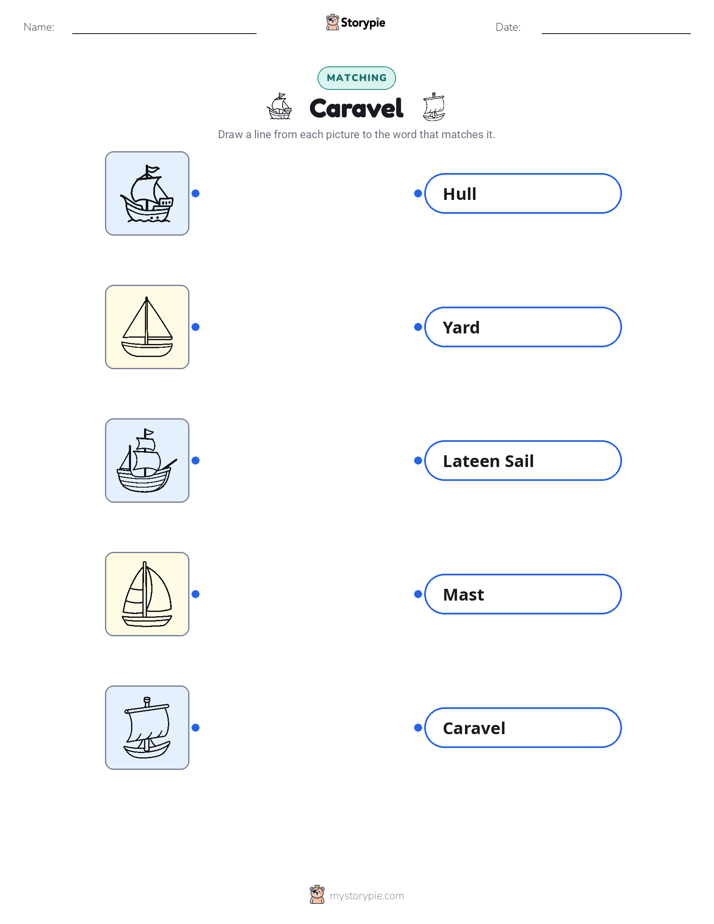
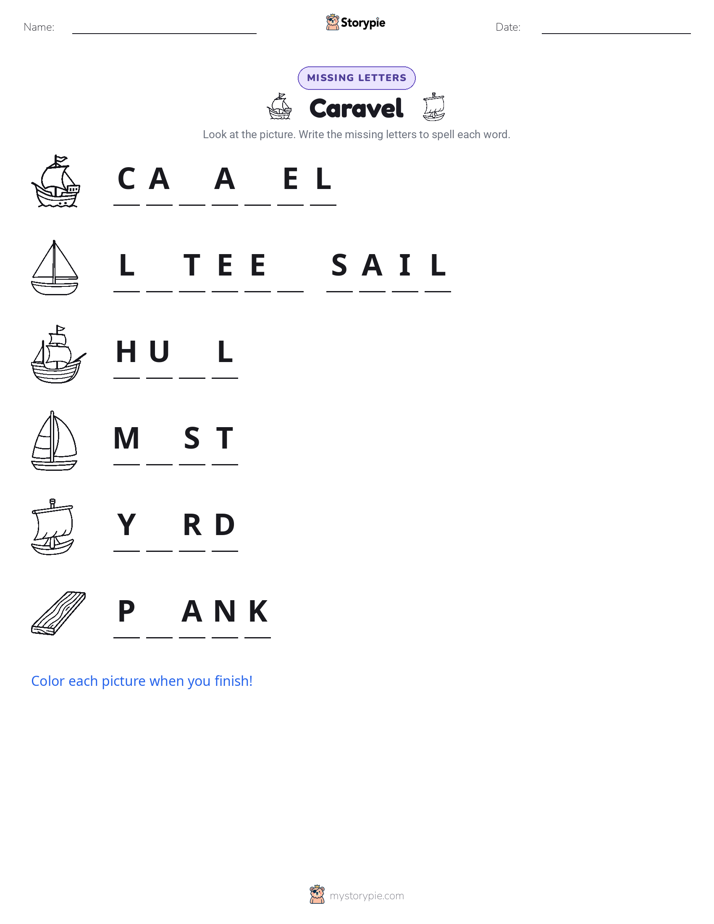
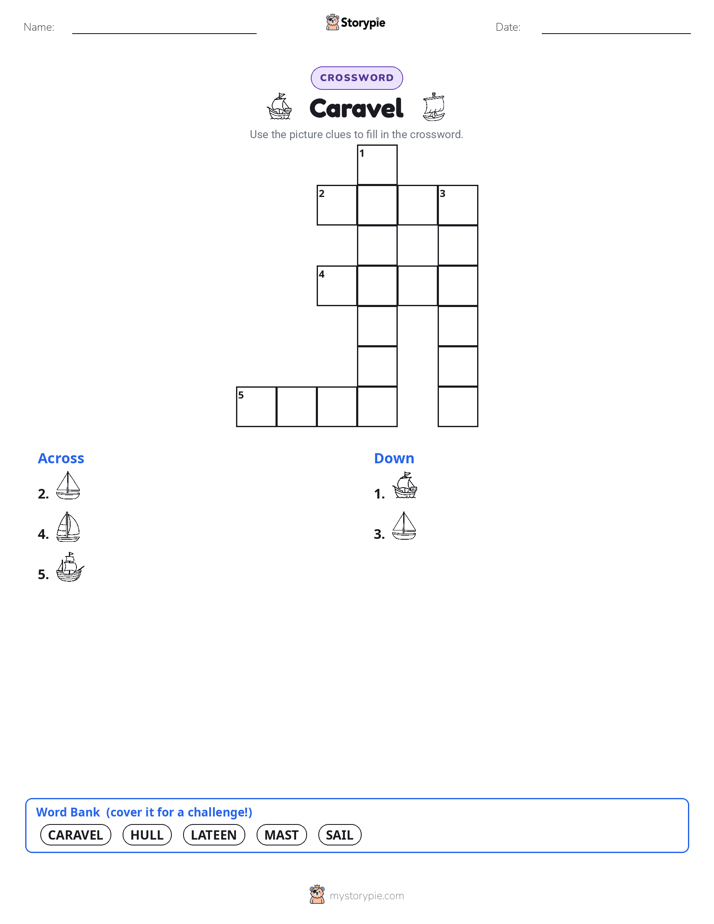
Print & create
Answer keys·No prep·Free with an account
28 worksheets · answer keys · full story · quiz · Ages 10-12 · CEFR B2
Plus adds 102,000+ more stories in 27 languages, audio for every one, and printables for all of them.
Just want Caravel?

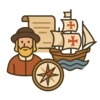
I am a Caravel, a ship born from a dream of the open ocean. Before I was first shaped from wood and canvas in the early 1400s, sailors in my home of Portugal stared out at the vast, churning Atlantic with a mixture of awe and trepidation. Their ships, called barcas, were sturdy but clumsy. With their big, single square sails, they could only sail when the wind was directly behind them, forcing them to hug the familiar coastlines. They were vessels of caution, not of bold discovery. But a visionary prince, Henry the Navigator, saw a future beyond the horizon. He dreamt of exploring the unknown coast of Africa, finding new trade routes to the riches of the East, and charting the mysteries of the sea. To turn this dream into reality, his sailors needed a new kind of ship, one that could master the wind, not just obey it. That is why I was created. I was a revolution in shipbuilding. I was smaller, lighter, and my hull was designed to be shallower than the heavy ships of the past, allowing me to navigate tricky coastal waters and unknown rivers. My greatest innovation, however, was my combination of sails. While I often had a square sail for speed with a tailwind, my true secret was my triangular lateen sails, a brilliant idea my designers adapted from Arab dhows. These sails, rigged on my rear masts, allowed me to do something that seemed like magic to many sailors of the time: I could sail into the wind. By zigzagging, a technique called tacking, I could make progress even when the wind was against me. I was nimble, I was resilient, and I was built to turn the unknown into the known.
The Caravel: Ship of Discovery
I am a Caravel, a ship born from a dream of the open ocean. Before I was first shaped from wood and canvas in the early 1400s, sailors in my home of Portugal stared out at the vast, churning Atlantic with a mixture of awe and trepidation. Their ships, called barcas, were sturdy but clumsy. With their big, single square sails, they could only sail when the wind was directly behind them, forcing them to hug the familiar coastlines. They were vessels of caution, not of bold discovery. But a visionary prince, Henry the Navigator, saw a future beyond the horizon. He dreamt of exploring the unknown coast of Africa, finding new trade routes to the riches of the East, and charting the mysteries of the sea. To turn this dream into reality, his sailors needed a new kind of ship, one that could master the wind, not just obey it. That is why I was created. I was a revolution in shipbuilding. I was smaller, lighter, and my hull was designed to be shallower than the heavy ships of the past, allowing me to navigate tricky coastal waters and unknown rivers. My greatest innovation, however, was my combination of sails. While I often had a square sail for speed with a tailwind, my true secret was my triangular lateen sails, a brilliant idea my designers adapted from Arab dhows. These sails, rigged on my rear masts, allowed me to do something that seemed like magic to many sailors of the time: I could sail into the wind. By zigzagging, a technique called tacking, I could make progress even when the wind was against me. I was nimble, I was resilient, and I was built to turn the unknown into the known.
My wooden planks quivered with purpose on my first voyages down the coast of Africa. My crews were courageous men, but the ocean was an immense and unpredictable wilderness. I carried them further south than any European had ever dared to venture. My lateen sails would catch the crosswinds, and I could feel myself leaning into the waves, turning the wind's power into forward motion. The sailors learned to trust my strength and agility. In 1488, I had one of my proudest moments when I carried the determined explorer Bartolomeu Dias on a monumental journey. We were battered by ferocious storms that pushed us far out to sea, but my strong frame and clever design held firm. We sailed so far south that we finally rounded the tip of Africa, which his king would later name the Cape of Good Hope. We had proven that a sea route to the Indian Ocean was possible. A few years later, in 1492, two of my sisters, the Niña and the Pinta, embarked on an even more audacious voyage. They sailed west across the seemingly endless Atlantic with an Italian explorer named Christopher Columbus. His flagship, the Santa María, was a larger, slower ship called a carrack. It was my nimble sisters who proved to be the more reliable and versatile vessels on that long, uncertain journey to the Americas. On these voyages, I became more than just a ship; I was a floating home. My decks smelled of sea salt, the tar that sealed my planks, and the exotic spices we sometimes carried. My world was filled with the constant creak of my masts, the rhythmic shouts of the crew as they worked the ropes, and the endless whisper and roar of the waves against my hull. I was the vessel that sailed right over the parts of the map that once read 'Here be dragons' and helped draw a new, more connected world.
My reign as the premier ship of exploration lasted for more than a century, a golden age of discovery. As the 1500s progressed, the world changed again. Trade routes became busier, and merchants and empires needed to transport more cargo and carry heavier cannons. Bigger ships, like the mighty Carracks and Galleons, were developed to meet these new demands, and I gracefully yielded the main sea lanes to them. But my story did not end when I retired from my grand voyages. My design fundamentally changed shipbuilding forever. The concept of using a combination of square and lateen sails for both speed and maneuverability became the standard for sailing ships for centuries to come. You can see my influence in almost every tall ship that followed. I was never just a collection of wood and canvas; I was an idea brought to life. I was the key that helped unlock the globe, connecting continents and allowing people, cultures, goods, and knowledge to flow between them in ways that had been impossible before. I showed humanity that with ingenuity, courage, and the right tools, no ocean is too vast to cross and no horizon is truly out of reach. So the next time you see a sailboat gliding across the water, turning gracefully to catch the breeze, remember me, the Caravel. The spirit of discovery that I carried upon the ocean tides continues to inspire explorers today, whether they are charting the deepest seas or reaching for the distant stars.
Wow facts
About
The caravel was a small, highly maneuverable sailing ship developed in the 13th century by the Portuguese. It evolved into its advanced form in the 15th century to explore along the West African coast and into the Atlantic Ocean.
Take a Quiz
Question 1 of 5
In your own words, explain the main reasons the caravel was a better ship for exploration than the ships that came before it.
Explore next



Want to do even more?
Go beyond exploring. Unlock tools that turn every story into real learning.

Storypie Plus for families
Full stories, quizzes, and printables. Nights and car rides, sorted.
- Unlimited audio stories
- Create Mode: your child stars in the story
- Offline downloads
- Printable worksheets & coloring pages

Why Storypie for Schools
Students engaged. Prep in seconds. Evenings back to you.
- Worksheets & Quizzes
- Classroom Management
- Formative Assessment
- Custom Curriculum & Lesson Plans
- 27 Languages

Why Storypie for Homeschool
Curriculum done. They'll ask for more. Hours back in your day.
- Worksheet Generator
- First-Person Audio Stories
- Built-in Comprehension Quizzes
- Custom Curriculum & Lesson Plans
- Print & Go Activities