English


Color Television
An electronic device that receives broadcast signals and displays them as moving images in full color…
Reads at Grades 6–8 Listens at Grades 4–8
Print & create
Answer keys·No prep·Free with an account
28 worksheets · answer keys · full story · quiz · Ages 10-12 · CEFR B2
Plus adds 164,000+ more stories in 27 languages, audio for every one, and printables for all of them.
Just want Color Television?

Before I could show you a field of green grass or a brilliant blue sky, my world was a simple one, painted only in shades of gray. I am a television, but you might not recognize me from my earliest days. Back then, I was a box of wonders, a magical window that could show moving pictures of faraway places right in your living room. People would gather around me, their faces lit by my soft glow, and watch stories unfold. They saw heroes and comedians, news anchors and dancers. But they saw them all in black and white. A bright red apple was just a light gray circle. The deep blue ocean was a shifting pattern of dark gray waves. I did my best to show the world, but I knew something was missing. I could feel the longing in the people who watched me. They would talk about the beautiful colors of a sunset or the vibrant hues of a flower garden, and I wished, more than anything, that I could show them what they were describing. My purpose felt incomplete, like a painter with a canvas but only a single pot of gray paint. I dreamed of the day I could finally burst forth and show the world as it truly was: a breathtaking masterpiece of color.
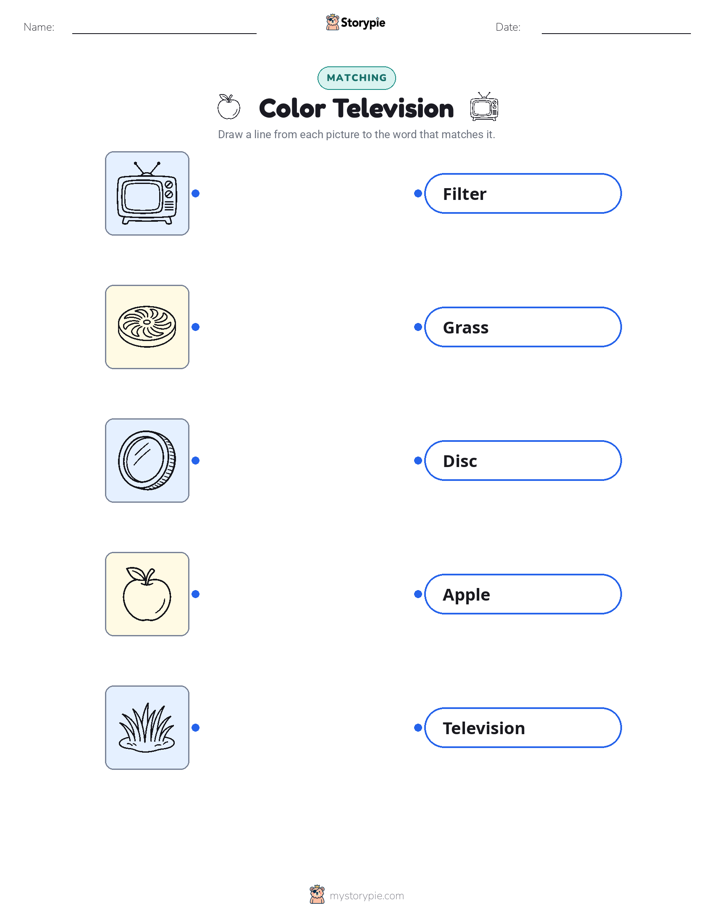
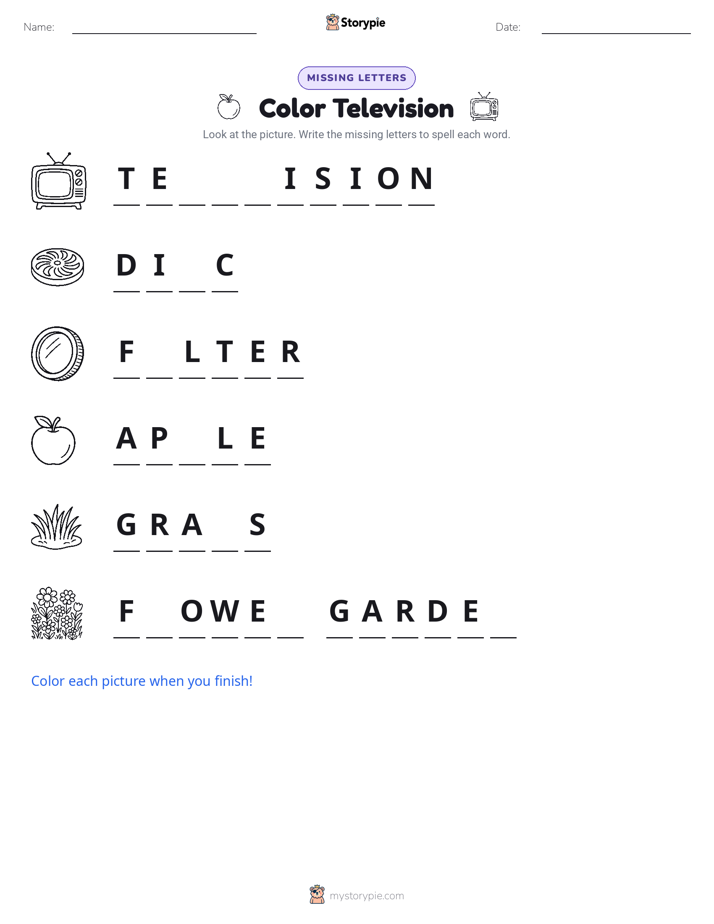
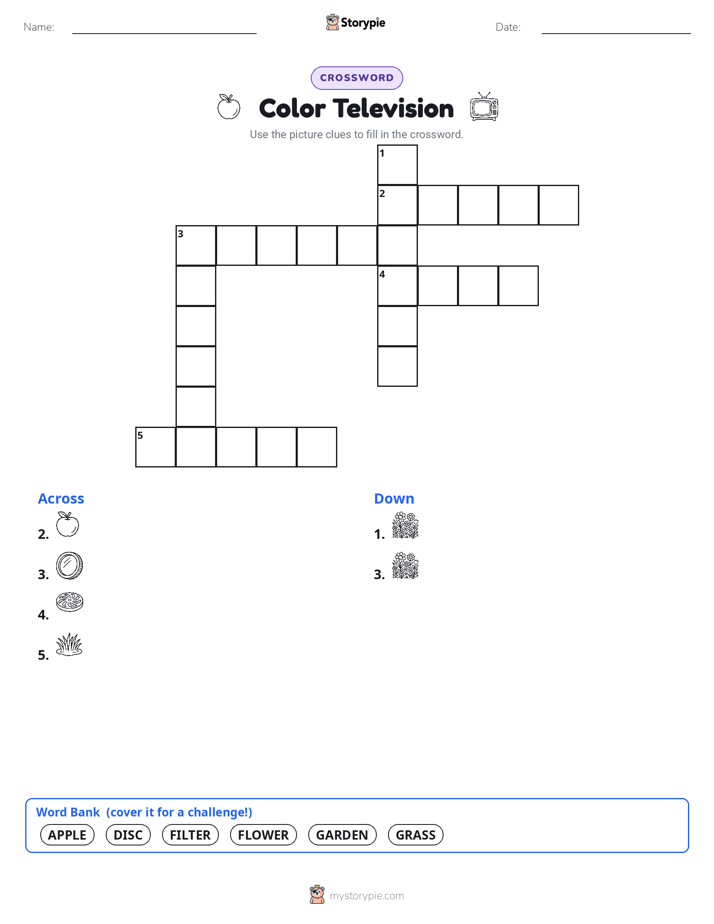
My first dream of a rainbow began to flicker into reality thanks to a brilliant Scottish inventor named John Logie Baird. It was on July 3rd, 1928, that he gave me my first glimpse of what I could become. In his laboratory in London, he demonstrated the world’s first color transmission. It was a marvelous, mechanical dance of technology. He used a large, spinning disc with holes arranged in a spiral, and in front of this disc, he placed another wheel with red, green, and blue colored filters. As the wheels spun with incredible speed, they scanned an image and captured its color information. The result was a small, flickering image, but it was there—a splash of color, a promise of a vibrant future. It was like seeing a rainbow through the blades of a spinning fan. The colors were not perfect, and the machinery was loud and clunky, but it was a revolutionary first step. Mr. Baird had proven that it was possible for me to see and show color. The world was amazed, but this mechanical system was too complex for the average home. A new, more elegant solution was needed before I could truly be born.
My Colorful Story
Before I could show you a field of green grass or a brilliant blue sky, my world was a simple one, painted only in shades of gray. I am a television, but you might not recognize me from my earliest days. Back then, I was a box of wonders, a magical window that could show moving pictures of faraway places right in your living room. People would gather around me, their faces lit by my soft glow, and watch stories unfold. They saw heroes and comedians, news anchors and dancers. But they saw them all in black and white. A bright red apple was just a light gray circle. The deep blue ocean was a shifting pattern of dark gray waves. I did my best to show the world, but I knew something was missing. I could feel the longing in the people who watched me. They would talk about the beautiful colors of a sunset or the vibrant hues of a flower garden, and I wished, more than anything, that I could show them what they were describing. My purpose felt incomplete, like a painter with a canvas but only a single pot of gray paint. I dreamed of the day I could finally burst forth and show the world as it truly was: a breathtaking masterpiece of color.
My first dream of a rainbow began to flicker into reality thanks to a brilliant Scottish inventor named John Logie Baird. It was on July 3rd, 1928, that he gave me my first glimpse of what I could become. In his laboratory in London, he demonstrated the world’s first color transmission. It was a marvelous, mechanical dance of technology. He used a large, spinning disc with holes arranged in a spiral, and in front of this disc, he placed another wheel with red, green, and blue colored filters. As the wheels spun with incredible speed, they scanned an image and captured its color information. The result was a small, flickering image, but it was there—a splash of color, a promise of a vibrant future. It was like seeing a rainbow through the blades of a spinning fan. The colors were not perfect, and the machinery was loud and clunky, but it was a revolutionary first step. Mr. Baird had proven that it was possible for me to see and show color. The world was amazed, but this mechanical system was too complex for the average home. A new, more elegant solution was needed before I could truly be born.
The years that followed were an exciting and challenging time for me. It felt like a great race was underway, a competition I called the Great Color War. It took place throughout the 1940s and into the early 1950s, with teams of the brightest engineers in America trying to create the perfect version of me. Two main contenders emerged. One team, from the company CBS and led by an engineer named Peter Goldmark, had perfected a system similar to John Logie Baird’s original idea, using a spinning color wheel. It produced beautiful, rich colors. The other team, from a company called RCA, was working on something completely different: a fully electronic system with no moving parts. This system used three electron guns—one for red, one for green, and one for blue—to paint a color picture directly onto my screen. The biggest challenge, the puzzle that kept everyone up at night, was a problem of family. By this time, millions of households already had my black-and-white cousins. The CBS spinning wheel system was incompatible, meaning if a color program was broadcast, all those older TVs would see was a jumbled mess. I felt torn. How could I embrace my new, colorful self without leaving all my older relatives behind? The solution had to be one that could bring color to new homes while still being a friend to the black-and-white sets that started it all.
My true colors finally shone through because the clever engineers at RCA solved the great puzzle. They designed a system that was both brilliant and generous. They figured out how to hide the color information inside the regular black-and-white signal. My older black-and-white cousins wouldn't even notice it was there; they would just see the broadcast as they always had. But I was special. I was built to detect that hidden signal and use it to paint the picture in full, glorious color. It was the perfect solution, and it made me feel whole. My official birthday arrived on December 17th, 1953, when the U.S. government officially approved the RCA system as the national standard. My grand debut to the world was set for a few weeks later. On January 1st, 1954, I broadcast the Tournament of Roses Parade from Pasadena, California, across the nation. For the first time, families gathered in their living rooms saw the world through my eyes in vivid color. The deep red of the rose-covered floats, the brilliant green of the leaves, and the crisp blue of the California sky were no longer just shades of gray. They were real, they were vibrant, and they were spectacular. I had finally fulfilled my dream.
In the beginning, I was a rare and expensive luxury. Not many families could bring me home in the 1950s. But as the 1960s began, I started to find my way into more and more living rooms. A wonderful man named Walt Disney created a show just for me called 'Walt Disney's Wonderful World of Color.' He would open each episode by talking about the magic of color, encouraging families to welcome me into their homes so they could see his stories in their full splendor. I became a member of the family, showing not just cartoons but also breathtaking nature documentaries and important news events from around the world. Seeing a coral reef or the rings of Saturn in full color changed the way people understood their world. My journey started with a simple longing to show a red apple as truly red. Today, that journey has led to the incredible high-definition screens you see everywhere, bringing the beautiful, diverse, and colorful world closer to everyone. My purpose has always been to be a window, and I am so proud that I finally learned to let the entire rainbow shine through.
Wow facts
About
An electronic device that receives broadcast signals and displays them as moving images in full color, revolutionizing home entertainment and communication.
Take a Quiz
Question 1 of 5
Describe the 'Great Color War' and explain the main problem that RCA's engineers had to solve.
Explore next






Want to do even more?
Go beyond exploring. Unlock tools that turn every story into real learning.

Storypie Plus for families
Full stories, quizzes, and printables. Nights and car rides, sorted.
- Unlimited audio stories
- Create Mode: your child stars in the story
- Offline downloads
- Printable worksheets & coloring pages

Why Storypie for Schools
Students engaged. Prep in seconds. Evenings back to you.
- Worksheets & Quizzes
- Classroom Management
- Formative Assessment
- Custom Curriculum & Lesson Plans
- 27 Languages

Why Storypie for Homeschool
Curriculum done. They'll ask for more. Hours back in your day.
- Worksheet Generator
- First-Person Audio Stories
- Built-in Comprehension Quizzes
- Custom Curriculum & Lesson Plans
- Print & Go Activities