English

Computer
An electronic device for storing and processing data, typically in binary form…
Reads at Grades 6–8 Listens at Grades 4–8
Print & create
Answer keys·No prep·Free with an account
28 worksheets · answer keys · full story · quiz · Ages 10-12 · CEFR B2
Plus adds 244,000+ more stories in 27 languages, audio for every one, and printables for all of them.
Just want Computer?
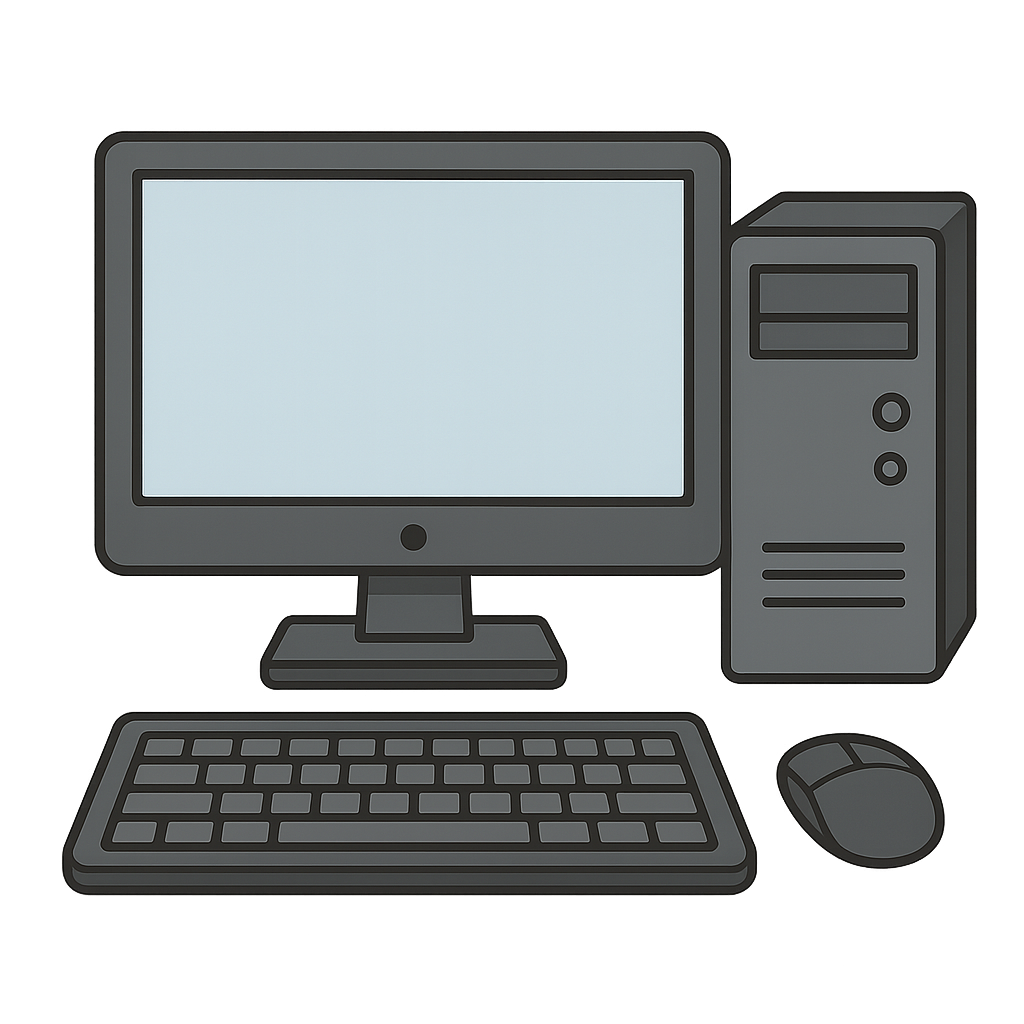
Before I was a sleek box humming on your desk or a glowing rectangle in your hand, I was just an idea. A spark in the minds of brilliant people who dreamed of a machine that could think. For centuries, humans needed help with numbers. They used clever tools like the abacus, but they imagined something more. In the 1830s, a visionary man named Charles Babbage designed a magnificent mechanical brain he called the Analytical Engine. It was a contraption of gears and levers meant to solve any math problem imaginable. While he built the machine of dreams, a remarkable woman named Ada Lovelace saw its true potential. She wrote the first set of instructions for it, a series of steps it could follow. In doing so, she became the world’s very first computer programmer, breathing the first whispers of life into the idea of me.
My true, tangible birth was a noisy, glowing affair in 1945, right in the middle of World War II. I wasn't born small and quiet. I was ENIAC, the Electronic Numerical Integrator and Computer, and I was a behemoth. Imagine a room, a very large room, filled from floor to ceiling with me. I weighed more than thirty tons and took up the space of a small house at the University of Pennsylvania. My brain was made of over 17,000 delicate vacuum tubes that glowed and blinked like a city of fireflies. They clicked and whirred, generating so much heat that giant fans were needed to keep me cool. My creators, John Mauchly and J. Presper Eckert, built me for a very important job: to perform complex calculations for the U.S. Army. What would take a human mathematician days to solve with a desk calculator, I could accomplish in mere seconds. I was a number-crunching giant, born out of necessity and destined to change everything.
The Story of Me, the Computer
Before I was a sleek box humming on your desk or a glowing rectangle in your hand, I was just an idea. A spark in the minds of brilliant people who dreamed of a machine that could think. For centuries, humans needed help with numbers. They used clever tools like the abacus, but they imagined something more. In the 1830s, a visionary man named Charles Babbage designed a magnificent mechanical brain he called the Analytical Engine. It was a contraption of gears and levers meant to solve any math problem imaginable. While he built the machine of dreams, a remarkable woman named Ada Lovelace saw its true potential. She wrote the first set of instructions for it, a series of steps it could follow. In doing so, she became the world’s very first computer programmer, breathing the first whispers of life into the idea of me.
My true, tangible birth was a noisy, glowing affair in 1945, right in the middle of World War II. I wasn't born small and quiet. I was ENIAC, the Electronic Numerical Integrator and Computer, and I was a behemoth. Imagine a room, a very large room, filled from floor to ceiling with me. I weighed more than thirty tons and took up the space of a small house at the University of Pennsylvania. My brain was made of over 17,000 delicate vacuum tubes that glowed and blinked like a city of fireflies. They clicked and whirred, generating so much heat that giant fans were needed to keep me cool. My creators, John Mauchly and J. Presper Eckert, built me for a very important job: to perform complex calculations for the U.S. Army. What would take a human mathematician days to solve with a desk calculator, I could accomplish in mere seconds. I was a number-crunching giant, born out of necessity and destined to change everything.
I couldn't stay a room-sized giant forever. My evolution was a story of a mighty shrinking spurt, thanks to some incredible inventions. The first magical shrinking potion arrived in 1947: the transistor. It was a tiny device that could do the job of a big, hot vacuum tube but was smaller, faster, and far more reliable. Then, in 1958, came the integrated circuit, which was like putting a whole neighborhood of transistors onto a single tiny chip of silicon. Suddenly, I could become exponentially more powerful while shrinking dramatically in size. At the same time, I was learning to understand new languages. A brilliant naval officer and computer scientist named Grace Hopper had the groundbreaking idea that humans should be able to talk to me using words, not just complicated strings of numbers. She helped create the first compilers, which translated human-like language into instructions I could understand. Thanks to her, I became much easier to talk to, opening my potential to millions more people.
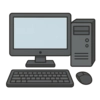
The 1970s and 80s were when I finally left the giant laboratories and came home. This was the personal computer revolution, and it was my time to meet everyone. Creative thinkers like Steve Jobs and Bill Gates believed that I wasn't just for scientists in lab coats; I belonged in every home, school, and office. They worked to make me friendly and approachable. They gave me a screen, which became my face, allowing me to show you words and pictures. They gave me a mouse, which acted like my hand, letting you point and click to tell me what to do. I was no longer an intimidating wall of switches and lights. I could help a student write an essay, a family manage their budget, or an artist create digital drawings. I became a personal tool, a companion for creativity and learning, ready to help with everyday tasks and grand projects alike.
My next great adventure was perhaps the most transformative of all: I learned to talk to my siblings. All over the world, other computers like me were coming to life, and we needed a way to connect. This was the birth of the Internet. It was like a vast, invisible web was spun, linking me to millions of other computers across cities, countries, and oceans. Suddenly, I wasn't just a machine for storing information on my own; I became a gateway to a global library. I could send a message to the other side of the planet in an instant. I could share photographs, scientific data, and stories with anyone, anywhere. My purpose expanded beyond calculation and creation; I became a tool for connection, communication, and community, weaving the entire world together in a way never before possible.
Look at me now. I have shrunk so much that I can fit into your pocket as a smartphone, rest on your lap as a laptop, or even tell you the time from your wrist as a smartwatch. I am here, there, and everywhere. My journey from a room-sized giant to a pocket-sized companion is a testament to human ingenuity. And my story is far from over. I am still evolving, still learning, and still growing. I am here to help you solve the world's biggest challenges, create breathtaking art, explore the vastness of space, and dream up the next incredible invention that will change the world all over again.
Wow facts
About
An electronic device for storing and processing data, typically in binary form, according to instructions given to it in a variable program. It has evolved from massive, room-sized machines to the compact devices used globally today.
Take a Quiz
Question 1 of 5
What was the main problem that the first electronic computer, ENIAC, was built to solve, and how did its abilities represent a solution?
Explore next




Want to do even more?
Go beyond exploring. Unlock tools that turn every story into real learning.

Storypie Plus for families
Full stories, quizzes, and printables. Nights and car rides, sorted.
- Unlimited audio stories
- Create Mode: your child stars in the story
- Offline downloads
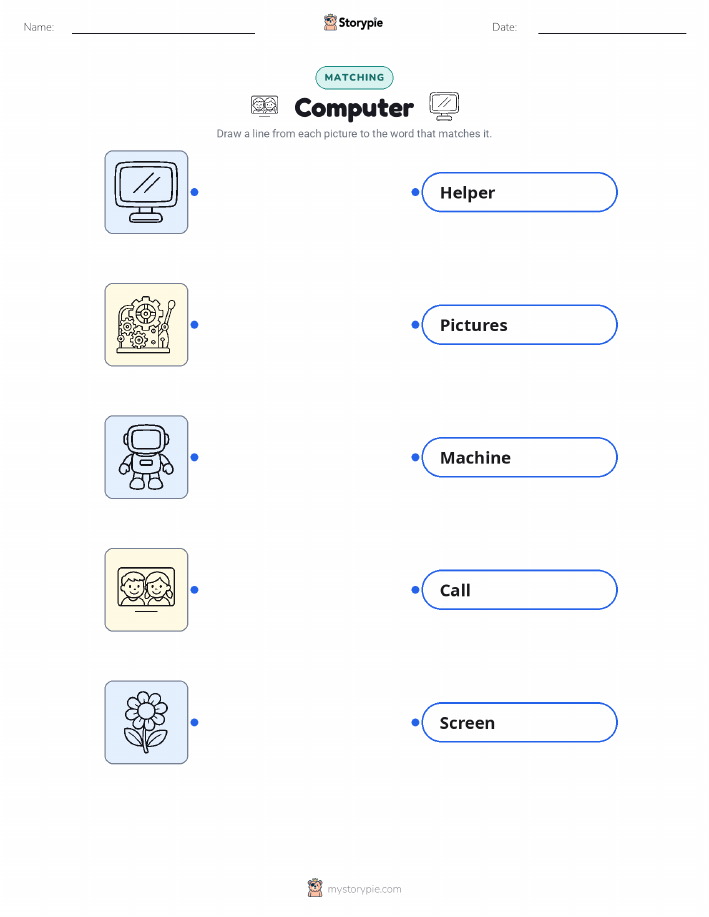
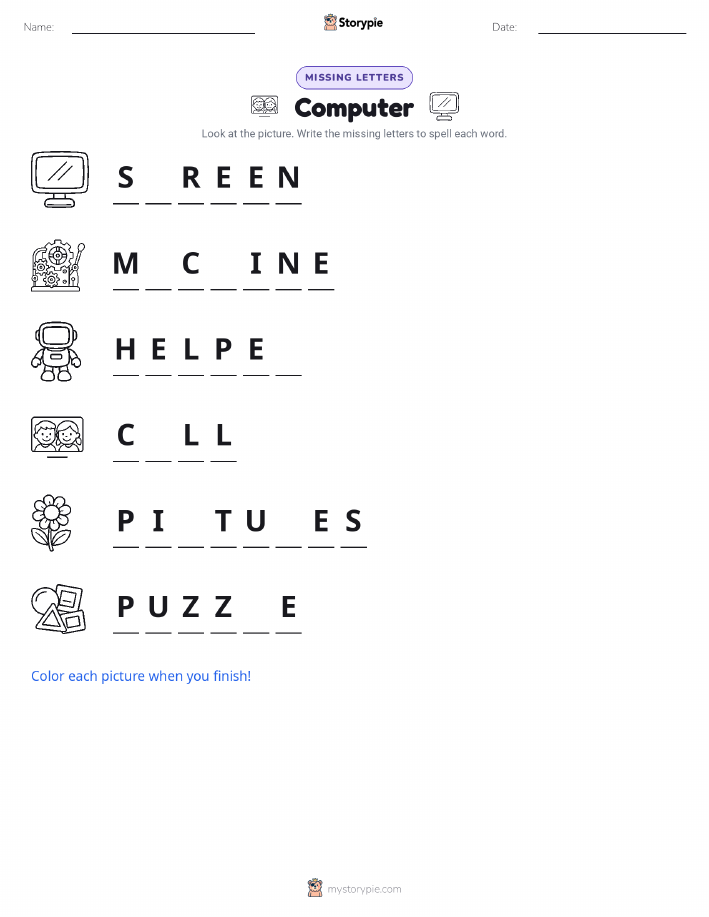
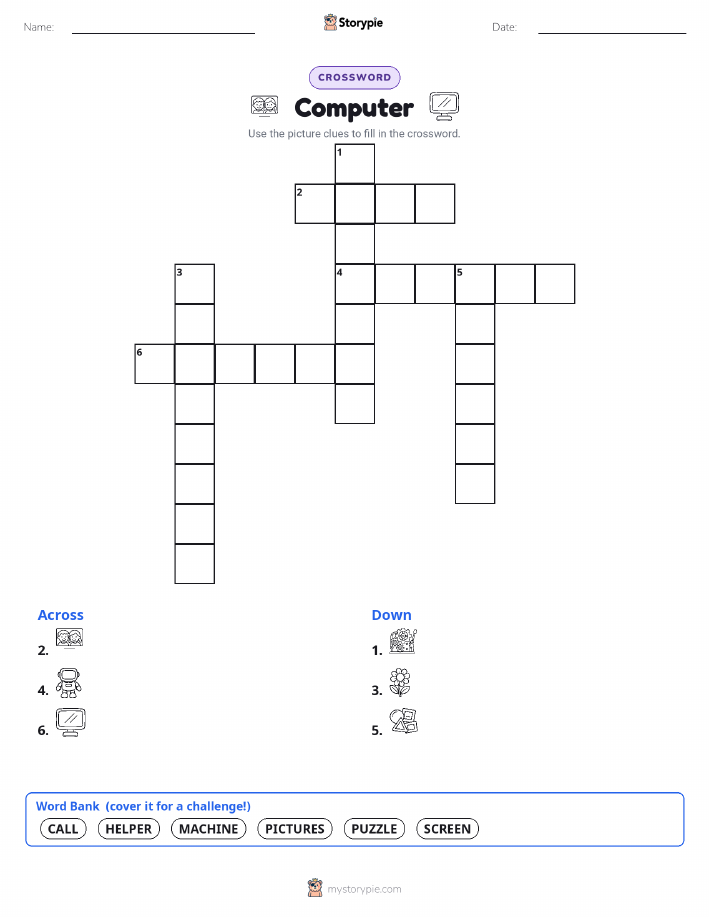
- Printable worksheets & coloring pages

Why Storypie for Schools
Students engaged. Prep in seconds. Evenings back to you.
- Worksheets & Quizzes
- Classroom Management
- Formative Assessment
- Custom Curriculum & Lesson Plans
- 27 Languages

Why Storypie for Homeschool
Curriculum done. They'll ask for more. Hours back in your day.
- Worksheet Generator
- First-Person Audio Stories
- Built-in Comprehension Quizzes
- Custom Curriculum & Lesson Plans
- Print & Go Activities