English
 For Schools
 For Homeschool

The Story of CRISPR
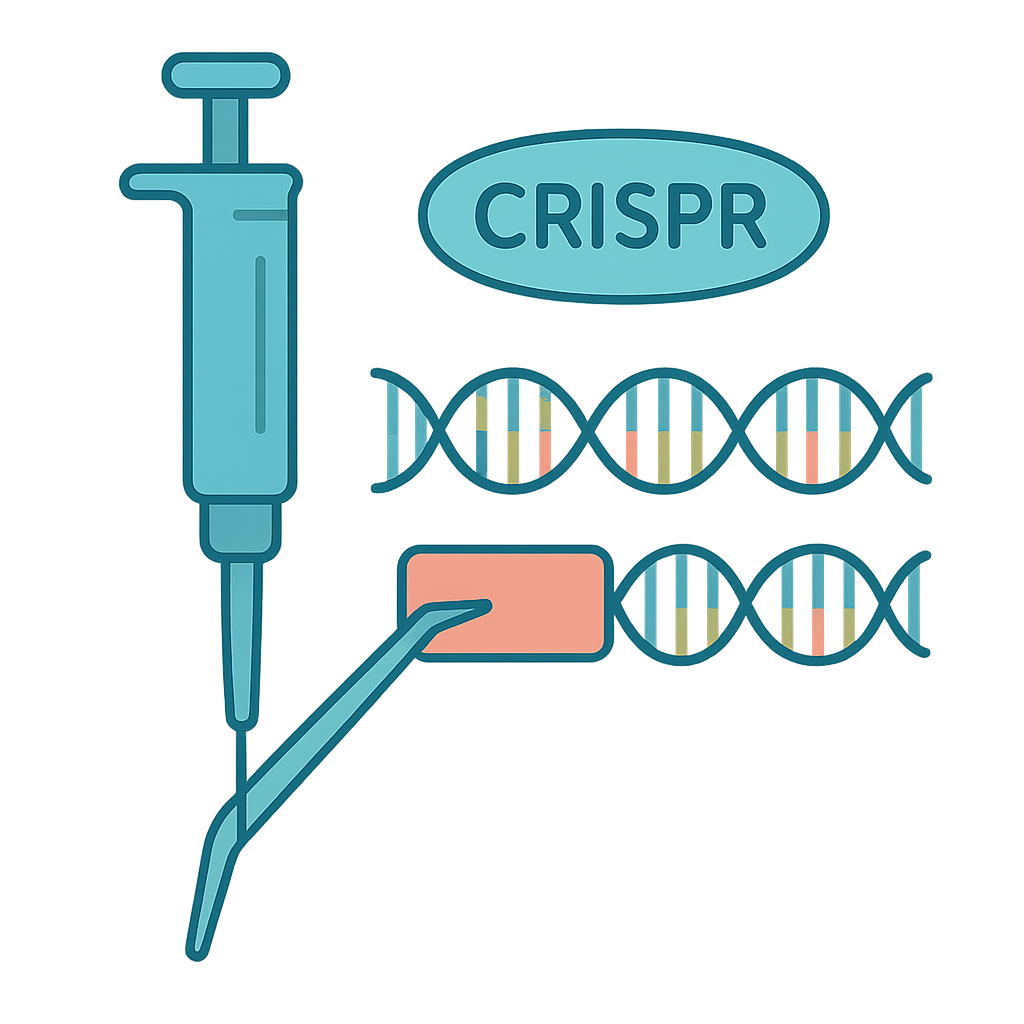
Hello there. You can call me CRISPR. I know it’s a funny-sounding name, but I have a very important job. Imagine that every living thing, from the tiniest bug to the tallest tree to you, has a giant instruction book inside of it. This book is called DNA, and it holds all the plans for how to build and run that living thing. Well, I live inside that book. For a very long time, I worked as a secret agent inside tiny life forms called bacteria. My mission was to be their bodyguard. I am a special kind of tool, like a pair of incredibly tiny, super-precise molecular scissors. When a nasty virus tried to sneak into the bacteria’s instruction book to cause trouble, I would find it. With a quick snip, I would cut the virus’s instructions out, keeping the bacteria safe and sound. I was a tiny superhero, a silent guardian protecting my small friends from unseen dangers. I was very good at my job, but I had no idea my world was about to get much, much bigger.
My life changed because of the curiosity of some very smart people. Scientists had noticed me and my work for a while, but they didn't fully understand how I operated. Then, two brilliant scientists, Emmanuelle Charpentier and Jennifer Doudna, decided to study me very closely. They were like detectives trying to solve a great mystery. They saw how I could find a specific spot in the DNA instruction book and make a perfect cut. They wondered if they could teach me to cut somewhere else, not just where the viruses were. They worked together, sharing ideas and running experiments, trying to understand my secrets. They discovered that I have a partner, a special guide that tells me exactly where to go. They realized if they could create their own guide, they could send me anywhere they wanted inside the DNA. On June 28th, 2012, they shared their amazing discovery with the world. It felt like a light switching on inside of me. Suddenly, I wasn't just a bacteria’s bodyguard anymore. I was a tool that could be given a map and a mission. I could be sent to a specific page, a specific sentence, in the instruction book of life. I felt a huge sense of excitement and purpose. My little scissors, which had only ever protected my tiny friends, were now ready for a much bigger adventure.
After my big break, my life became a whirlwind of new possibilities. Scientists began giving me incredible new jobs. Imagine if a person’s life story had a typo, a small mistake in the instructions that made them sick. The scientists could now send me in with a new guide, like a map to the exact word that was wrong. With a careful snip, I could cut out the mistake. Then, the cell’s own repair crew could come in and write in the correct word, fixing the story. This meant I could help fight diseases that were once impossible to cure. But my work isn’t just with people. I’m also helping in fields and farms. I can help make plants stronger, so they can resist diseases or grow in difficult weather. This means they can produce more food for a hungry world. Looking back, I see that I am more than just a pair of scissors. I am a tool for hope. In the hands of caring and creative people, I can help rewrite stories, fix problems, and build a healthier future. My own story is really just beginning, and I can't wait to see what new challenges we can solve together.
Activities
Take a Quiz
Test what you learned with a fun quiz!
Get creative with colors!
Print a coloring book page of this topic.