English
 For Schools
 For Homeschool

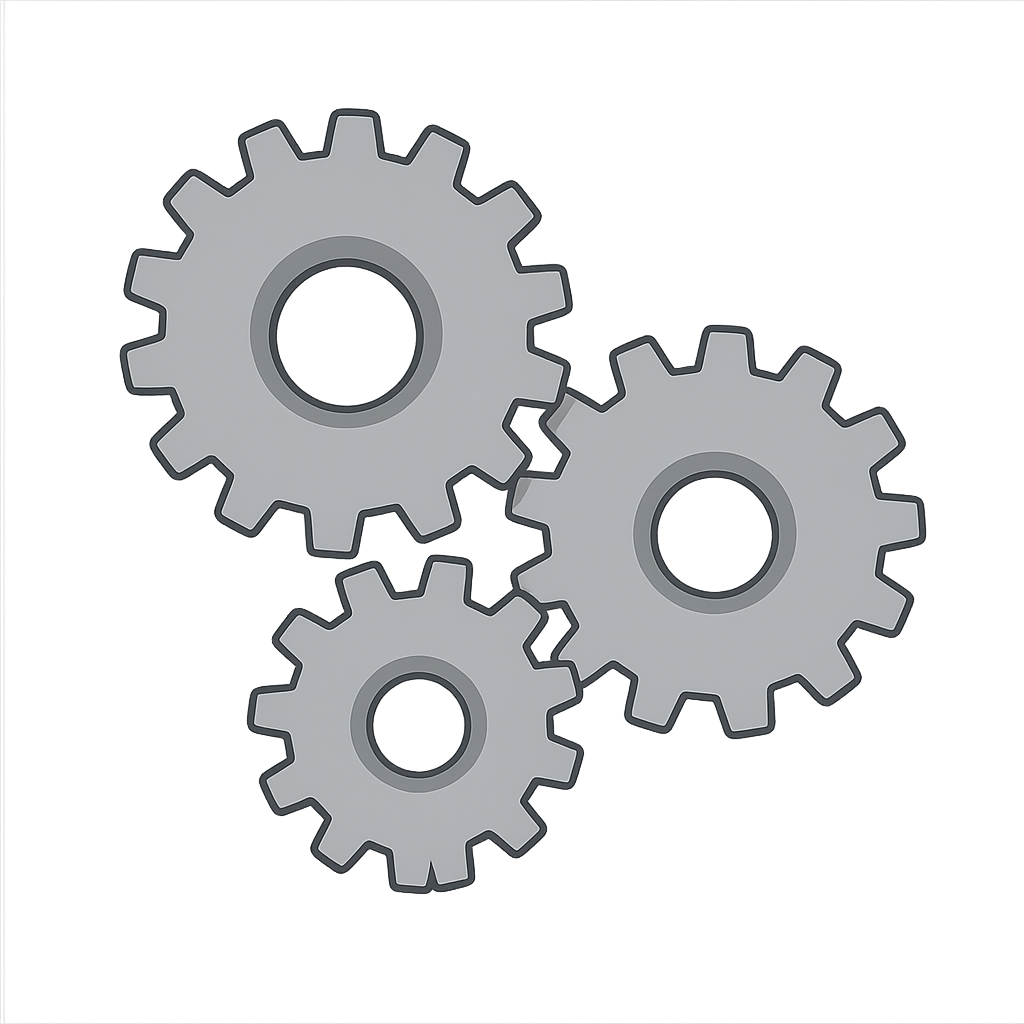
The Gear's Tale: A Story of Motion and Connection
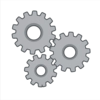
You might not recognize me at first, but I am everywhere. Look closely. I am a wheel, but a special one, with teeth all around my edge. My name is Gear, and while I may seem simple, I am one of the secret heroes inside almost every machine you can imagine. My purpose is to create motion, to connect power to purpose. I have three main jobs that I have been doing for thousands of years. Sometimes, I change speed, letting a tiny, fast motor turn something big and slow with great force. Other times, I change the direction of movement, making one wheel's clockwise spin turn another counter-clockwise. And my favorite job is to increase power, turning a small effort into a mighty force capable of lifting water or moving a train. My story is long, etched into the history of human ingenuity, from the grandest clocks to the tiniest watches, and I want to share it with you.
My youth was a time of bronze and brilliant minds. One of my earliest memories is from ancient China, around the 4th century BCE. I was part of a magnificent invention called the South-Pointing Chariot. It was a complex puzzle of wooden versions of me, all interlocking. No matter how the chariot twisted or turned, a small wooden figure on top always pointed south. It wasn't magic; it was me, cleverly arranged to transfer motion in just the right way. Later, my journey took me to the sunny shores of ancient Greece. A brilliant thinker named Archimedes understood my potential, using my principles to design machines that could lift heavy objects and water. But my most breathtaking role was inside the Antikythera mechanism, crafted around the 2nd century BCE. I was one of over thirty bronze gears, packed together in a box no bigger than a dictionary. I felt like a star in my own mechanical universe. My teeth, precisely cut, meshed with my brothers and sisters to model the movements of the sun, the moon, and the planets. I helped predict eclipses. I was an ancient computer, a calculator of the cosmos, and for centuries after I was lost in a shipwreck, no one would create anything as complex. I was proof that even in the ancient world, humanity dreamed of understanding the universe, and they needed me to do it.
As the world moved into the Middle Ages, I found a new and vital purpose: I gave time a heartbeat. Before me, time was measured by the sun or dripping water, which was imprecise. But then, inventors created the first mechanical clocks, and I was at the very center of them. My teeth, as part of a device called an escapement, would catch and release a pendulum's swing, creating a steady, ticking rhythm. Tick, tock, tick, tock. I was the very pulse of the machine. This changed everything. For the first time, towns and cities had a shared, precise time. People organized their days around the ringing of the clocktower bells, all thanks to my reliable movement. A few centuries later, during the Renaissance, I caught the eye of the ultimate genius, Leonardo da Vinci. I filled the pages of his notebooks. He sketched me into his incredible dreams: flying machines with flapping wings, armored fighting vehicles, and automated looms. Though most of his inventions were never built in his lifetime, I felt a thrill just being part of his imagination. He saw that I was the key to turning his revolutionary ideas into reality. I was the bridge between a brilliant thought and a working machine.
The 18th and 19th centuries arrived with the roar of steam and the clatter of machinery, and this was my time to truly shine. The Industrial Revolution was built on my back. The mighty steam engine had been invented, producing immense power, but it was just a chaotic force until I was brought in to tame it. I took that raw power and transferred it, precisely and tirelessly, to where it was needed. Inside massive textile mills, I connected the central engine to hundreds of looms, weaving cloth faster than dozens of hands ever could. In the belly of steam locomotives, I transferred the engine's force to the wheels, pulling heavy trains across entire continents and connecting people and places like never before. I became the backbone of the first assembly lines, moving products from one station to the next, helping to build the modern world. I was no longer made of wood or delicate bronze; I was forged from hard, durable iron and steel, ready for the toughest jobs.
Today, my story continues, often in places you might not expect. I am still working hard, though sometimes I am hidden from view. I am inside your family's car, in a complex system called a transmission that lets the engine work efficiently at different speeds. I am on your bicycle, helping your pedaling power turn the back wheel. When you hear the whir of a kitchen blender or an electric mixer, that is me, spinning rapidly to get the job done. But my journey has not stopped on Earth. My modern descendants, made of advanced alloys and plastics, are exploring other worlds. I am inside the robotic arms that build smartphones and computers with incredible precision. I am even on Mars. As part of the Mars rovers, my teeth bite into the red dust, turning the wheels that carry scientific instruments across the alien landscape. My form has changed over the centuries, but my fundamental purpose has not. I exist to connect one thing to another, to turn an idea into motion, and to help humanity's desire to build, explore, and understand the universe continue to turn, one tooth at a time.
Activities
Take a Quiz
Test what you learned with a fun quiz!
Get creative with colors!
Print a coloring book page of this topic.