English


Glider
A heavier-than-air aircraft that is supported in flight by the dynamic reaction of the air against its…
Reads at Grades 3–5 Listens at Grades 1–5
Print & create
Answer keys·No prep·Free with an account
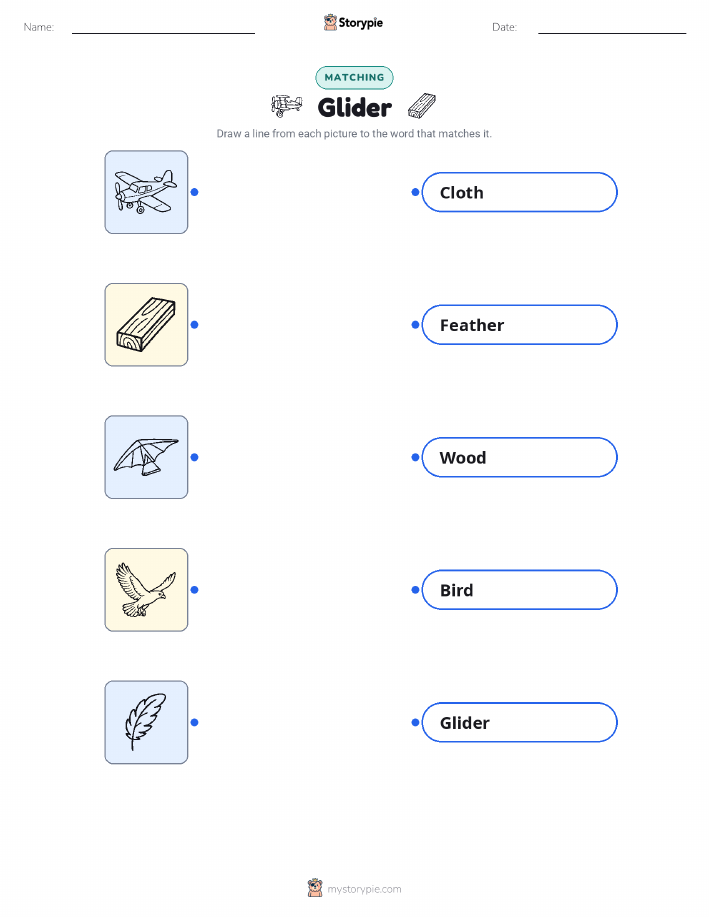
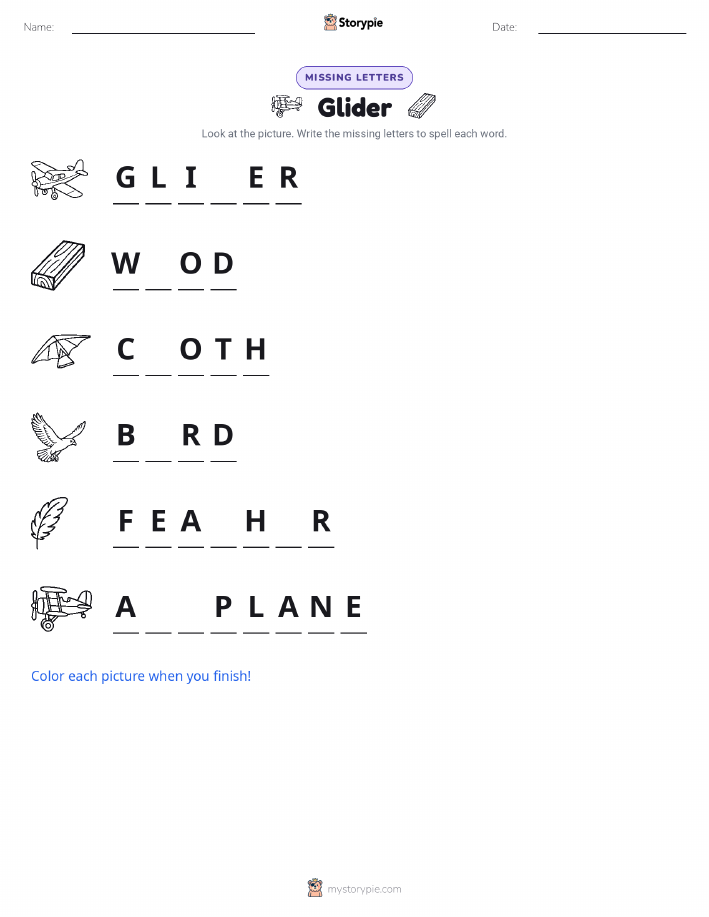
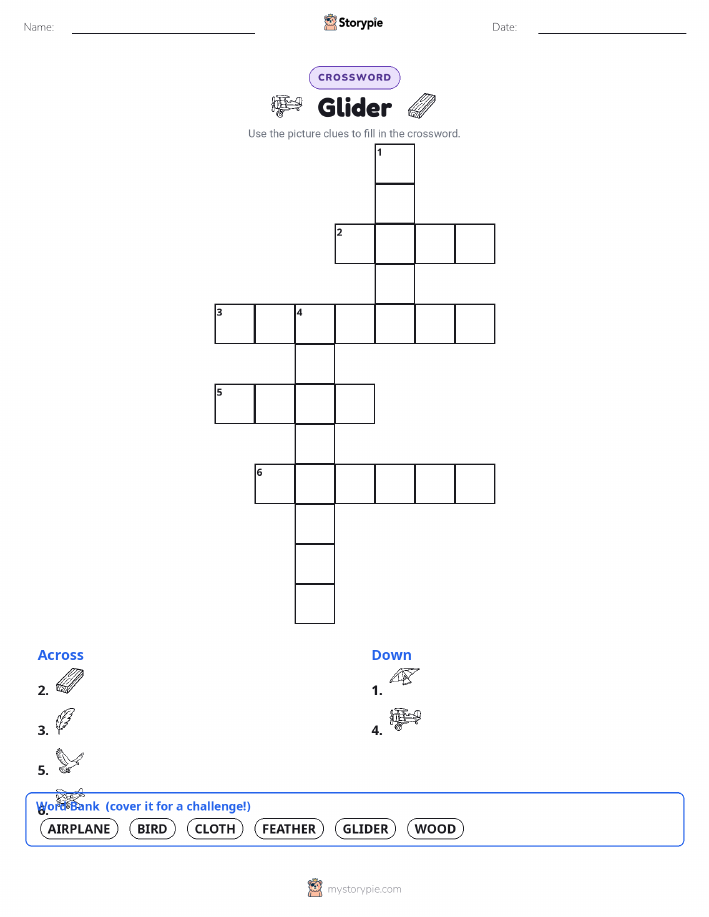
28 worksheets · answer keys · full story · quiz · Ages 8-10 · CEFR B1
Plus adds 280,000+ more stories in 27 languages, audio for every one, and printables for all of them.
Just want Glider?
Hello there. You might not recognize me at first, but I am the dream of flying come to life. I am a glider, and my story begins not in the clouds, but in a small bicycle shop in Dayton, Ohio. My creators were two brilliant and curious brothers, Orville and Wilbur Wright. While they fixed bicycles to make a living, their minds were always drifting up into the sky. They would spend hours watching birds, mesmerized by the way they would soar so gracefully on the wind. They didn't just see birds; they studied them. They noticed how a buzzard would twist the very tips of its wings to turn or to keep its balance in a gust of wind. That simple observation was the tiny seed of an idea that would grow into me. They didn't want to just fly; they wanted to control flight, to become pilots of the air, just like the birds.
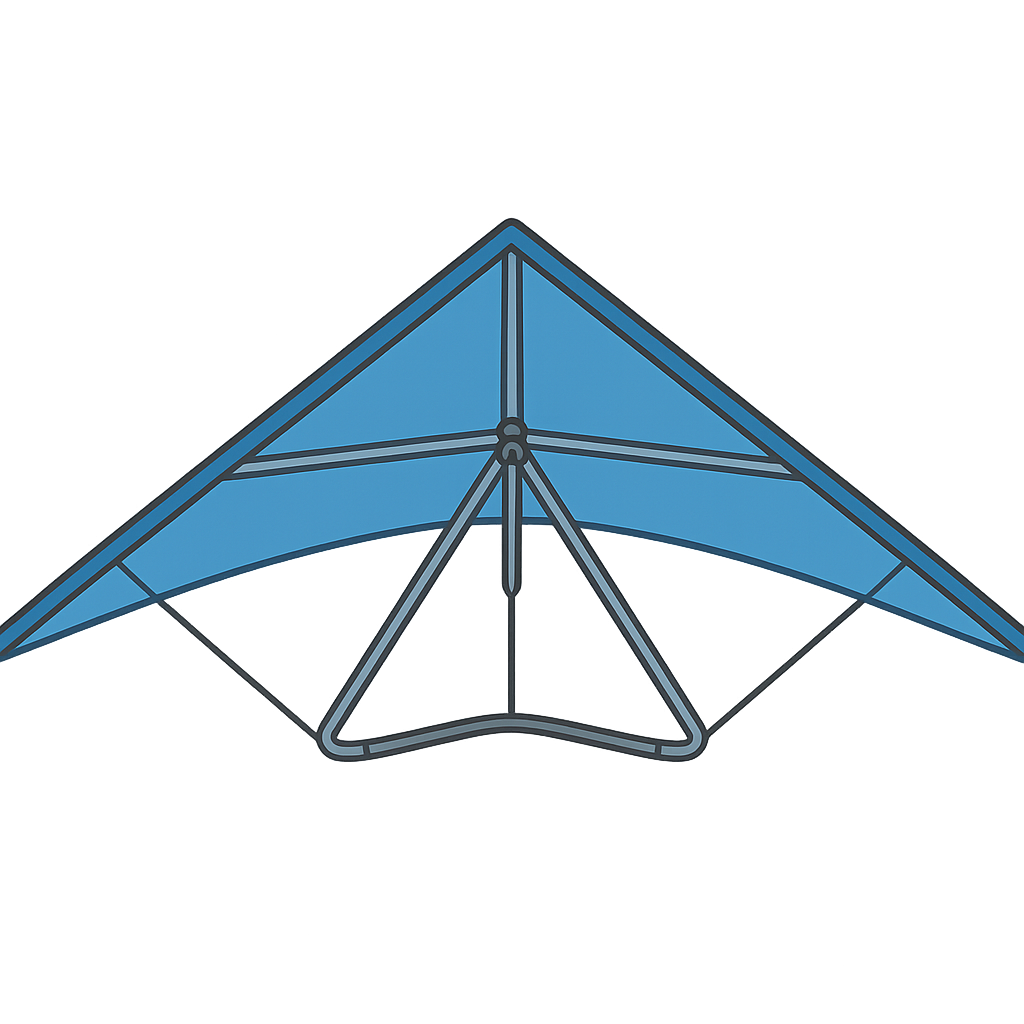
From that dream, the brothers began to build me. My bones were made of light but strong spruce wood, and my skin was a smooth, tight fabric called muslin. I was, in many ways, like a very large, very complex kite designed to carry a person. Their most clever idea was something they called 'wing-warping.' They rigged a series of wires to my wingtips that connected to a cradle where the pilot would lie. By shifting their hips from side to side, the pilot could twist my wings, changing their shape just enough to steer me left or right. It was a brilliant solution learned directly from the birds. In the autumn of 1900, they packed me up and we traveled to a remote, windy place with giant sand dunes called Kitty Hawk, North Carolina. Those first tests were challenging. The wind was strong, but I didn't always listen. Sometimes I would lift for a few seconds only to tumble back to the sand. The next year, in 1901, they returned with a newer version of me, but I still had problems. I didn't provide enough lift, and control was tricky. Some people might have given up, but not Orville and Wilbur. Every failed flight was a lesson, a piece of the puzzle that brought them closer to the answer.
The Wright Glider: My Journey to the Sky
Hello there. You might not recognize me at first, but I am the dream of flying come to life. I am a glider, and my story begins not in the clouds, but in a small bicycle shop in Dayton, Ohio. My creators were two brilliant and curious brothers, Orville and Wilbur Wright. While they fixed bicycles to make a living, their minds were always drifting up into the sky. They would spend hours watching birds, mesmerized by the way they would soar so gracefully on the wind. They didn't just see birds; they studied them. They noticed how a buzzard would twist the very tips of its wings to turn or to keep its balance in a gust of wind. That simple observation was the tiny seed of an idea that would grow into me. They didn't want to just fly; they wanted to control flight, to become pilots of the air, just like the birds.
From that dream, the brothers began to build me. My bones were made of light but strong spruce wood, and my skin was a smooth, tight fabric called muslin. I was, in many ways, like a very large, very complex kite designed to carry a person. Their most clever idea was something they called 'wing-warping.' They rigged a series of wires to my wingtips that connected to a cradle where the pilot would lie. By shifting their hips from side to side, the pilot could twist my wings, changing their shape just enough to steer me left or right. It was a brilliant solution learned directly from the birds. In the autumn of 1900, they packed me up and we traveled to a remote, windy place with giant sand dunes called Kitty Hawk, North Carolina. Those first tests were challenging. The wind was strong, but I didn't always listen. Sometimes I would lift for a few seconds only to tumble back to the sand. The next year, in 1901, they returned with a newer version of me, but I still had problems. I didn't provide enough lift, and control was tricky. Some people might have given up, but not Orville and Wilbur. Every failed flight was a lesson, a piece of the puzzle that brought them closer to the answer.
After the difficult flights of the previous years, the brothers knew they had to think differently. They went back to their bicycle shop and built a remarkable new tool: a small wind tunnel. It was a simple wooden box with a fan at one end, but inside it, they could test hundreds of tiny model wing shapes to see which ones created the most lift. With all this new knowledge, they built a new me in 1902. I was longer, with a new tail to help with balance, and my wings were a much better shape. When we returned to the windy hills of Kitty Hawk that fall, everything was different. From the moment I was launched into the wind, I felt it. I was steady. I was balanced. Orville or Wilbur would lie at my controls, and with a gentle push, I would leap into the air and glide. I soared over the sand for hundreds of feet at a time, staying airborne for nearly a minute on my best flights. We made hundreds of glides that season. It was in those moments, soaring silently above the dunes, that I truly taught them the secrets of the sky. I showed them how to balance on the wind, how to turn with precision, and how to land gently. I had become a true flying machine.
My job was almost done. I was never meant to be the final chapter in the story of flight, but I was the most important one. Because I had proven that humans could control a machine in the air, the Wright brothers knew they were ready for the next giant leap. They returned home and built my famous younger sibling, the Wright Flyer, taking everything they learned from me and adding a small, lightweight engine and two propellers. My successful glides gave them the confidence and the skill to make their first powered flight on December 17th, 1903. My spirit lives on today in modern gliders that float silently through the air, using only the power of the wind. I am a reminder that before you can run, you must learn to walk. And before humans could fly with engines, they first had to learn to glide with me, a simple machine born from curiosity and the dream to touch the sky.
Wow facts
About
A heavier-than-air aircraft that is supported in flight by the dynamic reaction of the air against its lifting surfaces, and whose free flight does not depend on an engine. The 1902 Wright Glider was a critical invention that solved the problem of flight control, paving the way for the first powered airplane.
Take a Quiz
Question 1 of 5
What did the Wright brothers learn from watching birds that helped them create me?
Explore next



Want to do even more?
Go beyond exploring. Unlock tools that turn every story into real learning.

Storypie Plus for families
Full stories, quizzes, and printables. Nights and car rides, sorted.
- Unlimited audio stories
- Create Mode: your child stars in the story
- Offline downloads
- Printable worksheets & coloring pages

Why Storypie for Schools
Students engaged. Prep in seconds. Evenings back to you.
- Worksheets & Quizzes
- Classroom Management
- Formative Assessment
- Custom Curriculum & Lesson Plans
- 27 Languages

Why Storypie for Homeschool
Curriculum done. They'll ask for more. Hours back in your day.
- Worksheet Generator
- First-Person Audio Stories
- Built-in Comprehension Quizzes
- Custom Curriculum & Lesson Plans
- Print & Go Activities