The Story of the Glue Stick

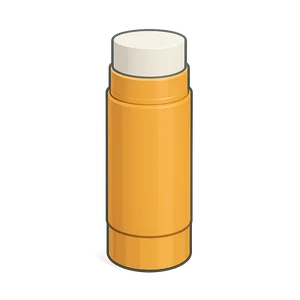
You probably know me. I’m that quiet, dependable friend who lives in your pencil case, always ready to help. I am the glue stick. My smooth, plastic body and tidy, twist-up design might seem simple, but my story begins in a world that was anything but neat. Before I existed, the act of sticking paper together was a sticky predicament, a messy affair involving gooey pots of liquid glue, dripping brushes, and fingers that were perpetually covered in a tacky film. Imagine trying to create a beautiful collage, only to have a glob of wet glue spill and wrinkle your masterpiece, or trying to paste a picture into your notebook and ending up with more adhesive on your hands than on the paper. This was the challenge people faced every day. They needed a hero, not a messy one, but a clean, portable, and easy-to-use solution that could make creativity and organization simpler. They needed someone who could hold things together without falling apart themselves. That’s where my story begins, with the problem I was born to solve.
My journey from an idea to a reality started high in the sky in the year 1967. My creator, a brilliant researcher for the German company Henkel named Dr. Wolfgang Dierichs, was on an airplane, likely thinking about chemical formulas and industrial adhesives. His mind, however, was pulled away from his work by a simple, elegant action. He watched a fellow passenger applying her lipstick. He observed the smooth, effortless way she twisted the bottom of the tube, causing a perfect cylinder of color to glide upwards. She applied it cleanly, without any mess on her fingers, and then twisted it back down, capping it securely. It was a moment of pure inspiration. A spark ignited in Dr. Dierichs’s mind. He thought, if color could be applied with such precision and convenience, why couldn't glue? The lipstick’s design was the perfect solution to the messy problem of liquid adhesives. It was self-contained, portable, and allowed for controlled application. The idea was revolutionary. He imagined a solid stick of adhesive housed in a similar twist-up tube. No more spills, no more brushes, no more sticky fingers. Just a simple, clean swipe. He couldn't wait for the plane to land; he knew he had discovered something that could change everyday life for millions of people.
Turning that brilliant idea into a physical object was a tremendous challenge. Back in the Henkel laboratory, Dr. Dierichs and his team began the exciting, and often frustrating, process of inventing me. I didn't just appear overnight; I was the result of countless experiments and refinements. Their first task was to create my very soul: the solid adhesive. It was a delicate balancing act. The formula had to be strong enough to create a lasting bond between pieces of paper, but it couldn't be so aggressive that it would bleed through or cause the thin pages to wrinkle and warp. Some of the early versions of me were too wet, defeating the whole purpose of a clean application. Others were too dry and waxy, barely sticking at all. The team worked tirelessly, mixing and testing different ingredients, almost like chefs perfecting a secret recipe. Simultaneously, they had to design my body, the tube that would become my signature feature. It had to be just as flawless as the lipstick that inspired it. The twisting mechanism needed to be smooth and reliable, pushing me up for use and letting me retract for storage without breaking or getting stuck. Every part of me, from the consistency of my glue to the satisfying click of my cap, was meticulously designed and tested until, finally, they achieved perfection.
By 1969, after two years of dedicated research and development, I was ready to meet the world. I was given the name ‘Pritt Stick’ and I emerged from the factory looking much like I do today: a sleek, white tube with a distinctive red cap. My debut was met with amazement and relief. In offices, workers could now assemble reports and attach notes without creating a sticky mess on important documents. In schools, children were set free to create art projects, posters, and scrapbooks with newfound ease and tidiness. Teachers loved me because classroom clean-up became so much simpler. The era of the messy glue pot was over. I was a symbol of modern convenience. People no longer had to dread the task of gluing. With a simple un-capping, a twist, and a swipe, their work was done cleanly and efficiently. I became an instant success, not because I was a complex piece of technology, but because I was a simple solution to a very common, very sticky problem. I didn't just stick paper together; I freed people to focus on their ideas and creativity without the hassle.

My journey didn't stop in Germany. From that single idea that took flight on an airplane, I traveled across the globe, finding a home in desk drawers, backpacks, and art studios in nearly every country imaginable. Over the decades, I have continued to evolve. I learned to be kinder to the planet; my formula became non-toxic and solvent-free, making me safe for even the youngest artists. My body also changed, and today, many of my tubes are made from recycled plastic, helping to give waste a new purpose. My story is a reminder that game-changing ideas are all around us, often hidden in the most ordinary objects. A simple observation, like watching someone use lipstick, can spark an invention that makes life a little bit easier and a little bit neater for millions. So, the next time you twist my base and swipe me across a piece of paper, remember my journey and keep your eyes open. You never know what brilliant solution you might discover in the world around you.

Reading Comprehension Questions

Click to see answer

Answer: The glue stick was invented because liquid glue was very messy. A researcher named Dr. Wolfgang Dierichs got the idea in 1967 on an airplane when he saw a woman using a twist-up lipstick tube. He realized glue could be applied the same clean way. He and his team at the company Henkel then spent two years experimenting to create a solid glue that worked well and a tube with a reliable twisting mechanism. Finally, in 1969, the glue stick was ready and became a popular tool.

Answer: The main problem was that liquid glue was messy, difficult to control, and not portable. It caused spills, wrinkled paper, and left fingers sticky. The glue stick's final design solved this by putting solid adhesive in a portable, lipstick-style tube. The twist-up mechanism allowed for clean, controlled application without touching the glue, and the cap prevented it from drying out, solving the mess and inconvenience.

Answer: The word 'predicament' suggests a situation that is not just a problem, but one that is also tricky, awkward, or difficult to get out of. Using 'sticky predicament' is a clever play on words because the glue was literally sticky, and the mess it created was an awkward and frustrating situation to deal with. It adds more feeling and paints a better picture than just saying it was a 'problem'.

Answer: Dr. Dierichs was observant, as shown when he noticed the lipstick tube on the airplane and saw its potential. He was creative and a good problem-solver, connecting the lipstick's clean design to the messy problem of glue. He was also persistent and dedicated, as he and his team spent two years experimenting and overcoming challenges to perfect the glue stick's formula and design.

Answer: The story teaches us that great innovations can come from observing everyday life and finding simple solutions to common problems. It shows that you don't always need complex technology to make a big impact. The lesson is to be observant, creative, and persistent, because a simple idea, like putting glue in a lipstick tube, can change the world in a small but helpful way.