English

Lightning Rod
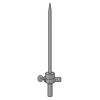
A metal rod fixed to an exposed part of a building to divert lightning harmlessly into the ground.
Reads at Grades 6–8 Listens at Grades 4–8
Print & create
Answer keys·No prep·Free with an account
28 worksheets · answer keys · full story · quiz · Ages 10-12 · CEFR B2
Plus adds 208,000+ more stories in 27 languages, audio for every one, and printables for all of them.
Just want Lightning Rod?
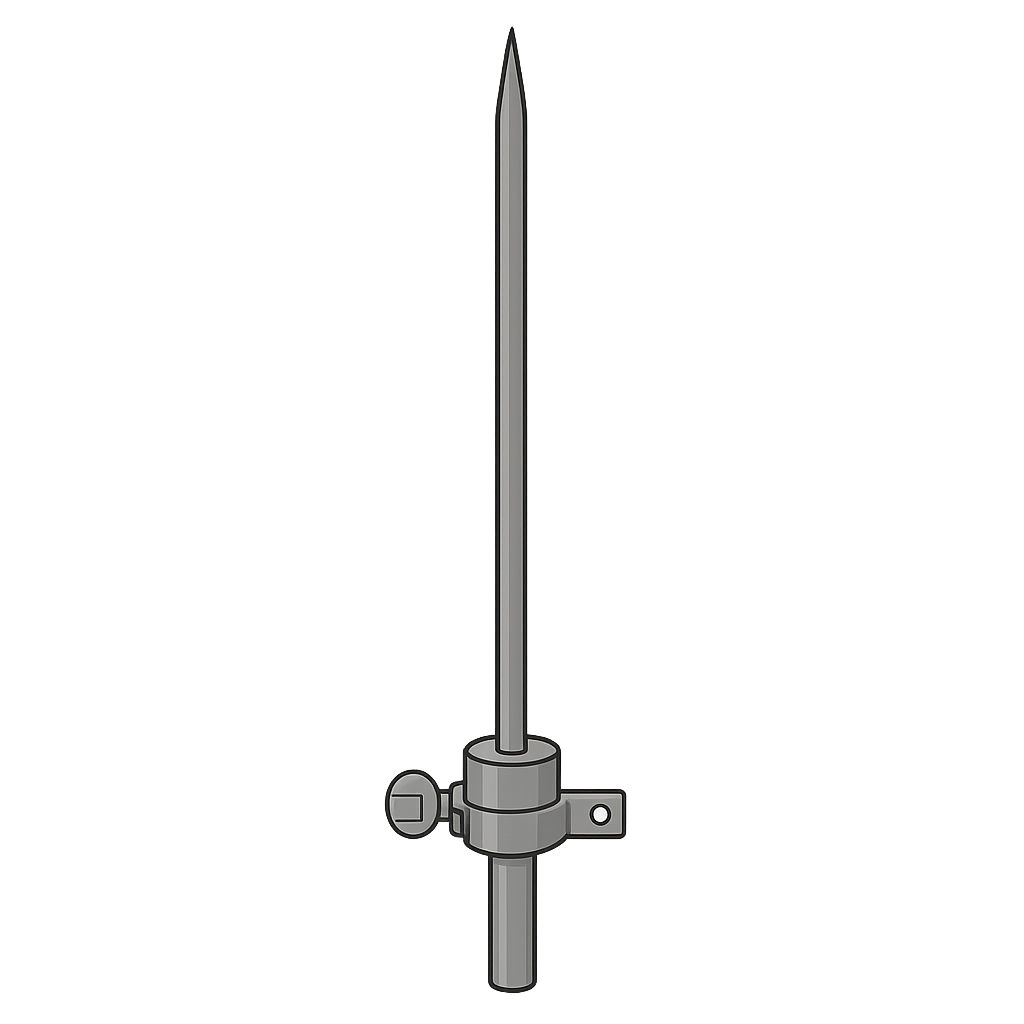
I am a Lightning Rod, a simple metal spire with a very important job. Before I existed, thunderstorms were not just awe-inspiring, they were deeply terrifying. In the 18th century, homes, barns, and tall church steeples were often made of wood, and a single flash of lightning could set them ablaze in an instant. There was no reliable way to protect these structures from the sky's fiery power. People lived with a constant fear of storms, hoping that the next bolt wouldn't strike their home. In the bustling city of Philadelphia, a brilliant man named Benjamin Franklin became fascinated with the mysterious force everyone called electricity. He was a printer, a writer, a statesman, and most importantly, a scientist with an insatiably curious mind. He had seen the powerful sparks that could be generated from electrical machines in his laboratory and wondered if the spectacular, jagged lightning in the sky was the very same thing, just on a much grander, more dangerous scale. In 1749, after years of observation and thought, he published his theory. He proposed that lightning was not a supernatural act of anger, but a natural electrical discharge. From this idea, a revolutionary concept was born. He theorized that if lightning was indeed electricity, perhaps it could be guided and controlled. He imagined that a tall, pointed metal rod could harmlessly draw the 'electric fire' from a storm cloud before it had a chance to strike, or provide a safe path for a direct hit, channeling it away from a building and deep into the earth. It was a bold idea, one that challenged long-held beliefs and promised to tame one of nature's most destructive forces.
The Story of the Lightning Rod
I am a Lightning Rod, a simple metal spire with a very important job. Before I existed, thunderstorms were not just awe-inspiring, they were deeply terrifying. In the 18th century, homes, barns, and tall church steeples were often made of wood, and a single flash of lightning could set them ablaze in an instant. There was no reliable way to protect these structures from the sky's fiery power. People lived with a constant fear of storms, hoping that the next bolt wouldn't strike their home. In the bustling city of Philadelphia, a brilliant man named Benjamin Franklin became fascinated with the mysterious force everyone called electricity. He was a printer, a writer, a statesman, and most importantly, a scientist with an insatiably curious mind. He had seen the powerful sparks that could be generated from electrical machines in his laboratory and wondered if the spectacular, jagged lightning in the sky was the very same thing, just on a much grander, more dangerous scale. In 1749, after years of observation and thought, he published his theory. He proposed that lightning was not a supernatural act of anger, but a natural electrical discharge. From this idea, a revolutionary concept was born. He theorized that if lightning was indeed electricity, perhaps it could be guided and controlled. He imagined that a tall, pointed metal rod could harmlessly draw the 'electric fire' from a storm cloud before it had a chance to strike, or provide a safe path for a direct hit, channeling it away from a building and deep into the earth. It was a bold idea, one that challenged long-held beliefs and promised to tame one of nature's most destructive forces.
To turn my potential into a reality, Benjamin Franklin knew he needed to prove his theory beyond any doubt. He devised a daring and incredibly risky experiment. So, on a stormy day in June of 1752, he and his 21-year-old son, William, went to a field outside Philadelphia to meet the storm head-on. They constructed a special kite, not with paper, but with a large silk handkerchief, as silk would not tear as easily when wet. To the very top of the kite, they attached a sharp piece of wire, designed to attract the electrical charge from the low-hanging storm clouds. The kite string itself was made of hemp, which would conduct electricity when it became damp from the rain. At the very bottom of the string, where Franklin held it, he attached a simple metal house key. To protect himself, he tied a silk ribbon to the hemp string and held the kite by the ribbon, knowing that the dry silk would act as an insulator. As the storm clouds gathered overhead, they sent the kite soaring. For a while, nothing happened. But then, as the hemp string absorbed moisture from the air, Franklin noticed the loose threads standing straight out, repelling each other. This was the sign he was waiting for. He cautiously brought his knuckle close to the key, and a spark leaped across the gap. It was a small spark, but its meaning was immense. In that brilliant, tiny flash, my purpose was confirmed. I was no longer just a theory; I was a certainty. Lightning was electricity. With this proof, Franklin could now design me with confidence. I would be a long iron rod, eight or ten feet long, and sharpened to a fine point. I was to be placed on the highest point of a building, the roof or chimney. From my base, a thick wire would run down the side of the building and be buried ten feet deep into the moist ground, creating a safe and direct path for any lightning strike to follow.
My life's work began almost immediately after the success of the kite experiment. In that same year, 1752, the first versions of me were installed on buildings in Philadelphia, including Franklin’s own home. My job was simple yet life-saving. I want to be clear about how I work. I do not attract lightning that would not have struck anyway. Instead, if a strike is about to happen near the building I protect, I offer the immense electrical energy the path of least resistance. The charge flows harmlessly through my metal body and down the wire into the earth, bypassing the flammable wood and stone of the structure itself. This prevents the catastrophic fires and explosions that were once so common. Benjamin Franklin, believing that inventions should serve all of humanity, chose not to patent me. He shared my design freely in his popular publication, Poor Richard's Almanack, allowing anyone to build and install me. Because of his generosity, I soon began to appear on rooftops across the American colonies and eventually in Europe. For over 270 years, I have been a quiet guardian, a silent protector standing watch through countless storms. I am a testament to how human curiosity, careful observation, and brave experimentation—the core principles of the scientific method—can solve real-world problems and tame one of nature's most powerful forces. I may be a simple invention of metal and wire, but I stand tall as a symbol of safety, ingenuity, and the power of a good idea to change the world for the better.
Wow facts
About
A metal rod fixed to an exposed part of a building to divert lightning harmlessly into the ground. It was invented by Benjamin Franklin in the mid-18th century to protect structures from lightning-induced fires.
Take a Quiz
Question 1 of 5
Retell the key events that led to the invention of the lightning rod, starting with Benjamin Franklin's initial idea.
Explore next





Want to do even more?
Go beyond exploring. Unlock tools that turn every story into real learning.

Storypie Plus for families
Full stories, quizzes, and printables. Nights and car rides, sorted.
- Unlimited audio stories
- Create Mode: your child stars in the story
- Offline downloads
- Printable worksheets & coloring pages

Why Storypie for Schools
Students engaged. Prep in seconds. Evenings back to you.
- Worksheets & Quizzes
- Classroom Management
- Formative Assessment
- Custom Curriculum & Lesson Plans
- 27 Languages

Why Storypie for Homeschool
Curriculum done. They'll ask for more. Hours back in your day.
- Worksheet Generator
- First-Person Audio Stories
- Built-in Comprehension Quizzes
- Custom Curriculum & Lesson Plans
- Print & Go Activities