English

Movie Projector
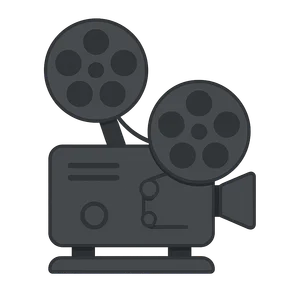
A device that projects a sequence of photographic images from a film onto a screen…
Reads at Grades 6–8 Listens at Grades 4–8
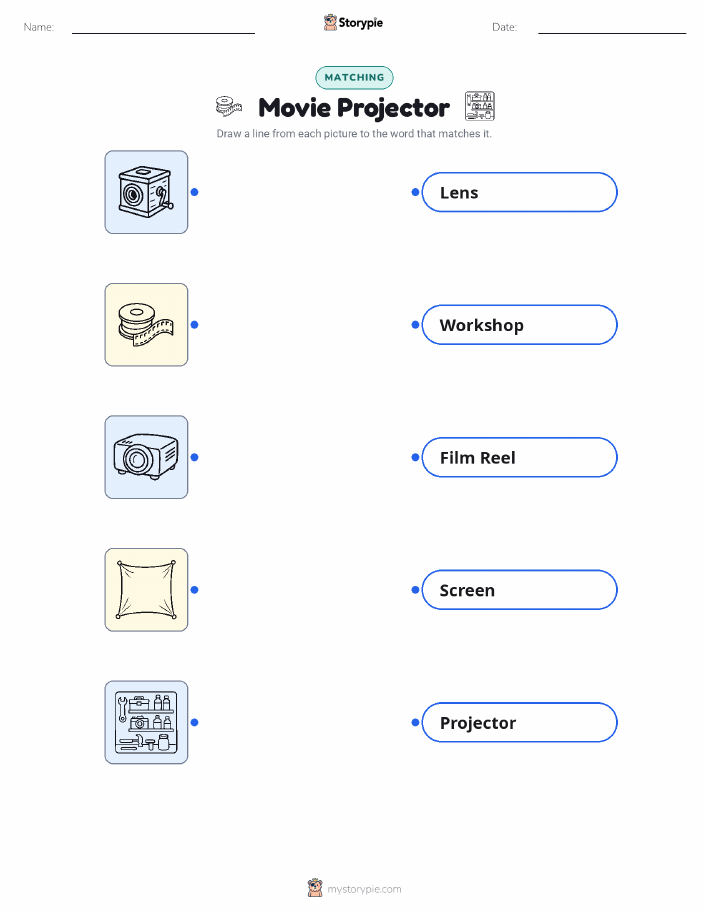
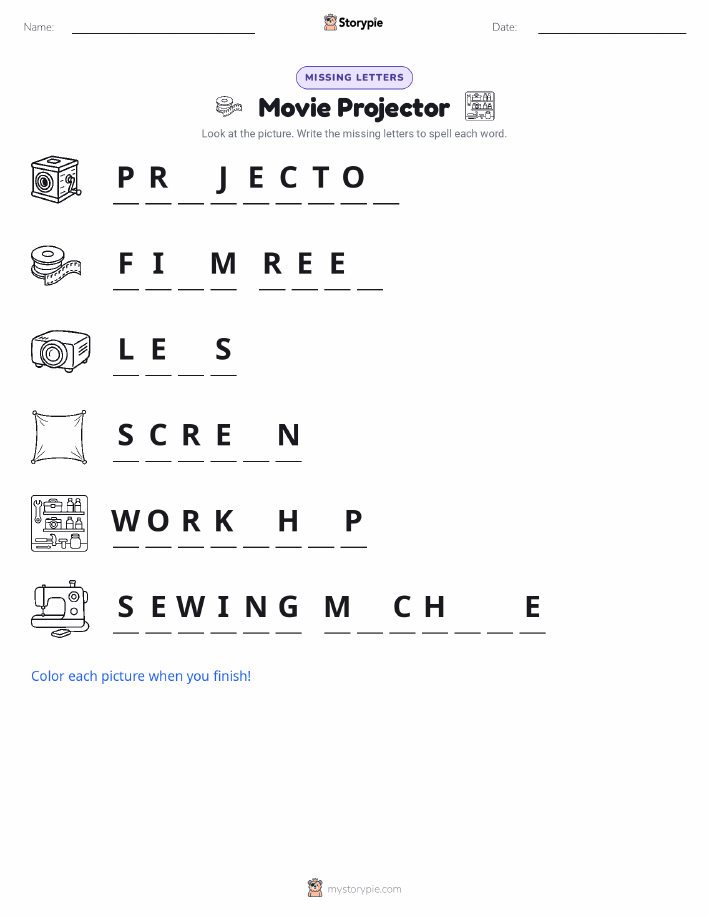
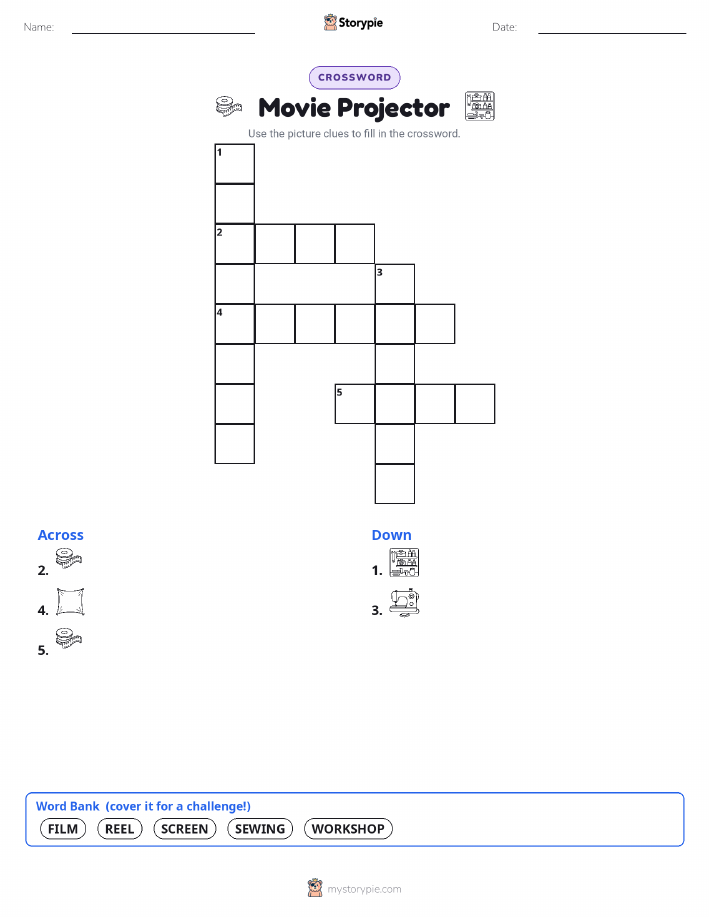
Print & create
Answer keys·No prep·Free with an account
28 worksheets · answer keys · full story · quiz · Ages 10-12 · CEFR B2
Plus adds 280,000+ more stories in 27 languages, audio for every one, and printables for all of them.
Just want Movie Projector?

Before I existed, the world was a collection of frozen moments. Photographs could capture a smile or a landscape, but they held it perfectly still, a silent memory locked on paper. I am the Movie Projector, and I was born from the deep human wish to see those pictures breathe, to watch stories unfold in motion just like life itself. In the years before my birth, people tried to create this magic. Simple magic lanterns could throw painted images onto a wall, a flickering ghost of a story. Then, in the early 1890s, the great inventor Thomas Edison created the Kinetoscope. It was a marvelous wooden cabinet where you could peek through a small eyepiece and see a short loop of film of a dancer or a strongman. It was incredible, but it was a secret told to only one person at a time. The world was holding its breath, waiting for a way to share these moving dreams together, to sit in a dark room and be swept away by a story everyone could see.
My true beginning took place in Lyon, France, with two visionary brothers, Auguste and Louis Lumière. Their family ran a successful business making photographic equipment, so capturing light and images was in their blood. They saw Edison’s Kinetoscope and were fascinated, but they imagined something grander: a shared experience. Louis, the technical genius of the pair, was struck with an idea while watching a sewing machine. He saw how its needle moved with a precise stop-and-go rhythm and realized that was the secret to advancing film without tearing it. They worked tirelessly and created me, calling me the Cinématographe. I was a marvel of portable design—a camera to capture life, a laboratory to develop the film, and a projector to share it, all in one wooden box. My grand debut was on December 28th, 1895, in a basement room of the Grand Café in Paris. Only about thirty people came, paying one franc to see what this new invention could do. The lights dimmed. A beam of light shot from my lens, cutting through the darkness. On the screen, an image appeared: workers leaving the Lumière factory. But they were not still. They were walking, talking, and moving. The audience gasped in unison. They watched a series of short films, but it was 'The Arrival of a Train at La Ciotat Station' that became legendary. As the locomotive on screen chugged directly toward the camera, growing bigger and bigger, people in the audience screamed and ducked, truly believing it would crash into the room. In that moment of shared wonder and fright, I did more than just project light. I gave birth to the art of cinema.
The Story of the Movie Projector
Before I existed, the world was a collection of frozen moments. Photographs could capture a smile or a landscape, but they held it perfectly still, a silent memory locked on paper. I am the Movie Projector, and I was born from the deep human wish to see those pictures breathe, to watch stories unfold in motion just like life itself. In the years before my birth, people tried to create this magic. Simple magic lanterns could throw painted images onto a wall, a flickering ghost of a story. Then, in the early 1890s, the great inventor Thomas Edison created the Kinetoscope. It was a marvelous wooden cabinet where you could peek through a small eyepiece and see a short loop of film of a dancer or a strongman. It was incredible, but it was a secret told to only one person at a time. The world was holding its breath, waiting for a way to share these moving dreams together, to sit in a dark room and be swept away by a story everyone could see.
My true beginning took place in Lyon, France, with two visionary brothers, Auguste and Louis Lumière. Their family ran a successful business making photographic equipment, so capturing light and images was in their blood. They saw Edison’s Kinetoscope and were fascinated, but they imagined something grander: a shared experience. Louis, the technical genius of the pair, was struck with an idea while watching a sewing machine. He saw how its needle moved with a precise stop-and-go rhythm and realized that was the secret to advancing film without tearing it. They worked tirelessly and created me, calling me the Cinématographe. I was a marvel of portable design—a camera to capture life, a laboratory to develop the film, and a projector to share it, all in one wooden box. My grand debut was on December 28th, 1895, in a basement room of the Grand Café in Paris. Only about thirty people came, paying one franc to see what this new invention could do. The lights dimmed. A beam of light shot from my lens, cutting through the darkness. On the screen, an image appeared: workers leaving the Lumière factory. But they were not still. They were walking, talking, and moving. The audience gasped in unison. They watched a series of short films, but it was 'The Arrival of a Train at La Ciotat Station' that became legendary. As the locomotive on screen chugged directly toward the camera, growing bigger and bigger, people in the audience screamed and ducked, truly believing it would crash into the room. In that moment of shared wonder and fright, I did more than just project light. I gave birth to the art of cinema.
That night in Paris was only the beginning of my journey. I quickly grew from a scientific novelty into a powerful tool for artists and a voice for storytellers. To tell longer and more complex stories, I had to evolve. The gentle hand-crank that my first operators used was soon replaced by the reliable power of an electric motor. This allowed me to project film smoothly and consistently for hours, making feature-length films possible. For my first few decades, I told my stories in silence, with only a live pianist or organist in the theater providing the emotional soundtrack. But I always dreamed of being able to speak. That dream came true in the late 1920s. On October 6th, 1927, the film 'The Jazz Singer' premiered, and for the first time, audiences heard an actor speak and sing from the screen. The era of the “talkies” was a revolution. I was fitted with new technology that could read sound waves printed right on the film strip. Soon after I found my voice, I discovered a world of color. By the mid-1930s, new color film processes allowed me to transform the gray worlds I once showed into vibrant, breathtaking realities. To celebrate these incredible new stories, magnificent movie palaces were built. They were like temples, with plush velvet seats, golden statues, and massive screens. I was the heart of these palaces, and from my booth high above the crowd, I watched millions of people gather to laugh, cry, and dream together in the magical darkness I created.
Today, I look very different than I did in that Paris café in 1895. My mechanical body of gears and sprockets has mostly given way to sleek digital descendants that paint pictures with pixels instead of light shining through film. My spirit has even found its way into the tiny, glowing screens you carry in your pockets, ready to tell a story at any moment. But even though my form has changed, my soul—my purpose—is stronger than ever. The fundamental magic of what I do, which is to gather people and focus their hearts and minds on a single, shared story, has not changed at all. Whether the light comes from a carbon arc lamp or a tiny laser, the power of experiencing a story together in the dark is a timeless human connection. I am proud to know that my light, in all its forms, will continue to shine on, illuminating our shared world with stories for many generations to come.
Wow facts
About
A device that projects a sequence of photographic images from a film onto a screen, creating the illusion of motion. Its invention was foundational to the birth of cinema and the entertainment industry.
Take a Quiz
Question 1 of 5
In your own words, describe the movie projector's debut at the Grand Café in Paris. What happened and how did the audience react?
Explore next






Want to do even more?
Go beyond exploring. Unlock tools that turn every story into real learning.

Storypie Plus for families
Full stories, quizzes, and printables. Nights and car rides, sorted.
- Unlimited audio stories
- Create Mode: your child stars in the story
- Offline downloads
- Printable worksheets & coloring pages

Why Storypie for Schools
Students engaged. Prep in seconds. Evenings back to you.
- Worksheets & Quizzes
- Classroom Management
- Formative Assessment
- Custom Curriculum & Lesson Plans
- 27 Languages

Why Storypie for Homeschool
Curriculum done. They'll ask for more. Hours back in your day.
- Worksheet Generator
- First-Person Audio Stories
- Built-in Comprehension Quizzes
- Custom Curriculum & Lesson Plans
- Print & Go Activities