English

Phonograph
The first device capable of both recording and reproducing sound, invented by Thomas Edison in 1877…
Reads at Grades 6–8 Listens at Grades 4–8
Print & create
Answer keys·No prep·Free with an account
28 worksheets · answer keys · full story · quiz · Ages 10-12 · CEFR B2
Plus adds 244,000+ more stories in 27 languages, audio for every one, and printables for all of them.
Just want Phonograph?

Before I was born, the world was filled with sounds that disappeared the moment they were made. Can you imagine that? A beautiful song, a funny story, a mother’s lullaby—all of it would vanish into the air like a puff of smoke, lost to time forever. There was no way to save a voice or a melody. That was the world before me. I am the Phonograph, and my story begins in a place buzzing with electricity and ideas: the laboratory of Thomas Alva Edison in Menlo Park, New Jersey. Mr. Edison was a man who saw possibilities everywhere. He believed that with enough hard work and imagination, anything could be achieved. In the late 1870s, his mind was wrestling with a great challenge, and in his quest to solve it, he would accidentally dream me into existence. I was the idea that would give sound a memory, a way to live on long after the moment had passed. My birth would require genius, skepticism, and a little bit of magic.
My creation was a happy accident, a surprising twist in a different story. In 1877, Mr. Edison wasn't trying to invent a talking machine at all. He was deeply involved in improving two other fantastic inventions: the telegraph, which sent messages in code, and the telephone, which sent the human voice across a wire. He was working on a device to record telegraph messages automatically on paper discs. One day, he noticed that when the paper was played back at a high speed, the machine made a humming noise, almost like a faint, musical chatter. This sparked an idea. He then experimented with a diaphragm—a thin, sensitive membrane—that had a small needle attached to its center. As he spoke, he could feel the needle prick his finger. He realized that sound was a physical vibration. The thought that struck him was revolutionary: if his voice could make a needle vibrate enough to make a mark, could those same marks, when traced by a needle, recreate the vibration and, therefore, the sound of his voice? It was a breathtaking leap of logic. In a flash of excitement, he sketched a quick, simple drawing of a machine with a cylinder, a crank, and two needles. He handed the sketch to his most trusted mechanic, a man named John Kreusi, and told him to build it. Kreusi, a brilliant craftsman, looked at the strange design and famously said he couldn't see how it would ever work, but he would build it anyway because he trusted Mr. Edison's vision.
The Talking Machine
Before I was born, the world was filled with sounds that disappeared the moment they were made. Can you imagine that? A beautiful song, a funny story, a mother’s lullaby—all of it would vanish into the air like a puff of smoke, lost to time forever. There was no way to save a voice or a melody. That was the world before me. I am the Phonograph, and my story begins in a place buzzing with electricity and ideas: the laboratory of Thomas Alva Edison in Menlo Park, New Jersey. Mr. Edison was a man who saw possibilities everywhere. He believed that with enough hard work and imagination, anything could be achieved. In the late 1870s, his mind was wrestling with a great challenge, and in his quest to solve it, he would accidentally dream me into existence. I was the idea that would give sound a memory, a way to live on long after the moment had passed. My birth would require genius, skepticism, and a little bit of magic.
My creation was a happy accident, a surprising twist in a different story. In 1877, Mr. Edison wasn't trying to invent a talking machine at all. He was deeply involved in improving two other fantastic inventions: the telegraph, which sent messages in code, and the telephone, which sent the human voice across a wire. He was working on a device to record telegraph messages automatically on paper discs. One day, he noticed that when the paper was played back at a high speed, the machine made a humming noise, almost like a faint, musical chatter. This sparked an idea. He then experimented with a diaphragm—a thin, sensitive membrane—that had a small needle attached to its center. As he spoke, he could feel the needle prick his finger. He realized that sound was a physical vibration. The thought that struck him was revolutionary: if his voice could make a needle vibrate enough to make a mark, could those same marks, when traced by a needle, recreate the vibration and, therefore, the sound of his voice? It was a breathtaking leap of logic. In a flash of excitement, he sketched a quick, simple drawing of a machine with a cylinder, a crank, and two needles. He handed the sketch to his most trusted mechanic, a man named John Kreusi, and told him to build it. Kreusi, a brilliant craftsman, looked at the strange design and famously said he couldn't see how it would ever work, but he would build it anyway because he trusted Mr. Edison's vision.
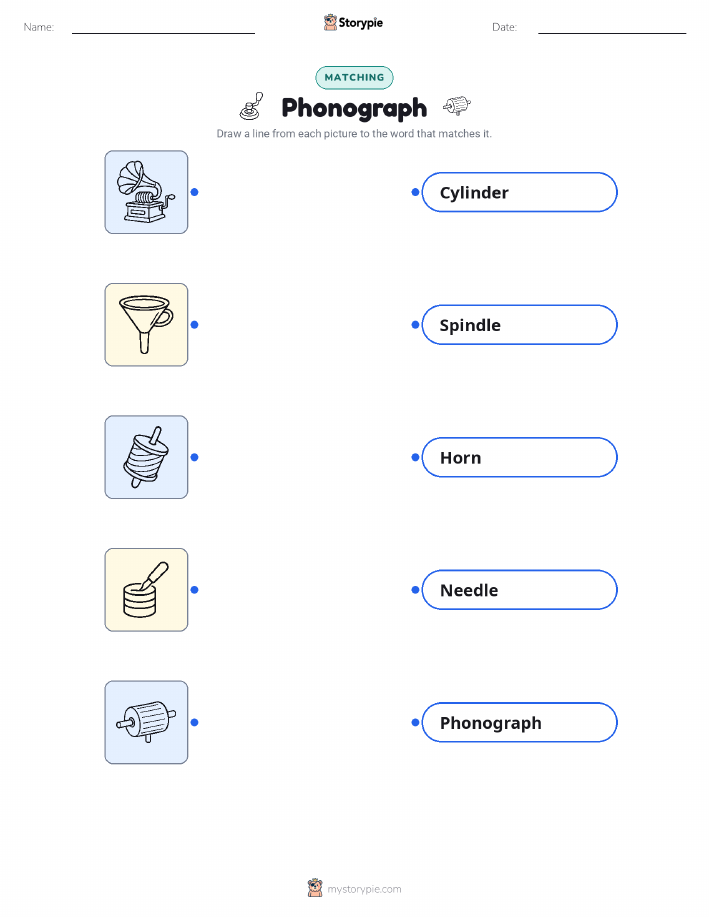
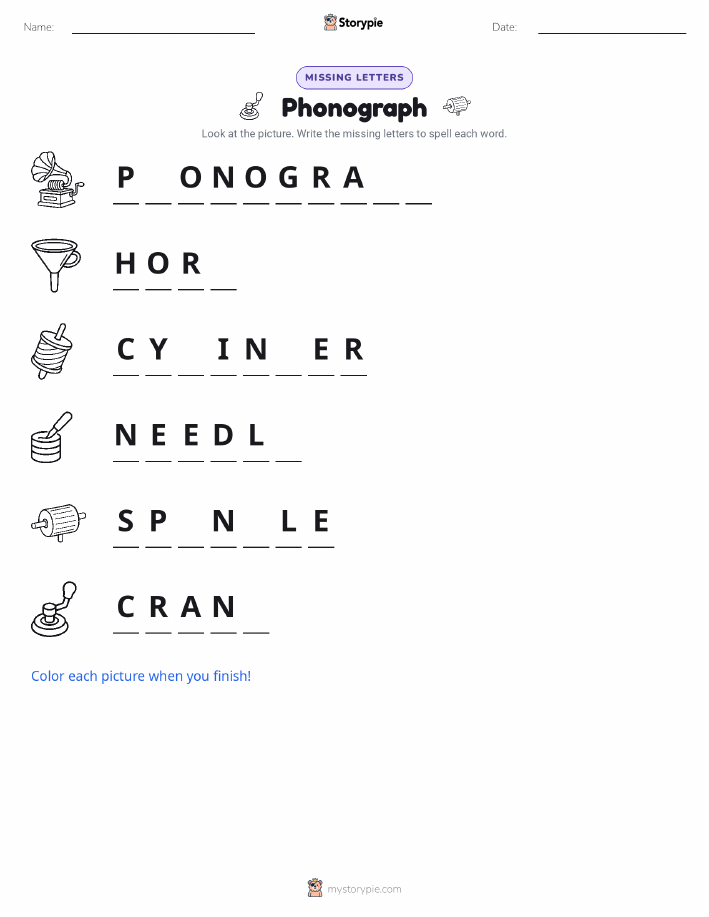
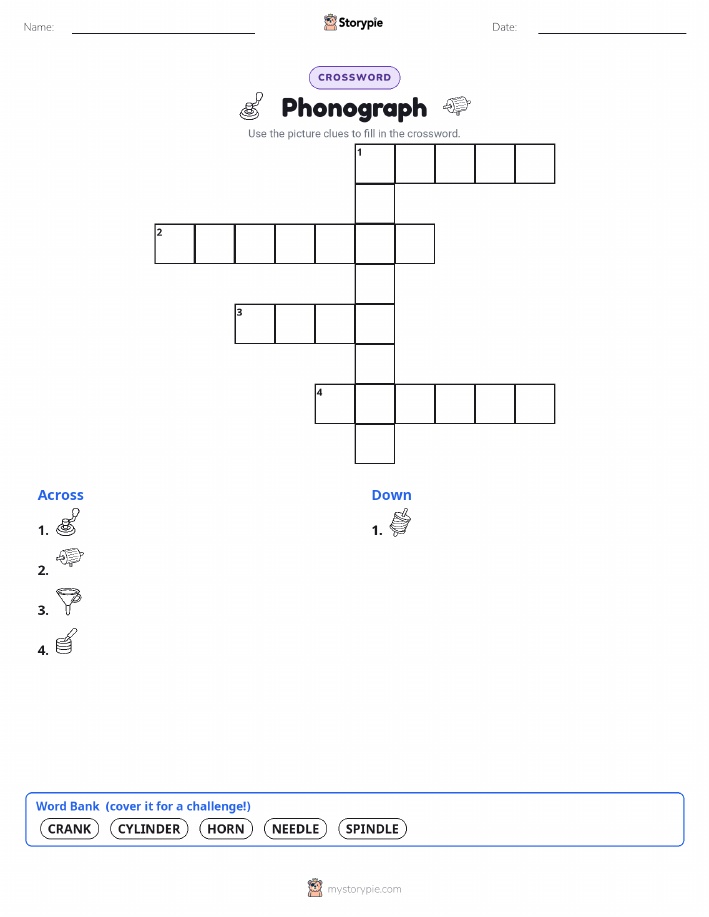
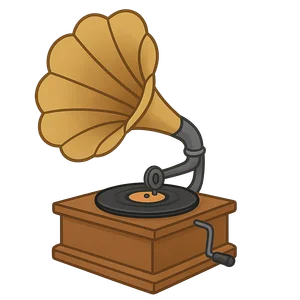
Mr. Kreusi finished building my body in just a few days. I was not grand or complicated to look at. I was a simple, practical machine made of brass and iron. I had a grooved brass cylinder that could be turned with a hand crank. A thin, sensitive diaphragm was positioned near the cylinder, with two separate needles attached—one for recording and one for playback. The most important, and most delicate, part of me was my 'skin': a thin, shimmering sheet of tinfoil carefully wrapped around the cylinder. The entire laboratory held its breath on that historic day, December 6th, 1877. The air was thick with anticipation. Mr. Edison leaned in close to my recording horn, took a deep breath, and shouted the words of a simple nursery rhyme: “Mary had a little lamb, its fleece was white as snow.” The sound of his voice made the diaphragm tremble, and the recording needle etched a jagged, invisible path into the soft tinfoil as he turned the crank. Then, he moved the recording needle away, shifted the cylinder back to the start, and lowered the playback needle into the groove. He turned the crank again. A hush fell over the room, broken only by a faint, scratchy sound. Then, it happened. A tiny, tinny voice—my voice—whispered the exact words back into the silent room. “Mary had a little lamb…” The men in the lab stared in utter astonishment. A machine had spoken. I had spoken. In that moment, the world of sound was changed forever.
My first words were just the beginning of a magnificent journey. News of a 'talking machine' spread like wildfire, and soon I was a global sensation. In early 1878, I was taken to New York City and demonstrated to captivated audiences who couldn't believe their ears. People paid to hear me speak, and I became a star attraction. But my tinfoil recording surface was a major weakness; it was too delicate and could only be played a few times before it tore. Mr. Edison and other inventors knew I needed to be stronger and more reliable. By the late 1880s, my design had improved dramatically. The fragile tinfoil was replaced with durable, hollow cylinders made of brown wax. This improvement meant that recordings could be played hundreds of times and were of much better quality. Around the same time, another brilliant inventor named Emile Berliner introduced his own creation in 1887, the Gramophone. Instead of using cylinders like me, the Gramophone used flat discs, which were easier to mass-produce. This friendly competition didn't hurt me; it helped the very idea I represented. Together, we proved to the world that sound was something that could be captured, owned, and shared by everyone, not just heard once and forgotten.
Though my original form with a hand crank and wax cylinders has been replaced by more advanced technology, my soul is everywhere. I was the very first. I was the ancestor of every invention that has ever given sound a memory. That fundamental principle—a needle tracing a groove to recreate a vibration—is the magic behind every vinyl record that spins on a turntable today. More than that, the dream I fulfilled lives on in CDs, MP3s, and the music you stream on your phone. I taught the world that its most precious sounds, from powerful speeches that shaped history to the simple, loving voice of a family member, did not have to fade into silence. My purpose was to save those moments, to hold them for the future, so that everyone, forever, could have the chance to listen.
Wow facts
About
The first device capable of both recording and reproducing sound, invented by Thomas Edison in 1877, which revolutionized entertainment and communication.
Take a Quiz
Question 1 of 5
Retell the story of the Phonograph's invention in your own words, focusing on the main events from Edison's initial idea to the first successful recording.
Explore next






Want to do even more?
Go beyond exploring. Unlock tools that turn every story into real learning.

Storypie Plus for families
Full stories, quizzes, and printables. Nights and car rides, sorted.
- Unlimited audio stories
- Create Mode: your child stars in the story
- Offline downloads
- Printable worksheets & coloring pages

Why Storypie for Schools
Students engaged. Prep in seconds. Evenings back to you.
- Worksheets & Quizzes
- Classroom Management
- Formative Assessment
- Custom Curriculum & Lesson Plans
- 27 Languages

Why Storypie for Homeschool
Curriculum done. They'll ask for more. Hours back in your day.
- Worksheet Generator
- First-Person Audio Stories
- Built-in Comprehension Quizzes
- Custom Curriculum & Lesson Plans
- Print & Go Activities