English

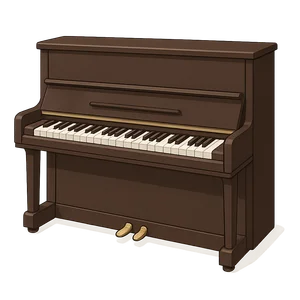
Piano
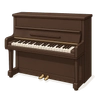
A musical keyboard instrument that produces sound by striking strings with felt-covered hammers…
Reads at Grades 6–8 Listens at Grades 4–8
Print & create
Answer keys·No prep·Free with an account
28 worksheets · answer keys · full story · quiz · Ages 10-12 · CEFR B2
Plus adds 116,000+ more stories in 27 languages, audio for every one, and printables for all of them.
Just want Piano?
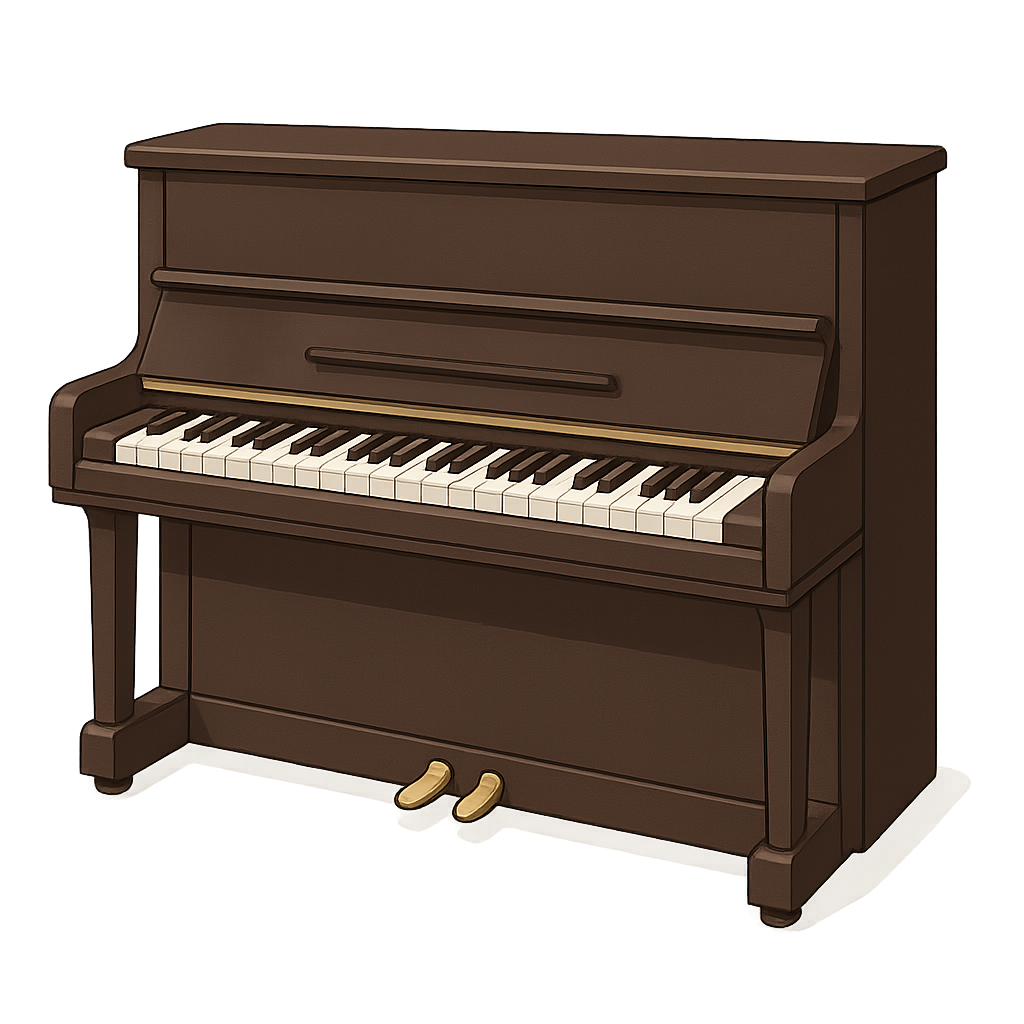
Before I could sing, my family filled the grand halls of Europe with music. You see, I am the Piano, but my story begins with my ancestors. Imagine living in a world where music could only speak at one volume. That was the life of my elegant cousin, the harpsichord. With its strings being plucked by tiny quills, it produced a crisp, bright sound, but it could not whisper a gentle melody or shout with triumphant joy. Every note was played with the same force, a beautiful but limited voice. Then there was my quieter relative, the clavichord. It was wonderfully expressive, capable of delicate nuances because its strings were struck by small metal tangents. However, its voice was so soft, so intimate, that it was easily lost in a large room full of people. It was a secret keeper, not a concert star. In the city of Florence, Italy, around the year 1700, a brilliant man named Bartolomeo Cristofori listened to my family and dreamed of something more. He was the official keeper of instruments for the famous Medici family, and he understood my ancestors' strengths and weaknesses better than anyone. He imagined a new kind of keyboard instrument, one with the power of the harpsichord but the expressive soul of the clavichord. He envisioned a voice that could convey the full spectrum of human emotion, from the softest touch to the most powerful declaration. This idea, this need for a more dynamic voice, was the spark that brought me into existence.
Bartolomeo Cristofori's workshop was a place of focused creation, filled with the scent of wood and the gleam of polished metal. It was there that I was born from his tireless efforts and ingenious mind. The challenge was immense: how to make a string sing both softly and loudly based purely on the player's touch. Cristofori’s revolutionary solution was a mechanism of pure genius. Instead of plucking my strings like a harpsichord or simply pressing them like a clavichord, he designed a system where a small, leather-covered hammer would strike the string and then immediately fall away. This 'escapement' mechanism was the secret to my voice. It allowed the string to vibrate freely, creating a rich, sustained tone that could ring through a room. More importantly, the speed and force with which a key was pressed directly translated to how hard the hammer struck the string. A gentle touch produced a soft sound; a firm press created a loud one. It was a direct connection between the musician's heart and my own strings. For the first time, a keyboard instrument could truly control its dynamics. My official birth name was quite a mouthful: 'gravicembalo col piano e forte,' which in Italian means 'harpsichord with soft and loud.' My name literally described my superpower. I remember the feeling when Cristofori first played me around 1700. His fingers cautiously explored my keys, testing my range. A quiet, lyrical phrase was followed by a series of strong, resonant chords. He had done it. A new voice, full of possibility, was finally ready to speak.
I Am the Piano
Before I could sing, my family filled the grand halls of Europe with music. You see, I am the Piano, but my story begins with my ancestors. Imagine living in a world where music could only speak at one volume. That was the life of my elegant cousin, the harpsichord. With its strings being plucked by tiny quills, it produced a crisp, bright sound, but it could not whisper a gentle melody or shout with triumphant joy. Every note was played with the same force, a beautiful but limited voice. Then there was my quieter relative, the clavichord. It was wonderfully expressive, capable of delicate nuances because its strings were struck by small metal tangents. However, its voice was so soft, so intimate, that it was easily lost in a large room full of people. It was a secret keeper, not a concert star. In the city of Florence, Italy, around the year 1700, a brilliant man named Bartolomeo Cristofori listened to my family and dreamed of something more. He was the official keeper of instruments for the famous Medici family, and he understood my ancestors' strengths and weaknesses better than anyone. He imagined a new kind of keyboard instrument, one with the power of the harpsichord but the expressive soul of the clavichord. He envisioned a voice that could convey the full spectrum of human emotion, from the softest touch to the most powerful declaration. This idea, this need for a more dynamic voice, was the spark that brought me into existence.
Bartolomeo Cristofori's workshop was a place of focused creation, filled with the scent of wood and the gleam of polished metal. It was there that I was born from his tireless efforts and ingenious mind. The challenge was immense: how to make a string sing both softly and loudly based purely on the player's touch. Cristofori’s revolutionary solution was a mechanism of pure genius. Instead of plucking my strings like a harpsichord or simply pressing them like a clavichord, he designed a system where a small, leather-covered hammer would strike the string and then immediately fall away. This 'escapement' mechanism was the secret to my voice. It allowed the string to vibrate freely, creating a rich, sustained tone that could ring through a room. More importantly, the speed and force with which a key was pressed directly translated to how hard the hammer struck the string. A gentle touch produced a soft sound; a firm press created a loud one. It was a direct connection between the musician's heart and my own strings. For the first time, a keyboard instrument could truly control its dynamics. My official birth name was quite a mouthful: 'gravicembalo col piano e forte,' which in Italian means 'harpsichord with soft and loud.' My name literally described my superpower. I remember the feeling when Cristofori first played me around 1700. His fingers cautiously explored my keys, testing my range. A quiet, lyrical phrase was followed by a series of strong, resonant chords. He had done it. A new voice, full of possibility, was finally ready to speak.
My journey from an Italian workshop to the world's stage took time and the help of other brilliant minds. At first, I was a curiosity, a complex and expensive instrument that not many understood. But word of my unique abilities began to spread. In the 1730s, a German instrument maker named Gottfried Silbermann read about Cristofori's design and began building his own versions of me. He made improvements and even showed one of his creations to the legendary composer Johann Sebastian Bach. Bach, a master of the harpsichord, was initially critical but eventually grew to admire my expressive potential. I continued to grow stronger and more powerful. The most significant change came in the 1820s with the invention of the full, cast-iron frame. This metal skeleton allowed my strings to be strung at a much higher tension, giving me a richer, louder, and more sustained sound than Cristofori could have ever imagined. I could now fill the grandest concert halls with a sound that was both mighty and delicate. It was during this time that composers truly fell in love with me. Wolfgang Amadeus Mozart and Ludwig van Beethoven discovered that my dynamic range allowed them to write music with dramatic emotional shifts. They composed sonatas and concertos filled with stormy passages that crashed into gentle, whispering melodies, music that was impossible to perform on any other keyboard instrument. They gave me a soul and a repertoire that would define me for centuries. Today, my voice is heard everywhere, from the classical stage to jazz clubs, from school practice rooms to family living rooms. I carry the legacy of my inventor's dream, a testament to the power of perseverance and the universal language of music, capable of expressing every feeling the human heart can hold.
Wow facts
About
A musical keyboard instrument that produces sound by striking strings with felt-covered hammers, allowing for a wide range of dynamics from soft (piano) to loud (forte).
Take a Quiz
Question 1 of 5
What does the word 'revolutionary' mean in the sentence, 'Cristofori’s revolutionary solution was a mechanism of pure genius'?
Explore next





Want to do even more?
Go beyond exploring. Unlock tools that turn every story into real learning.

Storypie Plus for families
Full stories, quizzes, and printables. Nights and car rides, sorted.
- Unlimited audio stories
- Create Mode: your child stars in the story
- Offline downloads
- Printable worksheets & coloring pages

Why Storypie for Schools
Students engaged. Prep in seconds. Evenings back to you.
- Worksheets & Quizzes
- Classroom Management
- Formative Assessment
- Custom Curriculum & Lesson Plans
- 27 Languages

Why Storypie for Homeschool
Curriculum done. They'll ask for more. Hours back in your day.
- Worksheet Generator
- First-Person Audio Stories
- Built-in Comprehension Quizzes
- Custom Curriculum & Lesson Plans
- Print & Go Activities