English

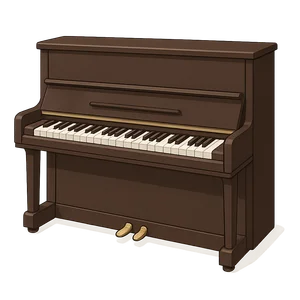
Piano
A musical keyboard instrument that produces sound by striking strings with felt-covered hammers…
Reads at Grades 3–5 Listens at Grades 1–5
Print & create
Answer keys·No prep·Free with an account
28 worksheets · answer keys · full story · quiz · Ages 8-10 · CEFR B1
Plus adds 116,000+ more stories in 27 languages, audio for every one, and printables for all of them.
Just want Piano?
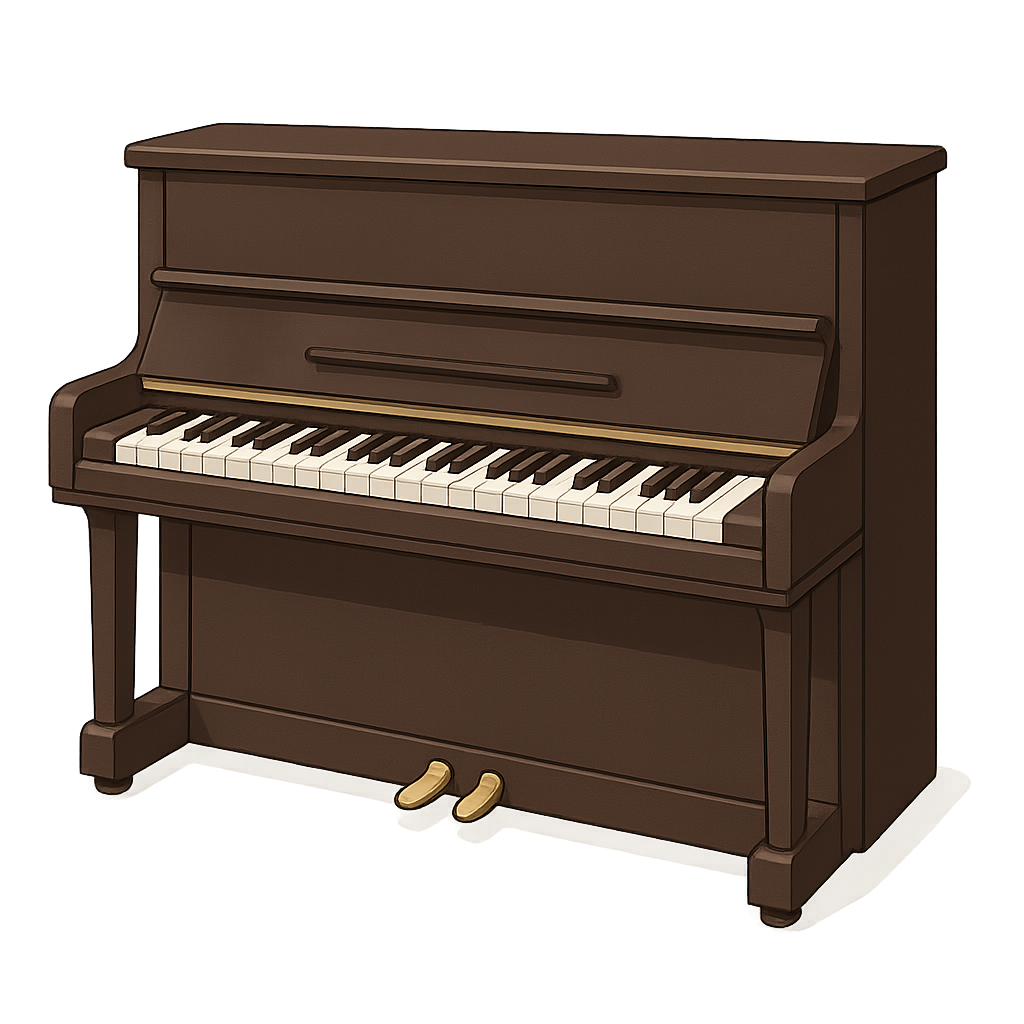
Hello there. My name is Piano, and I have a voice that can sing a thousand songs. I can whisper a gentle lullaby as soft as a falling leaf, or I can roar like a lion in a grand symphony. This ability to be both soft and loud is what makes me special. Before I was born, my musical family was a bit limited. My older cousin, the harpsichord, was quite dashing, but he had only one volume: loud. His strings were always plucked with the same force, so he couldn't show a gentle side. My other relative, the quiet clavichord, was the opposite. He was so shy and soft-spoken that in a large room, you could barely hear his delicate voice. For years, musicians and composers dreamed of an instrument that could do it all. They longed for a way to pour all their feelings into music, from the quietest sadness to the most joyful celebration. They needed a voice that could match the emotions in their hearts, and that’s where my story begins.
My wonderful creator was a man named Bartolomeo Cristofori, a brilliant and dedicated keeper of instruments for a prince in Florence, Italy. Around the year 1700, inside his workshop filled with the scent of wood shavings and glue, he had a revolutionary idea. He looked at my cousin, the harpsichord, and thought, 'What if, instead of plucking the strings, little hammers tapped them?'. It was a spark of genius. He spent years carefully designing and building a new kind of instrument—me. He created a clever mechanism where a small, felt-covered hammer would strike one of my strings when a key was pressed. If the key was pressed gently, the hammer would tap softly. If it was pressed with force, the hammer would strike powerfully, making a loud, bold sound. For the first time, a musician had complete control over the volume. Bartolomeo was so proud of his creation that he gave me a very long and descriptive name: 'gravicembalo col piano e forte.' In Italian, that means 'harpsichord with soft and loud.' Over time, people just started calling me the 'piano,' which means 'soft,' but I’ll always remember the 'forte,' my 'loud' side, too.
A Story Told by the Piano
Hello there. My name is Piano, and I have a voice that can sing a thousand songs. I can whisper a gentle lullaby as soft as a falling leaf, or I can roar like a lion in a grand symphony. This ability to be both soft and loud is what makes me special. Before I was born, my musical family was a bit limited. My older cousin, the harpsichord, was quite dashing, but he had only one volume: loud. His strings were always plucked with the same force, so he couldn't show a gentle side. My other relative, the quiet clavichord, was the opposite. He was so shy and soft-spoken that in a large room, you could barely hear his delicate voice. For years, musicians and composers dreamed of an instrument that could do it all. They longed for a way to pour all their feelings into music, from the quietest sadness to the most joyful celebration. They needed a voice that could match the emotions in their hearts, and that’s where my story begins.
My wonderful creator was a man named Bartolomeo Cristofori, a brilliant and dedicated keeper of instruments for a prince in Florence, Italy. Around the year 1700, inside his workshop filled with the scent of wood shavings and glue, he had a revolutionary idea. He looked at my cousin, the harpsichord, and thought, 'What if, instead of plucking the strings, little hammers tapped them?'. It was a spark of genius. He spent years carefully designing and building a new kind of instrument—me. He created a clever mechanism where a small, felt-covered hammer would strike one of my strings when a key was pressed. If the key was pressed gently, the hammer would tap softly. If it was pressed with force, the hammer would strike powerfully, making a loud, bold sound. For the first time, a musician had complete control over the volume. Bartolomeo was so proud of his creation that he gave me a very long and descriptive name: 'gravicembalo col piano e forte.' In Italian, that means 'harpsichord with soft and loud.' Over time, people just started calling me the 'piano,' which means 'soft,' but I’ll always remember the 'forte,' my 'loud' side, too.
After I was born in Italy, it took me some time to grow up and find my full voice. During the 18th and 19th centuries, other clever inventors and builders helped me become stronger and more powerful. They gave me a sturdy iron frame inside my wooden case, which allowed my strings to be pulled much tighter. This gave my voice a richer, fuller, and more sustained sound. They also gave me more keys, expanding my range from a deep, rumbling bass to a high, sparkling treble. It was a thrilling time. Soon, famous composers began to notice what I could do. A man named Wolfgang Amadeus Mozart loved my clear and elegant voice. Then, a passionate composer named Ludwig van Beethoven discovered me, and he used my power to create stormy, thundering music that shook the concert halls. I wasn't just for famous musicians, though. I started to become a beloved member of families, taking my place in their living rooms. I loved being the center of attention, gathering people together to sing songs and celebrate happy occasions.
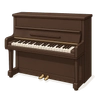
Today, you can find me almost everywhere. On the world’s biggest concert stages, I appear in my most majestic form as the grand piano, my long body gleaming under the bright lights, ready to fill the hall with magnificent music. In schools, practice rooms, and cozy homes, you’ll find my more compact sibling, the upright piano, standing tall against a wall, always ready for a lesson or a family sing-along. My journey has been a long one, from a clever idea in a quiet workshop in Italy to a friend for musicians and music lovers all over the world. Looking back, I see that I did more than just make sounds. I gave people a new way to share their feelings, to tell stories without words, and to connect with each other through the universal language of music. And I hope my voice continues to bring joy, comfort, and inspiration to everyone who listens.
Wow facts
About
A musical keyboard instrument that produces sound by striking strings with felt-covered hammers, allowing for a wide range of dynamics from soft (piano) to loud (forte).
Take a Quiz
Question 1 of 5
What problem did the piano solve that its relatives, the harpsichord and clavichord, could not?
Explore next





Want to do even more?
Go beyond exploring. Unlock tools that turn every story into real learning.

Storypie Plus for families
Full stories, quizzes, and printables. Nights and car rides, sorted.
- Unlimited audio stories
- Create Mode: your child stars in the story
- Offline downloads
- Printable worksheets & coloring pages

Why Storypie for Schools
Students engaged. Prep in seconds. Evenings back to you.
- Worksheets & Quizzes
- Classroom Management
- Formative Assessment
- Custom Curriculum & Lesson Plans
- 27 Languages

Why Storypie for Homeschool
Curriculum done. They'll ask for more. Hours back in your day.
- Worksheet Generator
- First-Person Audio Stories
- Built-in Comprehension Quizzes
- Custom Curriculum & Lesson Plans
- Print & Go Activities