English

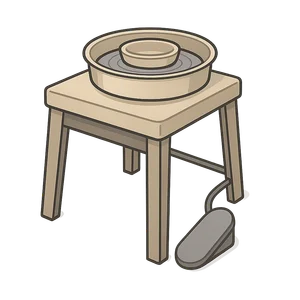
Potter's Wheel
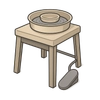
An ancient machine that spins a lump of clay…
Reads at Grades 6–8 Listens at Grades 4–8
Print & create
Answer keys·No prep·Free with an account
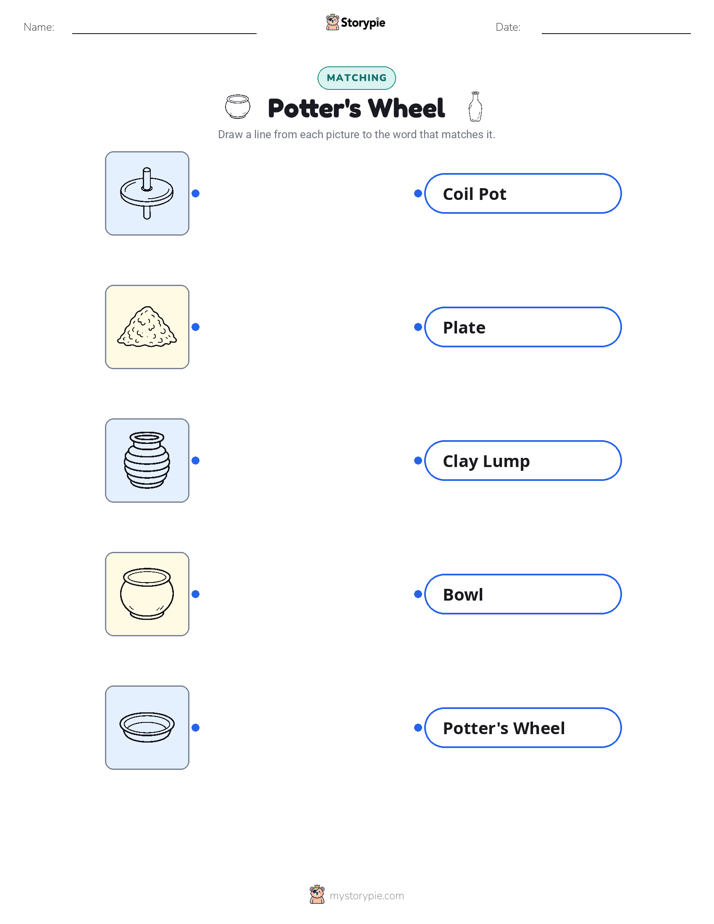
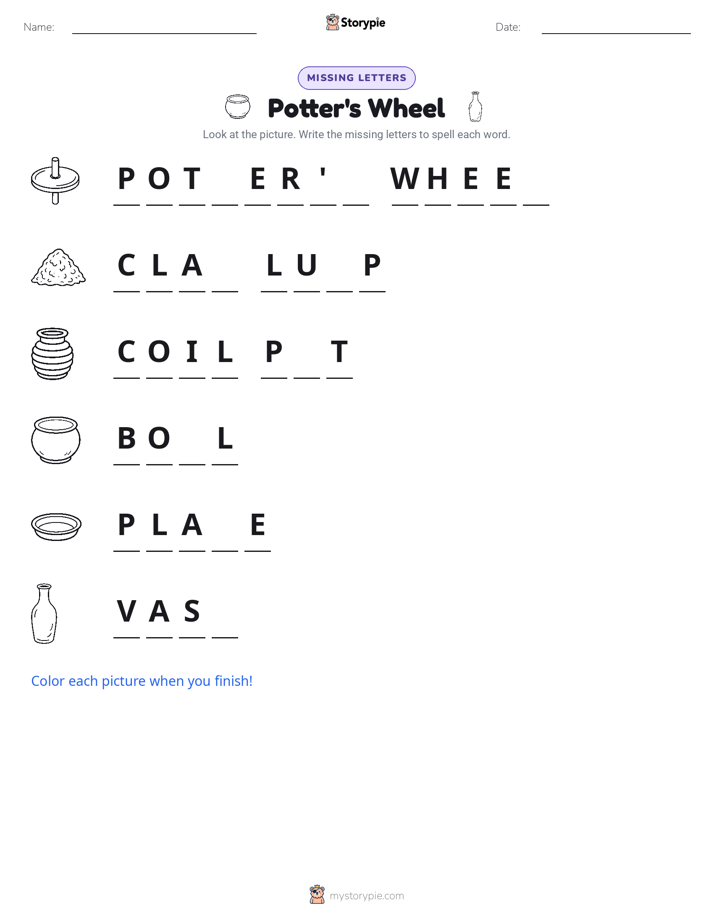
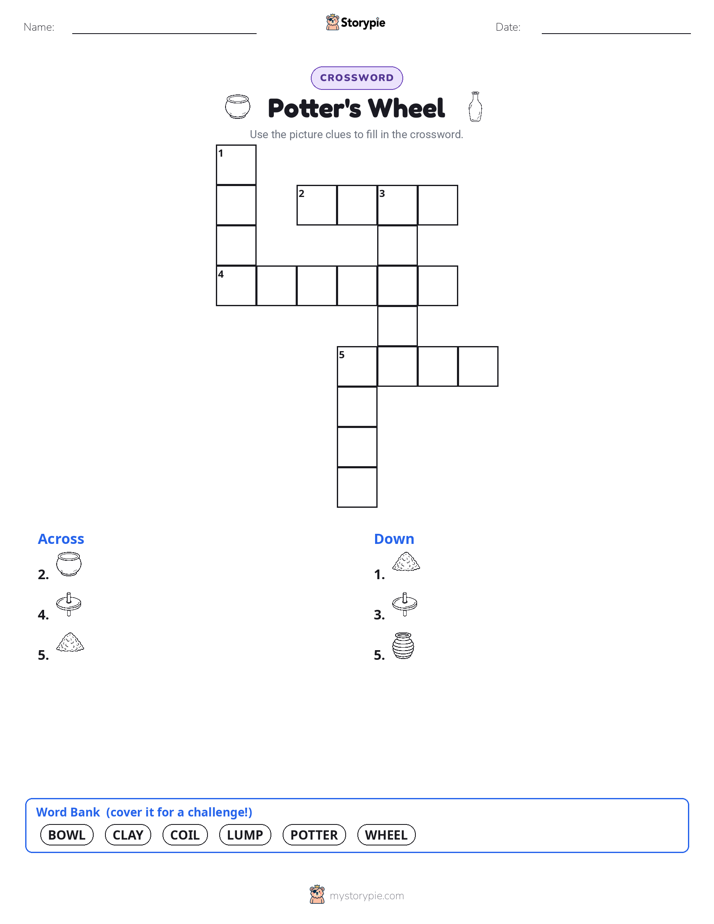
28 worksheets · answer keys · full story · quiz · Ages 10-12 · CEFR B2
Plus adds 208,000+ more stories in 27 languages, audio for every one, and printables for all of them.
Just want Potter's Wheel?
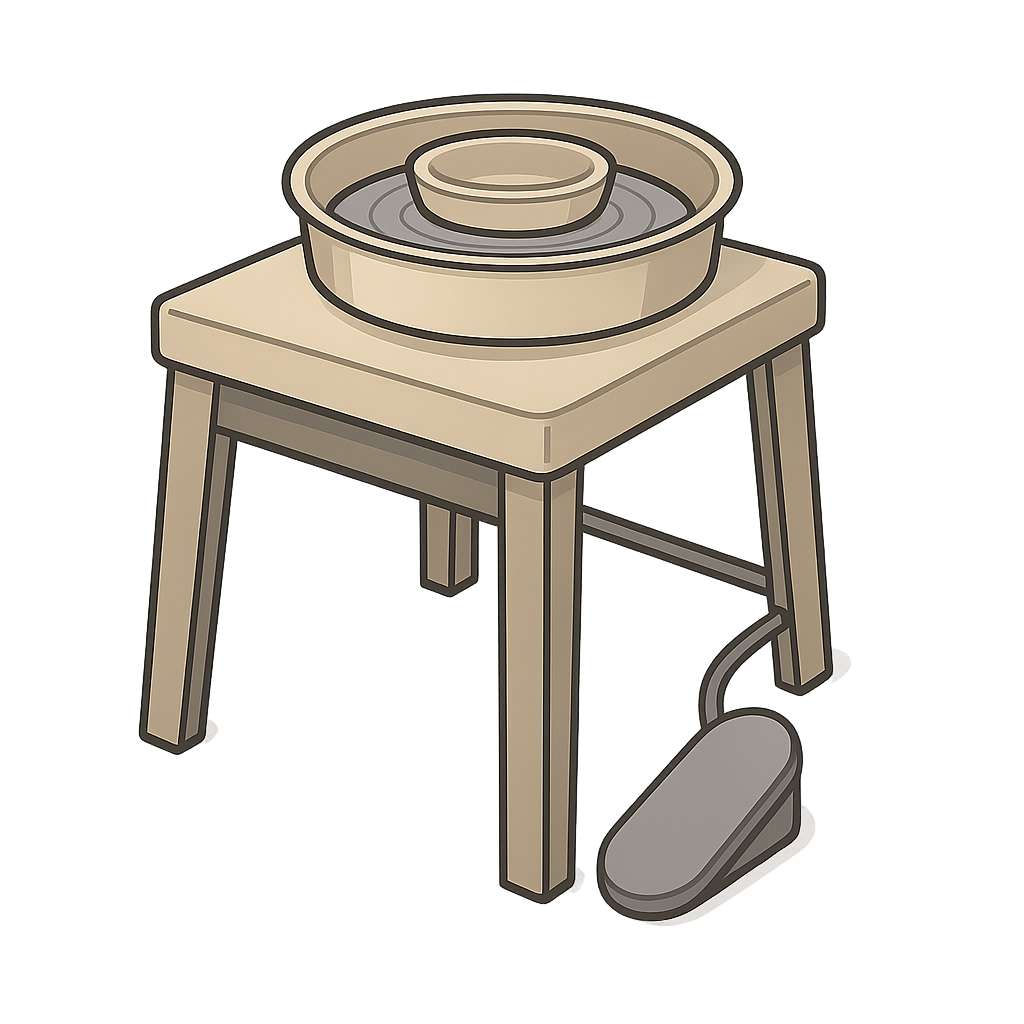
For thousands of years, I was just an idea, a whisper of a thought in the minds of clever people. I am the Potter’s Wheel, and before I was born, the world was full of lumps and bumps. Imagine living in Mesopotamia around 3500 BCE. The air was warm and dusty, and life revolved around the great rivers, the Tigris and Euphrates. People needed containers for everything. They needed strong jars to store precious grain away from mice, sturdy pots to carry water from the river, and bowls for their daily meals. To make them, a potter would sit for hours, patiently rolling ropes of clay and coiling them one on top of the other, or pinching a lump of clay into shape. It was slow, painstaking work. Each pot was a testament to patience, but they were often lopsided, heavy, and uneven. I could feel the frustration of the potters, their tired hands wishing for a faster, smoother way to bring the perfect, round shapes they imagined in their minds into the world.
My first real spin was a humble beginning. In the bustling Sumerian cities, a clever potter created my earliest form: the tournette, or slow wheel. I wasn't much to look at, just a flat stone or wooden disk balanced on a central peg. A potter could place a lump of clay on my surface and slowly turn me with one hand while shaping the clay with the other. This was a wonderful improvement. For the first time, pots began to have a more uniform shape. But the potter's one hand was always busy turning me, which limited what the other hand could do. Then, during the 3rd millennium BCE, came the great leap forward. Someone had the brilliant idea to make me heavier and set me on a more sophisticated axle. This new design allowed a potter to give me a strong kick and set me spinning rapidly all on my own. I became the fast wheel. That single change was everything. It freed up both of the potter's hands. I remember the exhilarating feeling of that first powerful kick, spinning fast and true, my surface a blur of potential. I was no longer just a helpful tool; I was a partner in creation, ready to transform earth into art with a speed and grace never seen before.
I Am the Potter's Wheel
For thousands of years, I was just an idea, a whisper of a thought in the minds of clever people. I am the Potter’s Wheel, and before I was born, the world was full of lumps and bumps. Imagine living in Mesopotamia around 3500 BCE. The air was warm and dusty, and life revolved around the great rivers, the Tigris and Euphrates. People needed containers for everything. They needed strong jars to store precious grain away from mice, sturdy pots to carry water from the river, and bowls for their daily meals. To make them, a potter would sit for hours, patiently rolling ropes of clay and coiling them one on top of the other, or pinching a lump of clay into shape. It was slow, painstaking work. Each pot was a testament to patience, but they were often lopsided, heavy, and uneven. I could feel the frustration of the potters, their tired hands wishing for a faster, smoother way to bring the perfect, round shapes they imagined in their minds into the world.
My first real spin was a humble beginning. In the bustling Sumerian cities, a clever potter created my earliest form: the tournette, or slow wheel. I wasn't much to look at, just a flat stone or wooden disk balanced on a central peg. A potter could place a lump of clay on my surface and slowly turn me with one hand while shaping the clay with the other. This was a wonderful improvement. For the first time, pots began to have a more uniform shape. But the potter's one hand was always busy turning me, which limited what the other hand could do. Then, during the 3rd millennium BCE, came the great leap forward. Someone had the brilliant idea to make me heavier and set me on a more sophisticated axle. This new design allowed a potter to give me a strong kick and set me spinning rapidly all on my own. I became the fast wheel. That single change was everything. It freed up both of the potter's hands. I remember the exhilarating feeling of that first powerful kick, spinning fast and true, my surface a blur of potential. I was no longer just a helpful tool; I was a partner in creation, ready to transform earth into art with a speed and grace never seen before.
With both hands free, potters became masters of their craft. They could now brace their arms and use the force I generated to pull the clay upwards, as if by magic. Thin-walled vases, elegant jugs, and perfectly balanced bowls emerged from my spinning surface in minutes, not hours. Pottery making was transformed from a common household chore into a specialized profession. Workshops sprang up in cities, filled with artisans who dedicated their lives to clay. I was at the center of it all, spinning from dawn until dusk. My impact grew beyond the workshop, shaping the very structure of civilization. I enabled the mass production of large storage jars, which allowed cities to store surplus grain and oil. This created food security and formed the basis for organized trade between distant lands. I began to travel the world. In Egypt, I helped create the beautiful canopic jars used in sacred rituals. In ancient Greece, I shaped the magnificent amphorae on which artists painted epic tales of gods and heroes. Millennia later, in China, my descendants would help form the delicate, translucent porcelain that was treasured across continents. I wasn't just making pots; I was helping create the containers that held culture, commerce, and history itself.
My journey didn't end in the ancient world. I am still here today, spinning away in quiet art studios, busy classrooms, and modern factories all over the globe. Some of my younger relatives are now powered by electricity, spinning silently with the flick of a switch, but the fundamental magic remains exactly the same. It is still a partnership between the centrifugal force I create and the gentle, guiding pressure of human hands. From the simple coffee mug you use every morning to the elegant dinner plates on your table and the breathtaking sculptures you see in a gallery, I continue to play my part. I am proof that a simple idea, the concept of a turning wheel applied to a lump of clay, can echo through thousands of years of human history. I connect the artists of today to our most ancient ancestors, and I continue to shape the world with both practical purpose and timeless beauty. Sometimes, the oldest ideas are truly the most enduring.
Wow facts
About
An ancient machine that spins a lump of clay, allowing a potter to shape it into symmetrical round ceramic ware like bowls, plates, and vases.
Take a Quiz
Question 1 of 5
According to the story, what was the most significant advantage of the fast wheel compared to the slow wheel, or tournette?
Explore next



Want to do even more?
Go beyond exploring. Unlock tools that turn every story into real learning.

Storypie Plus for families
Full stories, quizzes, and printables. Nights and car rides, sorted.
- Unlimited audio stories
- Create Mode: your child stars in the story
- Offline downloads
- Printable worksheets & coloring pages

Why Storypie for Schools
Students engaged. Prep in seconds. Evenings back to you.
- Worksheets & Quizzes
- Classroom Management
- Formative Assessment
- Custom Curriculum & Lesson Plans
- 27 Languages

Why Storypie for Homeschool
Curriculum done. They'll ask for more. Hours back in your day.
- Worksheet Generator
- First-Person Audio Stories
- Built-in Comprehension Quizzes
- Custom Curriculum & Lesson Plans
- Print & Go Activities