
 English
 For Schools
 For Homeschool

The Story of Velcro
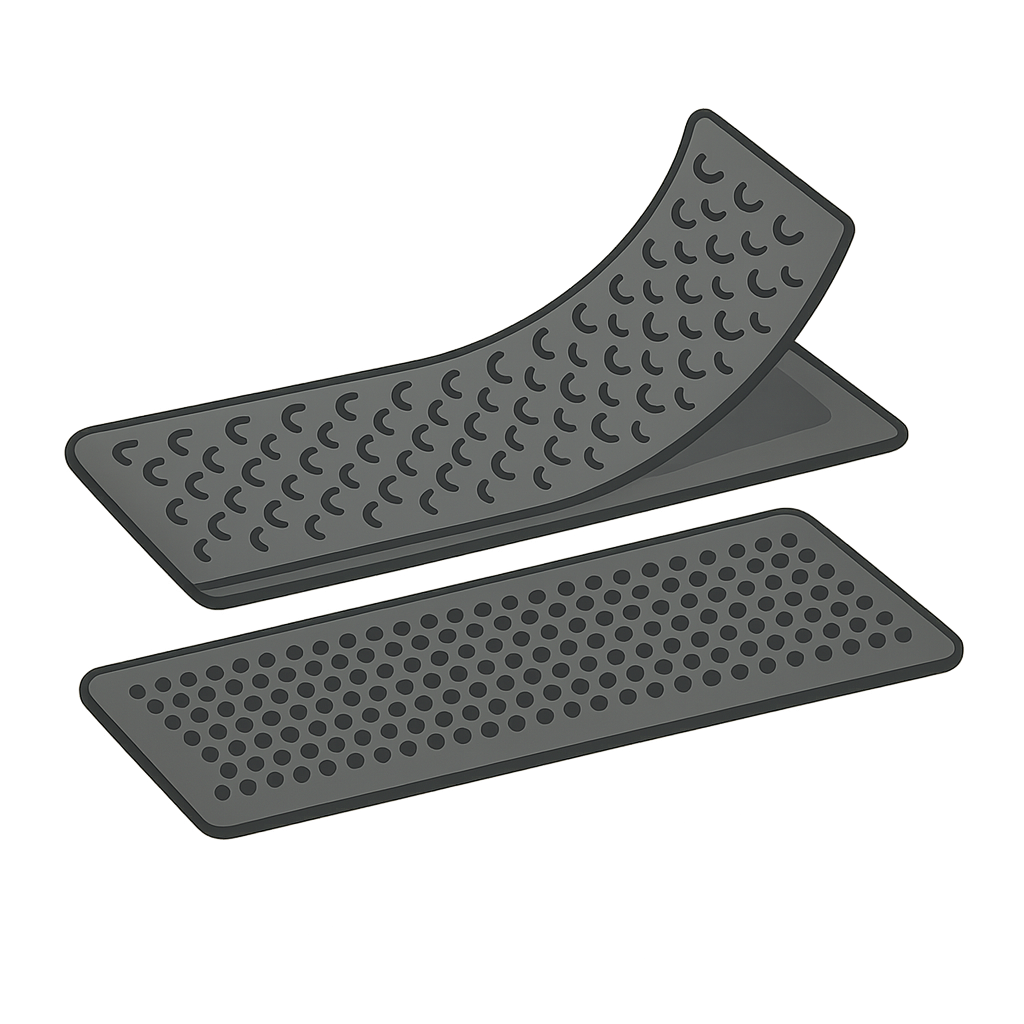
You probably know me by the sound I make. a sharp, satisfying RRRIIIPPP that echoes in classrooms, on playgrounds, and even in the quiet of space. I am Velcro, and my life is a tale of two halves. One of my sides is a field of tiny, scratchy hooks, determined and tough. The other is a soft, fuzzy landscape of countless loops, gentle and yielding. Separately, we are just pieces of fabric. but when pressed together, we form an unbreakable bond, a partnership of grip and give. We hold your shoes on your feet, your jacket closed against the wind, and your artwork on the wall. Most people think I must have been born in a sterile laboratory, the product of complex equations and scientific machinery. But my story began somewhere much wilder and more surprising. a sun-drenched mountainside, a curious engineer, and a dog covered in burrs. I am proof that sometimes the most brilliant ideas aren't invented from scratch but are discovered by simply paying attention to the world around you, waiting to be noticed.
My journey began on a crisp autumn day in 1941, high in the Swiss Alps. A Swiss engineer named George de Mestral was out for a hunting trip with his faithful dog, Milka. The air was thin and clean, the landscape painted with the fiery colors of fall, and life felt simple. As they walked through the tangled underbrush, something began to happen. Tiny, spiky seed pods, the burrs from a burdock plant, clung to everything. They decorated George’s tweed trousers like stubborn little ornaments and matted themselves deep into Milka’s fur. When they returned home, George was annoyed. He began the tedious task of picking the burrs off, one by one. But as he worked, his frustration slowly melted away, replaced by a powerful sense of curiosity. He was an engineer, a man trained to understand how things work, and these burrs worked exceptionally well. What gave them such incredible sticking power. He couldn't shake the question. Instead of throwing the last burr away, he did something that would change everything. he placed it under his microscope. What he saw amazed him. The burr wasn't just a jumble of spikes. it was a marvel of natural engineering. Its surface was covered in hundreds of minuscule hooks, perfectly designed to latch onto anything with a loop, like the fibers of his pants or the strands of Milka’s fur. In that moment, seeing nature’s own fastener up close, I was conceived. I wasn’t made of nylon yet, I was just an idea. an idea for a two-sided fastener that copied the brilliant design of a humble plant.
Having an idea inspired by nature was one thing, but turning it into a real, working product was another challenge entirely. It would take George de Mestral over a decade of relentless work and perseverance. His first attempts were discouraging. He tried to replicate the hook-and-loop system using cotton, but the fabric was too soft. The hooks and loops wore out quickly, losing their grip after just a few uses. I existed only as a series of failed prototypes, a frustrating puzzle that refused to be solved. But George was not one to give up. He knew the core idea was sound, he just needed the right materials and technique. His quest took him to Lyon, France, a city renowned for its textile industry. There, he collaborated with a weaver who helped him develop a new process. The true breakthrough, however, came with the invention of a new material. nylon. This synthetic polymer was incredibly strong and durable. George discovered that when nylon thread was woven into loops and then heated under infrared light, he could cut the loops at a specific point to create firm, resilient hooks. It was the perfect mimic of the burdock burr. Finally, after years of trial and error, I was perfected. one strip of tough nylon hooks and another of soft nylon loops. In 1955, I was ready to meet the world. George needed a name for me, something catchy that told my story. He combined the French words ‘velours,’ meaning velvet, and ‘crochet,’ meaning hook. From those words, my name was born. Velcro. On September 13th, 1955, my patent was officially granted, and my journey as a real invention began.
Even with a patent and a clever name, my early life was not easy. The high-fashion industry thought I was clunky and unattractive. For a while, it seemed I might be an invention without a purpose. But then, my biggest opportunity came from a place George de Mestral could never have imagined. outer space. In the 1960s, NASA was preparing for the Apollo missions to the moon, and they had a unique problem. in zero gravity, everything floats. Astronauts needed a simple and reliable way to secure their tools, food packets, and equipment so they wouldn’t drift away. I was the perfect solution. I was lightweight, strong, and easy to use with bulky gloves on. I traveled on those historic missions, holding things in place inside the spacecraft, and I even had a small part on the space suits themselves. My adventure with NASA made me famous. Suddenly, everyone saw my potential. I started appearing everywhere. I made it easier for children to put on their own shoes. I was used in hospitals to secure blood pressure cuffs gently and in sporting goods to fasten gloves and pads. I organized wires behind desks and held together wallets and bags. From a humble burr on a dog’s coat to the vastness of space and back to homes around the world, my story is a reminder that the greatest innovations can come from the smallest observations. All it takes is a curious mind willing to look closer and ask, ‘how does that work.’.
Activities
Take a Quiz
Test what you learned with a fun quiz!
Get creative with colors!
Print a coloring book page of this topic.