English

Asgard
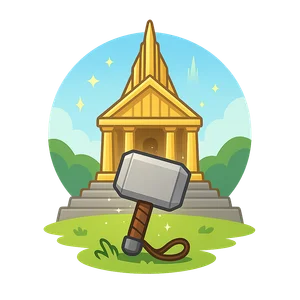
Asgard is the celestial fortress and home of the Æsir gods in Norse mythology, ruled by Odin.
Reads at Grades 6–8 Listens at Grades 4–8
Print & create
Answer keys·No prep·Free with an account
28 worksheets · answer keys · full story · quiz · Ages 10-12 · CEFR B2
Plus adds 164,000+ more stories in 27 languages, audio for every one, and printables for all of them.
Just want Asgard?
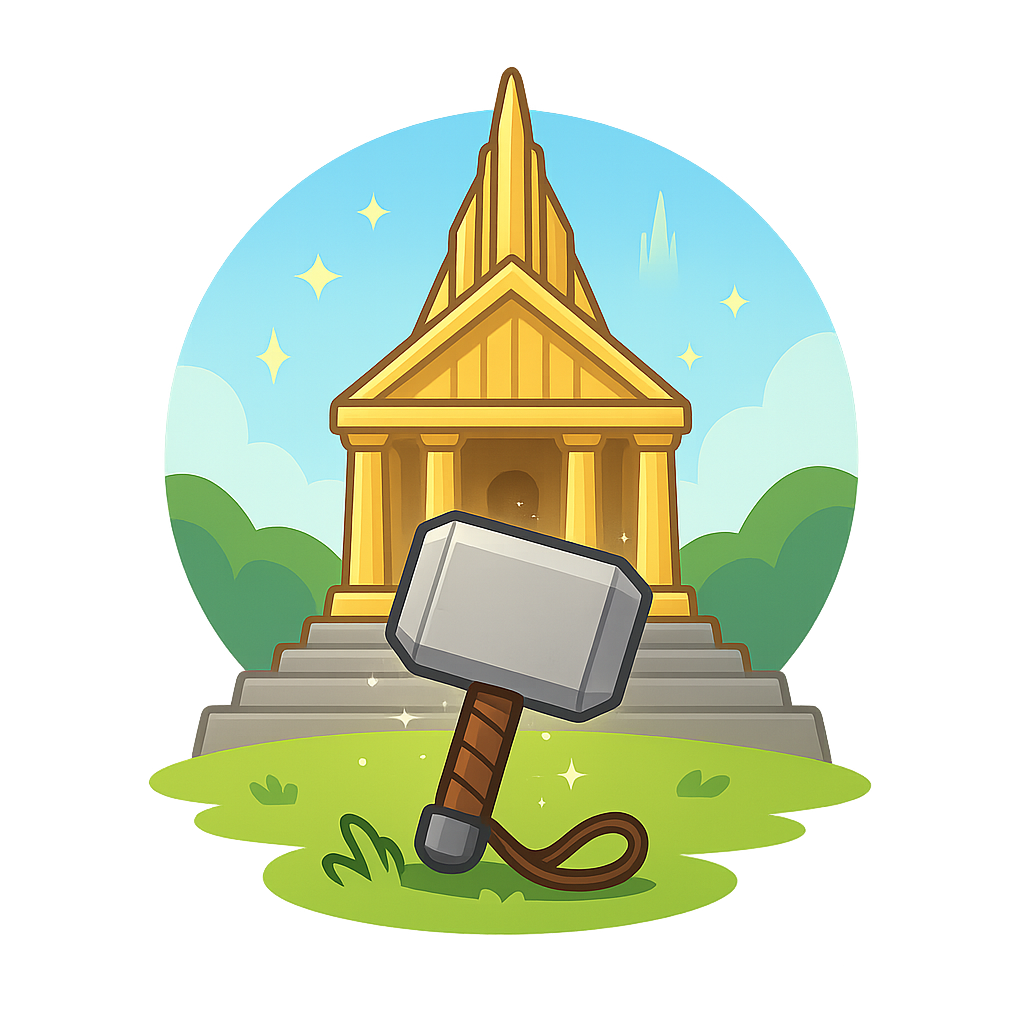
My horn, Gjallarhorn, rests by my side, and my eyes see for hundreds of miles. I am Heimdall, the ever-vigilant guardian of Bifröst, the shimmering rainbow bridge that connects your world to mine. From my post, I can see all Nine Realms, but my heart and my duty belong to the golden-spired realm at the center of it all: Asgard. After a long and terrible war, our home was glorious but undefended, its treasures and families open to attack from the frost giants. Odin, the All-Father, knew we needed a fortress, a wall so strong that no enemy could ever breach it. This is the tale of how that great wall was built, a story of a dangerous bargain, a clever trick, and a lesson the gods would never forget. This is the myth of the Building of Asgard's Wall.
One day, a stranger appeared at the gates of Asgard. He was a master builder, he claimed, and he made an astonishing offer: he would build a wall around the entire realm, so high and strong that it would be impenetrable to any foe. The gods were intrigued, but his price was impossibly high. He demanded the Sun, the Moon, and the hand of the beautiful goddess Freyja in marriage. The gods were outraged and ready to send him away, but Loki, the silver-tongued trickster, saw an opportunity. He whispered to the other gods, suggesting they accept the deal but add a seemingly impossible condition. The builder had to complete the entire wall in a single winter, with no help from any man. The builder thought for a moment and agreed, with one small change: he asked if he could have the help of his stallion, Svaðilfari. Confident that the task was still impossible, the gods agreed, swearing solemn oaths to uphold their end of the bargain if he succeeded.
The Building of Asgard's Wall
My horn, Gjallarhorn, rests by my side, and my eyes see for hundreds of miles. I am Heimdall, the ever-vigilant guardian of Bifröst, the shimmering rainbow bridge that connects your world to mine. From my post, I can see all Nine Realms, but my heart and my duty belong to the golden-spired realm at the center of it all: Asgard. After a long and terrible war, our home was glorious but undefended, its treasures and families open to attack from the frost giants. Odin, the All-Father, knew we needed a fortress, a wall so strong that no enemy could ever breach it. This is the tale of how that great wall was built, a story of a dangerous bargain, a clever trick, and a lesson the gods would never forget. This is the myth of the Building of Asgard's Wall.
One day, a stranger appeared at the gates of Asgard. He was a master builder, he claimed, and he made an astonishing offer: he would build a wall around the entire realm, so high and strong that it would be impenetrable to any foe. The gods were intrigued, but his price was impossibly high. He demanded the Sun, the Moon, and the hand of the beautiful goddess Freyja in marriage. The gods were outraged and ready to send him away, but Loki, the silver-tongued trickster, saw an opportunity. He whispered to the other gods, suggesting they accept the deal but add a seemingly impossible condition. The builder had to complete the entire wall in a single winter, with no help from any man. The builder thought for a moment and agreed, with one small change: he asked if he could have the help of his stallion, Svaðilfari. Confident that the task was still impossible, the gods agreed, swearing solemn oaths to uphold their end of the bargain if he succeeded.
Work on the wall began immediately. To the gods' astonishment, the builder and his horse worked with superhuman speed and strength. By day, the builder shaped and laid the massive stones. By night, the magnificent stallion Svaðilfari hauled impossibly large boulders from the mountains. The horse did the work of ten men, and the wall grew higher and longer with each passing day. As the winter drew to a close, a sense of dread fell over Asgard. The wall was nearly finished, with only the main gateway left to complete. The gods realized with horror that the builder was going to succeed. They would lose the light of the Sun and Moon, and Freyja would be taken from them. In their panic, they turned on the one who had convinced them to make the deal in the first place: Loki.
Facing the wrath of the other gods, Loki knew he had to fix the mess he had created. That evening, as Svaðilfari was hauling the final stones for the gate, a beautiful mare emerged from the nearby woods. Loki, in one of his magical transformations, had taken this form to distract the stallion. Svaðilfari, captivated by the mare, broke free from his harness and chased her deep into the forest, not returning until the next day. Without his horse, the builder could not finish the final gate before the sun rose, and the deadline passed. He had failed. Furious at being tricked, the builder revealed his true form—he was no mere man, but a powerful mountain giant, an ancient enemy of the gods. Just as he lunged forward in a rage, Thor arrived, his hammer Mjöllnir in hand, and swiftly put an end to the threat.
Asgard was finally safe behind its mighty, impenetrable wall. A while later, Loki returned, and with him was a foal—a wondrous, grey colt with eight legs, the offspring of his encounter with Svaðilfari. He presented the horse, Sleipnir, to Odin, and it became the swiftest steed in all the Nine Realms. The gods had their fortress, but they had secured it through trickery and a broken oath. This story was told around hearth fires by the Norse people not just as an adventure, but as a lesson about the consequences of one's promises and the dangers of making bargains born of pride. It shows that even gods can be flawed and that cleverness can be a more powerful tool than brute force. Today, the tales of Asgard, its cunning gods, and magical creatures like Sleipnir continue to fuel our imagination, appearing in books, movies, and art, reminding us that a great story, like a great wall, can stand the test of time.
Wow facts
About
Asgard is the celestial fortress and home of the Æsir gods in Norse mythology, ruled by Odin. It is famously connected to Midgard (Earth) by the rainbow bridge, Bifrost.
Take a Quiz
Question 1 of 5
Why did the gods, especially Loki, agree to the builder's bargain even though the price was so high?
Explore next





Want to do even more?
Go beyond exploring. Unlock tools that turn every story into real learning.

Storypie Plus for families
Full stories, quizzes, and printables. Nights and car rides, sorted.
- Unlimited audio stories
- Create Mode: your child stars in the story
- Offline downloads
- Printable worksheets & coloring pages

Why Storypie for Schools
Students engaged. Prep in seconds. Evenings back to you.
- Worksheets & Quizzes
- Classroom Management
- Formative Assessment
- Custom Curriculum & Lesson Plans
- 27 Languages

Why Storypie for Homeschool
Curriculum done. They'll ask for more. Hours back in your day.
- Worksheet Generator
- First-Person Audio Stories
- Built-in Comprehension Quizzes
- Custom Curriculum & Lesson Plans
- Print & Go Activities