English

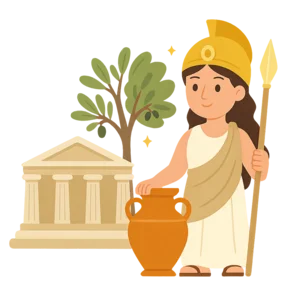
Athena
The ancient Greek origin myth detailing the contest between the goddess Athena and the god Poseidon for the…
Reads at Grades 6–8 Listens at Grades 4–8
Print & create
Answer keys·No prep·Free with an account
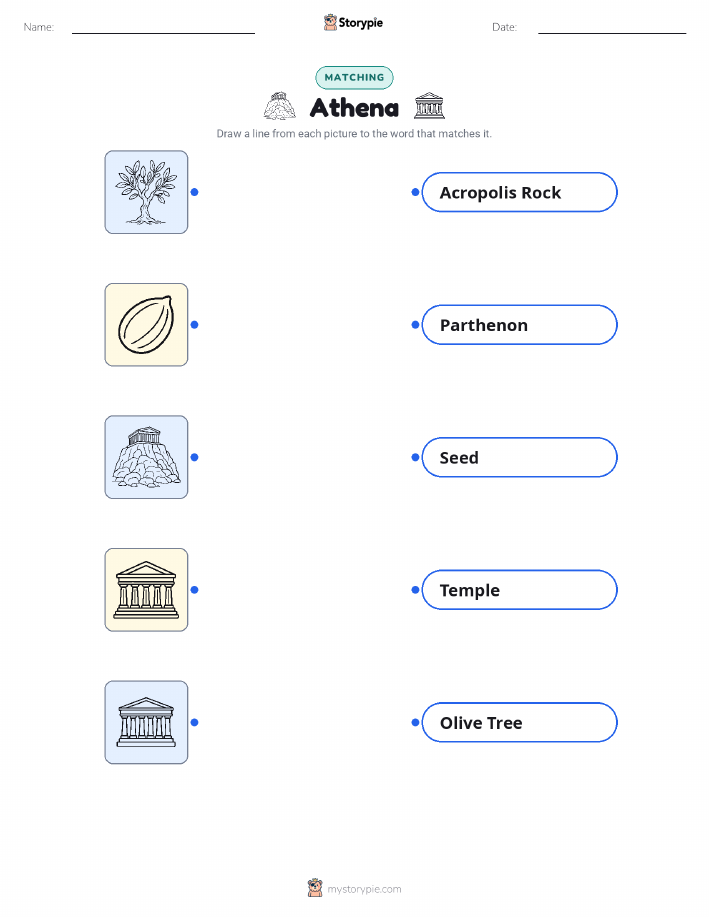
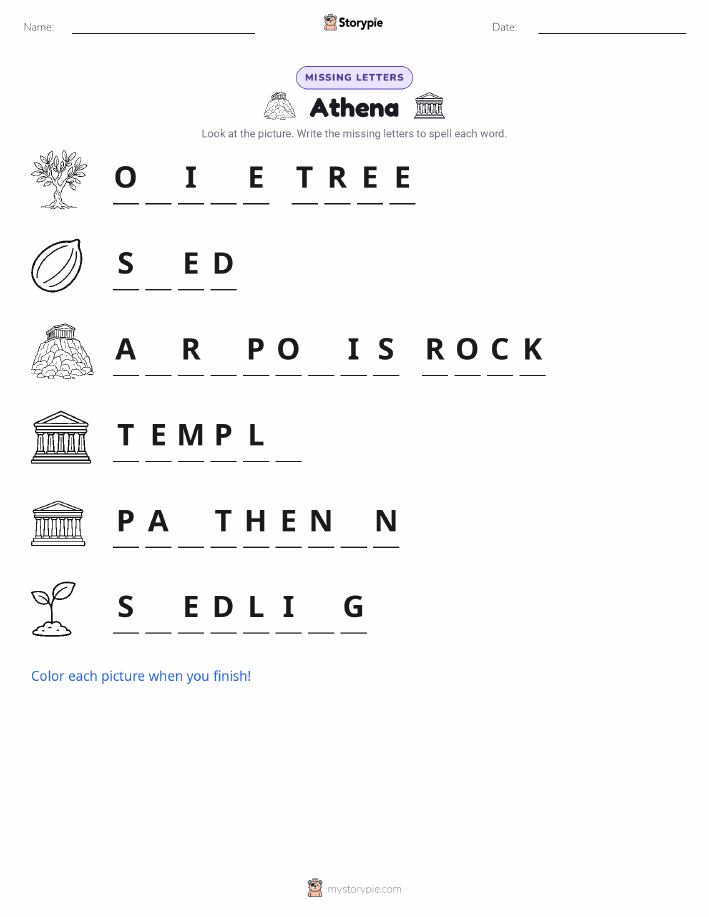
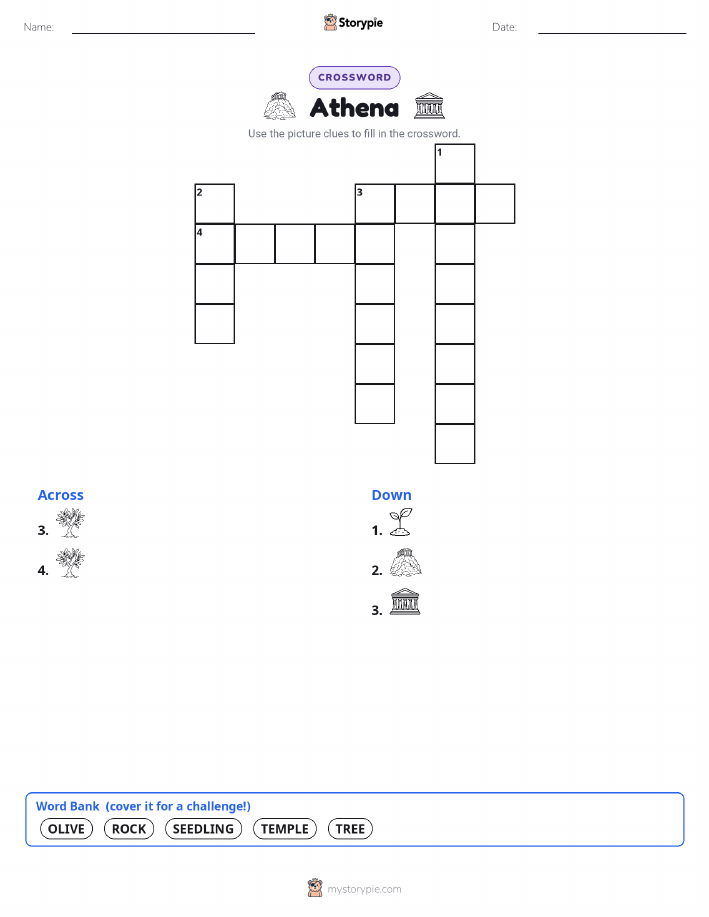
28 worksheets · answer keys · full story · quiz · Ages 10-12 · CEFR B2
Plus adds 244,000+ more stories in 27 languages, audio for every one, and printables for all of them.
Just want Athena?
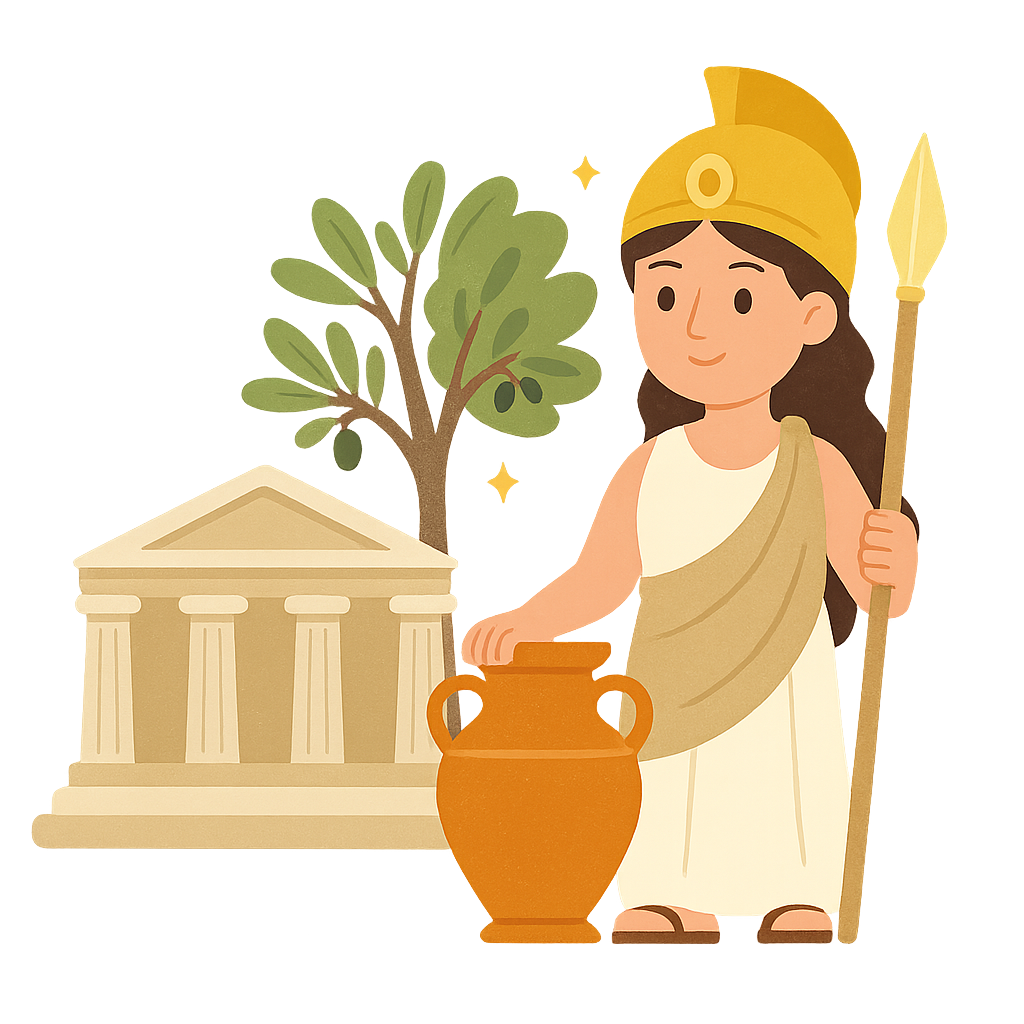
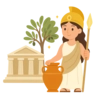
My gaze often drifts from the cloudy peaks of Mount Olympus down to the world of mortals, but there was one city that always held my attention. It shimmered under the Aegean sun, a jewel of white stone set against the blue sea, its people full of cleverness and ambition. I am Athena, and I knew this city deserved a guardian who valued wisdom and craft as much as its citizens did. One day, my powerful uncle, Poseidon, lord of the seas, stood beside me and declared his own intention to claim the city, leading to the famous myth we now call Athena and the Contest for Athens. The other gods decreed that we must compete; the one who gave the city the most useful gift would become its patron. The stage was set upon the high rock of the Acropolis, with the king, Cecrops, and all the people gathered to witness our divine challenge. I felt a quiet confidence, for I understood that true power isn't always found in crashing waves or shaking earth, but in the steady, patient gifts that help a civilization grow and flourish for generations.
Poseidon, ever dramatic, went first. He strode to the center of the rock, his bronze trident gleaming. With a mighty roar that echoed the sound of a tidal wave, he struck the limestone ground. The earth shuddered, and from the new crevice, a spring of water erupted, spraying a cool mist over the astonished crowd. They cheered, for water was precious in this sun-drenched land. But their joy was short-lived. As they rushed forward to taste the god's gift, their faces soured. The water was salty, as briny as the sea itself—a spectacular display, but ultimately useless for drinking or watering crops. Poseidon's gift was one of raw, untamed power, a reflection of his own nature. Then, it was my turn. I approached the rock not with a show of force, but with a quiet purpose. I knelt and planted a small seed in the earth. As I touched it, a sapling instantly sprouted, growing rapidly into a magnificent tree with silvery-green leaves and gnarled branches. It was the first olive tree. I explained its many gifts: its wood could be used to build homes and boats, its fruit could be eaten, and most importantly, its olives could be pressed into a golden oil to light their lamps, cook their food, and soothe their skin. My gift was one of peace, nourishment, and lasting prosperity.
Athena and the Contest for Athens
My gaze often drifts from the cloudy peaks of Mount Olympus down to the world of mortals, but there was one city that always held my attention. It shimmered under the Aegean sun, a jewel of white stone set against the blue sea, its people full of cleverness and ambition. I am Athena, and I knew this city deserved a guardian who valued wisdom and craft as much as its citizens did. One day, my powerful uncle, Poseidon, lord of the seas, stood beside me and declared his own intention to claim the city, leading to the famous myth we now call Athena and the Contest for Athens. The other gods decreed that we must compete; the one who gave the city the most useful gift would become its patron. The stage was set upon the high rock of the Acropolis, with the king, Cecrops, and all the people gathered to witness our divine challenge. I felt a quiet confidence, for I understood that true power isn't always found in crashing waves or shaking earth, but in the steady, patient gifts that help a civilization grow and flourish for generations.
Poseidon, ever dramatic, went first. He strode to the center of the rock, his bronze trident gleaming. With a mighty roar that echoed the sound of a tidal wave, he struck the limestone ground. The earth shuddered, and from the new crevice, a spring of water erupted, spraying a cool mist over the astonished crowd. They cheered, for water was precious in this sun-drenched land. But their joy was short-lived. As they rushed forward to taste the god's gift, their faces soured. The water was salty, as briny as the sea itself—a spectacular display, but ultimately useless for drinking or watering crops. Poseidon's gift was one of raw, untamed power, a reflection of his own nature. Then, it was my turn. I approached the rock not with a show of force, but with a quiet purpose. I knelt and planted a small seed in the earth. As I touched it, a sapling instantly sprouted, growing rapidly into a magnificent tree with silvery-green leaves and gnarled branches. It was the first olive tree. I explained its many gifts: its wood could be used to build homes and boats, its fruit could be eaten, and most importantly, its olives could be pressed into a golden oil to light their lamps, cook their food, and soothe their skin. My gift was one of peace, nourishment, and lasting prosperity.
The choice was clear. The people and the gods, acting as judges, saw the lasting value in my creation. Poseidon’s gift was a momentary wonder, but mine was a promise for the future—a resource that would sustain them for centuries. King Cecrops announced the verdict: my gift was superior. In my honor, the citizens named their magnificent city 'Athens.' From that day forward, I became their protector, and the olive tree became a sacred symbol throughout Greece. This story was told for thousands of years, carved into the stone of the Parthenon, the temple built for me on the very spot of our contest. It was a way for the ancient Greeks to explain their city's identity, built on wisdom and ingenuity rather than just force. Even today, the myth of our contest reminds us that the most valuable gifts aren't always the loudest or grandest. It shows that foresight, creativity, and gifts that nurture life are what truly build great civilizations. The olive branch remains a universal symbol of peace, a quiet echo of a choice made long ago on a sunlit hill in Athens, a story that continues to inspire us to build a wiser, more peaceful world.
Wow facts
About
The ancient Greek origin myth detailing the contest between the goddess Athena and the god Poseidon for the patronage of the city that would be named Athens.
Take a Quiz
Question 1 of 5
Describe Poseidon's character based on his actions in the story. What evidence supports your description?
Explore next




Want to do even more?
Go beyond exploring. Unlock tools that turn every story into real learning.

Storypie Plus for families
Full stories, quizzes, and printables. Nights and car rides, sorted.
- Unlimited audio stories
- Create Mode: your child stars in the story
- Offline downloads
- Printable worksheets & coloring pages

Why Storypie for Schools
Students engaged. Prep in seconds. Evenings back to you.
- Worksheets & Quizzes
- Classroom Management
- Formative Assessment
- Custom Curriculum & Lesson Plans
- 27 Languages

Why Storypie for Homeschool
Curriculum done. They'll ask for more. Hours back in your day.
- Worksheet Generator
- First-Person Audio Stories
- Built-in Comprehension Quizzes
- Custom Curriculum & Lesson Plans
- Print & Go Activities