English

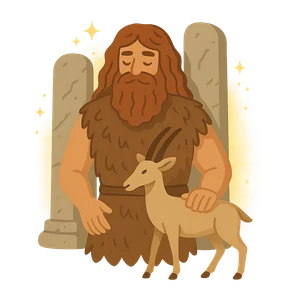
Enkidu
A central figure in the ancient Mesopotamian Epic of Gilgamesh…
Reads at Grades 6–8 Listens at Grades 4–8
Print & create
Answer keys·No prep·Free with an account
28 worksheets · answer keys · full story · quiz · Ages 10-12 · CEFR B2
Plus adds 208,000+ more stories in 27 languages, audio for every one, and printables for all of them.
Just want Enkidu?
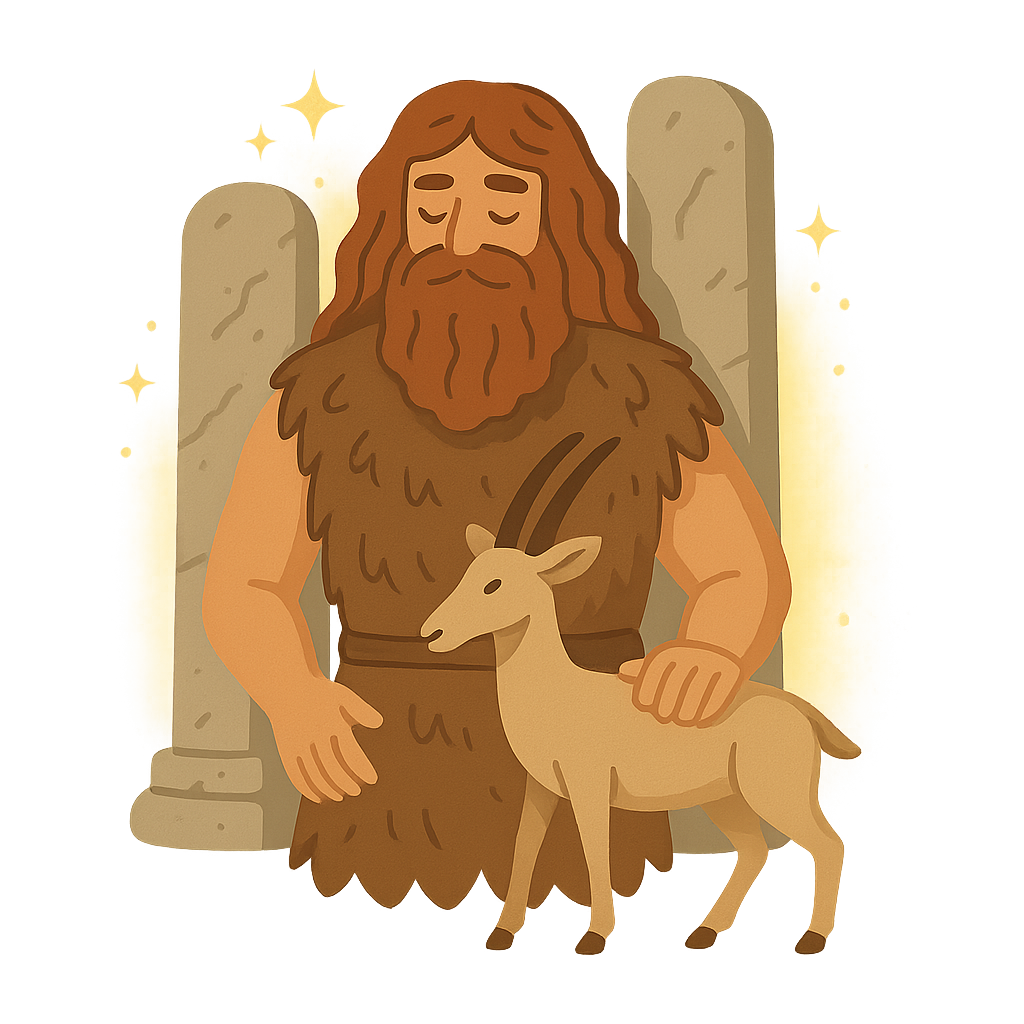
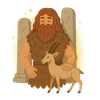
My first memories are not of walls or words, but of wind and earth. I am Enkidu, and my story began in the vast, open steppe of ancient Mesopotamia, where I lived among the gazelles, drank from the same waterholes, and knew nothing of mankind. My hair was long and matted, my body covered in fur, and my heart beat in time with the wild things of the world. I was strong, created by the gods from clay and water for a purpose I did not yet understand. All I knew was the freedom of the plains and the quiet companionship of the animals. But sometimes, a traveler or a hunter would spot me, a fleeting shadow on the horizon, and they would carry back tales to the great city of Uruk of a wild man who ran with the beasts. They spoke of a king in Uruk, a man so powerful and proud that he thought himself a god. His name was Gilgamesh, and the gods, hearing the pleas of his weary people, had fashioned me to be his equal, a rival to temper his arrogance. But I knew none of this. I only knew the rustle of reeds and the scent of rain. My life changed on the day a trapper, frustrated that I was helping the animals escape his snares, sought the advice of the king. Gilgamesh, ever bold, sent a woman from the temple, Shamhat, to find me. She did not approach with weapons or traps, but with patience and kindness. She sat by my waterhole, and over many days, she taught me the ways of humans. She shared bread with me, a food I had never tasted, and wine that warmed me in a way the sun never had. She clothed my body and cut my hair. Slowly, the wildness in my eyes softened, replaced by a new kind of understanding. She told me of Uruk, of music and art, of community, and of the mighty King Gilgamesh. A longing grew within me to see this man, this city, this other world. My journey from the wild to civilization is a core part of the great story known as the Epic of Gilgamesh.
The Wild Man and the King: An Epic Friendship
My first memories are not of walls or words, but of wind and earth. I am Enkidu, and my story began in the vast, open steppe of ancient Mesopotamia, where I lived among the gazelles, drank from the same waterholes, and knew nothing of mankind. My hair was long and matted, my body covered in fur, and my heart beat in time with the wild things of the world. I was strong, created by the gods from clay and water for a purpose I did not yet understand. All I knew was the freedom of the plains and the quiet companionship of the animals. But sometimes, a traveler or a hunter would spot me, a fleeting shadow on the horizon, and they would carry back tales to the great city of Uruk of a wild man who ran with the beasts. They spoke of a king in Uruk, a man so powerful and proud that he thought himself a god. His name was Gilgamesh, and the gods, hearing the pleas of his weary people, had fashioned me to be his equal, a rival to temper his arrogance. But I knew none of this. I only knew the rustle of reeds and the scent of rain. My life changed on the day a trapper, frustrated that I was helping the animals escape his snares, sought the advice of the king. Gilgamesh, ever bold, sent a woman from the temple, Shamhat, to find me. She did not approach with weapons or traps, but with patience and kindness. She sat by my waterhole, and over many days, she taught me the ways of humans. She shared bread with me, a food I had never tasted, and wine that warmed me in a way the sun never had. She clothed my body and cut my hair. Slowly, the wildness in my eyes softened, replaced by a new kind of understanding. She told me of Uruk, of music and art, of community, and of the mighty King Gilgamesh. A longing grew within me to see this man, this city, this other world. My journey from the wild to civilization is a core part of the great story known as the Epic of Gilgamesh.
Leaving my animal friends behind was the first sorrow I had ever known, but the pull of Uruk was stronger. When I arrived, the city was a kaleidoscope of overwhelming sensations—the noise of the marketplace, the smell of baked bricks and cooking spices, the sight of towering walls that scraped the sky. The people stared at me, this giant of a man who still carried the scent of the wilderness. I was told Gilgamesh was about to perform a ritual that showed his power over his people, and something inside me, a sense of justice learned from the balance of nature, roared in protest. I stood in his path, blocking a doorway, and for the first time, I came face to face with the king. He was as strong and proud as the stories had said, two-thirds god and one-third man, and he was furious that anyone would dare challenge him. We wrestled in the city square, a clash of two titans. The walls of the buildings shook with our strength. We were perfectly matched, and in that struggle, something shifted. We saw the reflection of ourselves in the other's eyes—the strength, the loneliness, the yearning for a true equal. When the dust settled, our anger was gone, replaced by a profound respect. From that moment, Gilgamesh and I were no longer rivals; we were brothers. My wild energy had found a focus, and his arrogance was tempered by my friendship. We became inseparable. Together, we sought great adventures to make our names last forever. Our most famous quest took us to the forbidden Cedar Forest, a sacred place guarded by a fearsome monster named Humbaba. The elders of Uruk warned us against it, but our youthful ambition was deaf to their fears. We journeyed for weeks, supporting each other through hardship, and finally faced the terrifying guardian. By combining our strengths, we defeated Humbaba. But our victory came at a cost. Later, when the goddess Ishtar demanded Gilgamesh marry her and he refused, she sent the Bull of Heaven to destroy Uruk in a rage. Again, we stood together, fighting side-by-side to protect the city, and we slayed the beast. We were heroes, celebrated by all, but we had defied the gods, and a heavy price was about to be paid.
An Enduring Legacy. The gods gathered in council, angered by our hubris. For killing Humbaba and the Bull of Heaven, they decreed that one of us must die. Their judgment fell upon me. A strange sickness seeped into my bones, draining the wild strength that had defined me. In my fevered dreams, I saw the dark, dusty underworld that awaited me. It was a grim and lonely place. I was terrified, and for a time, I was angry at the world I was leaving behind. Gilgamesh never left my side, his grief as immense as his strength. Seeing his sorrow, my anger faded, replaced by a deep sadness for the friend I would leave behind. My death shattered him. The mighty king who had feared nothing was now consumed by the fear of his own mortality. He could not accept that a life so full of strength and love could simply turn to dust. My end marked the beginning of his greatest journey—not for glory, but for eternal life. He wandered the earth, seeking the secret of immortality, hoping to conquer death itself. He never found it. Instead, he returned to Uruk a changed man, wiser and more compassionate. He finally understood that a person's legacy is not in living forever, but in the life they lead, the friendships they cherish, and the world they build for others. He had the story of our friendship and adventures carved into stone, ensuring it would never be forgotten. Our story, the Epic of Gilgamesh, was first told over 4,000 years ago in Mesopotamia, written on clay tablets in a script called cuneiform. It is one of the first and greatest adventure stories ever recorded. For thousands of years, it has inspired people to think about what it means to be a true friend, a good leader, and a brave human being. It teaches us that loss is a part of life, but so is love, and that the stories we share are our truest form of immortality. Even today, our tale reminds us that the greatest adventures are the ones we share with those we love, and that a life well-lived is the most epic story of all.
Wow facts
About
A central figure in the ancient Mesopotamian Epic of Gilgamesh, created by the gods as a wild man to challenge King Gilgamesh, but who becomes his best friend and companion.
Take a Quiz
Question 1 of 5
How did Enkidu's feelings about Gilgamesh change from when he first heard about him to after they wrestled?
Explore next



Want to do even more?
Go beyond exploring. Unlock tools that turn every story into real learning.

Storypie Plus for families
Full stories, quizzes, and printables. Nights and car rides, sorted.
- Unlimited audio stories
- Create Mode: your child stars in the story
- Offline downloads
- Printable worksheets & coloring pages

Why Storypie for Schools
Students engaged. Prep in seconds. Evenings back to you.
- Worksheets & Quizzes
- Classroom Management
- Formative Assessment
- Custom Curriculum & Lesson Plans
- 27 Languages

Why Storypie for Homeschool
Curriculum done. They'll ask for more. Hours back in your day.
- Worksheet Generator
- First-Person Audio Stories
- Built-in Comprehension Quizzes
- Custom Curriculum & Lesson Plans
- Print & Go Activities