English

Lech, Czech and Rus - Slavic
A foundational Slavic myth explaining the origins of the Polish (Lech), Czech (Czech)…
Reads at Grades K-2 Listens at K–3
Print & create
Answer keys·No prep·Free with an account
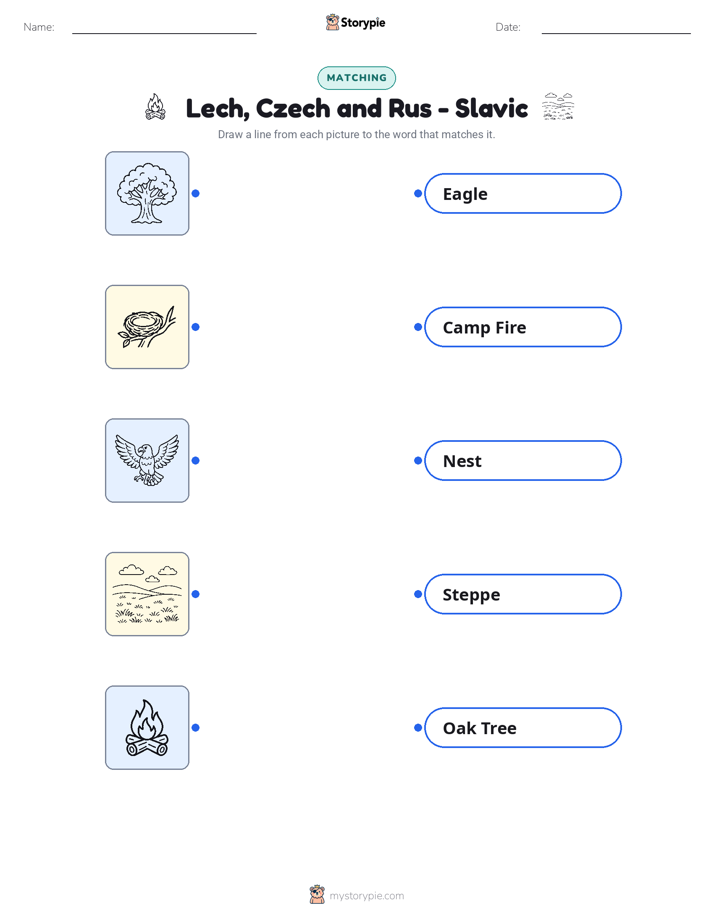
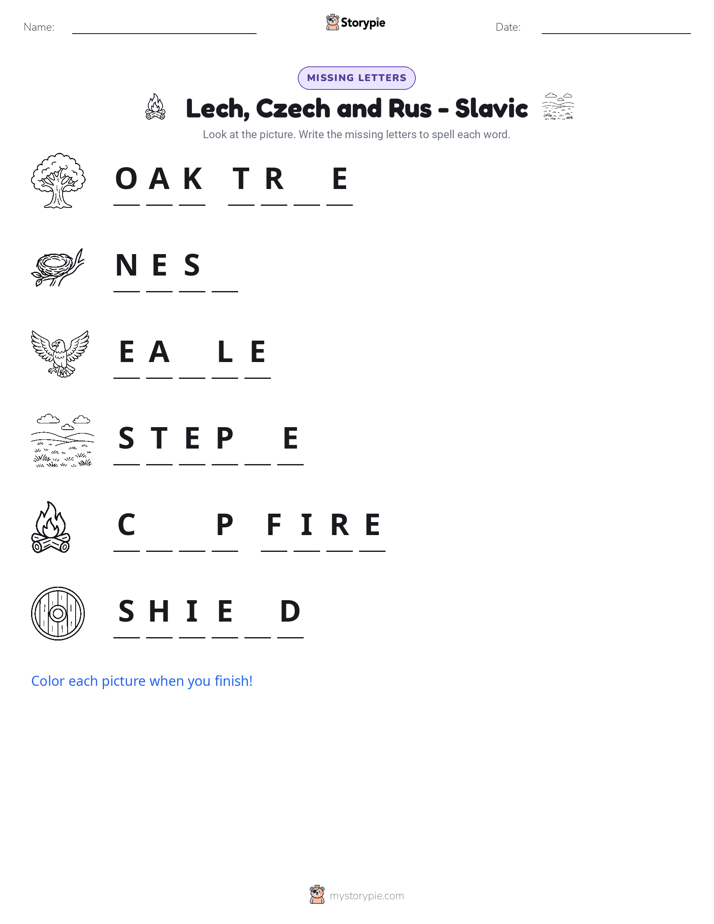
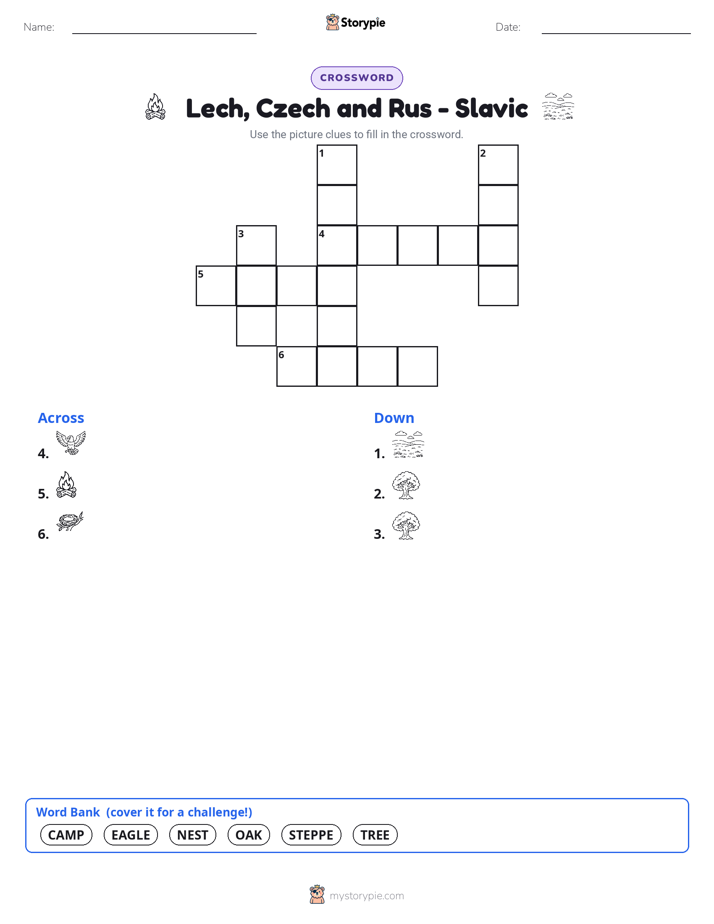
28 worksheets · answer keys · full story · quiz · Ages 6-8 · CEFR A2
Plus adds 164,000+ more stories in 27 languages, audio for every one, and printables for all of them.
Just want Lech, Czech and Rus - Slavic?
Hello, my name is Lech. Long ago, my brothers and I led our people through thick, green forests and across wide, flowing rivers, searching for the perfect place to build our homes. We knew we would have to part ways someday, but we hoped for a special sign to guide us. This is the story of how we found our nations, a tale people call The Legend of Lech, Czech, and Rus. We traveled together for a long time, our families and animals following close behind. The world was wild and new, full of whispering trees and sparkling streams. But our people grew tired, and we knew we could not all stay in one place.
One day, we reached a crossroads. My brother Czech, seeing a tall mountain in the distance, decided to lead his people south. He climbed to the top of Mount Říp and saw a beautiful land full of rolling hills and fertile fields, perfect for farming. He knew he had found his home. My other brother, Rus, felt called to the vast, flat plains to the east. He led his people that way, toward wide-open grasslands where they could build their own villages. I continued my journey north with my people, feeling a little lonely but hopeful. As the sun began to set, painting the sky in shades of fiery red and orange, I saw something incredible. Perched high in a giant oak tree was a magnificent white eagle, guarding its nest. The setting sun made its white feathers glow.
Seeing the brave and beautiful eagle in its nest felt like the sign I had been waiting for. It looked so strong and peaceful. I decided this was the place to build our home. I named the settlement Gniezno, which means 'nest' in the old language, to honor the eagle's home. The White Eagle became the symbol for me and all my people. This story explains how the three great Slavic nations began: the Poles (my people), the Czechs, and the Rus'. For hundreds of years, the tale of the three brothers has been told to children to explain where they came from. The White Eagle is still the national symbol of Poland today, appearing on its flag and coins. It reminds people of the courage it takes to find a home and the beautiful signs nature can give us. The story of Lech, Czech, and Rus helps us imagine a time of new beginnings and the strong bond that families share, even when they live far apart.
The Legend of the Three Brothers
Hello, my name is Lech. Long ago, my brothers and I led our people through thick, green forests and across wide, flowing rivers, searching for the perfect place to build our homes. We knew we would have to part ways someday, but we hoped for a special sign to guide us. This is the story of how we found our nations, a tale people call The Legend of Lech, Czech, and Rus. We traveled together for a long time, our families and animals following close behind. The world was wild and new, full of whispering trees and sparkling streams. But our people grew tired, and we knew we could not all stay in one place.
One day, we reached a crossroads. My brother Czech, seeing a tall mountain in the distance, decided to lead his people south. He climbed to the top of Mount Říp and saw a beautiful land full of rolling hills and fertile fields, perfect for farming. He knew he had found his home. My other brother, Rus, felt called to the vast, flat plains to the east. He led his people that way, toward wide-open grasslands where they could build their own villages. I continued my journey north with my people, feeling a little lonely but hopeful. As the sun began to set, painting the sky in shades of fiery red and orange, I saw something incredible. Perched high in a giant oak tree was a magnificent white eagle, guarding its nest. The setting sun made its white feathers glow.
Seeing the brave and beautiful eagle in its nest felt like the sign I had been waiting for. It looked so strong and peaceful. I decided this was the place to build our home. I named the settlement Gniezno, which means 'nest' in the old language, to honor the eagle's home. The White Eagle became the symbol for me and all my people. This story explains how the three great Slavic nations began: the Poles (my people), the Czechs, and the Rus'. For hundreds of years, the tale of the three brothers has been told to children to explain where they came from. The White Eagle is still the national symbol of Poland today, appearing on its flag and coins. It reminds people of the courage it takes to find a home and the beautiful signs nature can give us. The story of Lech, Czech, and Rus helps us imagine a time of new beginnings and the strong bond that families share, even when they live far apart.
Wow facts
About
A foundational Slavic myth explaining the origins of the Polish (Lech), Czech (Czech), and Rus' peoples through the story of three brothers who part ways to establish their own nations.
Take a Quiz
Question 1 of 4
What animal did Lech see that he took as a special sign?
Explore next




Want to do even more?
Go beyond exploring. Unlock tools that turn every story into real learning.

Storypie Plus for families
Full stories, quizzes, and printables. Nights and car rides, sorted.
- Unlimited audio stories
- Create Mode: your child stars in the story
- Offline downloads
- Printable worksheets & coloring pages

Why Storypie for Schools
Students engaged. Prep in seconds. Evenings back to you.
- Worksheets & Quizzes
- Classroom Management
- Formative Assessment
- Custom Curriculum & Lesson Plans
- 27 Languages

Why Storypie for Homeschool
Curriculum done. They'll ask for more. Hours back in your day.
- Worksheet Generator
- First-Person Audio Stories
- Built-in Comprehension Quizzes
- Custom Curriculum & Lesson Plans
- Print & Go Activities