English

Roman Mythology
The foundational myth of Rome, telling the story of twin brothers, Romulus and Remus…
Reads at Grades 6–8 Listens at Grades 4–8
Print & create
Answer keys·No prep·Free with an account
28 worksheets · answer keys · full story · quiz · Ages 10-12 · CEFR B2
Plus adds 208,000+ more stories in 27 languages, audio for every one, and printables for all of them.
Just want Roman Mythology?
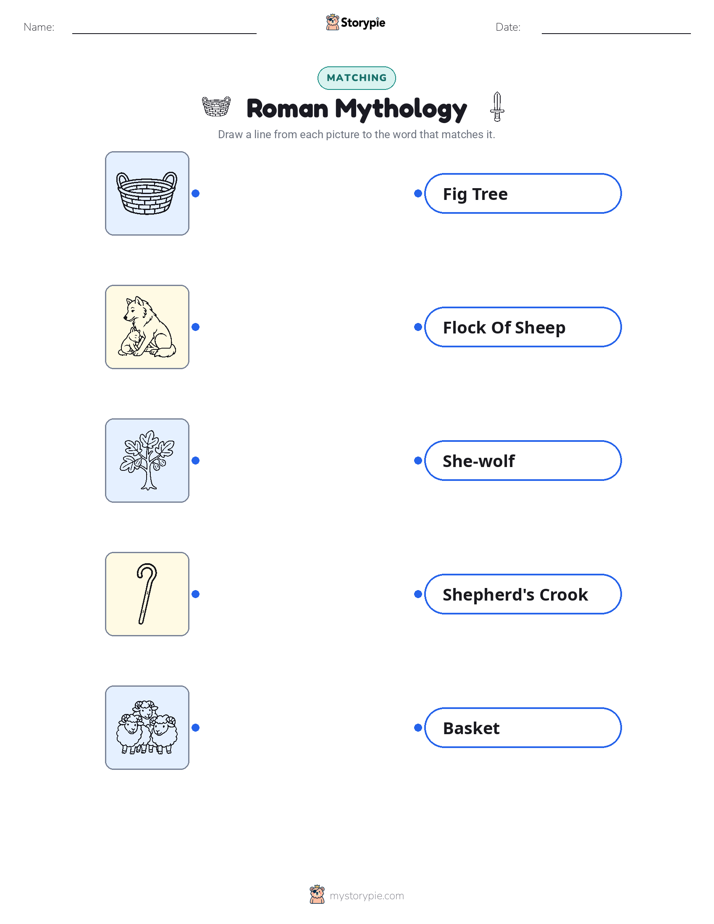
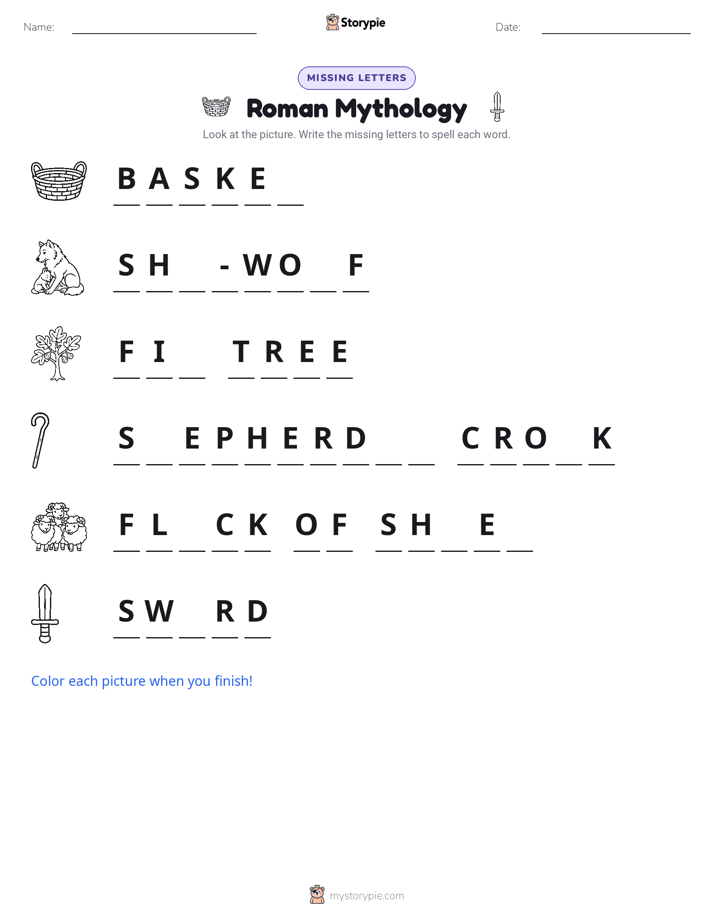
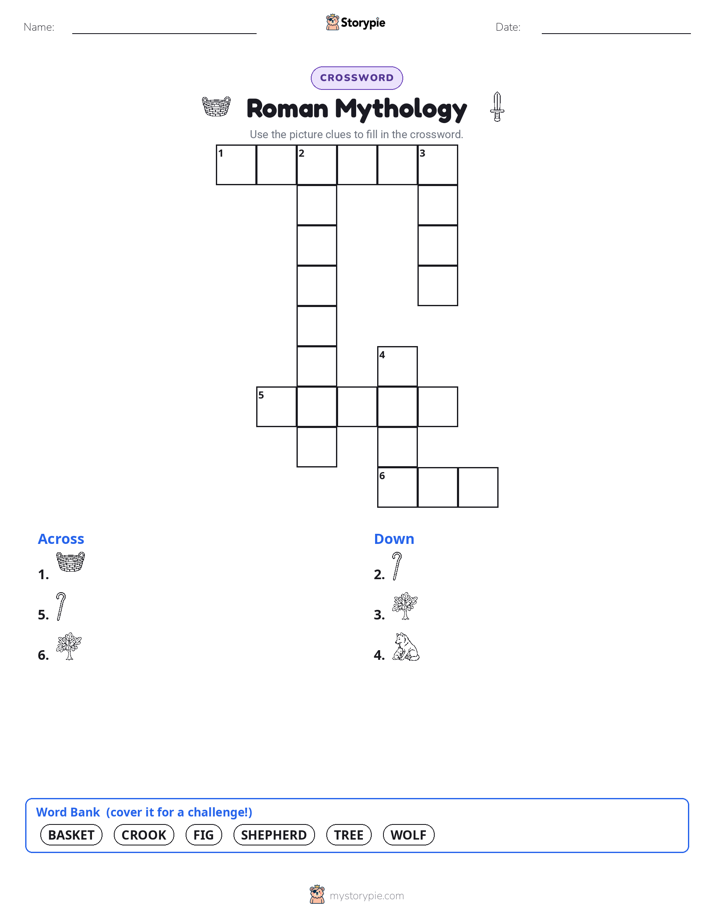
The cool water of the River Tiber lapped against the sides of my basket, a sound I can still recall, like a whisper of the future. My brother, Remus, slept beside me, his tiny fist clenched, unaware of the great and terrible destiny that churned in the currents beneath us. My name is Romulus, and our story is one that built an empire from a riverbank legend; it is the myth of the founding of Rome. Our great-uncle, the cruel King Amulius, had heard a prophecy that we, the twin sons of the god Mars and the priestess Rhea Silvia, would one day overthrow him. Fearing this, he ordered us cast into the river to perish. But the river god, Tiberinus, had other plans. He calmed the waters, guiding our humble vessel to the soft mud beneath a fig tree. It was there, as the sun warmed our faces, that our first mother found us. Not a human, but a magnificent she-wolf, her fur the color of the evening shadows. She nudged us with her wet nose, her eyes filled with a wild kindness, and offered us her milk, saving us from starvation. We were children of a god, but we were nursed by a beast, a sign that our city would be one of both divine will and untamed strength.
A kind shepherd named Faustulus discovered us under the care of the she-wolf, whom he called Lupa. He and his wife, Acca Larentia, raised us as their own sons among the rolling hills and green pastures. We grew up strong and fearless, our bodies hardened by the sun and our spirits sharpened by the wildness of our surroundings. We led the other young shepherds, defending our flocks from predators and challenging the authority of the king's men. Remus was always the quicker to laugh, his heart full of daring, while I was more thoughtful, my mind already tracing the lines of walls and towers in the dust. We knew we were different, that a destiny greater than a shepherd's life awaited us, but we did not yet know its shape. The truth was revealed when Remus was captured in a dispute and brought before our grandfather, King Numitor, whom Amulius had deposed. Seeing the noble bearing of my brother, and hearing Faustulus's tale of our discovery, Numitor realized who we were. I gathered our band of shepherds, and together we stormed the palace, defeated our wicked great-uncle, and restored our grandfather to his rightful throne. We were no longer just shepherds; we were princes, grandsons of a king, and sons of a god.
The Founding of Rome: The Tale of Romulus and Remus
The cool water of the River Tiber lapped against the sides of my basket, a sound I can still recall, like a whisper of the future. My brother, Remus, slept beside me, his tiny fist clenched, unaware of the great and terrible destiny that churned in the currents beneath us. My name is Romulus, and our story is one that built an empire from a riverbank legend; it is the myth of the founding of Rome. Our great-uncle, the cruel King Amulius, had heard a prophecy that we, the twin sons of the god Mars and the priestess Rhea Silvia, would one day overthrow him. Fearing this, he ordered us cast into the river to perish. But the river god, Tiberinus, had other plans. He calmed the waters, guiding our humble vessel to the soft mud beneath a fig tree. It was there, as the sun warmed our faces, that our first mother found us. Not a human, but a magnificent she-wolf, her fur the color of the evening shadows. She nudged us with her wet nose, her eyes filled with a wild kindness, and offered us her milk, saving us from starvation. We were children of a god, but we were nursed by a beast, a sign that our city would be one of both divine will and untamed strength.
A kind shepherd named Faustulus discovered us under the care of the she-wolf, whom he called Lupa. He and his wife, Acca Larentia, raised us as their own sons among the rolling hills and green pastures. We grew up strong and fearless, our bodies hardened by the sun and our spirits sharpened by the wildness of our surroundings. We led the other young shepherds, defending our flocks from predators and challenging the authority of the king's men. Remus was always the quicker to laugh, his heart full of daring, while I was more thoughtful, my mind already tracing the lines of walls and towers in the dust. We knew we were different, that a destiny greater than a shepherd's life awaited us, but we did not yet know its shape. The truth was revealed when Remus was captured in a dispute and brought before our grandfather, King Numitor, whom Amulius had deposed. Seeing the noble bearing of my brother, and hearing Faustulus's tale of our discovery, Numitor realized who we were. I gathered our band of shepherds, and together we stormed the palace, defeated our wicked great-uncle, and restored our grandfather to his rightful throne. We were no longer just shepherds; we were princes, grandsons of a king, and sons of a god.
With our grandfather ruling once more, Remus and I yearned to build a city of our own. We returned to the seven hills where the she-wolf had found us, the place where our story began. But here, our shared dream began to fracture. I wished to build on the Palatine Hill, a strategic and easily defensible position. Remus favored the Aventine Hill. We were brothers, two halves of a whole, but for the first time, we could not agree. To settle the matter, we decided to consult the gods through augury, a sacred ritual of watching the flight of birds. Remus, on his hill, was the first to see a sign. "Six vultures!" he shouted in triumph. "The gods favor me!" But moments later, as the sun climbed higher, I saw a flock of twelve circle above my head on the Palatine. "I have seen double your number, brother! The favor is mine!" The gods had sent a conflicting message. Who had their favor? The one who saw the birds first, or the one who saw more? Our argument grew heated, a storm of pride and ambition brewing between us. To mark the boundary of my proposed city, I began digging a shallow trench. Remus, in a fit of mockery and defiance, leaped over it, a grave insult to the sacred laws of a new city. In that terrible moment, our brotherhood was broken by a flash of anger and a tragic blow. My brother fell, and the dream we once shared became mine to carry alone, a victory forever shadowed by loss.
With a heavy heart, I completed the walls on the Palatine Hill. On April 21st, 753 BCE, I founded my city and, in honor of my own name, I called it Rome. I became its first king, establishing laws and a senate, and welcoming all who sought a new beginning—runaways, outcasts, and adventurers. From this small settlement on a hill, Rome grew. It became a republic, then an empire that stretched across the known world, its legions, laws, and language shaping the course of history. Our story, the tale of the twin boys saved by a wolf, became the founding myth of the Roman people. It gave them a sense of divine origin, of a destiny to rule, and of a strength born from both the heavens and the wild earth. The image of the she-wolf nursing Remus and me is still the symbol of the city today, carved in stone and cast in bronze. This myth teaches us about ambition, the painful cost of conflict, and how something immense and lasting can grow from a difficult beginning. It reminds us that our greatest creations are often born from both triumph and sorrow. And even now, thousands of years later, when people look at the ruins of the Roman Forum or read the words of Roman poets, they are connecting with the story that began with two babies in a basket, floating down a fateful river.
Wow facts
About
The foundational myth of Rome, telling the story of twin brothers, Romulus and Remus, who were raised by a she-wolf and later founded the city of Rome.
Take a Quiz
Question 1 of 5
What character traits did Romulus and Remus display as young shepherds, and how did these traits foreshadow their future conflict?
Explore next




Want to do even more?
Go beyond exploring. Unlock tools that turn every story into real learning.

Storypie Plus for families
Full stories, quizzes, and printables. Nights and car rides, sorted.
- Unlimited audio stories
- Create Mode: your child stars in the story
- Offline downloads
- Printable worksheets & coloring pages

Why Storypie for Schools
Students engaged. Prep in seconds. Evenings back to you.
- Worksheets & Quizzes
- Classroom Management
- Formative Assessment
- Custom Curriculum & Lesson Plans
- 27 Languages

Why Storypie for Homeschool
Curriculum done. They'll ask for more. Hours back in your day.
- Worksheet Generator
- First-Person Audio Stories
- Built-in Comprehension Quizzes
- Custom Curriculum & Lesson Plans
- Print & Go Activities