English

Canadian Space Agency
The Canadian Space Agency (CSA) is the national space agency of Canada…
Reads at Grades 6–8 Listens at Grades 4–8
Print & create
Answer keys·No prep·Free with an account
28 worksheets · answer keys · full story · quiz · Ages 10-12 · CEFR B2
Plus adds 116,000+ more stories in 27 languages, audio for every one, and printables for all of them.
Just want Canadian Space Agency?

We are the Canadian Space Agency, or CSA—our name in French is Agence spatiale canadienne. Our mission is to guide Canada’s journey into space, overseeing the country’s exploration and use of the final frontier for the benefit of all Canadians. Although Canada’s space story began much earlier, we were officially established on March 1st, 1989. Before that time, various government departments and research groups worked on different space-related projects. The creation of our agency was a major step forward, as it brought all of these civil space activities together under one roof. This unification allowed for a more focused and coordinated national space program. Our headquarters, the John H. Chapman Space Centre, is located in Quebec, and from there, we manage a wide range of projects that reach from our own planet’s orbit to the deepest corners of the universe.
Our roots, however, go back decades before our official founding. Canada was an early pioneer in the Space Age, and one of the country's most significant early achievements was the Alouette 1 satellite. Launched in 1962, this small but mighty satellite made history. With its launch, Canada became the third nation in the world, after the Soviet Union and the United States, to successfully design and build its own satellite. This was a remarkable accomplishment that demonstrated our country's advanced scientific and technological capabilities. The mission of Alouette 1 was to study the ionosphere, a layer of Earth's upper atmosphere filled with charged particles. Understanding this region was crucial for improving long-distance radio communication. The data Alouette 1 sent back was invaluable, and its success proved that Canada could be a serious contributor to space science. This early work laid a strong foundation of expertise and ambition, paving the way for the more complex missions we would undertake in the future.
Canada in Space: The Story of the CSA
We are the Canadian Space Agency, or CSA—our name in French is Agence spatiale canadienne. Our mission is to guide Canada’s journey into space, overseeing the country’s exploration and use of the final frontier for the benefit of all Canadians. Although Canada’s space story began much earlier, we were officially established on March 1st, 1989. Before that time, various government departments and research groups worked on different space-related projects. The creation of our agency was a major step forward, as it brought all of these civil space activities together under one roof. This unification allowed for a more focused and coordinated national space program. Our headquarters, the John H. Chapman Space Centre, is located in Quebec, and from there, we manage a wide range of projects that reach from our own planet’s orbit to the deepest corners of the universe.
Our roots, however, go back decades before our official founding. Canada was an early pioneer in the Space Age, and one of the country's most significant early achievements was the Alouette 1 satellite. Launched in 1962, this small but mighty satellite made history. With its launch, Canada became the third nation in the world, after the Soviet Union and the United States, to successfully design and build its own satellite. This was a remarkable accomplishment that demonstrated our country's advanced scientific and technological capabilities. The mission of Alouette 1 was to study the ionosphere, a layer of Earth's upper atmosphere filled with charged particles. Understanding this region was crucial for improving long-distance radio communication. The data Alouette 1 sent back was invaluable, and its success proved that Canada could be a serious contributor to space science. This early work laid a strong foundation of expertise and ambition, paving the way for the more complex missions we would undertake in the future.
Perhaps our most famous and visible contribution to space exploration is a series of remarkable robotic arms. The story of our leadership in space robotics began with the Canadarm, a game-changing piece of technology that first flew into orbit aboard the U.S. Space Shuttle Columbia in 1981. This 15-meter-long arm worked like a human arm but on a massive scale. Operated by astronauts from inside the shuttle, it could move with incredible precision to deploy, capture, and repair satellites. Its work was essential to the success of countless missions, making it a symbol of Canadian innovation seen around the world. The triumph of the original Canadarm led us to develop its successor, Canadarm2. This next-generation arm is bigger, smarter, and more advanced. It was installed on the International Space Station (ISS), where it serves as the station’s primary robotic manipulator. It has helped to build the station, move supplies and equipment, and assist astronauts during spacewalks. To give Canadarm2 even greater dexterity, we built Dextre, a two-armed robotic "hand" that can attach to the end of the arm. Dextre can perform delicate tasks that would otherwise require a spacewalk, like replacing batteries or cameras. Together, these robotic systems have cemented our reputation as a world leader in space robotics.
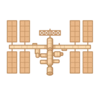
Our expertise in robotics became our ticket to participating in one of the greatest engineering projects in history: the International Space Station. The ISS is a collaborative project involving multiple space agencies from around the world, and it serves as a permanently inhabited laboratory in orbit. Our contribution of the Canadarm2 and Dextre robotic systems was so critical to the station’s construction and maintenance that it secured our place as a full partner in the program. This partnership didn't just mean we provided hardware; it also earned Canada the right to send our astronauts to live and work aboard the station. The Canadian astronaut corps has played a vital role on the ISS, conducting a wide range of scientific experiments in the unique microgravity environment. They have studied how the human body adapts to space, which helps prepare for future long-duration missions to the Moon and Mars. They have also researched the properties of different materials and fluids, leading to innovations on Earth. Canadian astronauts like Chris Hadfield have also become powerful communicators, sharing the wonder of spaceflight with millions of people back home and inspiring a new generation to look up at the stars.
While our astronauts and robotic arms capture much of the public's imagination, a significant part of our work is focused on looking back at our own planet. We develop and operate sophisticated satellites that provide crucial information to help manage life here on Earth. The most prominent among these are our RADARSAT satellites. Unlike cameras that need light, these satellites use powerful radar technology to create detailed images of the Earth’s surface, day or night, and in any weather condition. This capability is especially important for a country as vast and geographically diverse as Canada. RADARSAT data is used to monitor sea ice in the Arctic, which is essential for safe ship navigation. It helps us detect oil spills and other forms of pollution, manage our natural resources like forests and water, and respond effectively to natural disasters such as floods and wildfires. Our work also extends far beyond Earth's orbit. We contribute key technologies to international astronomy missions, helping humanity peer deeper into the cosmos. For instance, we provided the critical Fine Guidance Sensor for the James Webb Space Telescope. This instrument allows the telescope to point with incredible stability and precision, enabling it to capture stunning images of the earliest galaxies in the universe.
Today, we are building on our legacy of exploration and innovation as we look toward humanity’s next great destination: the Moon. We are a proud partner in the Artemis program, a U.S.-led international effort to return humans to the lunar surface and establish a sustainable presence there. Our key contribution to this historic endeavor will be Canadarm3. This new, highly intelligent robotic system will be installed on the Lunar Gateway, a small space station that will orbit the Moon and serve as a staging point for missions to the surface. Canadarm3 will be equipped with advanced artificial intelligence, allowing it to operate autonomously without direct human control for long periods. It will be responsible for inspecting and maintaining the Gateway, relocating modules, and assisting astronauts. In exchange for this critical technology, we have secured a seat for one of our astronauts on a future Artemis mission that will journey to the Moon. This opportunity ensures that Canada will continue to be at the forefront of space exploration, carrying our nation's legacy of achievement to new celestial shores.
Wow facts
About
The Canadian Space Agency (CSA) is the national space agency of Canada, responsible for advancing the knowledge of space through science and ensuring that space science and technology provide social and economic benefits for Canadians.
Take a Quiz
Question 1 of 5
According to the story, what was the direct result of Canada providing robotic systems for the International Space Station?
Explore next





Want to do even more?
Go beyond exploring. Unlock tools that turn every story into real learning.

Storypie Plus for families
Full stories, quizzes, and printables. Nights and car rides, sorted.
- Unlimited audio stories
- Create Mode: your child stars in the story
- Offline downloads
- Printable worksheets & coloring pages

Why Storypie for Schools
Students engaged. Prep in seconds. Evenings back to you.
- Worksheets & Quizzes
- Classroom Management
- Formative Assessment
- Custom Curriculum & Lesson Plans
- 27 Languages

Why Storypie for Homeschool
Curriculum done. They'll ask for more. Hours back in your day.
- Worksheet Generator
- First-Person Audio Stories
- Built-in Comprehension Quizzes
- Custom Curriculum & Lesson Plans
- Print & Go Activities