English

Doctors Without Borders
An international humanitarian non-governmental organization that provides medical care in conflict zones and…
Reads at Grades 6–8 Listens at Grades 4–8
Print & create
Answer keys·No prep·Free with an account
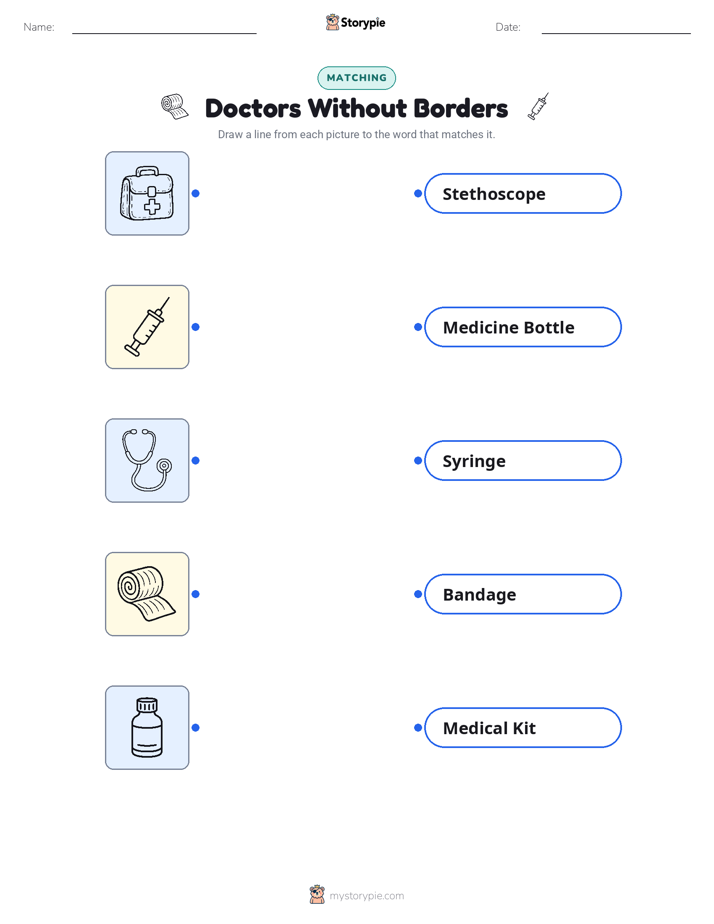
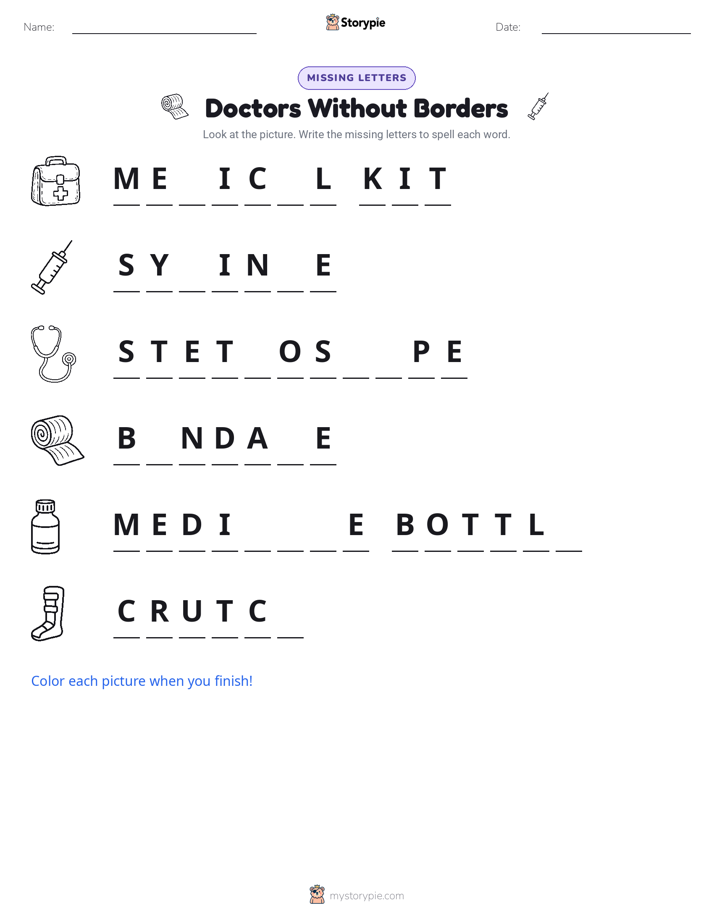
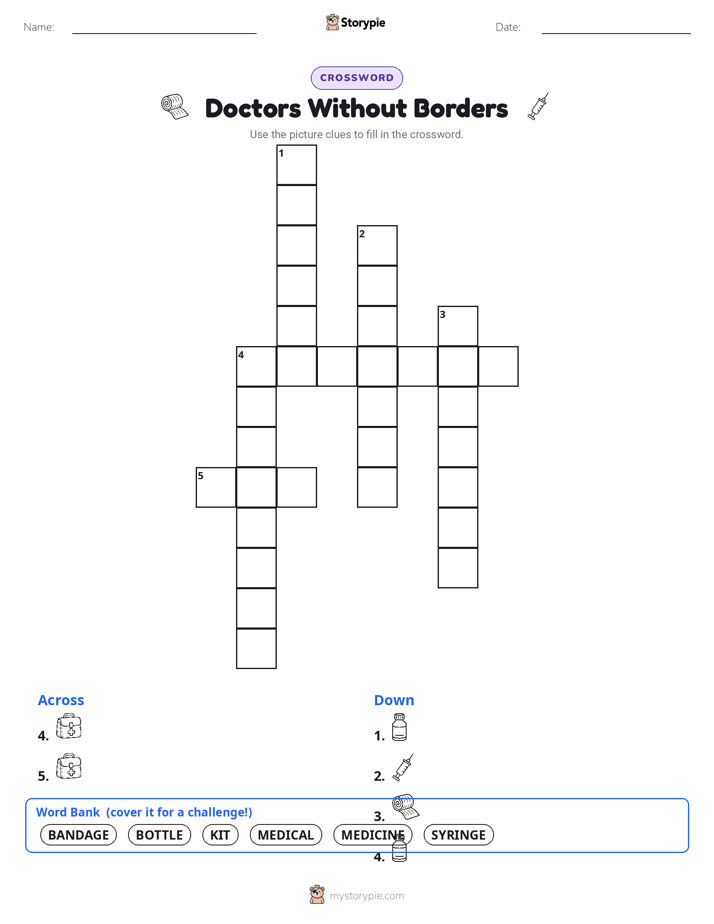
28 worksheets · answer keys · full story · quiz · Ages 10-12 · CEFR B2
Plus adds 116,000+ more stories in 27 languages, audio for every one, and printables for all of them.
Just want Doctors Without Borders?
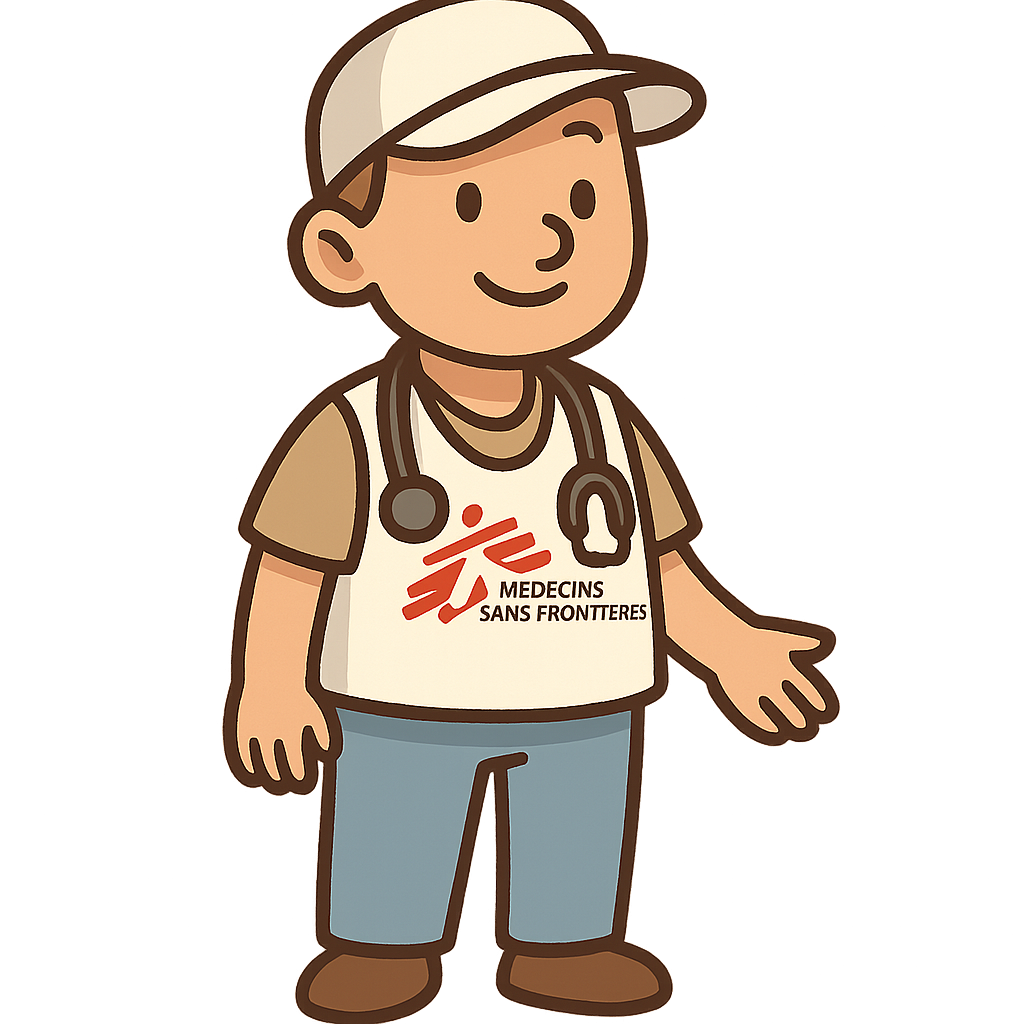
We are Médecins Sans Frontières, a name you might know by its English translation, Doctors Without Borders. Our story began in Paris, France, on December 22nd, 1971, when a group of French doctors and journalists decided that a new kind of humanitarian organization was needed. From the very start, our purpose was twofold. First, we aimed to provide life-saving medical care to people caught in emergencies, like wars, natural disasters, or epidemics. Second, we committed ourselves to the principle of “témoignage,” or “bearing witness.” This means we believe it is our duty not only to treat patients but also to speak out publicly about the suffering we see and its causes.
To do this work effectively, we established a set of core principles that guide us to this day. We are impartial, which means we offer help based on need alone, regardless of a person’s race, religion, or political beliefs. A patient is a patient, and our only goal is to provide care. We are also fiercely independent. This means we do not take sides in conflicts and we remain free from the influence of any government, corporation, or political party. This independence allows us to go where we are needed most and to speak the truth about what we witness, even when it is difficult for others to hear.
In the 1970s, we put these principles into action on our very first missions. We traveled to places that were often dangerous and hard to reach, driven by the belief that everyone deserves medical care. In 1972, a massive earthquake devastated the city of Managua in Nicaragua. Our teams went there to provide emergency medical assistance to the injured and displaced. A few years later, in 1976, we began working in Lebanon during its long and difficult civil war, setting up clinics and operating on the wounded in the midst of the conflict. During this same period, we also launched missions to help refugees from Southeast Asia. Many people, often called “boat people,” were fleeing their homes by sea after the Vietnam War. We provided them with medical care and basic necessities, becoming one of the first organizations to assist them directly.
Médecins Sans Frontières: A Story of Aid and Action
We are Médecins Sans Frontières, a name you might know by its English translation, Doctors Without Borders. Our story began in Paris, France, on December 22nd, 1971, when a group of French doctors and journalists decided that a new kind of humanitarian organization was needed. From the very start, our purpose was twofold. First, we aimed to provide life-saving medical care to people caught in emergencies, like wars, natural disasters, or epidemics. Second, we committed ourselves to the principle of “témoignage,” or “bearing witness.” This means we believe it is our duty not only to treat patients but also to speak out publicly about the suffering we see and its causes.
To do this work effectively, we established a set of core principles that guide us to this day. We are impartial, which means we offer help based on need alone, regardless of a person’s race, religion, or political beliefs. A patient is a patient, and our only goal is to provide care. We are also fiercely independent. This means we do not take sides in conflicts and we remain free from the influence of any government, corporation, or political party. This independence allows us to go where we are needed most and to speak the truth about what we witness, even when it is difficult for others to hear.
In the 1970s, we put these principles into action on our very first missions. We traveled to places that were often dangerous and hard to reach, driven by the belief that everyone deserves medical care. In 1972, a massive earthquake devastated the city of Managua in Nicaragua. Our teams went there to provide emergency medical assistance to the injured and displaced. A few years later, in 1976, we began working in Lebanon during its long and difficult civil war, setting up clinics and operating on the wounded in the midst of the conflict. During this same period, we also launched missions to help refugees from Southeast Asia. Many people, often called “boat people,” were fleeing their homes by sea after the Vietnam War. We provided them with medical care and basic necessities, becoming one of the first organizations to assist them directly.
These early experiences prepared us for the immense challenges that lay ahead. As the 20th century continued, we found ourselves responding to some of the largest humanitarian crises in modern history. In 1984, a devastating famine swept across Ethiopia. We responded by setting up therapeutic feeding centers to treat severely malnourished children and adults. But our work there also presented a major ethical challenge. We witnessed the government misusing international aid, and true to our principle of bearing witness, we spoke out against it. As a result, we were expelled from the country. It was a difficult decision, but it demonstrated our unwavering commitment to our values. A decade later, in 1994, we faced the horror of the Rwandan genocide. While many organizations fled the violence, we were among the very few who stayed, determined to provide medical care to the survivors and speak out to the world about the atrocities taking place.
Our commitment to providing independent care and speaking out on behalf of vulnerable populations was recognized on a global scale. In 1999, we were awarded the Nobel Peace Prize. The Nobel Committee honored us for our pioneering humanitarian work and for our courage in challenging the silence that often surrounds great suffering. Receiving this award was a profound moment for us, not as a final achievement, but as a responsibility. We decided to use the prize money to address a specific injustice we saw every day in our work: the lack of access to essential medicines. Many of the diseases we treated, like tuberculosis and malaria, were curable, but the necessary drugs were too expensive for people in developing countries. We launched the Access Campaign, a project dedicated to pushing for lower drug prices and the development of new treatments for neglected diseases. This fight for more affordable and accessible medicine continues to be a central part of our work.
Today, we are a worldwide movement, with tens of thousands of staff members—doctors, nurses, logisticians, and administrators—from all over the globe working together. Our mission remains the same as it was in 1971, but the challenges have evolved. We respond to massive disease outbreaks, like the Ebola epidemic that struck West Africa, setting up treatment centers and working to stop the spread of the virus. We provide long-term medical care in conflict zones like Syria, where health systems have been destroyed by years of war. We also assist people caught in the global refugee crisis, offering medical and psychological support to those who have been forced to flee their homes. Through all of this, we continue to provide impartial medical care and to bear witness, ensuring that the stories of the people we help are not forgotten.
Wow facts
About
An international humanitarian non-governmental organization that provides medical care in conflict zones and to countries affected by endemic diseases and disasters.
Take a Quiz
Question 1 of 5
What does the French name 'Médecins Sans Frontières' mean in English?
Explore next





Want to do even more?
Go beyond exploring. Unlock tools that turn every story into real learning.

Storypie Plus for families
Full stories, quizzes, and printables. Nights and car rides, sorted.
- Unlimited audio stories
- Create Mode: your child stars in the story
- Offline downloads
- Printable worksheets & coloring pages

Why Storypie for Schools
Students engaged. Prep in seconds. Evenings back to you.
- Worksheets & Quizzes
- Classroom Management
- Formative Assessment
- Custom Curriculum & Lesson Plans
- 27 Languages

Why Storypie for Homeschool
Curriculum done. They'll ask for more. Hours back in your day.
- Worksheet Generator
- First-Person Audio Stories
- Built-in Comprehension Quizzes
- Custom Curriculum & Lesson Plans
- Print & Go Activities