English

Doctors Without Borders
An international humanitarian non-governmental organization that provides medical care in conflict zones and…
Reads at Grades 3–5 Listens at Grades 1–5
Print & create
Answer keys·No prep·Free with an account
28 worksheets · answer keys · full story · quiz · Ages 8-10 · CEFR B1
Plus adds 116,000+ more stories in 27 languages, audio for every one, and printables for all of them.
Just want Doctors Without Borders?
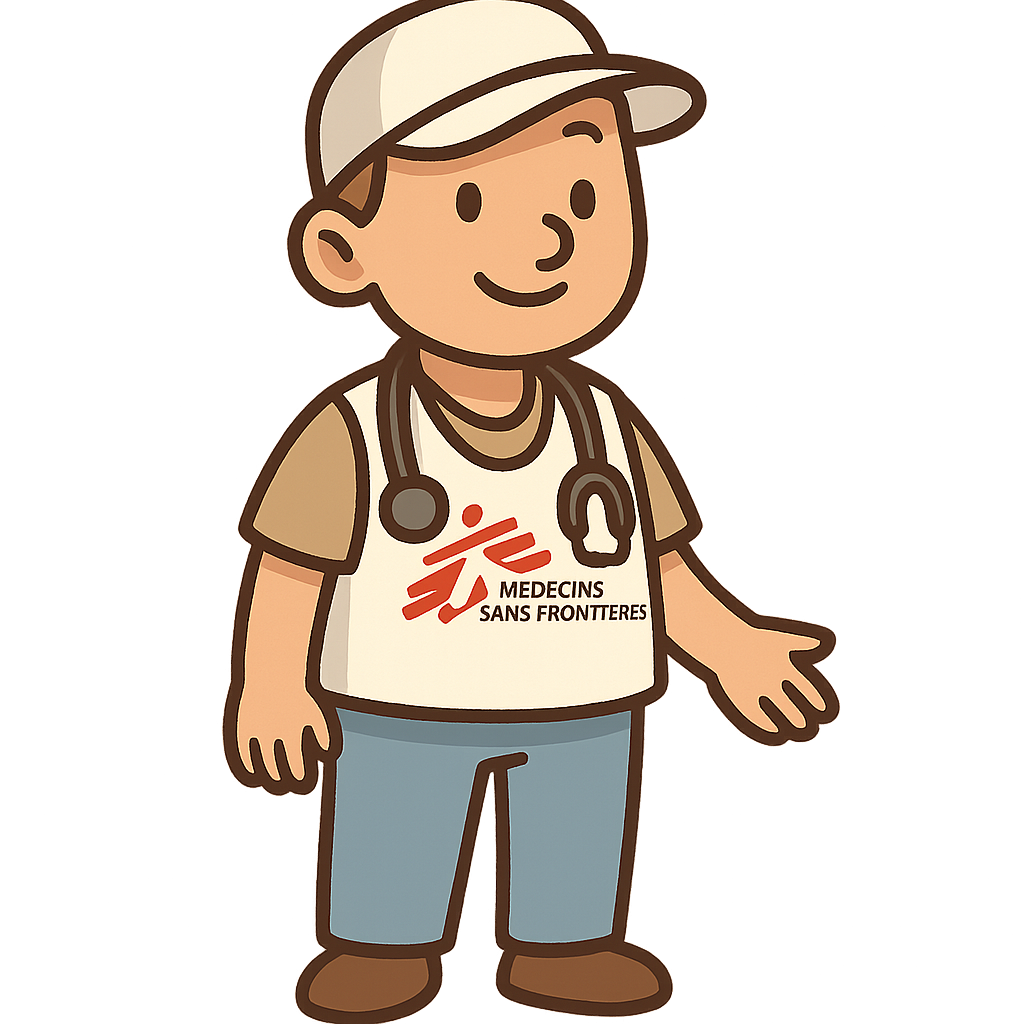
Hello. We are an international organization called Doctors Without Borders. In French, our name is Médecins Sans Frontières, which is why you will often see us called by our acronym, MSF. Our story began in Paris, France, all the way back in 1971. We were started by a group of French doctors and journalists who shared a powerful belief. They believed that every single person has the right to get medical care, no matter who they are or where they live. They also believed that this right doesn't stop during emergencies, like wars or natural disasters. In fact, that is when help is needed the most. Our founders wanted to create a new kind of aid organization, one that would be willing to go anywhere to help people who were suffering. Our mission was clear from the start: to provide life-saving medical care in places that others could not, or would not, go.
Shortly after we were formed in 1971, we began our work. We sent teams of volunteer doctors, nurses, and other experts to different parts of the world. One of our very first major missions took place in 1972. A powerful earthquake had struck the country of Nicaragua, leaving many people injured and without homes. Our teams traveled there and quickly set up medical clinics to treat the wounded. It was during these early experiences that we realized something important. Providing medicine and care was essential, but it wasn't always enough. The doctors and journalists who started our organization believed we had another important duty. We had to tell the world about the suffering we were seeing firsthand.
The Story of Doctors Without Borders
Hello. We are an international organization called Doctors Without Borders. In French, our name is Médecins Sans Frontières, which is why you will often see us called by our acronym, MSF. Our story began in Paris, France, all the way back in 1971. We were started by a group of French doctors and journalists who shared a powerful belief. They believed that every single person has the right to get medical care, no matter who they are or where they live. They also believed that this right doesn't stop during emergencies, like wars or natural disasters. In fact, that is when help is needed the most. Our founders wanted to create a new kind of aid organization, one that would be willing to go anywhere to help people who were suffering. Our mission was clear from the start: to provide life-saving medical care in places that others could not, or would not, go.
Shortly after we were formed in 1971, we began our work. We sent teams of volunteer doctors, nurses, and other experts to different parts of the world. One of our very first major missions took place in 1972. A powerful earthquake had struck the country of Nicaragua, leaving many people injured and without homes. Our teams traveled there and quickly set up medical clinics to treat the wounded. It was during these early experiences that we realized something important. Providing medicine and care was essential, but it wasn't always enough. The doctors and journalists who started our organization believed we had another important duty. We had to tell the world about the suffering we were seeing firsthand.
We gave this duty a special name based on a French word: 'témoignage,' which means "witnessing." For us, witnessing means more than just seeing something. It is our principle of speaking out when we see people in danger or when their human rights are being ignored. If we are working in a war zone and see that civilians are not being protected, we will talk about it. If we are in a country where people cannot get the medicine they need to survive, we will raise our voices to call for change. This idea combined the two professions of our founders: the doctors who healed and the journalists who informed. We believe that speaking out can sometimes save as many lives as surgery.
As the years went on, our work grew and took us to many of the world's most difficult places. Our medical teams learned how to respond to many different kinds of crises. We worked in large refugee camps in Southeast Asia, helping families who had been forced to flee their homes. We traveled to parts of Africa that were experiencing terrible famines, where food was scarce and many people were sick from hunger. There, we learned how to effectively treat severe malnutrition, especially in children. We became experts at setting up entire hospitals in tents or abandoned buildings, allowing our surgeons to perform operations in the middle of a crisis. We also organized large-scale vaccination campaigns, giving thousands of people shots to protect them from deadly diseases that can spread quickly in emergencies.
Our steady, impartial work around the globe eventually gained worldwide attention. In 1999, we received a very special and important honor: the Nobel Peace Prize. This award is given to people or organizations that have done the most to create peace in the world. The committee that chose us for the prize specifically honored our pioneering humanitarian work. They recognized our core belief that every person, no matter their background, has a right to receive help in a time of crisis. This award brought a lot of attention to our mission and helped people everywhere understand why providing independent medical care is so important for humanity.
Today, we are no longer just a small group of French doctors and journalists. We have grown into a global, international movement. Our staff and volunteers come from countries all over the world, and we work together to respond to the world’s biggest health crises. We continue to rush to the front lines of emergencies, like when we helped care for patients during the dangerous Ebola outbreak in West Africa. But we also provide long-term care in places where the local health systems are struggling to meet the needs of the people. To do all of this work effectively, we must protect one of our most important principles: our independence. This means we must be free to make our own decisions about where to go and who to help. To ensure this freedom, most of our funding comes from millions of private donors—ordinary people giving what they can. We do not take large amounts of money from governments. This way, our decisions are always guided by medical needs alone, not by politics. Our work continues, guided by the same mission we started with in 1971: to bring medical care to those who need it most, without borders.
Wow facts
About
An international humanitarian non-governmental organization that provides medical care in conflict zones and to countries affected by endemic diseases and disasters.
Take a Quiz
Question 1 of 5
What is the French name for Doctors Without Borders?
Explore next




Want to do even more?
Go beyond exploring. Unlock tools that turn every story into real learning.

Storypie Plus for families
Full stories, quizzes, and printables. Nights and car rides, sorted.
- Unlimited audio stories
- Create Mode: your child stars in the story
- Offline downloads
- Printable worksheets & coloring pages

Why Storypie for Schools
Students engaged. Prep in seconds. Evenings back to you.
- Worksheets & Quizzes
- Classroom Management
- Formative Assessment
- Custom Curriculum & Lesson Plans
- 27 Languages

Why Storypie for Homeschool
Curriculum done. They'll ask for more. Hours back in your day.
- Worksheet Generator
- First-Person Audio Stories
- Built-in Comprehension Quizzes
- Custom Curriculum & Lesson Plans
- Print & Go Activities