English

International Whaling Commission
The International Whaling Commission (IWC) is an intergovernmental organization established in 1946 to manage…
Reads at Grades 3–5 Listens at Grades 1–5
Print & create
Answer keys·No prep·Free with an account
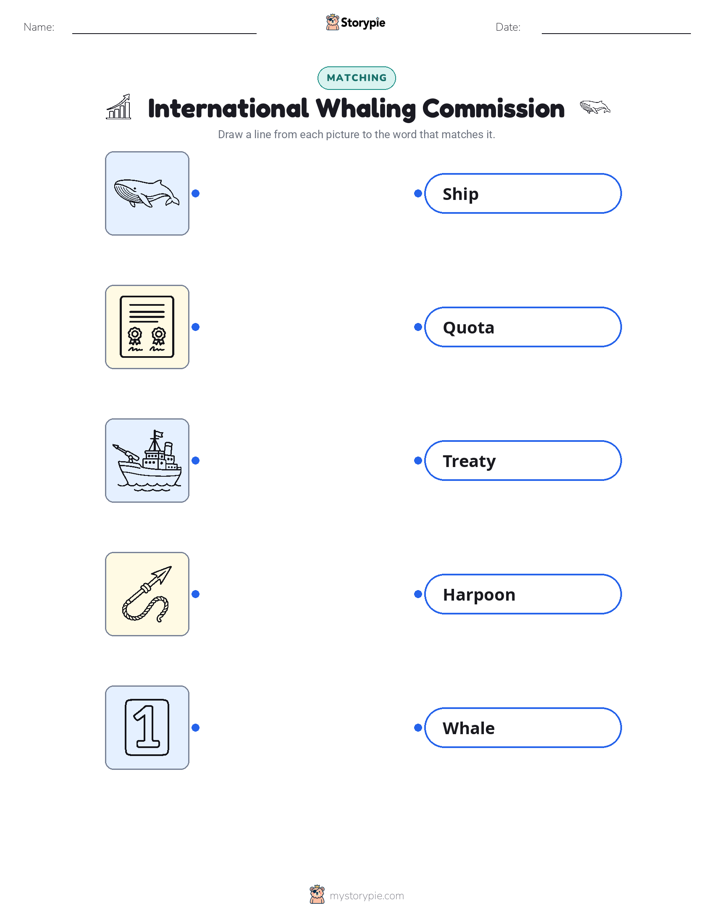
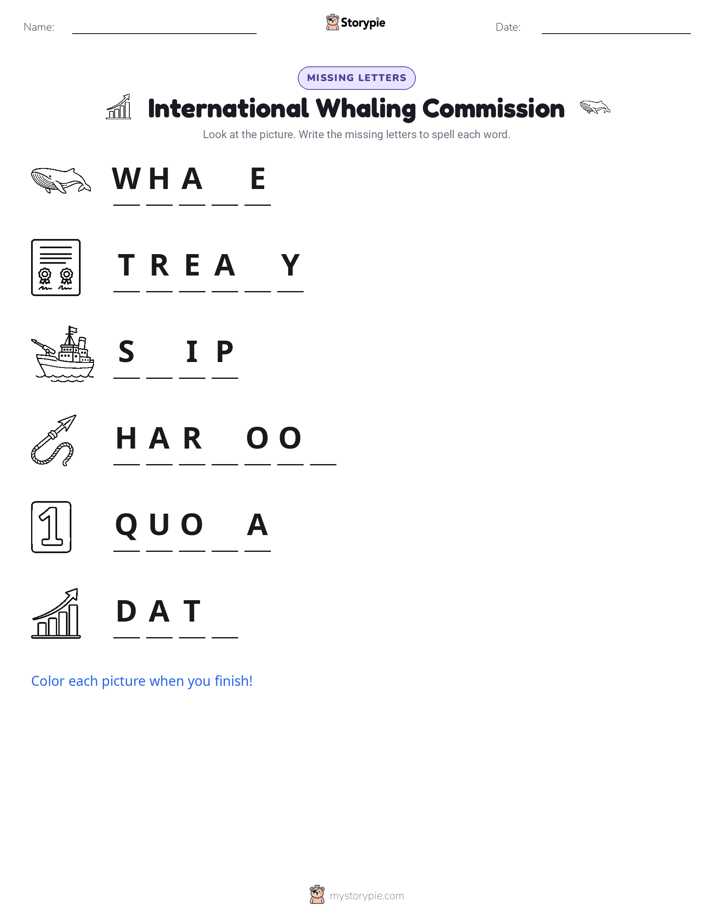
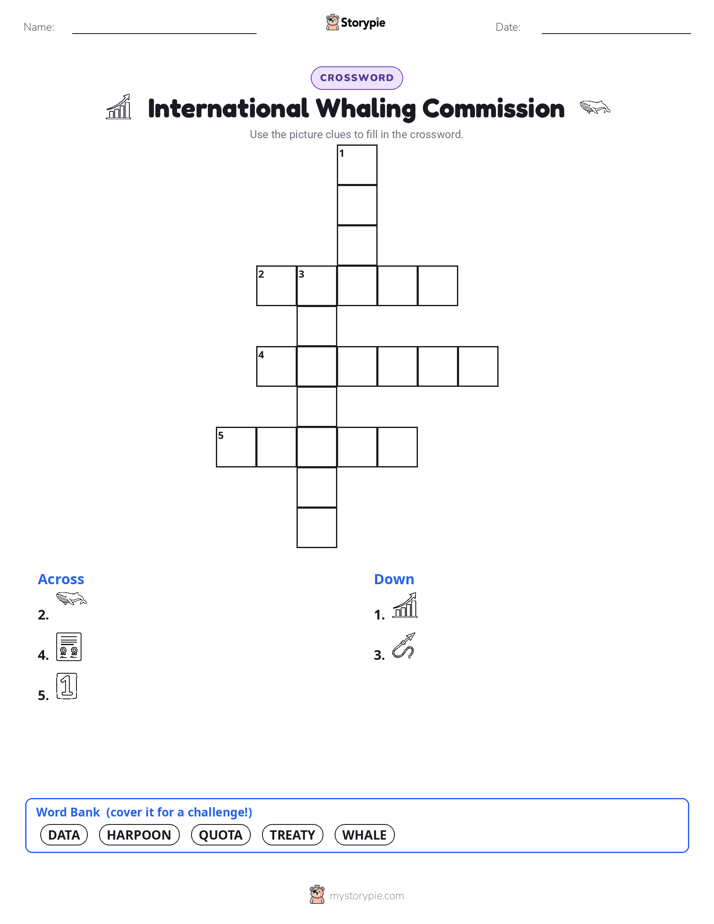
28 worksheets · answer keys · full story · quiz · Ages 8-10 · CEFR B1
Plus adds 116,000+ more stories in 27 languages, audio for every one, and printables for all of them.
Just want International Whaling Commission?
Hello. We are the International Whaling Commission, and our story is about working together to protect some of the largest and most amazing animals on Earth. You might know us by our shorter name, the IWC.
Our journey began in 1946. At that time, 15 countries came together to sign an important agreement. For many years, people had been hunting whales, and this was causing a serious problem. The number of whales in the ocean was getting smaller and smaller. If nothing was done, some types of whales might disappear forever. So, our first job was to bring order to the whaling industry. We were created to set rules for whaling to make sure that whale populations could be properly managed and would be around for future generations. Our goal was to make whaling sustainable, meaning it could continue without causing the whales to die out.
To make smart rules, we knew we couldn't just guess what to do. We needed facts and information. That’s why we created our Scientific Committee. This isn't just one or two people; it's a large group of the world's top whale scientists. These experts come from many different countries, and their job is to study whales in every ocean. They research how many whales there are, where they live, how they have their babies, and what dangers they face. The information they gather is incredibly important because it helps us understand the true condition of whale populations around the globe.
The research from our Scientific Committee brought us some very serious news. Their studies showed that the problem was much worse than many people had realized. Many species of whales were in serious danger of becoming extinct. This means they were at risk of vanishing from the planet completely. This powerful scientific evidence showed us that simply managing the whaling industry was not going to be enough to save them. Because of what we learned, our main focus slowly began to change. We realized we had a much bigger job to do. We shifted from managing whaling to the much larger mission of conservation, which means protecting all whales and the ocean habitats they call home.
A Voice for the Whales: The International Whaling Commission
Hello. We are the International Whaling Commission, and our story is about working together to protect some of the largest and most amazing animals on Earth. You might know us by our shorter name, the IWC.
Our journey began in 1946. At that time, 15 countries came together to sign an important agreement. For many years, people had been hunting whales, and this was causing a serious problem. The number of whales in the ocean was getting smaller and smaller. If nothing was done, some types of whales might disappear forever. So, our first job was to bring order to the whaling industry. We were created to set rules for whaling to make sure that whale populations could be properly managed and would be around for future generations. Our goal was to make whaling sustainable, meaning it could continue without causing the whales to die out.
To make smart rules, we knew we couldn't just guess what to do. We needed facts and information. That’s why we created our Scientific Committee. This isn't just one or two people; it's a large group of the world's top whale scientists. These experts come from many different countries, and their job is to study whales in every ocean. They research how many whales there are, where they live, how they have their babies, and what dangers they face. The information they gather is incredibly important because it helps us understand the true condition of whale populations around the globe.
The research from our Scientific Committee brought us some very serious news. Their studies showed that the problem was much worse than many people had realized. Many species of whales were in serious danger of becoming extinct. This means they were at risk of vanishing from the planet completely. This powerful scientific evidence showed us that simply managing the whaling industry was not going to be enough to save them. Because of what we learned, our main focus slowly began to change. We realized we had a much bigger job to do. We shifted from managing whaling to the much larger mission of conservation, which means protecting all whales and the ocean habitats they call home.
This new focus on conservation led to our most important decision. In 1982, based on the clear advice from our scientists, we voted to put a moratorium on all commercial whaling. A moratorium is like pressing a global “pause” button on an activity. Commercial whaling is when whales are hunted so that their parts can be sold. The pause was designed to give whale populations a much-needed chance to recover and begin to grow in number again. This worldwide pause officially went into effect in 1986. It was a major step toward protecting the world's whales.
However, our rules recognized that not all whaling is the same. The moratorium was placed on commercial whaling, but we made an exception for something called aboriginal subsistence whaling. This is a very specific and limited type of hunting done by some native groups whose communities have depended on whales for survival for thousands of years. Under our rules, this type of whaling is carefully managed to ensure it meets the needs of these communities without harming the overall recovery of whale populations.
Today, our work continues, and it is more complex than ever. Our members now include countries that have different views on whaling. Some support it, and some are against it. But despite these differences, we all work together for the shared goal of whale conservation. Overseeing the moratorium is still a key part of our job, but we now know that whales face many other dangers in the modern world. Our focus has expanded to tackle these other threats.
We now help countries cooperate to protect whales from these new problems. For example, whales can get tangled in fishing nets and other gear, which can be very harmful. Huge ships travel across the oceans, and sometimes they accidentally strike and injure whales. Another growing problem is noise pollution. The sounds from large ships and underwater construction can confuse whales, making it hard for them to find food and communicate with each other. Our job is to bring countries and scientists together to find solutions to these challenges and make the oceans a safer place for every whale.
Wow facts
About
The International Whaling Commission (IWC) is an intergovernmental organization established in 1946 to manage whaling and conserve whale populations. The IWC's role has evolved from solely regulating the whaling industry to also focusing on global whale conservation, while continuing to regulate certain types of whaling.
Take a Quiz
Question 1 of 5
In what year was the International Whaling Commission formed?
Explore next






Want to do even more?
Go beyond exploring. Unlock tools that turn every story into real learning.

Storypie Plus for families
Full stories, quizzes, and printables. Nights and car rides, sorted.
- Unlimited audio stories
- Create Mode: your child stars in the story
- Offline downloads
- Printable worksheets & coloring pages

Why Storypie for Schools
Students engaged. Prep in seconds. Evenings back to you.
- Worksheets & Quizzes
- Classroom Management
- Formative Assessment
- Custom Curriculum & Lesson Plans
- 27 Languages

Why Storypie for Homeschool
Curriculum done. They'll ask for more. Hours back in your day.
- Worksheet Generator
- First-Person Audio Stories
- Built-in Comprehension Quizzes
- Custom Curriculum & Lesson Plans
- Print & Go Activities