English

Japan Aerospace Exploration Agency (JAXA)
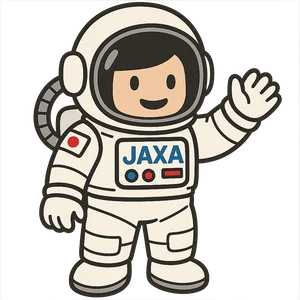
The Japan Aerospace Exploration Agency (JAXA) is Japan's national aerospace agency.
Reads at Grades 3–5 Listens at Grades 1–5
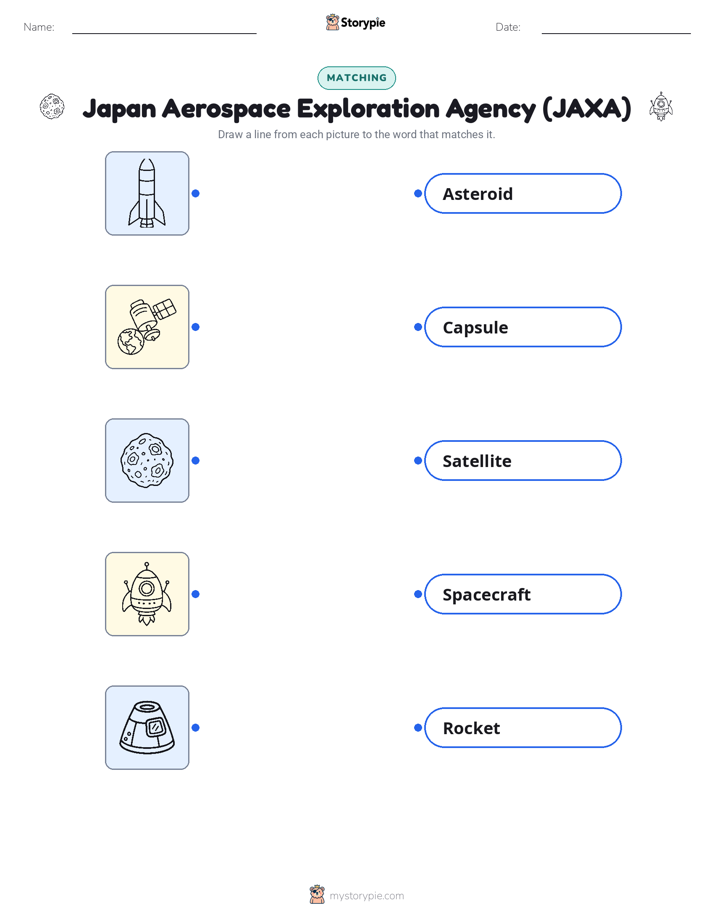
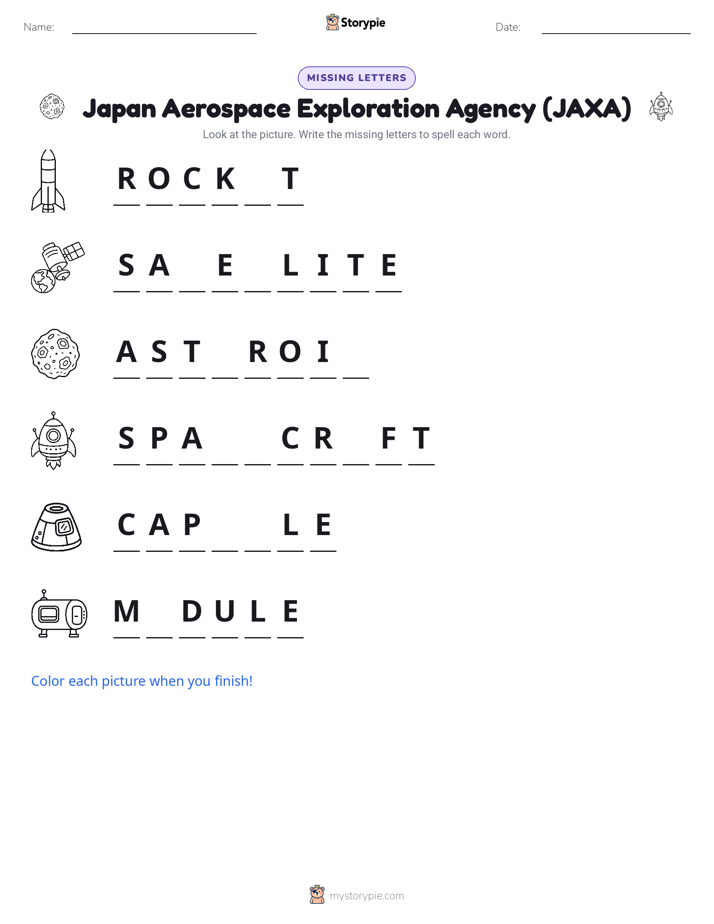
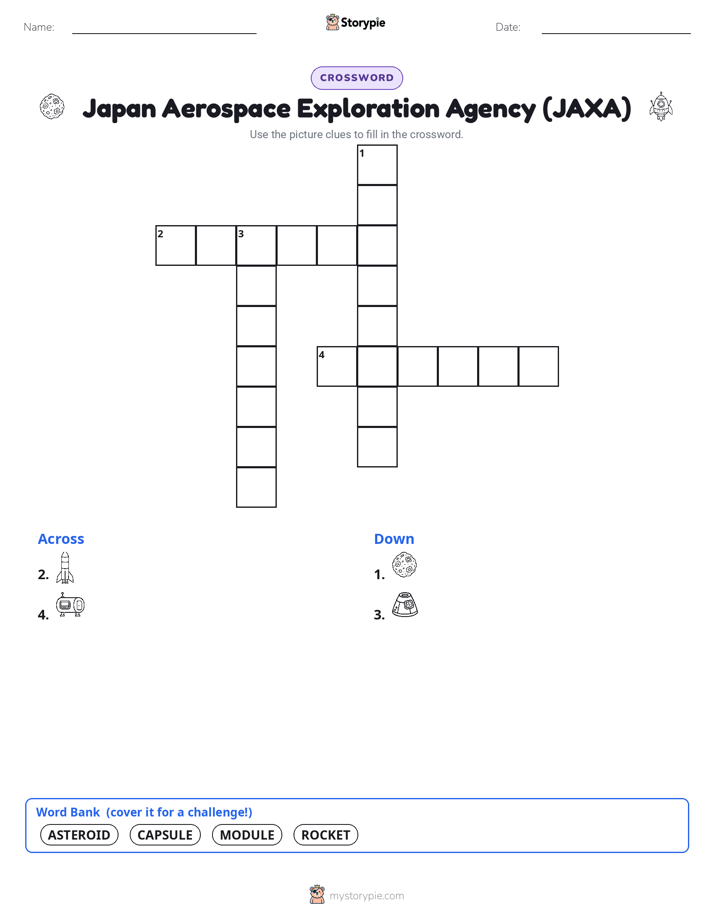
Print & create
Answer keys·No prep·Free with an account
28 worksheets · answer keys · full story · quiz · Ages 8-10 · CEFR B1
Plus adds 116,000+ more stories in 27 languages, audio for every one, and printables for all of them.
Just want Japan Aerospace Exploration Agency (JAXA)?

Hello! We are the Japan Aerospace Exploration Agency, but most people know us by our shorter name, JAXA. Our story began on October 1st, 2003. On that day, a very important event happened in Japan. Three separate groups, all dedicated to studying the skies and beyond, decided to join together. One group focused on space science, another on aviation, and a third on developing rockets. By combining their knowledge, skills, and dreams, they formed one single, stronger agency: us. Our mission was clear from the very start. We were created to explore the vastness of space, to develop new technologies for rockets and airplanes, and, most importantly, to use what we learn in space to help people living on Earth.
To achieve our goals, we do many different kinds of work. One of our most important jobs is building and launching powerful rockets. Think of a rocket as a giant, powerful elevator to space. Our H-IIA rocket is one of our most reliable vehicles, designed to carry heavy satellites and spacecraft out of Earth’s atmosphere and into orbit. Once in space, our creations get to work. We design and operate many types of satellites. Some of these are like weather reporters in the sky, watching over Earth to track storms and help predict the weather. Others are communication hubs, bouncing signals for phones and the internet across the world. We also have satellites that act as scientists, carefully studying our planet's environment, from the deep oceans to the green forests, helping us understand and protect our home. Our work also involves people. We train Japanese astronauts, like Akihiko Hoshide and Soichi Noguchi, preparing them for one of the most amazing jobs imaginable: living and working on the International Space Station. Floating high above the Earth, they conduct important science experiments that can only be done in a place with almost no gravity.
JAXA: Japan's Journey to the Stars
Hello! We are the Japan Aerospace Exploration Agency, but most people know us by our shorter name, JAXA. Our story began on October 1st, 2003. On that day, a very important event happened in Japan. Three separate groups, all dedicated to studying the skies and beyond, decided to join together. One group focused on space science, another on aviation, and a third on developing rockets. By combining their knowledge, skills, and dreams, they formed one single, stronger agency: us. Our mission was clear from the very start. We were created to explore the vastness of space, to develop new technologies for rockets and airplanes, and, most importantly, to use what we learn in space to help people living on Earth.
To achieve our goals, we do many different kinds of work. One of our most important jobs is building and launching powerful rockets. Think of a rocket as a giant, powerful elevator to space. Our H-IIA rocket is one of our most reliable vehicles, designed to carry heavy satellites and spacecraft out of Earth’s atmosphere and into orbit. Once in space, our creations get to work. We design and operate many types of satellites. Some of these are like weather reporters in the sky, watching over Earth to track storms and help predict the weather. Others are communication hubs, bouncing signals for phones and the internet across the world. We also have satellites that act as scientists, carefully studying our planet's environment, from the deep oceans to the green forests, helping us understand and protect our home. Our work also involves people. We train Japanese astronauts, like Akihiko Hoshide and Soichi Noguchi, preparing them for one of the most amazing jobs imaginable: living and working on the International Space Station. Floating high above the Earth, they conduct important science experiments that can only be done in a place with almost no gravity.
Sometimes our missions take us much, much farther than the space station. One of our most famous adventures was a mission called Hayabusa2. Its destination was a distant asteroid named Ryugu, a small, rocky world left over from the time when our solar system was just beginning to form. We sent our Hayabusa2 spacecraft on a long and difficult six-year journey just to reach it. When it finally arrived, the spacecraft didn't just fly by; it carefully descended and landed on the asteroid's surface. Its job was to collect tiny samples of rock and dust, which are like cosmic treasures holding secrets from billions of years ago. After gathering the samples, Hayabusa2 began its long flight back home. In 2020, it safely returned to Earth’s neighborhood and dropped off a special capsule containing the precious dust. Scientists are now studying these samples to understand the building blocks of planets and to learn more about how our own world was created.
More recently, we reached another major milestone, this time much closer to home. In January 2024, we successfully landed a spacecraft on the Moon. This mission was called SLIM, which stands for Smart Lander for Investigating Moon. Landing on the Moon is always a challenge, but our SLIM mission had a special goal. We wanted to land with "pinpoint accuracy." This means we didn't just aim for a large, general area; we targeted a very specific, small spot on the lunar surface and landed exactly where we planned. This achievement was a huge step forward in landing technology. Being able to land so precisely is incredibly important for the future of space exploration. It will allow future missions, whether they are carrying robots or eventually people, to land safely and exactly where they need to be to conduct scientific research or explore interesting features on the Moon and other planets.
Today, our work continues, driven by the same mission we started with: to explore the universe and help our world. We are constantly launching new satellites that make life better and safer for people on Earth. Some of our satellites monitor the planet for natural disasters, like earthquakes and floods, providing valuable information to help communities prepare and respond. Others improve GPS navigation, making the maps on your phone or in your car more accurate than ever before. While we keep an eye on our home planet, we are also looking outward. We are busy planning new missions to explore other planets in our solar system. We know that space exploration is too big a job for any one group to do alone, so we work closely with other space agencies around the world. By partnering with groups like NASA, we can share our ideas, combine our resources, and work together to achieve amazing goals in space that would be impossible on our own.
Wow facts
About
The Japan Aerospace Exploration Agency (JAXA) is Japan's national aerospace agency. It conducts research, technology development, and launches satellites and spacecraft for space exploration, scientific observation, and aeronautics.
Take a Quiz
Question 1 of 5
What was the name of the asteroid that our Hayabusa2 spacecraft visited to collect samples?
Explore next





Want to do even more?
Go beyond exploring. Unlock tools that turn every story into real learning.

Storypie Plus for families
Full stories, quizzes, and printables. Nights and car rides, sorted.
- Unlimited audio stories
- Create Mode: your child stars in the story
- Offline downloads
- Printable worksheets & coloring pages

Why Storypie for Schools
Students engaged. Prep in seconds. Evenings back to you.
- Worksheets & Quizzes
- Classroom Management
- Formative Assessment
- Custom Curriculum & Lesson Plans
- 27 Languages

Why Storypie for Homeschool
Curriculum done. They'll ask for more. Hours back in your day.
- Worksheet Generator
- First-Person Audio Stories
- Built-in Comprehension Quizzes
- Custom Curriculum & Lesson Plans
- Print & Go Activities