English


Nobel Foundation
A private institution established in 1900 to manage the finances and administration of the Nobel Prizes…
Reads at Grades 6–8 Listens at Grades 4–8
Print & create
Answer keys·No prep·Free with an account
28 worksheets · answer keys · full story · quiz · Ages 10-12 · CEFR B2
Plus adds 116,000+ more stories in 27 languages, audio for every one, and printables for all of them.
Just want Nobel Foundation?
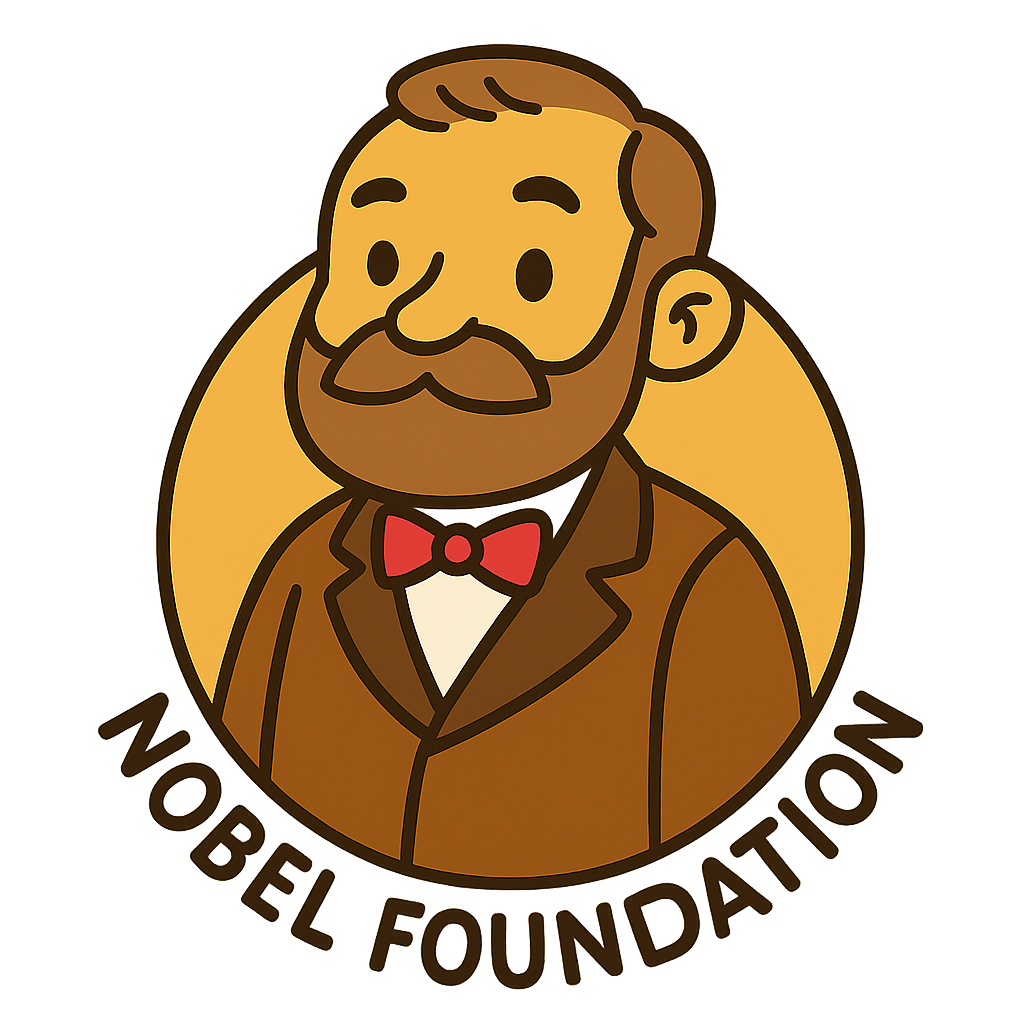
We are the Nobel Foundation, and our story begins with the vision of a man named Alfred Nobel. You may know him as the inventor of dynamite, a powerful explosive that changed the worlds of construction and engineering. However, he wanted his legacy to be about celebrating human brilliance and our potential for peace, not just his scientific inventions. To make this happen, he wrote a remarkable will in 1895. In this document, he directed that his entire fortune—the money he had earned over his lifetime—should be used to create a series of prizes. These awards would honor the people who had brought the “greatest benefit to humankind” in five specific areas: Physics, Chemistry, Physiology or Medicine, Literature, and Peace.
Alfred Nobel’s request was groundbreaking. It was a powerful statement about what he believed mattered most in the world. He wanted to reward not wealth or power, but discovery, creativity, and the difficult work of building a more peaceful world. After he passed away, it took several years to make his surprising final wish a reality. His will needed to be understood and a formal structure had to be created to protect his fortune and carry out his instructions precisely as he had intended. This led to our official beginning. We, the Nobel Foundation, were established in Stockholm, Sweden, on June 29th, 1900. Our mission was clear from that very first day: to manage Alfred Nobel’s assets and to oversee the entire prize process, ensuring that his vision would endure for generations to come.
The Nobel Foundation: A Legacy of Discovery and Peace
We are the Nobel Foundation, and our story begins with the vision of a man named Alfred Nobel. You may know him as the inventor of dynamite, a powerful explosive that changed the worlds of construction and engineering. However, he wanted his legacy to be about celebrating human brilliance and our potential for peace, not just his scientific inventions. To make this happen, he wrote a remarkable will in 1895. In this document, he directed that his entire fortune—the money he had earned over his lifetime—should be used to create a series of prizes. These awards would honor the people who had brought the “greatest benefit to humankind” in five specific areas: Physics, Chemistry, Physiology or Medicine, Literature, and Peace.
Alfred Nobel’s request was groundbreaking. It was a powerful statement about what he believed mattered most in the world. He wanted to reward not wealth or power, but discovery, creativity, and the difficult work of building a more peaceful world. After he passed away, it took several years to make his surprising final wish a reality. His will needed to be understood and a formal structure had to be created to protect his fortune and carry out his instructions precisely as he had intended. This led to our official beginning. We, the Nobel Foundation, were established in Stockholm, Sweden, on June 29th, 1900. Our mission was clear from that very first day: to manage Alfred Nobel’s assets and to oversee the entire prize process, ensuring that his vision would endure for generations to come.
An important part of our structure is understanding what we do and what we do not do. A common misconception is that we select the Nobel Prize winners, who are called Laureates. However, this is not our role. Alfred Nobel’s will was very specific about creating a fair and expert-driven process. He wanted the decisions to be made by people with deep knowledge in each field. For this reason, the responsibility of choosing the Laureates belongs to several specialized and independent institutions. For example, the Royal Swedish Academy of Sciences selects the winners in Physics and Chemistry, while the Norwegian Nobel Committee is responsible for choosing the Nobel Peace Prize Laureate. These committees work for months each year, carefully reviewing nominations from around the world to identify the most deserving individuals and organizations.
Our role is to be the backbone of this entire system. We protect the financial resources that make the prizes possible and ensure the rules set out by Alfred Nobel are followed. The first Nobel Prizes were awarded in 1901, turning his written dream into an annual, celebrated reality. For many decades, the five original prize categories remained the same. Then, in 1968, a new prize was established by Sweden’s central bank, Sveriges Riksbank. This award was created in memory of Alfred Nobel to recognize outstanding contributions to the field of economics. It is officially called the Sveriges Riksbank Prize in Economic Sciences in Memory of Alfred Nobel, and we were given the responsibility of administering it alongside the original five prizes, following the same rigorous principles and procedures.
Today, our work continues to be guided by Alfred Nobel’s 1895 will. A central part of our duty is the careful management of his fortune. We invest the funds with the goal of preserving their value, which ensures that the Nobel Prizes can be awarded far into the future. This financial stewardship is the foundation upon which everything else is built. Without it, the annual celebration of human achievement that Nobel envisioned would not be possible. It is a serious responsibility to protect a legacy that has now lasted for more than a century and has become a global symbol of excellence.
Beyond managing the finances and the prize ceremony, our mission has grown to include sharing the ideas and achievements of the Nobel Laureates with the world. We actively work to promote the values that the prize represents: innovation, intellectual courage, and a commitment to humanity. One of the most visible ways we do this is by organizing Nobel Week each December in Stockholm and Oslo. During this week, the new Laureates receive their awards, give lectures about their work, and engage with students and the public. We also create educational outreach programs that aim to inspire people, especially young students, to learn, to question, and to imagine how they might contribute to a better world. Through this work, we hope to spark the curiosity of future innovators, scientists, writers, and peacemakers, keeping Alfred Nobel’s extraordinary legacy alive and meaningful for everyone.
Wow facts
About
A private institution established in 1900 to manage the finances and administration of the Nobel Prizes, based on the will of inventor Alfred Nobel.
Take a Quiz
Question 1 of 5
What was Alfred Nobel, the creator of the Nobel Prize, most famous for inventing?
Explore next





Want to do even more?
Go beyond exploring. Unlock tools that turn every story into real learning.

Storypie Plus for families
Full stories, quizzes, and printables. Nights and car rides, sorted.
- Unlimited audio stories
- Create Mode: your child stars in the story
- Offline downloads
- Printable worksheets & coloring pages

Why Storypie for Schools
Students engaged. Prep in seconds. Evenings back to you.
- Worksheets & Quizzes
- Classroom Management
- Formative Assessment
- Custom Curriculum & Lesson Plans
- 27 Languages

Why Storypie for Homeschool
Curriculum done. They'll ask for more. Hours back in your day.
- Worksheet Generator
- First-Person Audio Stories
- Built-in Comprehension Quizzes
- Custom Curriculum & Lesson Plans
- Print & Go Activities