English


The Scout Movement
A voluntary, non-political educational movement for young people, founded on the principles of outdoor skills…
Reads at Grades 6–8 Listens at Grades 4–8
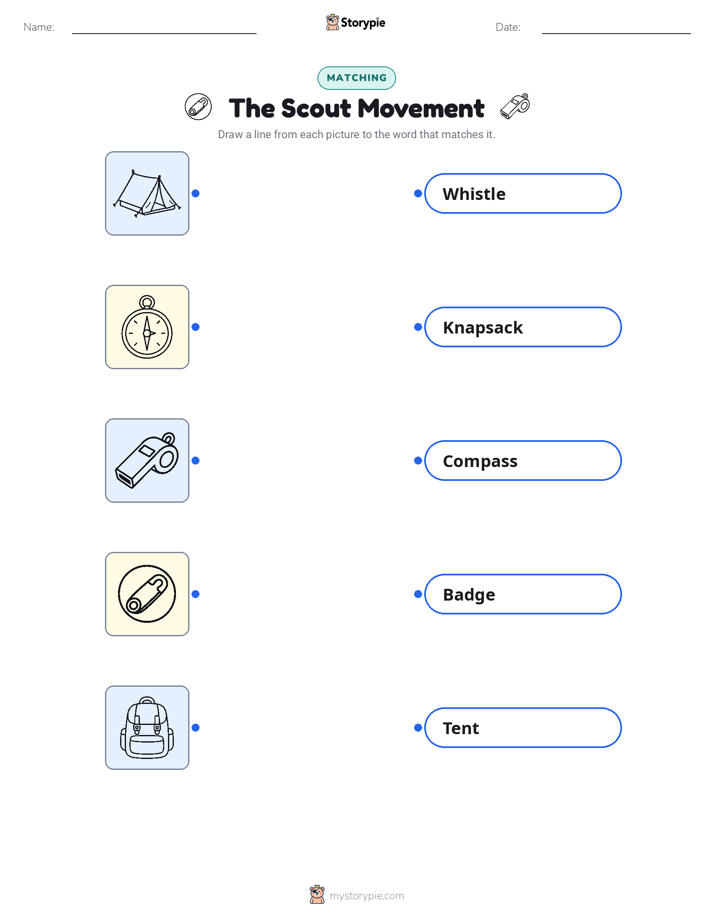
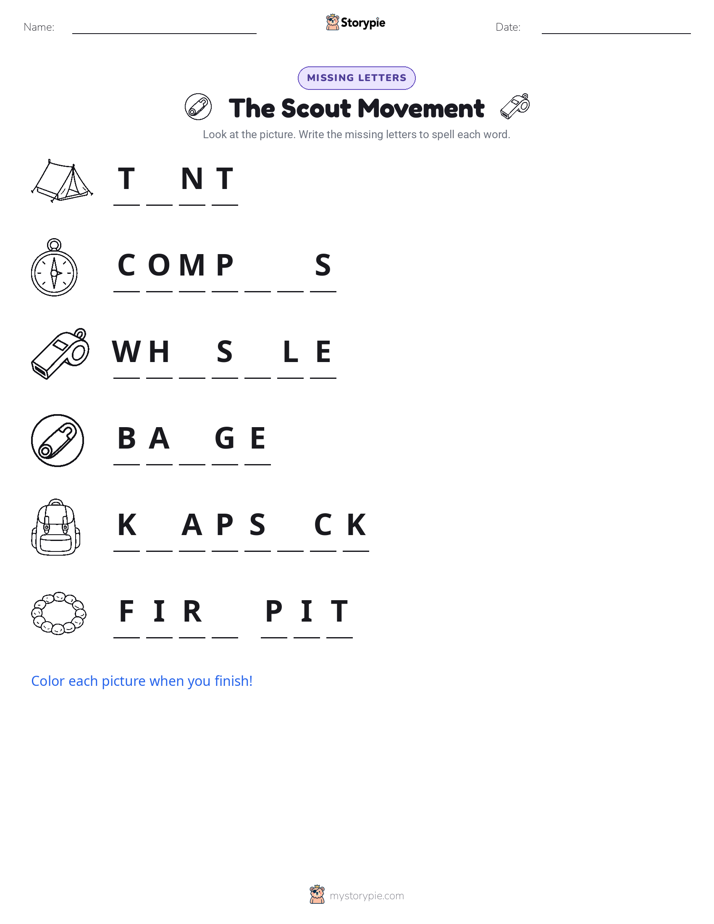
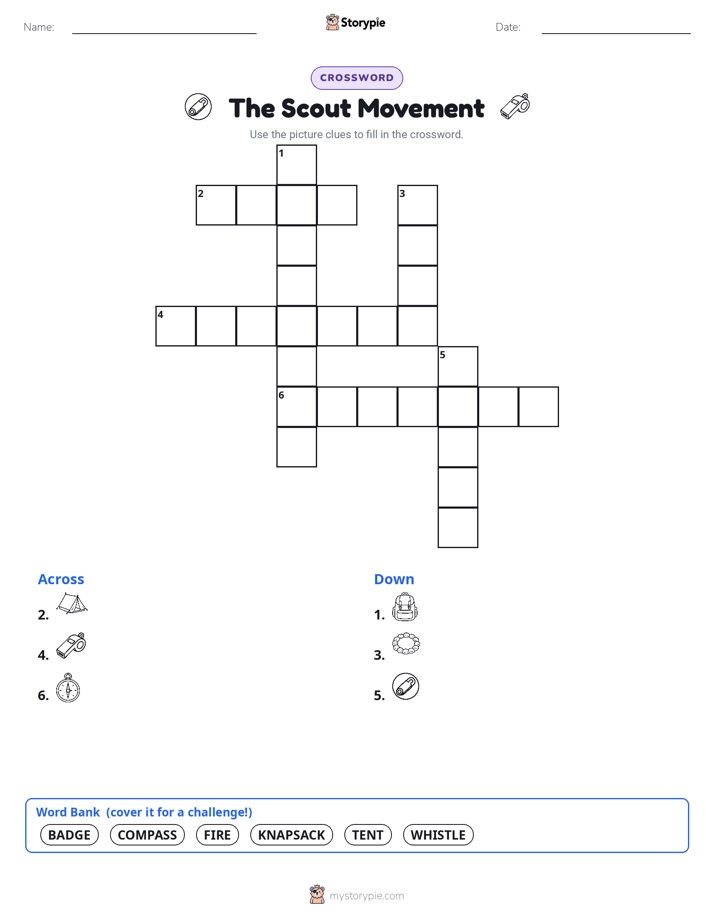
Print & create
Answer keys·No prep·Free with an account
28 worksheets · answer keys · full story · quiz · Ages 10-12 · CEFR B2
Plus adds 116,000+ more stories in 27 languages, audio for every one, and printables for all of them.
Just want The Scout Movement?
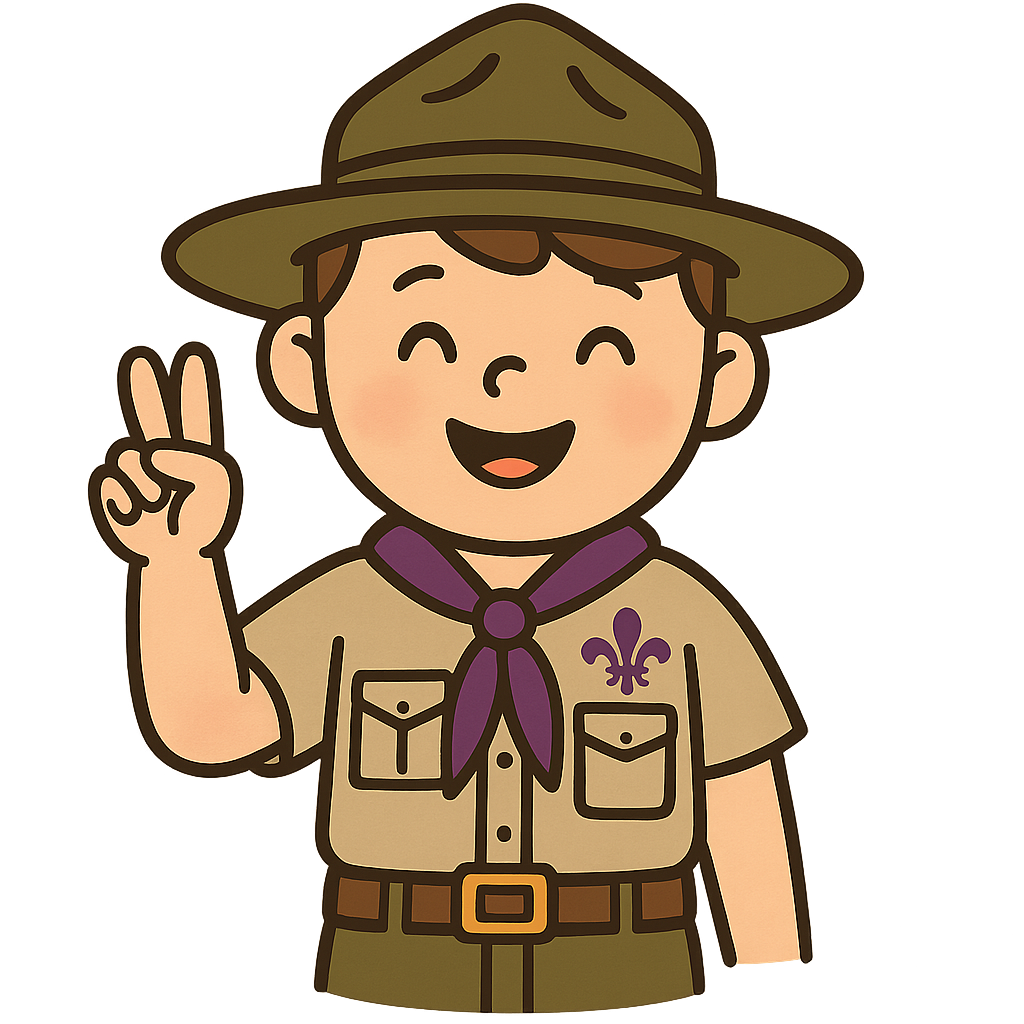
We are The Scout Movement, a global youth organization dedicated to helping young people develop their full potential. Our story doesn't begin in a large headquarters or with a formal declaration, but on a small island with an experimental camp. It was August of 1907 when a British army officer named Robert Baden-Powell brought 20 boys to Brownsea Island, off the coast of England. He had developed many ideas about education and character development, and he wanted to test them in a real-world setting. His goal was to see if boys could learn valuable life lessons through engaging outdoor activities rather than just from books in a classroom.
During this camp, Baden-Powell focused on teaching practical skills that encouraged the boys to become more independent and aware of their surroundings. We introduced them to activities centered on observation, such as tracking animals and noticing details in nature. We also taught them about self-reliance, which meant learning how to set up their own shelters, cook their own food, and work together in small teams to solve problems. The experiment was a great success. The boys were enthusiastic and capable, proving that Baden-Powell’s methods for training young people in these areas were effective. This small, successful camp on Brownsea Island laid the foundation for everything we would become.
Following the positive outcome of the camp, Robert Baden-Powell knew he needed a way to share his ideas with a much wider audience. In 1908, he wrote and published a book called 'Scouting for Boys.' This wasn't just a collection of stories; it was a comprehensive handbook filled with practical advice and instructions. It covered an incredible range of topics, from outdoor skills like camping and tracking to essential life skills like first aid. Importantly, it also included guidance on citizenship, teaching young people how to be responsible and active members of their communities. The book became an instant success and served as the guide for our new and rapidly growing movement.
The Story of The Scout Movement
We are The Scout Movement, a global youth organization dedicated to helping young people develop their full potential. Our story doesn't begin in a large headquarters or with a formal declaration, but on a small island with an experimental camp. It was August of 1907 when a British army officer named Robert Baden-Powell brought 20 boys to Brownsea Island, off the coast of England. He had developed many ideas about education and character development, and he wanted to test them in a real-world setting. His goal was to see if boys could learn valuable life lessons through engaging outdoor activities rather than just from books in a classroom.
During this camp, Baden-Powell focused on teaching practical skills that encouraged the boys to become more independent and aware of their surroundings. We introduced them to activities centered on observation, such as tracking animals and noticing details in nature. We also taught them about self-reliance, which meant learning how to set up their own shelters, cook their own food, and work together in small teams to solve problems. The experiment was a great success. The boys were enthusiastic and capable, proving that Baden-Powell’s methods for training young people in these areas were effective. This small, successful camp on Brownsea Island laid the foundation for everything we would become.
Following the positive outcome of the camp, Robert Baden-Powell knew he needed a way to share his ideas with a much wider audience. In 1908, he wrote and published a book called 'Scouting for Boys.' This wasn't just a collection of stories; it was a comprehensive handbook filled with practical advice and instructions. It covered an incredible range of topics, from outdoor skills like camping and tracking to essential life skills like first aid. Importantly, it also included guidance on citizenship, teaching young people how to be responsible and active members of their communities. The book became an instant success and served as the guide for our new and rapidly growing movement.
'Scouting for Boys' also introduced the world to our core principles, which remain central to our identity today. It outlined the Scout Promise, a personal pledge that each member makes to do their best to serve their community and live by our values. It also established the Scout Law, which is not a list of strict rules, but a set of positive principles to live by, such as being trustworthy, loyal, and helpful to others. From the very beginning, our educational method has been grounded in the idea of 'learning by doing.' We believe that the most effective way for young people to learn is through fun, hands-on activities and real-world experiences that allow them to explore, experiment, and discover for themselves.
The ideas presented in 'Scouting for Boys' spread with remarkable speed, capturing the imagination of young people and adults far beyond the shores of Great Britain. Within just a few years, Scout groups began forming in countries all around the globe, each one adapting our core principles to its own unique culture. This incredible growth presented a new challenge: how could all these separate groups stay connected and support one another? To meet this need, the World Organization of the Scout Movement, which you might see called WOSM, was officially formed in 1922. Its purpose was to provide a structure for cooperation and to maintain the unity of our global movement.
Even before WOSM was formally established, we held our very first World Scout Jamboree in 1920 in London. This event brought together thousands of Scouts from many different nations, providing a powerful opportunity for them to share their skills, learn about different cultures, and build lasting friendships across borders. This event highlighted a key aspect of our identity: we are not one single, centrally controlled organization. Instead, we are a worldwide movement made up of many independent national groups. While each group operates on its own, we are all united by the same fundamental goals and principles that were first tested on Brownsea Island.
Today, our movement is larger and more diverse than ever before. We now include millions of members, both boys and girls, in nearly every country on Earth. As the world has changed, so have we. While we continue to honor our history and teach traditional skills like camping and navigation, our programs have also evolved to address modern challenges and prepare young people for the future. We place a strong emphasis on encouraging our members to become active global citizens who are committed to making a positive impact on the world around them.
This commitment takes many forms. Our members participate in a wide variety of community service projects, from organizing local clean-ups to supporting food banks. They also learn about environmental conservation and take action to protect our planet for future generations. A major focus of our modern programs is developing leadership skills, empowering young people to take initiative, work collaboratively, and guide others. Through all these activities, we continue to follow our founding principle of 'learning by doing,' helping each member develop the confidence, skills, and values needed to help create a better world.
Wow facts
About
A voluntary, non-political educational movement for young people, founded on the principles of outdoor skills, community service, character development, and spiritual development established by Robert Baden-Powell.
Take a Quiz
Question 1 of 5
According to the story, what was the main purpose of Robert Baden-Powell's 1907 camp on Brownsea Island?
Explore next




Want to do even more?
Go beyond exploring. Unlock tools that turn every story into real learning.

Storypie Plus for families
Full stories, quizzes, and printables. Nights and car rides, sorted.
- Unlimited audio stories
- Create Mode: your child stars in the story
- Offline downloads
- Printable worksheets & coloring pages

Why Storypie for Schools
Students engaged. Prep in seconds. Evenings back to you.
- Worksheets & Quizzes
- Classroom Management
- Formative Assessment
- Custom Curriculum & Lesson Plans
- 27 Languages

Why Storypie for Homeschool
Curriculum done. They'll ask for more. Hours back in your day.
- Worksheet Generator
- First-Person Audio Stories
- Built-in Comprehension Quizzes
- Custom Curriculum & Lesson Plans
- Print & Go Activities