English

World Food Programme
The World Food Programme (WFP) is the food-assistance branch of the United Nations and the world's largest…
Reads at Grades 3–5 Listens at Grades 1–5
Print & create
Answer keys·No prep·Free with an account
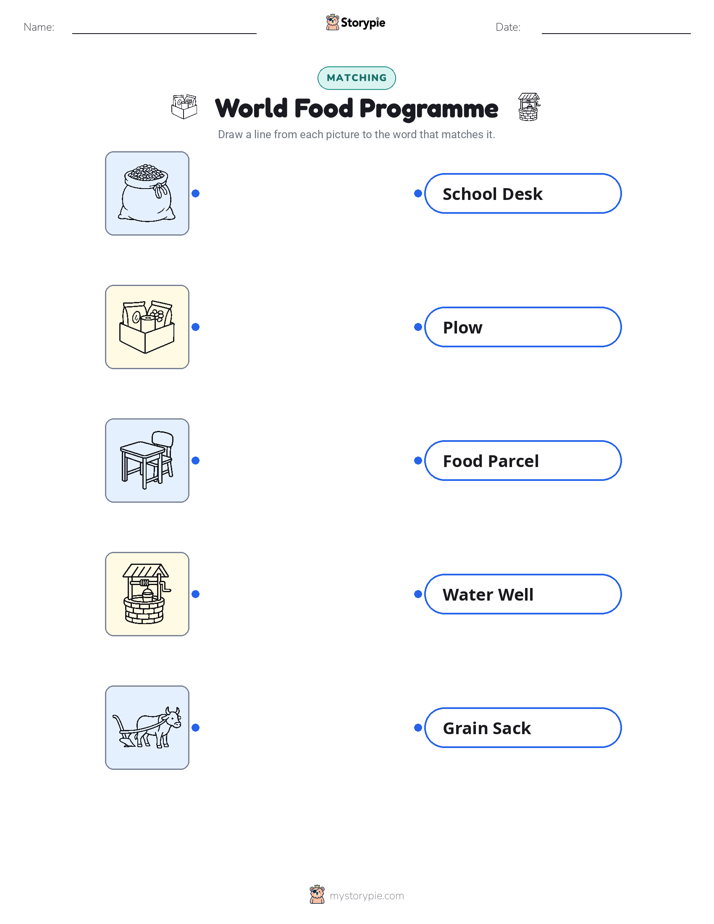
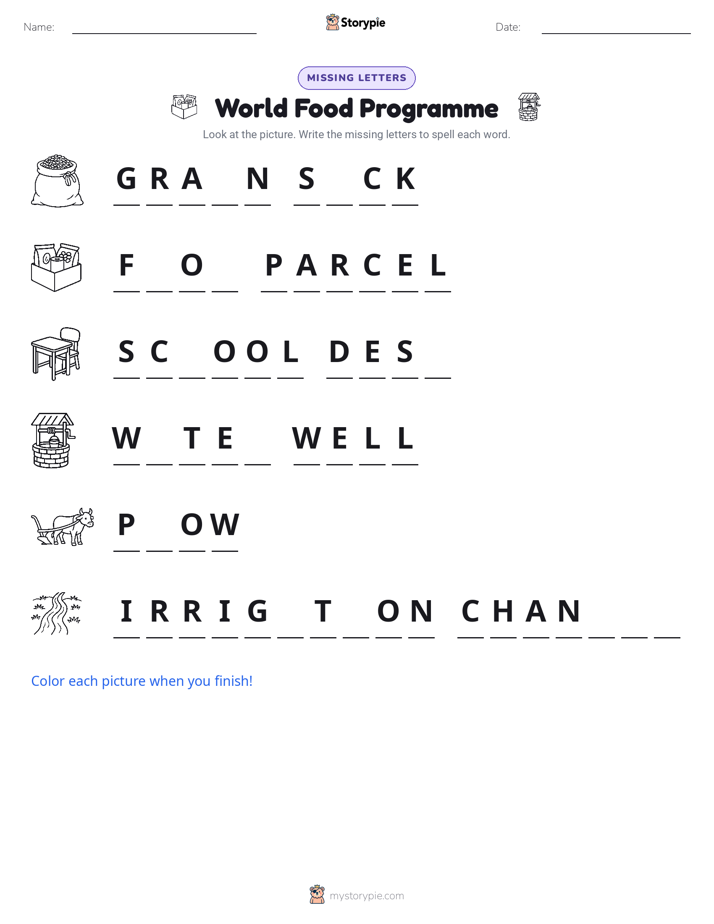
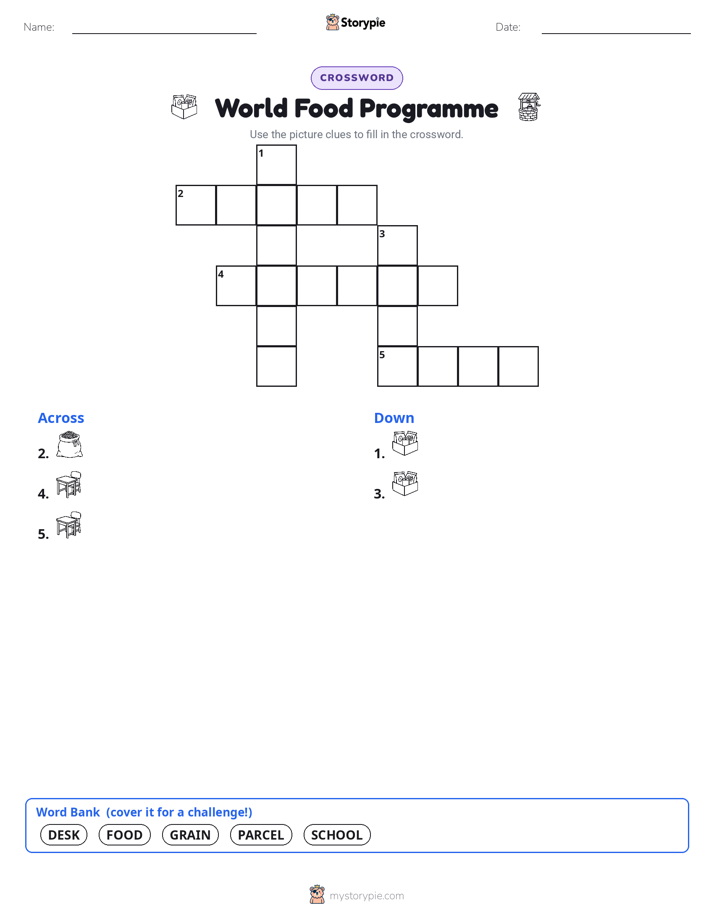
28 worksheets · answer keys · full story · quiz · Ages 8-10 · CEFR B1
Plus adds 116,000+ more stories in 27 languages, audio for every one, and printables for all of them.
Just want World Food Programme?
Hello, we are the World Food Programme, or WFP for short. Our story begins with a simple but powerful idea: that food could be used as a tool to help people in need all over the globe. We were created in 1961, but not as the large organization you see today. At first, we were set up as an experiment for just a few years. The world wanted to see if an international group dedicated to providing food aid could truly make a difference during crises. Our purpose was to test this idea and prove that we could deliver help effectively where it was needed most.
Our first big test came just one year later, in 1962. A powerful earthquake struck a region in Iran, leaving many people without homes, safety, or food. This was our chance to put our mission into action. We responded to the disaster, organizing and delivering food to the survivors. Over the next few years, we continued to respond to emergencies and run successful projects. After seeing that our work was both possible and necessary, we were made a permanent part of the United Nations, or UN, in 1965. From that point on, our experimental phase was over. We now had a clear, ongoing mission: to fight hunger around the world.
Our most important job is to bring food to people who do not have enough, especially during emergencies. Think of a sudden flood that washes away farms, a long drought that prevents crops from growing, or a war that forces families to flee their homes. In these situations, people can quickly run out of food. That is when we step in. Our main goal is to save lives and relieve suffering by providing life-saving food assistance. We work to make sure that people affected by disasters have the nutrition they need to survive and recover.
A Mission to Feed the World: The Story of the World Food Programme
Hello, we are the World Food Programme, or WFP for short. Our story begins with a simple but powerful idea: that food could be used as a tool to help people in need all over the globe. We were created in 1961, but not as the large organization you see today. At first, we were set up as an experiment for just a few years. The world wanted to see if an international group dedicated to providing food aid could truly make a difference during crises. Our purpose was to test this idea and prove that we could deliver help effectively where it was needed most.
Our first big test came just one year later, in 1962. A powerful earthquake struck a region in Iran, leaving many people without homes, safety, or food. This was our chance to put our mission into action. We responded to the disaster, organizing and delivering food to the survivors. Over the next few years, we continued to respond to emergencies and run successful projects. After seeing that our work was both possible and necessary, we were made a permanent part of the United Nations, or UN, in 1965. From that point on, our experimental phase was over. We now had a clear, ongoing mission: to fight hunger around the world.
Our most important job is to bring food to people who do not have enough, especially during emergencies. Think of a sudden flood that washes away farms, a long drought that prevents crops from growing, or a war that forces families to flee their homes. In these situations, people can quickly run out of food. That is when we step in. Our main goal is to save lives and relieve suffering by providing life-saving food assistance. We work to make sure that people affected by disasters have the nutrition they need to survive and recover.
To do this, we manage a huge and complex delivery network. Getting food to people in need is often very difficult. The communities we help might be in remote mountain villages, isolated by floodwaters, or located in conflict zones that are dangerous to enter. To reach them, we use a combination of ships to cross oceans, airplanes and helicopters to fly over difficult terrain, and large trucks to travel over land. This system allows us to get food to some of the hardest-to-reach places on Earth, delivering hope in the form of meals.
But our work isn't just about responding to emergencies. We also focus on long-term solutions to help communities become stronger and more self-reliant. We want to help people get to a point where they can find or grow their own food. One way we do this is by working with local farmers. We help them learn techniques to grow better, stronger crops that can survive challenges like dry weather. When farmers can produce more food, their entire community benefits.
Another one of our most important long-term projects is providing school meals. For many children around the world, the meal they receive at school might be the only nutritious food they get all day. This is important because it helps children grow healthy and strong. It also helps them learn. A child with a full stomach can concentrate better in class and has more energy to participate in school activities. School meals also encourage parents to send their children, including girls, to school regularly, giving them a chance at a better future.
Today, we are the world's largest humanitarian organization dedicated to fighting hunger. Every year, our work reaches millions of people across more than 120 countries and territories. In 2020, we received a very special honor: the Nobel Peace Prize. We were given this award for our efforts to fight hunger, but also for our work in connecting food security with peace. We have seen that hunger and conflict are often linked. It's hard for a community to be peaceful when people are struggling for food. By working to end hunger, we are also helping to build a more stable and peaceful world.
Our mission continues every single day. We believe that every person in the world has the right to food. As long as there are people who are hungry, we will be there, working to deliver food, support communities, and build a world where no one goes to bed hungry.
Wow facts
About
The World Food Programme (WFP) is the food-assistance branch of the United Nations and the world's largest humanitarian organization addressing hunger and promoting food security.
Take a Quiz
Question 1 of 5
What was the first major event where the World Food Programme provided help?
Explore next





Want to do even more?
Go beyond exploring. Unlock tools that turn every story into real learning.

Storypie Plus for families
Full stories, quizzes, and printables. Nights and car rides, sorted.
- Unlimited audio stories
- Create Mode: your child stars in the story
- Offline downloads
- Printable worksheets & coloring pages

Why Storypie for Schools
Students engaged. Prep in seconds. Evenings back to you.
- Worksheets & Quizzes
- Classroom Management
- Formative Assessment
- Custom Curriculum & Lesson Plans
- 27 Languages

Why Storypie for Homeschool
Curriculum done. They'll ask for more. Hours back in your day.
- Worksheet Generator
- First-Person Audio Stories
- Built-in Comprehension Quizzes
- Custom Curriculum & Lesson Plans
- Print & Go Activities