English

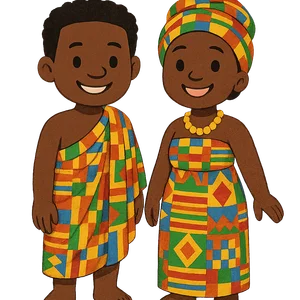
Ashanti People
The Ashanti are an Akan ethnic group native to the Ashanti Region of modern-day Ghana…
Reads at Grades 6–8 Listens at Grades 4–8
Print & create
Answer keys·No prep·Free with an account
28 worksheets · answer keys · full story · quiz · Ages 10-12 · CEFR B2
Plus adds 116,000+ more stories in 27 languages, audio for every one, and printables for all of them.
Just want Ashanti People?
Greetings. We are the Ashanti people, and our story is woven into the history of West Africa. We are part of the larger Akan cultural group, and our homeland is primarily in the modern nation of Ghana. For centuries, our ancestors lived in separate states, but that changed in the late 17th century. A great leader, our first king Osei Tutu I, brought our states together to form a strong, unified nation. He was guided by his trusted priest and advisor, Okomfo Anokye, who helped establish the spiritual foundation of our new kingdom.
Central to our unity is the story of the Golden Stool. According to our traditions, Okomfo Anokye brought this sacred stool down from the heavens itself, and it came to rest on the lap of Osei Tutu I. We believe this stool is no ordinary seat; it holds the sunsum, or the soul, of the entire Ashanti nation. It represents our unity, our strength, and our identity as a people. The Golden Stool is considered so sacred that it is never allowed to touch the ground, and no one, not even the king, has ever sat upon it. It is a powerful symbol of the bond that connects all Ashanti people, past, present, and future.
Our society is organized in a way that might seem unique to you. We are a matrilineal society. This means that our families, our inheritance of property, and even the royal succession for our leaders are all traced through the mother's side of the family. A child is considered part of their mother’s clan, and their identity and heritage flow from her lineage. This structure places great importance on the role of women in our communities. They are the keepers of our family lines and have significant influence in both social and political matters. This respect for women is most visible in the high-ranking positions they hold in our government and royal court.
The Golden Stool: The Story of the Ashanti People
Greetings. We are the Ashanti people, and our story is woven into the history of West Africa. We are part of the larger Akan cultural group, and our homeland is primarily in the modern nation of Ghana. For centuries, our ancestors lived in separate states, but that changed in the late 17th century. A great leader, our first king Osei Tutu I, brought our states together to form a strong, unified nation. He was guided by his trusted priest and advisor, Okomfo Anokye, who helped establish the spiritual foundation of our new kingdom.
Central to our unity is the story of the Golden Stool. According to our traditions, Okomfo Anokye brought this sacred stool down from the heavens itself, and it came to rest on the lap of Osei Tutu I. We believe this stool is no ordinary seat; it holds the sunsum, or the soul, of the entire Ashanti nation. It represents our unity, our strength, and our identity as a people. The Golden Stool is considered so sacred that it is never allowed to touch the ground, and no one, not even the king, has ever sat upon it. It is a powerful symbol of the bond that connects all Ashanti people, past, present, and future.
Our society is organized in a way that might seem unique to you. We are a matrilineal society. This means that our families, our inheritance of property, and even the royal succession for our leaders are all traced through the mother's side of the family. A child is considered part of their mother’s clan, and their identity and heritage flow from her lineage. This structure places great importance on the role of women in our communities. They are the keepers of our family lines and have significant influence in both social and political matters. This respect for women is most visible in the high-ranking positions they hold in our government and royal court.
At the head of our kingdom is the king, known as the Asantehene. But his power is balanced by that of a powerful female leader, the Queen Mother, or Asantehemaa. She is not just an advisor; she plays a crucial role in the governance of our nation. The Asantehemaa holds the history and knowledge of the royal family line. When a king passes away, it is her responsibility to nominate his successor from the eligible men in the royal matrilineal line. Her wisdom and authority ensure that our leadership remains stable and rooted in our traditions, demonstrating the deep respect and power held by women within our culture.
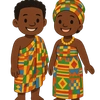
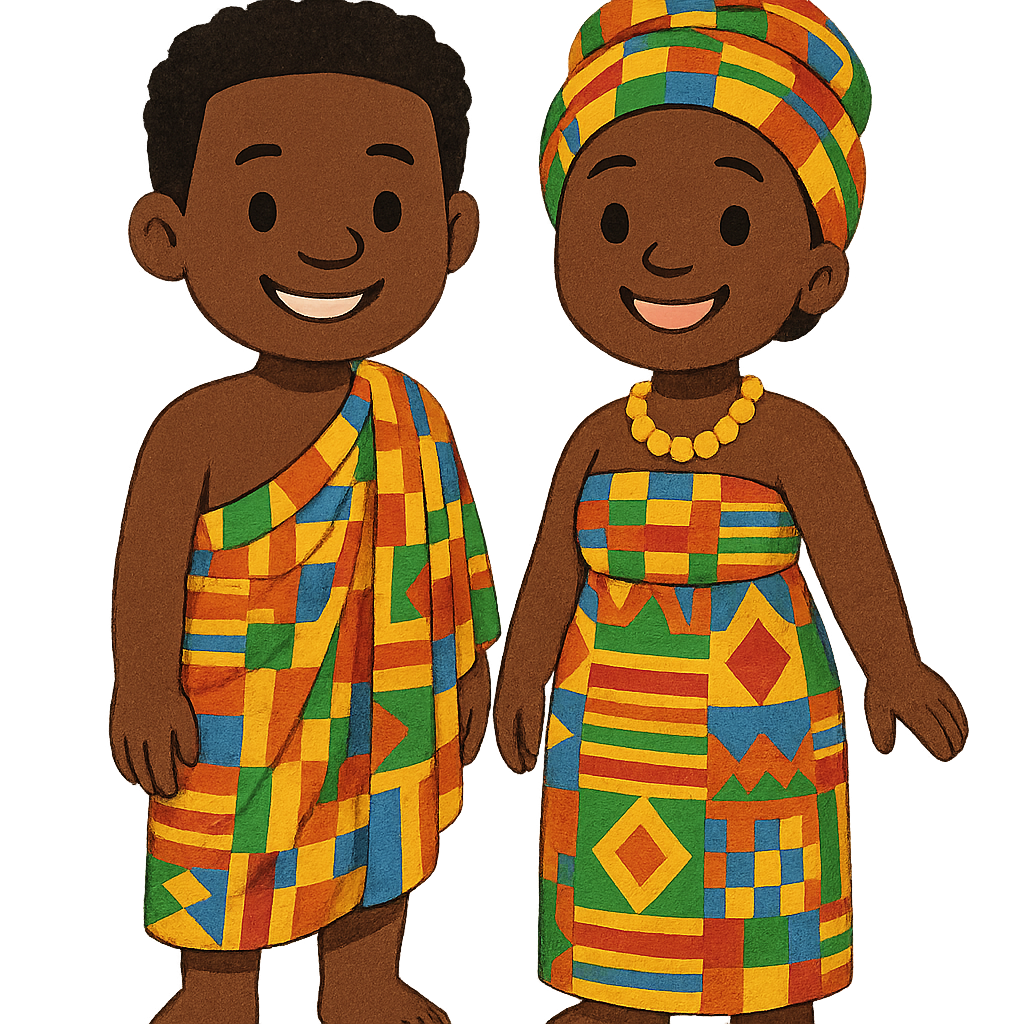
We have always expressed our beliefs, wisdom, and history through our art. You may have seen our famous Kente cloth, a vibrant textile woven with intricate patterns. Long ago, Kente was reserved for royalty, a sign of their status and power. But it is much more than just beautiful fabric. Each color has a specific meaning, and the complex patterns woven into the cloth carry messages and tell stories. It is a form of communication, a way of “speaking” through threads. Wearing a particular Kente design can express a proverb, share a historical event, or convey the wearer’s feelings or social standing.
Alongside Kente, we use a system of visual symbols called Adinkra. These symbols are everywhere in our culture, each one representing a specific proverb, concept, or piece of wisdom. You might find them stamped onto cloth, carved into wooden furniture, or incorporated into architecture. Like Kente patterns, Adinkra symbols are a form of language. They are a way for us to pass down our values and philosophical ideas from one generation to the next. Through our art, we ensure that the wisdom of our ancestors remains a living part of our daily lives.
Our history has not been without challenges. During the 19th and early 20th centuries, we fought a series of conflicts known as the Anglo-Ashanti Wars against the powerful British Empire. These wars were not just about territory; they were a struggle to protect our sovereignty—our right to rule ourselves—and to maintain control over the important trade routes that passed through our lands. We fought bravely to preserve our independence and way of life against the growing forces of European colonization. Ultimately, our powerful empire came to an end, and our lands became part of a British colony.
Though our empire ended, our people and our culture did not. Today, the Ashanti Kingdom continues to thrive as a respected traditional state within the modern Republic of Ghana. Our king, the Asantehene, still holds an important and influential cultural role, serving as a guardian of our customs and a leader for our people. Our language, our art like Kente and Adinkra, and our matrilineal social structure all remain vital parts of our identity. We have endured through great change, and we continue to celebrate and share the rich heritage that has defined us for centuries.
Wow facts
About
The Ashanti are an Akan ethnic group native to the Ashanti Region of modern-day Ghana, known for the historic and powerful Ashanti Empire, their intricate art forms like Kente cloth, and the sacred Golden Stool.
Take a Quiz
Question 1 of 5
According to Ashanti tradition, what does the Golden Stool contain?
Explore next





Want to do even more?
Go beyond exploring. Unlock tools that turn every story into real learning.

Storypie Plus for families
Full stories, quizzes, and printables. Nights and car rides, sorted.
- Unlimited audio stories
- Create Mode: your child stars in the story
- Offline downloads
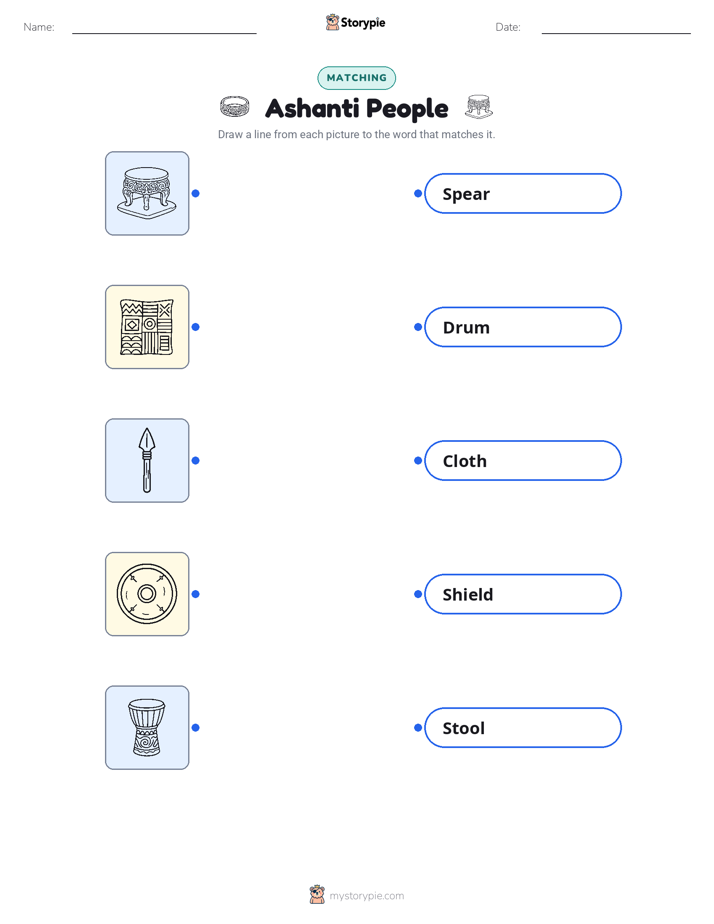
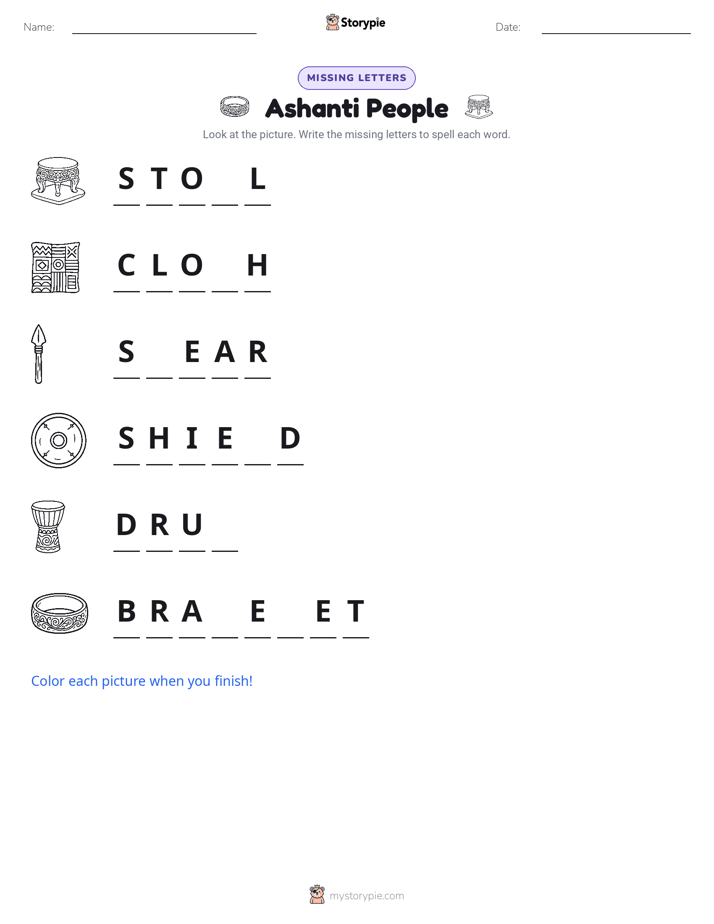
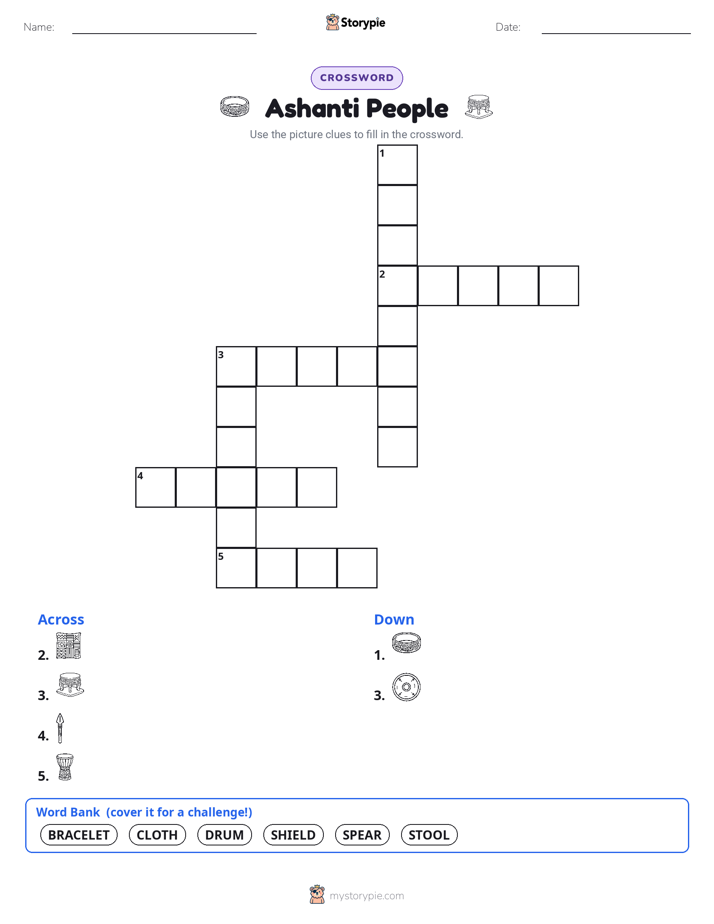
- Printable worksheets & coloring pages

Why Storypie for Schools
Students engaged. Prep in seconds. Evenings back to you.
- Worksheets & Quizzes
- Classroom Management
- Formative Assessment
- Custom Curriculum & Lesson Plans
- 27 Languages

Why Storypie for Homeschool
Curriculum done. They'll ask for more. Hours back in your day.
- Worksheet Generator
- First-Person Audio Stories
- Built-in Comprehension Quizzes
- Custom Curriculum & Lesson Plans
- Print & Go Activities