English

Babylonians
The Babylonians were an ancient Mesopotamian civilization known for establishing an influential empire under…
Reads at Grades 3–5 Listens at Grades 1–5
Print & create
Answer keys·No prep·Free with an account
28 worksheets · answer keys · full story · quiz · Ages 8-10 · CEFR B1
Plus adds 164,000+ more stories in 27 languages, audio for every one, and printables for all of them.
Just want Babylonians?
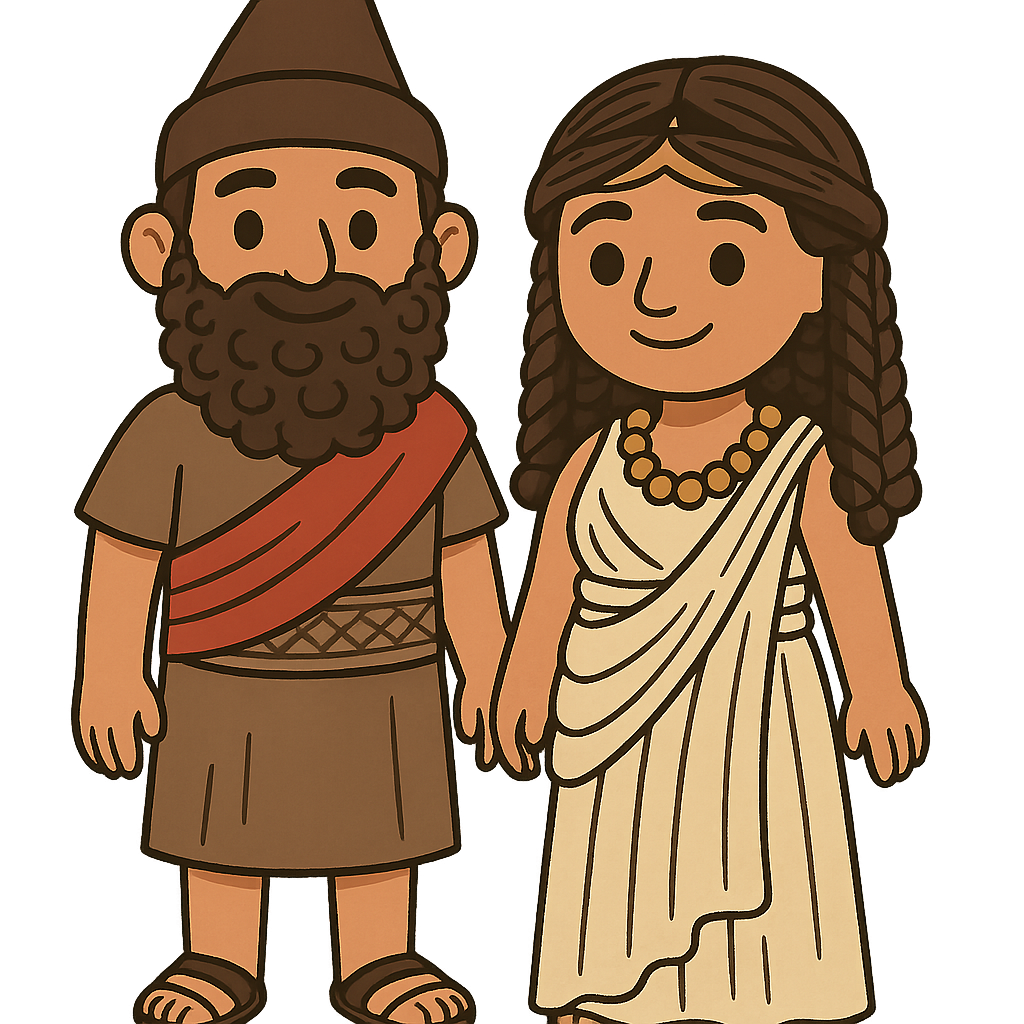
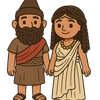
Hello, we are the Babylonians. Our story begins in a beautiful and fertile land called Mesopotamia, which means “the land between the rivers.” For us, those two great rivers were the Tigris and the Euphrates. They gave us water for our crops and acted as highways for our boats, connecting us to faraway places. In this land, we built our magnificent capital city, Babylon. For hundreds of years, starting around 1894 BCE, our city was a shining center of power, learning, and trade. People from all over the ancient world came to Babylon to share goods and ideas. From this amazing city, we grew a powerful empire and created a culture that would be remembered for its grand achievements and brilliant thinking.
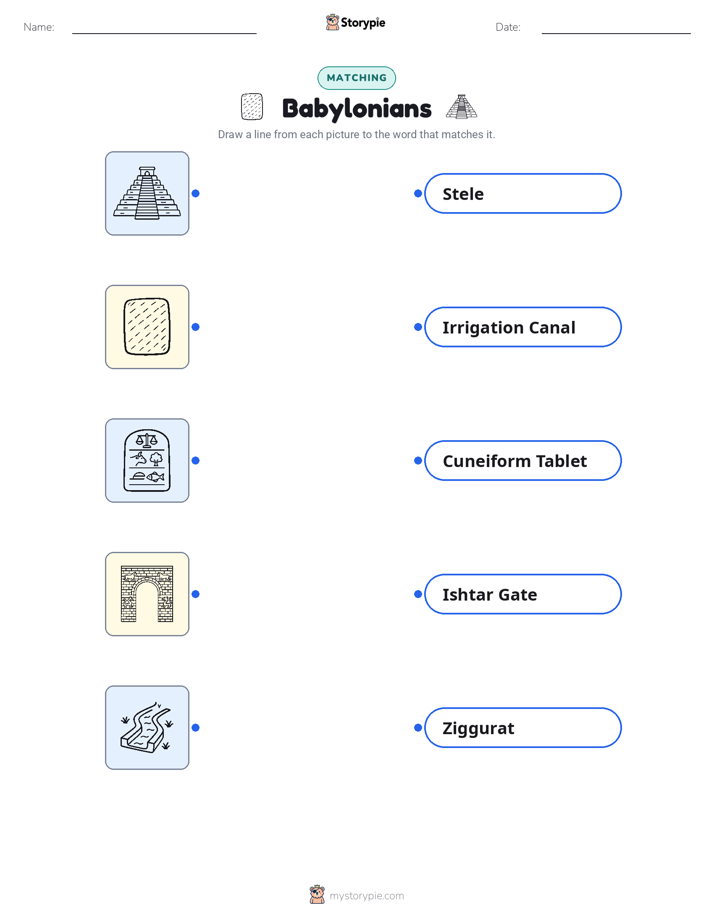
One of our greatest and most famous kings was named Hammurabi. He began his rule around 1792 BCE and saw that our empire was growing, with many different people living under his leadership. He wanted to make sure that everyone, from the farmer in the field to the merchant in the city, was treated fairly. To do this, he created something truly special: one of the world's first written sets of laws. We call it the Code of Hammurabi. It wasn't a secret set of rules known only to kings and priests. Instead, Hammurabi had all 282 laws carefully carved into a tall, dark stone monument for everyone to see. This meant that justice was open and clear, and the rules applied to all.
The laws on the monument covered almost every part of our lives. There were rules about farming, making sure that neighbors shared water from the canals properly. There were laws about business, ensuring that contracts were honored. And there were laws about family matters, setting out the rights and responsibilities of parents and children. Before this, justice might change from town to town or depend on who you were. But Hammurabi’s Code united our entire kingdom under one standard of justice, creating a society that was more organized and predictable for everyone who lived in it.
A Story from Babylon
Hello, we are the Babylonians. Our story begins in a beautiful and fertile land called Mesopotamia, which means “the land between the rivers.” For us, those two great rivers were the Tigris and the Euphrates. They gave us water for our crops and acted as highways for our boats, connecting us to faraway places. In this land, we built our magnificent capital city, Babylon. For hundreds of years, starting around 1894 BCE, our city was a shining center of power, learning, and trade. People from all over the ancient world came to Babylon to share goods and ideas. From this amazing city, we grew a powerful empire and created a culture that would be remembered for its grand achievements and brilliant thinking.
One of our greatest and most famous kings was named Hammurabi. He began his rule around 1792 BCE and saw that our empire was growing, with many different people living under his leadership. He wanted to make sure that everyone, from the farmer in the field to the merchant in the city, was treated fairly. To do this, he created something truly special: one of the world's first written sets of laws. We call it the Code of Hammurabi. It wasn't a secret set of rules known only to kings and priests. Instead, Hammurabi had all 282 laws carefully carved into a tall, dark stone monument for everyone to see. This meant that justice was open and clear, and the rules applied to all.
The laws on the monument covered almost every part of our lives. There were rules about farming, making sure that neighbors shared water from the canals properly. There were laws about business, ensuring that contracts were honored. And there were laws about family matters, setting out the rights and responsibilities of parents and children. Before this, justice might change from town to town or depend on who you were. But Hammurabi’s Code united our entire kingdom under one standard of justice, creating a society that was more organized and predictable for everyone who lived in it.
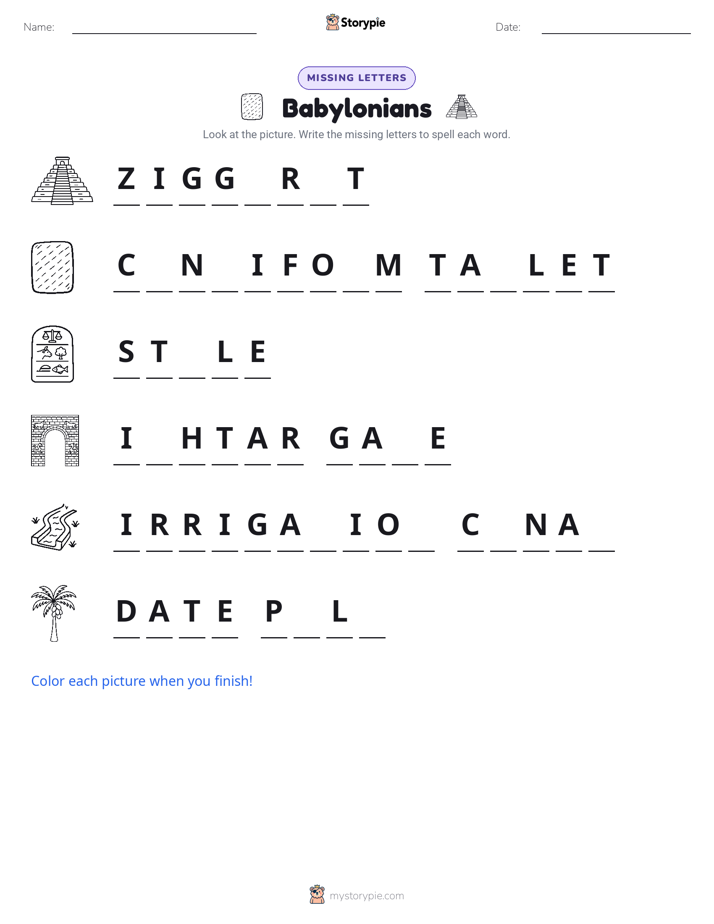
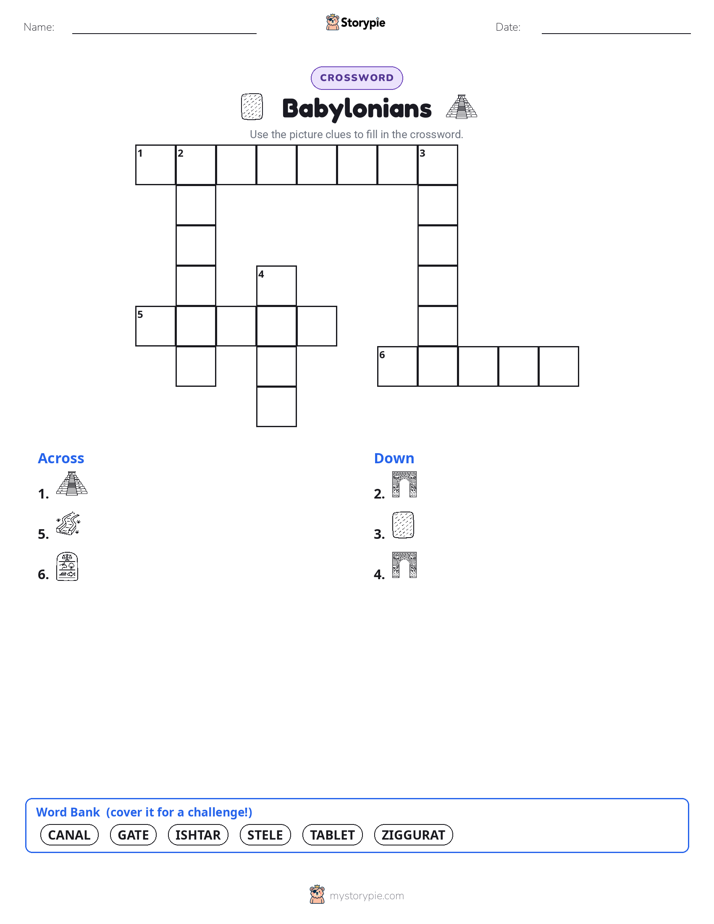
Our capital city of Babylon was a marvel of the ancient world. To protect our people, we built huge walls around the city, so thick and tall that they made visitors feel small. The most famous entrance was the Ishtar Gate, a breathtaking structure covered in bright blue glazed bricks and decorated with images of powerful animals. Inside the walls, our cities were filled with homes, busy markets, and towering temples called ziggurats. These were massive, stepped pyramids that seemed to reach toward the heavens, built to honor our gods. They were the center of religious life in our cities.
Besides being great builders, we were also great thinkers and record-keepers. To write things down, our skilled scribes used a system called cuneiform. They would press a stylus with a wedge-shaped tip into soft clay tablets, which would then dry and harden, preserving the writing for thousands of years. We kept records of everything from trade deals to stories. We were also fascinated by the night sky. Our astronomers were incredibly skilled observers who carefully mapped the constellations of stars and tracked the paths of the planets. This knowledge was important for our calendar and our beliefs.
Our careful study of mathematics and the sky led to discoveries that people still use every single day. We developed ideas in mathematics that helped us divide time into smaller parts. It was our work that led to the system of a 60-minute hour and a 60-second minute. Every time you look at a clock, you are seeing a little piece of our ancient Babylonian knowledge at work. This is one of the many ways our thinking continued long after we were gone.
Our powerful empire eventually came to an end. In the year 539 BCE, our great city of Babylon was conquered by the Persians. But the end of our rule was not the end of our influence. Our achievements in law, mathematics, and astronomy were not forgotten. Our ideas were so powerful that they were studied and passed on to other great civilizations that came after us, including the Greeks and the Romans. They learned from our legal codes, used our mathematical systems, and built upon our knowledge of the stars. The story of our culture shows how the ideas and discoveries of an ancient people can travel through time, shaping the world for thousands of years to come.
Wow facts
About
The Babylonians were an ancient Mesopotamian civilization known for establishing an influential empire under Hammurabi, but it was short-lived, declining rapidly after his death. They also created advanced legal codes like the Code of Hammurabi and made significant contributions to astronomy and mathematics.
Take a Quiz
Question 1 of 5
What was the name of the wedge-shaped writing system used by Babylonian scribes on clay tablets?
Explore next






Want to do even more?
Go beyond exploring. Unlock tools that turn every story into real learning.

Storypie Plus for families
Full stories, quizzes, and printables. Nights and car rides, sorted.
- Unlimited audio stories
- Create Mode: your child stars in the story
- Offline downloads
- Printable worksheets & coloring pages

Why Storypie for Schools
Students engaged. Prep in seconds. Evenings back to you.
- Worksheets & Quizzes
- Classroom Management
- Formative Assessment
- Custom Curriculum & Lesson Plans
- 27 Languages

Why Storypie for Homeschool
Curriculum done. They'll ask for more. Hours back in your day.
- Worksheet Generator
- First-Person Audio Stories
- Built-in Comprehension Quizzes
- Custom Curriculum & Lesson Plans
- Print & Go Activities