English

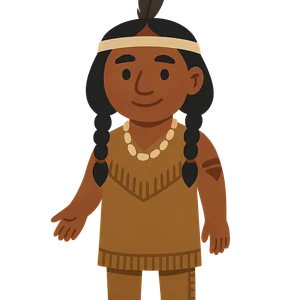
Powhatan Confederacy
A powerful political alliance of over 30 Algonquian-speaking Native American tribes in the Tidewater region…
Reads at Grades 6–8 Listens at Grades 4–8
Print & create
Answer keys·No prep·Free with an account
28 worksheets · answer keys · full story · quiz · Ages 10-12 · CEFR B2
Plus adds 116,000+ more stories in 27 languages, audio for every one, and printables for all of them.
Just want Powhatan Confederacy?
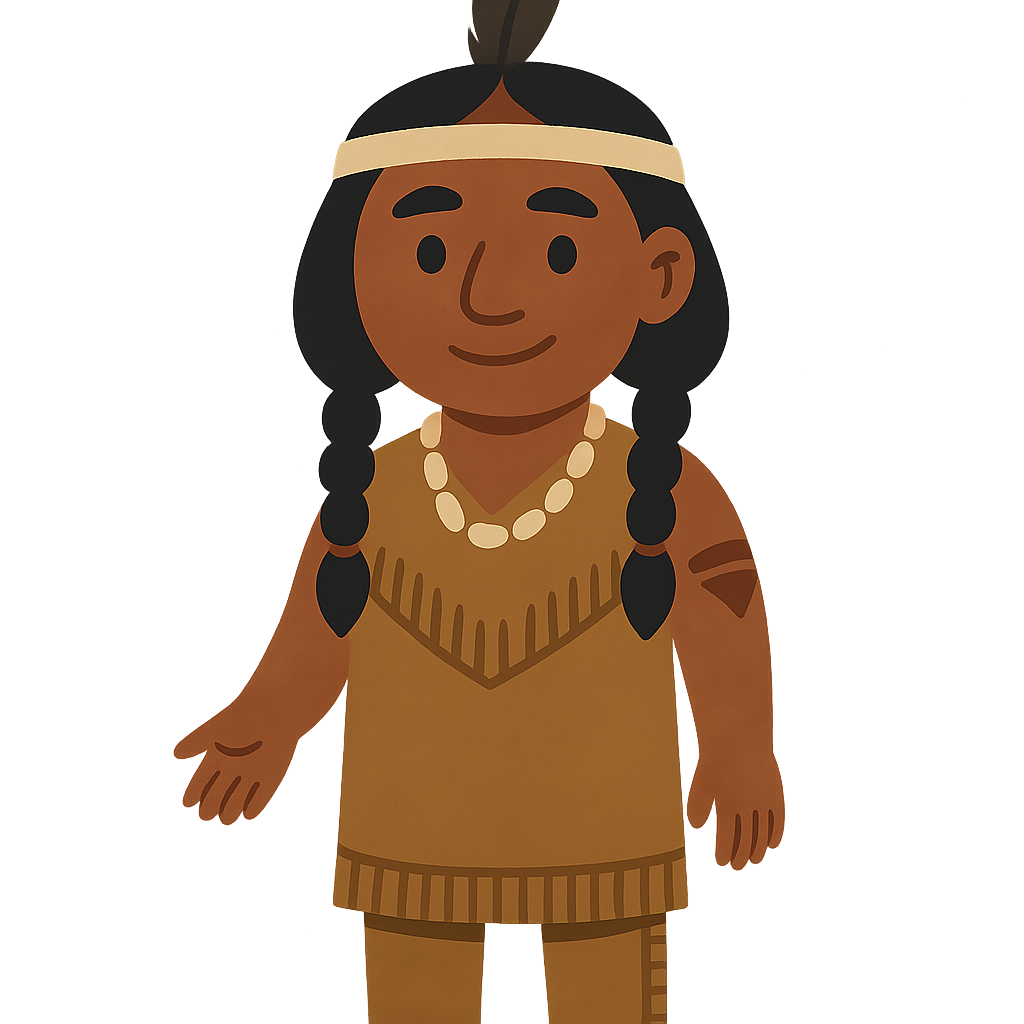
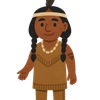
Hello. We are the people of the Powhatan Confederacy, and we want to share the story of our home, our history, and our heritage. For many generations, our world was a beautiful and bountiful land we called Tsenacommacah. This territory stretched along the coastal plains of what is now Virginia, with dense forests full of life and wide rivers that flowed into the great Chesapeake Bay. We were not just one group but a powerful alliance of more than 30 distinct tribes. Though each tribe had its own community and leaders, we were united by shared traditions and by speaking related Algonquian languages. This connection allowed us to communicate, trade, and support one another.
Our confederacy was guided by a paramount chief, a strong and respected leader who held great authority. During a very important time in our history, this leader was a man named Wahunsenacawh. He was so powerful that he was often simply called Powhatan, which was the name of his home village. It was under his leadership that our many tribes came together, forming a society that was complex, organized, and deeply connected to the land we inhabited. Our unity gave us strength and allowed us to thrive in Tsenacommacah for centuries.
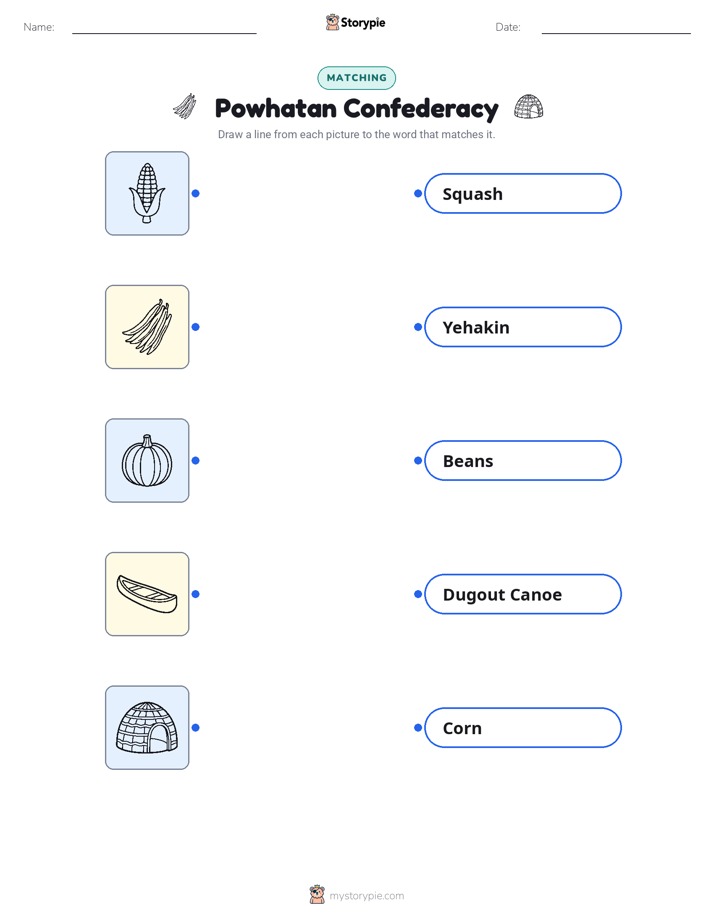
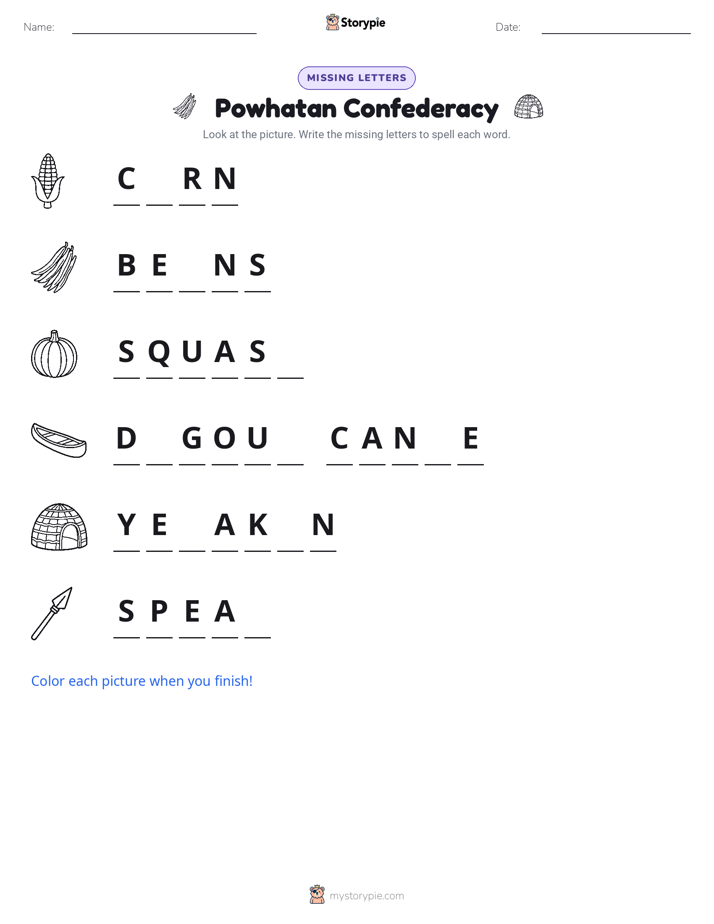
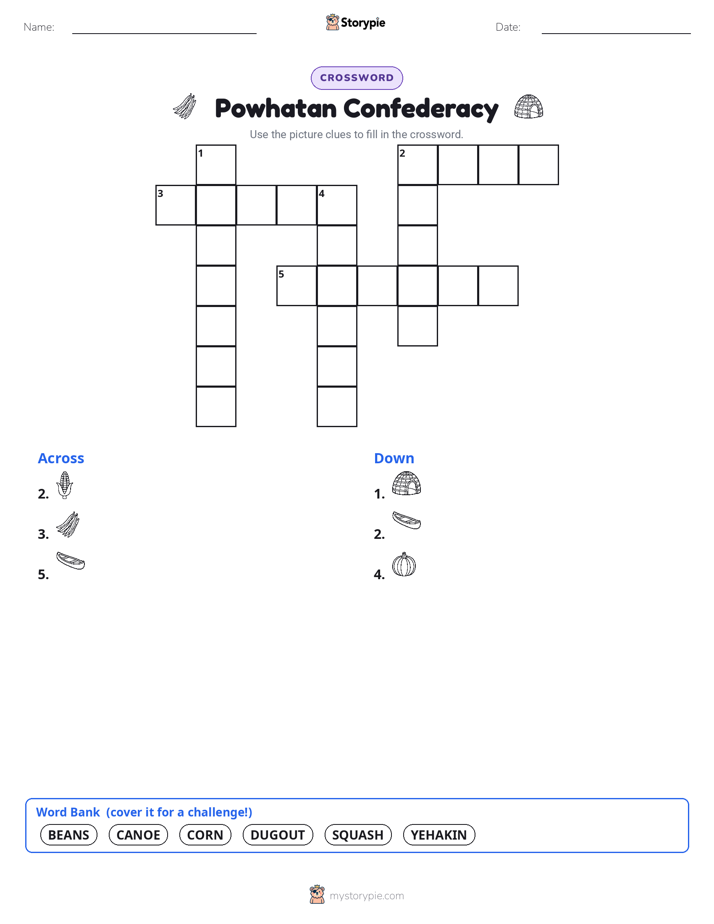
Our lives were shaped by the world around us, and we lived in harmony with the rhythm of the seasons. We were skilled farmers, resourceful hunters, and expert fishers, and everyone in our communities had an important role to play. The women were the heart of our agriculture. They were the main farmers, tending to the fields with great knowledge and care. Their most important crops were corn, beans, and squash, which we called the 'Three Sisters.' We grew them together because they helped one another thrive—the corn provided a stalk for the beans to climb, the beans added nutrients to the soil, and the broad leaves of the squash shaded the ground, keeping it moist and free of weeds. This clever farming method provided a reliable source of food for our people.
We Are the Powhatan Confederacy
Hello. We are the people of the Powhatan Confederacy, and we want to share the story of our home, our history, and our heritage. For many generations, our world was a beautiful and bountiful land we called Tsenacommacah. This territory stretched along the coastal plains of what is now Virginia, with dense forests full of life and wide rivers that flowed into the great Chesapeake Bay. We were not just one group but a powerful alliance of more than 30 distinct tribes. Though each tribe had its own community and leaders, we were united by shared traditions and by speaking related Algonquian languages. This connection allowed us to communicate, trade, and support one another.
Our confederacy was guided by a paramount chief, a strong and respected leader who held great authority. During a very important time in our history, this leader was a man named Wahunsenacawh. He was so powerful that he was often simply called Powhatan, which was the name of his home village. It was under his leadership that our many tribes came together, forming a society that was complex, organized, and deeply connected to the land we inhabited. Our unity gave us strength and allowed us to thrive in Tsenacommacah for centuries.
Our lives were shaped by the world around us, and we lived in harmony with the rhythm of the seasons. We were skilled farmers, resourceful hunters, and expert fishers, and everyone in our communities had an important role to play. The women were the heart of our agriculture. They were the main farmers, tending to the fields with great knowledge and care. Their most important crops were corn, beans, and squash, which we called the 'Three Sisters.' We grew them together because they helped one another thrive—the corn provided a stalk for the beans to climb, the beans added nutrients to the soil, and the broad leaves of the squash shaded the ground, keeping it moist and free of weeds. This clever farming method provided a reliable source of food for our people.
While the women farmed, the men focused on hunting and fishing. They tracked deer and turkey through the deep forests, using their skills to provide meat and materials for clothing and tools. On the water, our men were masters of the dugout canoe. These sturdy boats were carved from a single large log, and from them, we fished the rich waters of the rivers and the bay. Our villages were well-organized and comfortable. We lived in homes called yehakins, which were sturdy, dome-shaped structures. We built them by bending young trees, or saplings, into a frame and then covering it with tightly woven mats. These homes kept us warm in the winter and cool in the summer, providing safe and secure shelter for our families.
In the year 1607, our world began to change in ways we could never have imagined. Three tall ships sailed into the Chesapeake Bay, carrying strangers from a distant land. These were English colonists, and they chose a piece of our territory to build a settlement, which they named Jamestown. At first, our relationship with the newcomers was based on trade. We had a surplus of food, and they had metal tools and other goods that were new to us. However, it did not take long for tensions to grow. The English settlers struggled to grow their own food and began to demand more and more from our villages. At the same time, they started to expand their settlement, clearing forests and taking over land that had been ours for generations.
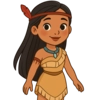
During this uncertain time, one of our most well-known ancestors, Pocahontas, played a crucial role. As the daughter of our paramount chief, Wahunsenacawh, she was in a unique position. She served as an important link between our people and the English, trying to build bridges of understanding and communication. She helped the struggling colonists, but her role was far more complex than simple assistance; she was a diplomat, navigating the difficult and often dangerous space between our two very different worlds.
Unfortunately, the efforts of diplomats like Pocahontas could not prevent the conflict that was to come. The peace was fragile and eventually shattered. The primary cause of the conflict was land. The English colonists believed they had a right to claim Tsenacommacah as their own, while we were determined to defend the home our ancestors had lived in for centuries. This fundamental disagreement led to a series of devastating wars that stretched across several decades in the 1600s, known today as the Anglo-Powhatan Wars. These were not short battles but long, brutal periods of fighting that brought immense suffering to our communities.
In addition to the violence of war, we faced another deadly threat: new diseases that the English brought with them from Europe. Our bodies had no immunity to illnesses like smallpox and measles, and these sicknesses swept through our villages, causing our population to decline dramatically. The combination of warfare and disease greatly weakened our confederacy. After years of fighting, the final war ended in 1646. A treaty was signed that officially broke the power of our once-great confederacy. The terms of the treaty forced our remaining people onto small, designated areas of land called reservations, changing our way of life forever.
Though our powerful confederacy was broken and our world was changed by colonization, we, the Powhatan people, did not disappear. Our story did not end in the 1600s. Today, our descendants carry on our legacy as citizens of several state and federally recognized tribes in Virginia. These include the Pamunkey and Mattaponi tribes, among others who continue to live on or near our ancestral lands. We are proud of our heritage and work hard to keep the spirit of our ancestors alive. We are actively preserving our culture by teaching our children our traditions, working to revitalize our languages, and ensuring that our history is told accurately. We share our story with the world so that everyone can understand the history of Tsenacommacah and the enduring presence of its people.
Wow facts
About
A powerful political alliance of over 30 Algonquian-speaking Native American tribes in the Tidewater region of Virginia during the late 16th and early 17th centuries.
Take a Quiz
Question 1 of 5
According to the story, what was the primary reason for the growing tension and eventual conflict between the Powhatan and the English colonists?
Explore next


Want to do even more?
Go beyond exploring. Unlock tools that turn every story into real learning.

Storypie Plus for families
Full stories, quizzes, and printables. Nights and car rides, sorted.
- Unlimited audio stories
- Create Mode: your child stars in the story
- Offline downloads
- Printable worksheets & coloring pages

Why Storypie for Schools
Students engaged. Prep in seconds. Evenings back to you.
- Worksheets & Quizzes
- Classroom Management
- Formative Assessment
- Custom Curriculum & Lesson Plans
- 27 Languages

Why Storypie for Homeschool
Curriculum done. They'll ask for more. Hours back in your day.
- Worksheet Generator
- First-Person Audio Stories
- Built-in Comprehension Quizzes
- Custom Curriculum & Lesson Plans
- Print & Go Activities