English

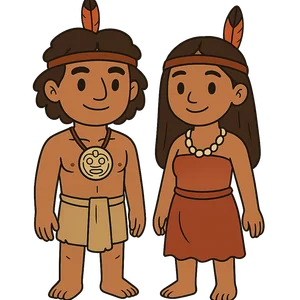
Taíno people
The Taíno were the indigenous Arawakan people of the Caribbean islands, including Puerto Rico, Hispaniola…
Reads at Grades 6–8 Listens at Grades 4–8
Print & create
Answer keys·No prep·Free with an account
28 worksheets · answer keys · full story · quiz · Ages 10-12 · CEFR B2
Plus adds 116,000+ more stories in 27 languages, audio for every one, and printables for all of them.
Just want Taíno people?
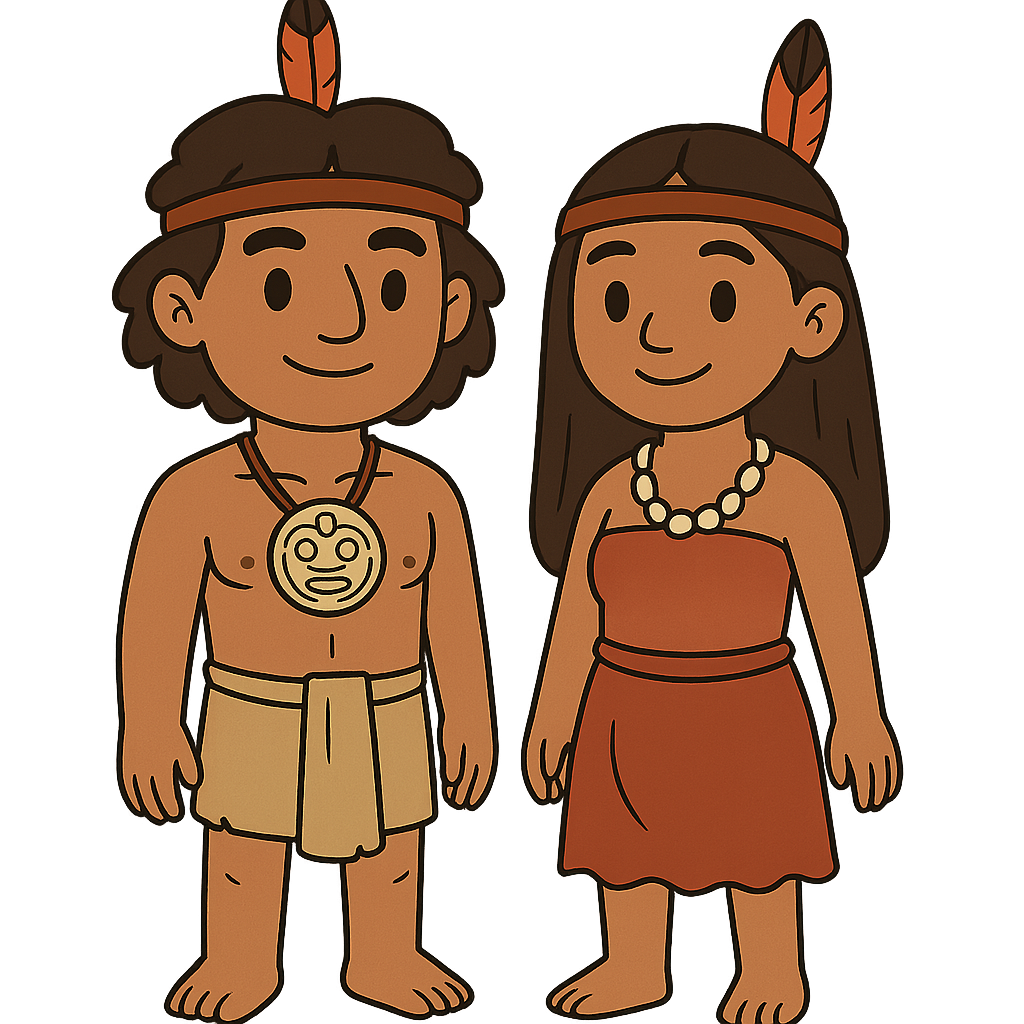
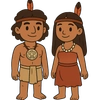
Hello. We are the Taíno, and we want to share the story of our people. We were the first people to call the beautiful islands of the Caribbean our home. For centuries, our world was a network of communities spread across the Greater Antilles, a chain of islands that includes Cuba, Hispaniola, and Puerto Rico. Imagine a place where the sun is always warm, the sea is a brilliant blue, and the land provides everything needed to live. Our homeland was a place of abundance, with lush forests, clear rivers, and fertile soil. This bountiful environment shaped who we were and allowed our culture to flourish long before ships from another world appeared on the horizon. It was here, among the palms and the waves, that we built our societies, raised our families, and created a rich way of life connected to the earth and the sea.
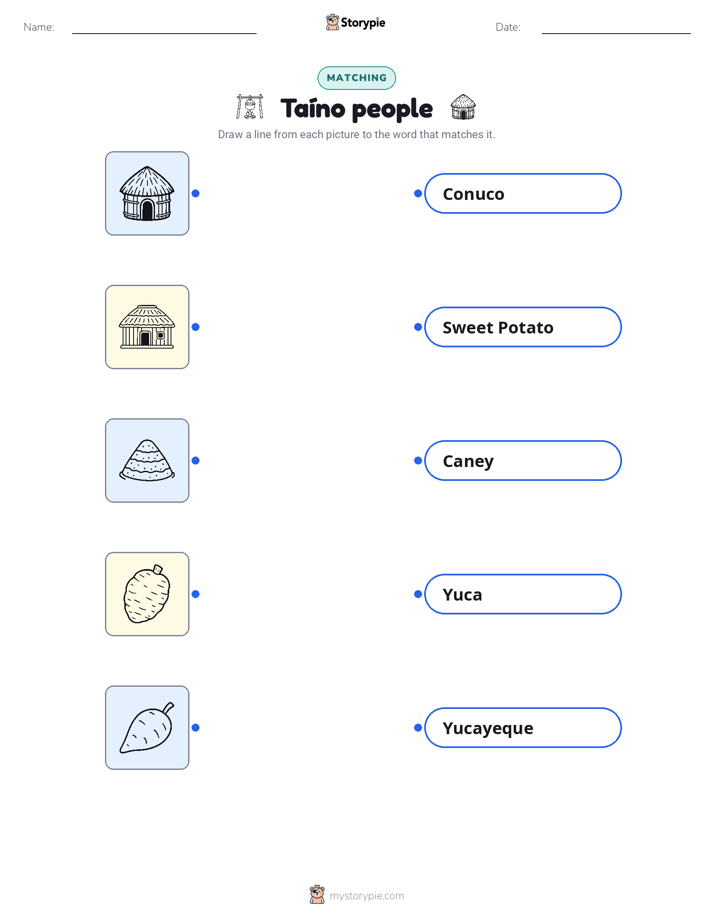
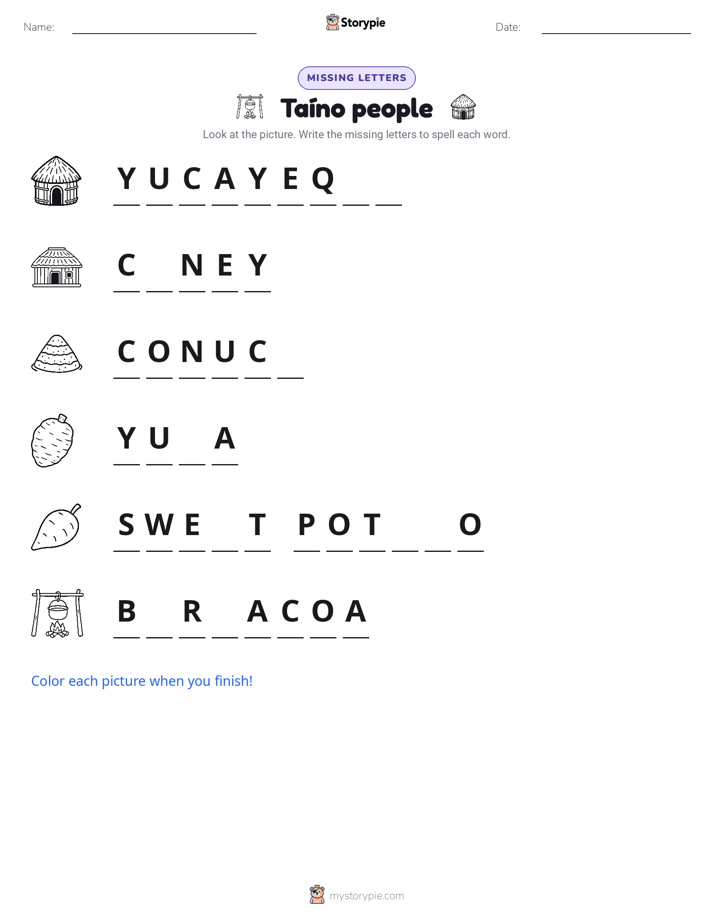
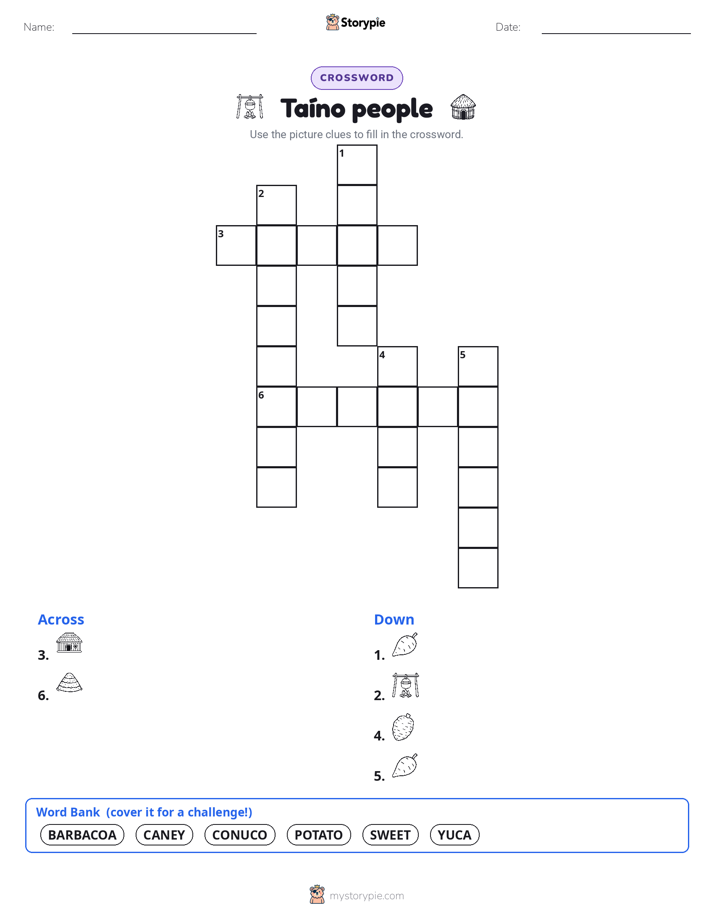
Our lives were centered in organized villages we called yucayeques. Each yucayeque was carefully planned around a large, open central plaza, which served as the heart of our community. This was where we gathered for ceremonies, celebrations, and important events. Most of our families lived in circular homes called bohíos, built with sturdy wooden poles and covered with thatched palm leaves to keep us cool and dry. Our leaders, known as caciques, lived in a larger, rectangular home called a caney, which stood as a symbol of their importance. Our society was well-structured. The cacique held the highest position, guiding the village and making important decisions. Below the caciques were the common people, who were the farmers, fishers, and artisans. Everyone had a role, and together, we created thriving communities that were connected through family ties, trade, and shared traditions across the islands.
We Are the Taíno: Our Story from the Caribbean
Hello. We are the Taíno, and we want to share the story of our people. We were the first people to call the beautiful islands of the Caribbean our home. For centuries, our world was a network of communities spread across the Greater Antilles, a chain of islands that includes Cuba, Hispaniola, and Puerto Rico. Imagine a place where the sun is always warm, the sea is a brilliant blue, and the land provides everything needed to live. Our homeland was a place of abundance, with lush forests, clear rivers, and fertile soil. This bountiful environment shaped who we were and allowed our culture to flourish long before ships from another world appeared on the horizon. It was here, among the palms and the waves, that we built our societies, raised our families, and created a rich way of life connected to the earth and the sea.
Our lives were centered in organized villages we called yucayeques. Each yucayeque was carefully planned around a large, open central plaza, which served as the heart of our community. This was where we gathered for ceremonies, celebrations, and important events. Most of our families lived in circular homes called bohíos, built with sturdy wooden poles and covered with thatched palm leaves to keep us cool and dry. Our leaders, known as caciques, lived in a larger, rectangular home called a caney, which stood as a symbol of their importance. Our society was well-structured. The cacique held the highest position, guiding the village and making important decisions. Below the caciques were the common people, who were the farmers, fishers, and artisans. Everyone had a role, and together, we created thriving communities that were connected through family ties, trade, and shared traditions across the islands.
We were skilled farmers and fishers, and we knew how to live in harmony with our island environment. To grow our food, we developed a clever farming method using what we called a conuco. Instead of planting in flat fields, we piled the earth into mounds. This technique protected the soil from washing away during heavy rains and helped our crops grow strong. Our most important crops were yuca, a starchy root vegetable, and sweet potatoes, which provided us with steady nourishment. The sea also gave us plenty to eat, and our days were often spent fishing in the clear coastal waters. Our connection to this way of life is still present today in the words we gave to the world. When you hear someone talk about having a “barbecue,” they are using our word, barbacoa, for a wooden frame used for cooking. And a “hammock,” the comfortable swinging bed, comes from our word hamaca.
Our spiritual world was just as rich as our physical one. Our beliefs centered on powerful spirits called zemís. We believed these spirits lived in the natural world and could influence everything from the weather to the success of our crops. To honor them, our artisans created detailed carvings of the zemís from wood, stone, and bone. These weren't just decorations; they were sacred objects that connected us to the spiritual realm. Our plazas were not only for gatherings but also for a ceremonial ball game called batú. Teams would try to keep a rubber ball in the air using their hips, knees, and heads. Batú was more than just a sport; it was a form of recreation, a way to hold religious ceremonies, and sometimes even a peaceful way to settle disputes between villages. Our creativity was also expressed through beautiful pottery, intricate weavings from cotton, and the detailed carvings that were a hallmark of our culture.
For generations, our way of life continued under the warm Caribbean sun. But in the year 1492, everything changed. Three large ships, unlike any we had ever seen, arrived on our shores, carrying Christopher Columbus and his crew. This was the first encounter between our people and Europeans, and it marked a devastating turning point in our history. The newcomers were interested in the resources of our islands, and soon our lives were overturned. Many of our people were forced into labor, and conflicts broke out as we tried to defend our homes and our freedom. Worst of all, the Europeans brought new diseases with them—sicknesses our bodies had never experienced before and had no defense against. These diseases spread rapidly through our communities, and our population was decimated.
The arrival of the Europeans caused our great societies to collapse, but we, the Taíno, did not disappear. Our spirit lives on. Today, many people living in the Caribbean islands are proud to have Taíno ancestry. There is a powerful cultural revival happening, as our descendants work to bring back our language, our traditions, and the stories of our ancestors. Our influence is still a vital part of Caribbean culture. You can taste it in the food, hear it in the names of places, and see it in the art of the region. Though we faced immense hardship, our story is one of survival and resilience. Our legacy is woven into the very fabric of the islands we first called home, and our spirit remains strong in the hearts of our people today.
Wow facts
About
The Taíno were the indigenous Arawakan people of the Caribbean islands, including Puerto Rico, Hispaniola, and Cuba, who had a rich culture and complex society prior to European contact in 1492.
Take a Quiz
Question 1 of 5
How did the geography of the Greater Antilles shape the Taíno way of life?
Explore next
Want to do even more?
Go beyond exploring. Unlock tools that turn every story into real learning.

Storypie Plus for families
Full stories, quizzes, and printables. Nights and car rides, sorted.
- Unlimited audio stories
- Create Mode: your child stars in the story
- Offline downloads
- Printable worksheets & coloring pages

Why Storypie for Schools
Students engaged. Prep in seconds. Evenings back to you.
- Worksheets & Quizzes
- Classroom Management
- Formative Assessment
- Custom Curriculum & Lesson Plans
- 27 Languages

Why Storypie for Homeschool
Curriculum done. They'll ask for more. Hours back in your day.
- Worksheet Generator
- First-Person Audio Stories
- Built-in Comprehension Quizzes
- Custom Curriculum & Lesson Plans
- Print & Go Activities