English

Taíno people
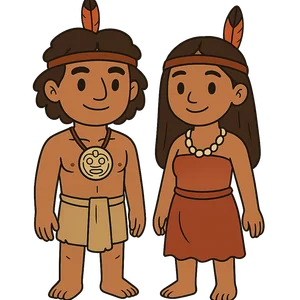
The Taíno were the indigenous Arawakan people of the Caribbean islands, including Puerto Rico, Hispaniola…
Reads at Grades 3–5 Listens at Grades 1–5
Print & create
Answer keys·No prep·Free with an account
28 worksheets · answer keys · full story · quiz · Ages 8-10 · CEFR B1
Plus adds 116,000+ more stories in 27 languages, audio for every one, and printables for all of them.
Just want Taíno people?
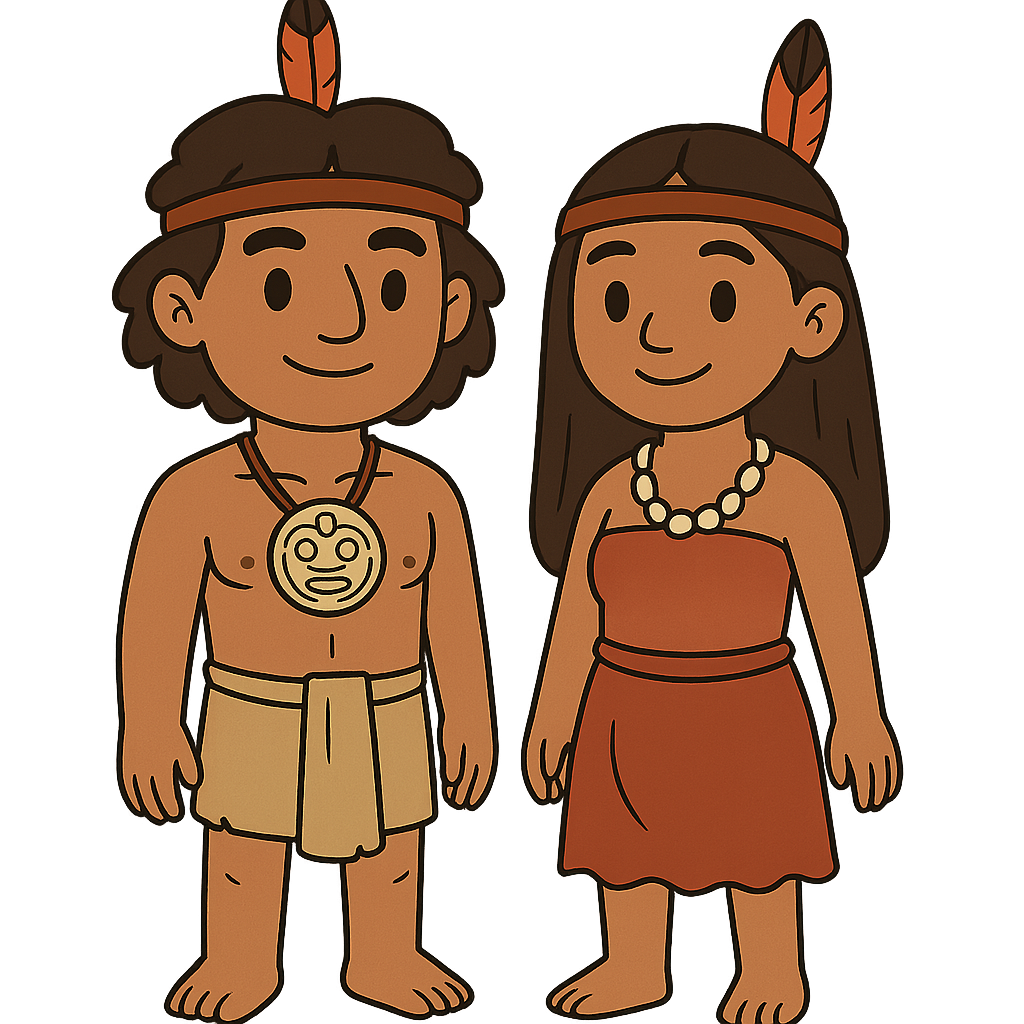
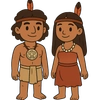
Hello! We are the Taíno people, and we want to share the story of our ancestors and our culture. Our story begins long ago, with a great journey. Our ancestors traveled from the mainland of South America, moving northward across the sparkling blue water until they reached the beautiful islands of the Caribbean. These islands became our home, a place of warm sunshine, gentle breezes, and lush green forests. We learned to live in harmony with the land and the sea, which provided everything we needed.
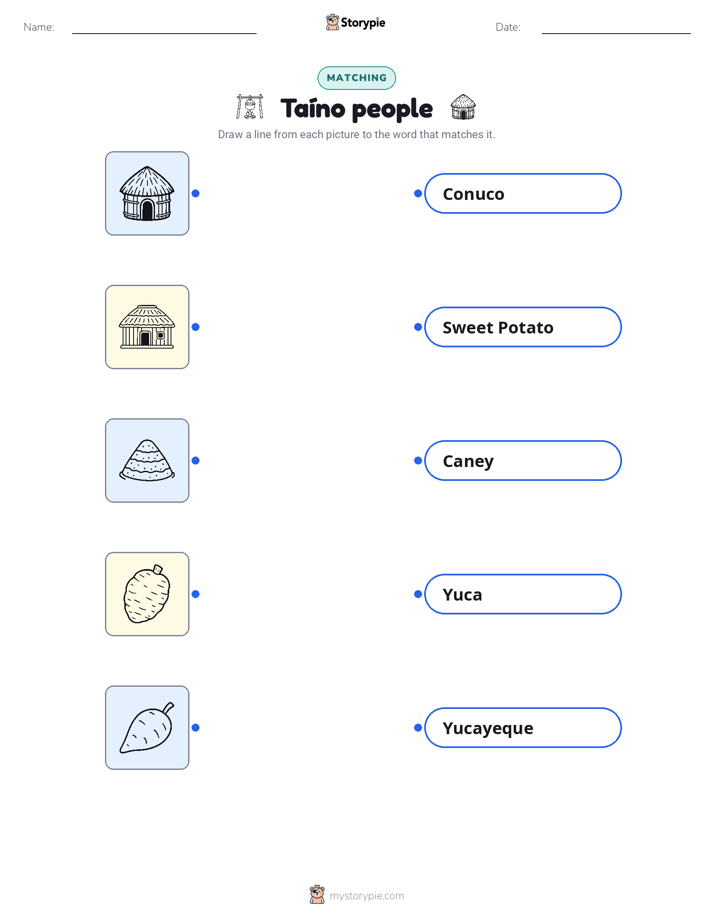
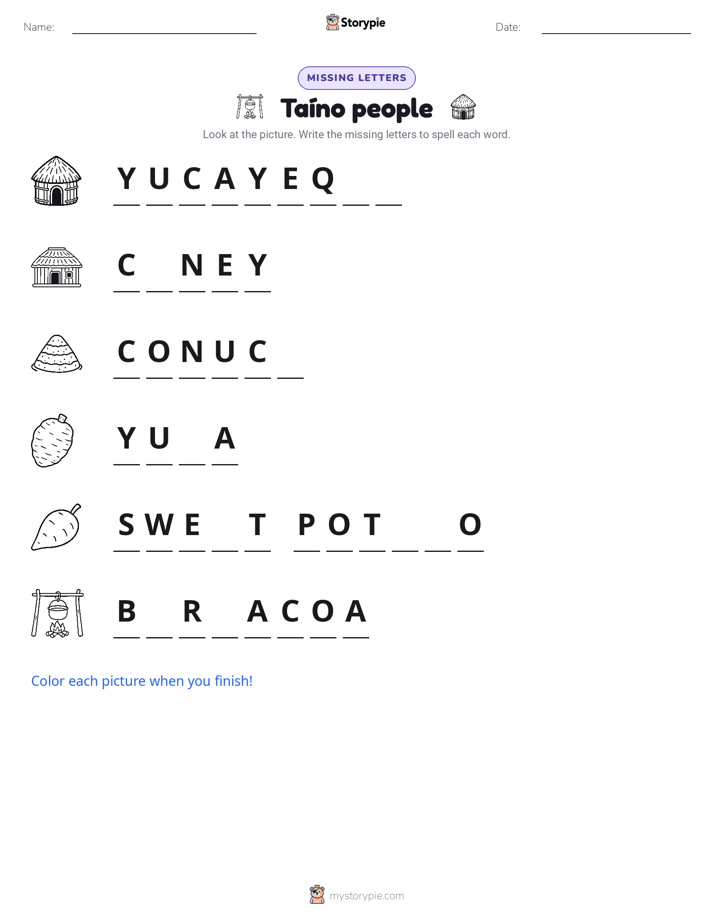
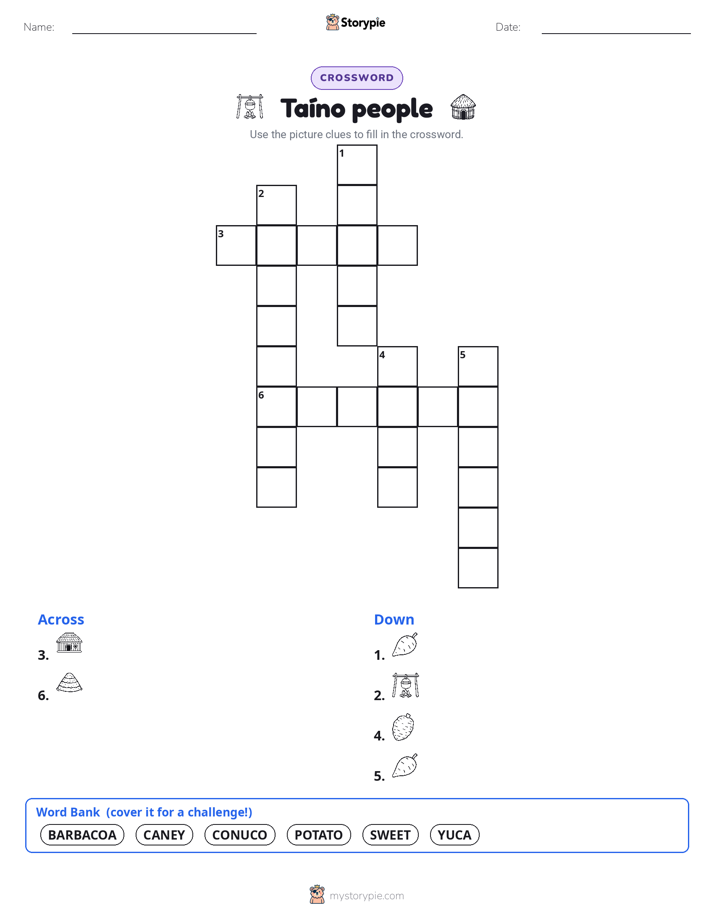
We built our communities in villages we called yucayeques. Inside our yucayeques, our families lived in homes known as bohios, which were sturdy, circular buildings that kept us safe and cool. Our villages were more than just groups of houses; they were organized communities where everyone had a role and worked together. Each yucayeque was led by a chief, whom we called a cacique. The cacique was a respected leader who helped make important decisions for the community, guiding us and ensuring that everyone was cared for. The role of the cacique was an important tradition, and leadership was passed down through families from one generation to the next, keeping our communities strong and connected.
Our daily life was tied to the land. We were skilled farmers who knew how to make the soil productive. Our most important crop was yuca, a hearty root vegetable that was a staple of our diet. To grow yuca and our other crops, we used a clever farming method called conuco. This involved creating mounds of earth, which helped to protect the soil from washing away during heavy rains and made it easier to grow healthy plants. This method allowed us to grow plenty of food to feed our families and our entire village. Farming was a central part of our life, and our ability to work with the land was something we took great pride in.
We Are the Taíno
Hello! We are the Taíno people, and we want to share the story of our ancestors and our culture. Our story begins long ago, with a great journey. Our ancestors traveled from the mainland of South America, moving northward across the sparkling blue water until they reached the beautiful islands of the Caribbean. These islands became our home, a place of warm sunshine, gentle breezes, and lush green forests. We learned to live in harmony with the land and the sea, which provided everything we needed.
We built our communities in villages we called yucayeques. Inside our yucayeques, our families lived in homes known as bohios, which were sturdy, circular buildings that kept us safe and cool. Our villages were more than just groups of houses; they were organized communities where everyone had a role and worked together. Each yucayeque was led by a chief, whom we called a cacique. The cacique was a respected leader who helped make important decisions for the community, guiding us and ensuring that everyone was cared for. The role of the cacique was an important tradition, and leadership was passed down through families from one generation to the next, keeping our communities strong and connected.
Our daily life was tied to the land. We were skilled farmers who knew how to make the soil productive. Our most important crop was yuca, a hearty root vegetable that was a staple of our diet. To grow yuca and our other crops, we used a clever farming method called conuco. This involved creating mounds of earth, which helped to protect the soil from washing away during heavy rains and made it easier to grow healthy plants. This method allowed us to grow plenty of food to feed our families and our entire village. Farming was a central part of our life, and our ability to work with the land was something we took great pride in.
Life was also filled with community, ceremony, and fun. Our spiritual beliefs were centered around spirits called zemís. We believed these spirits were connected to the natural world and could help and guide us. To honor them and to celebrate our history, we held special ceremonies called areytos. During an areyto, we would come together to sing, dance, and tell the stories of our ancestors, passing our traditions on to our children. We also loved to play a traditional ball game called batú. It was a fast-paced game played between two teams on a special court, and it was a popular way for us to have fun and show our skill and strength.
For centuries, our way of life continued on our island homes. But in the year 1492, everything began to change. On that day, large ships arrived, carrying Christopher Columbus and his crew from across the ocean. At first, there were meetings and interactions between our people and the newcomers. We were curious about these visitors who were so different from us. We could not have known how deeply their arrival would affect our world and change our lives forever. It was a moment that marked a new chapter in our history, one filled with great challenges.
After those initial meetings, our relationship with the Europeans grew difficult. Conflict soon broke out, and our people suffered greatly. We were forced to work for the newcomers, and our freedom was taken away. Even more devastating were the new diseases the sailors brought with them. Because our bodies had never been exposed to these illnesses before, they spread quickly through our communities and caused immense loss. It was a time of great sorrow and hardship for our people, and our world was turned upside down.
Despite these terrible struggles, we want you to know an important truth: we, the Taíno, did not disappear. Many people wrongly believed our culture was lost, but our spirit and our people have survived. Today, our descendants live throughout the Caribbean and in many other parts of the world. Our culture continues in the music, art, and traditions of the islands. Our language has even influenced the world, giving it words you might know. We are still here, and we are proud to share the story of our resilience and our lasting legacy.
Wow facts
About
The Taíno were the indigenous Arawakan people of the Caribbean islands, including Puerto Rico, Hispaniola, and Cuba, who had a rich culture and complex society prior to European contact in 1492.
Take a Quiz
Question 1 of 5
What were our villages called?
Explore next
Want to do even more?
Go beyond exploring. Unlock tools that turn every story into real learning.

Storypie Plus for families
Full stories, quizzes, and printables. Nights and car rides, sorted.
- Unlimited audio stories
- Create Mode: your child stars in the story
- Offline downloads
- Printable worksheets & coloring pages

Why Storypie for Schools
Students engaged. Prep in seconds. Evenings back to you.
- Worksheets & Quizzes
- Classroom Management
- Formative Assessment
- Custom Curriculum & Lesson Plans
- 27 Languages

Why Storypie for Homeschool
Curriculum done. They'll ask for more. Hours back in your day.
- Worksheet Generator
- First-Person Audio Stories
- Built-in Comprehension Quizzes
- Custom Curriculum & Lesson Plans
- Print & Go Activities