English

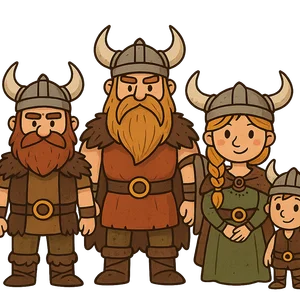
Vikings
The Vikings were seafaring Norse people from Scandinavia who, from the late 8th to the late 11th centuries…
Reads at Grades 6–8 Listens at Grades 4–8
Print & create
Answer keys·No prep·Free with an account
28 worksheets · answer keys · full story · quiz · Ages 10-12 · CEFR B2
Plus adds 164,000+ more stories in 27 languages, audio for every one, and printables for all of them.
Just want Vikings?
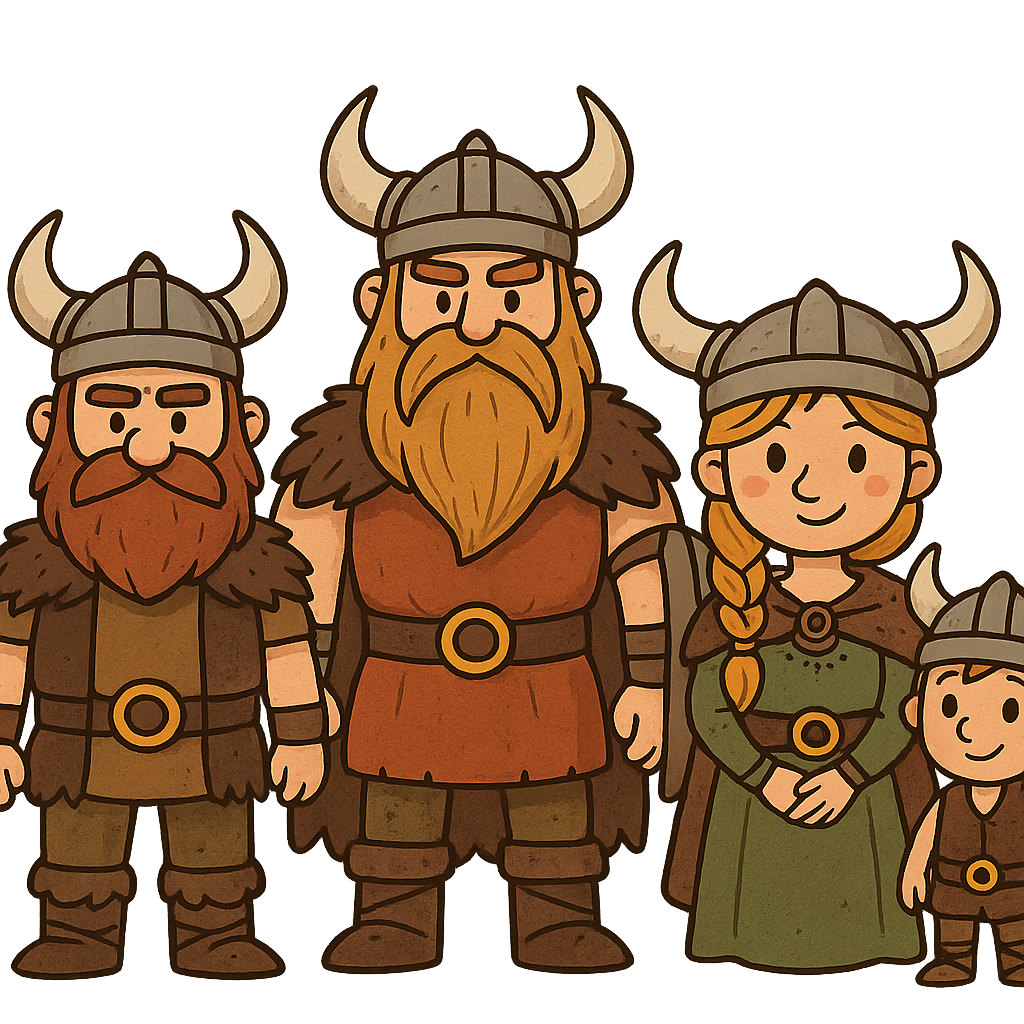
We are the Norse people, and our story is written on the waves of the sea. Our original homelands were in Scandinavia—the lands you now call Denmark, Norway, and Sweden. For centuries, our lives were shaped by the world around us. Deep, winding inlets of the sea called fjords cut into the coastline, while vast forests covered the land. This geography made us resourceful. We were farmers who worked the soil, but we were also sailors and shipbuilders who learned the ways of the water. The sea was not a barrier to us; it was our road to the world. Our deep connection to the ocean and our skill in building ships prepared us for a new period in our history. In the late 8th century, an era began that historians now call the Viking Age, a time when we would use our ships to travel farther than ever before, leaving our mark on lands near and far.
Our greatest technological achievement, the key that unlocked the world for us, was the longship. This vessel was a masterpiece of design, perfectly suited for our ambitions. It was long, narrow, and light, built with a method called “clinker-building,” where the wooden planks of the hull overlapped. This technique made the ship both strong and flexible, allowing it to ride the ocean waves rather than fight against them. One of its most important features was its shallow draft, which means the ship did not sit deep in the water. This brilliant design allowed us to cross the stormiest open oceans but also to navigate far up shallow rivers, taking us deep into territories that were unreachable for other seafarers. The longship was also symmetrical, with an identical bow and stern, so we could reverse direction without having to turn around. This versatile vessel was the heart of our success, enabling our journeys of trade, exploration, and raiding.
We Who Sailed the Seas: The Story of the Norse People
We are the Norse people, and our story is written on the waves of the sea. Our original homelands were in Scandinavia—the lands you now call Denmark, Norway, and Sweden. For centuries, our lives were shaped by the world around us. Deep, winding inlets of the sea called fjords cut into the coastline, while vast forests covered the land. This geography made us resourceful. We were farmers who worked the soil, but we were also sailors and shipbuilders who learned the ways of the water. The sea was not a barrier to us; it was our road to the world. Our deep connection to the ocean and our skill in building ships prepared us for a new period in our history. In the late 8th century, an era began that historians now call the Viking Age, a time when we would use our ships to travel farther than ever before, leaving our mark on lands near and far.
Our greatest technological achievement, the key that unlocked the world for us, was the longship. This vessel was a masterpiece of design, perfectly suited for our ambitions. It was long, narrow, and light, built with a method called “clinker-building,” where the wooden planks of the hull overlapped. This technique made the ship both strong and flexible, allowing it to ride the ocean waves rather than fight against them. One of its most important features was its shallow draft, which means the ship did not sit deep in the water. This brilliant design allowed us to cross the stormiest open oceans but also to navigate far up shallow rivers, taking us deep into territories that were unreachable for other seafarers. The longship was also symmetrical, with an identical bow and stern, so we could reverse direction without having to turn around. This versatile vessel was the heart of our success, enabling our journeys of trade, exploration, and raiding.
Many stories describe us only as fierce warriors, but this is a small part of who we were. While our raids are a famous part of our history, most of us were farmers, living our lives according to the rhythm of the seasons on our farms in Scandinavia. The search for new land to farm was often a major reason for our voyages. We were also energetic and wide-ranging traders. Our trade networks were incredibly vast, connecting Northern Europe with distant parts of the world. We sailed our longships, loaded with goods like furs and amber, to markets in the Byzantine Empire, reaching the great city of Constantinople. We even traded with merchants from Baghdad in the Middle East. Beyond trading, we were settlers who built new lives in new lands. We founded communities that grew and thrived, creating new societies in places like Iceland and Greenland. We also settled in a region of France that came to be known as Normandy, named after the “Northmen” who made it their home.
Before the widespread adoption of Christianity, our spiritual world was rich with powerful gods, epic tales, and ancient traditions. Our beliefs explained the world around us, from the clap of thunder in a storm to the cycle of life and death. We honored a pantheon of gods, including Odin, the wise and powerful Allfather, who was the god of war and wisdom. His son, Thor, was the mighty defender of humanity, the god of thunder who wielded a legendary hammer. We also worshipped Freyja, the goddess of love, fertility, and beauty. We did not write our histories in books. Instead, we were masters of oral storytelling. We passed down our beliefs, our history, and the adventures of our ancestors through epic poems and long stories known as sagas. These tales were a vital part of our culture. We did have a system of writing called the Futhark, an alphabet made of angular letters called runes. These runes were not typically used for long stories but were carved into stones, wood, and metal to commemorate important people, mark significant events, or send messages.
Our skills as navigators and sailors allowed us to undertake some of the most daring voyages of exploration in history. We sailed westward into the uncharted waters of the North Atlantic, long before other Europeans dared to venture so far from shore. We navigated without magnetic compasses, relying instead on our deep knowledge of the natural world. We used the position of the sun and stars to guide us, but we also paid close attention to other signs, like the flight patterns of birds, the color of the water, and the presence of distant clouds over land. Using these skills, we became the first people to settle the remote island of Iceland. Later, an explorer named Erik the Red led an expedition even farther west, establishing a settlement on a vast, ice-covered island he called Greenland. A generation after that, his own son, Leif Erikson, sailed from Greenland and led an expedition that landed in North America, becoming the first known Europeans to reach that continent.
The Viking Age, our era of expansion and exploration, gradually came to an end around the 11th century. As powerful kingdoms formed across Europe and as we adopted new beliefs like Christianity, our societies changed. But our influence did not disappear. We left behind an enduring legacy that continues to shape the world today. In the places we settled, our impact can still be seen in the culture, the place names, and even the languages people speak. For example, the English language has many words that came from our Old Norse language. We were explorers who connected different parts of the world, traders who created new economic networks, and settlers who built new communities. Though the time of our longships has passed, our history of innovation, courage, and exploration continues to capture the world’s imagination.
Wow facts
About
The Vikings were seafaring Norse people from Scandinavia who, from the late 8th to the late 11th centuries, raided, traded, explored, and settled across Europe, Asia, and the North Atlantic.
Take a Quiz
Question 1 of 5
According to the story, what was the main reason the longship was so effective for both ocean and river travel?
Explore next

Want to do even more?
Go beyond exploring. Unlock tools that turn every story into real learning.

Storypie Plus for families
Full stories, quizzes, and printables. Nights and car rides, sorted.
- Unlimited audio stories
- Create Mode: your child stars in the story
- Offline downloads
- Printable worksheets & coloring pages

Why Storypie for Schools
Students engaged. Prep in seconds. Evenings back to you.
- Worksheets & Quizzes
- Classroom Management
- Formative Assessment
- Custom Curriculum & Lesson Plans
- 27 Languages

Why Storypie for Homeschool
Curriculum done. They'll ask for more. Hours back in your day.
- Worksheet Generator
- First-Person Audio Stories
- Built-in Comprehension Quizzes
- Custom Curriculum & Lesson Plans
- Print & Go Activities