English

Wayuu People
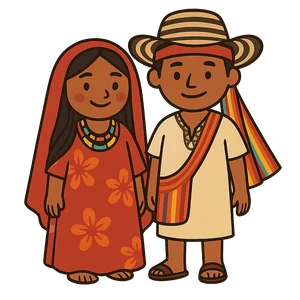
The Wayuu are an Indigenous American ethnic group inhabiting the Guajira Peninsula in northern Colombia and…
Reads at Grades 3–5 Listens at Grades 1–5
Print & create
Answer keys·No prep·Free with an account
28 worksheets · answer keys · full story · quiz · Ages 8-10 · CEFR B1
Plus adds 116,000+ more stories in 27 languages, audio for every one, and printables for all of them.
Just want Wayuu People?
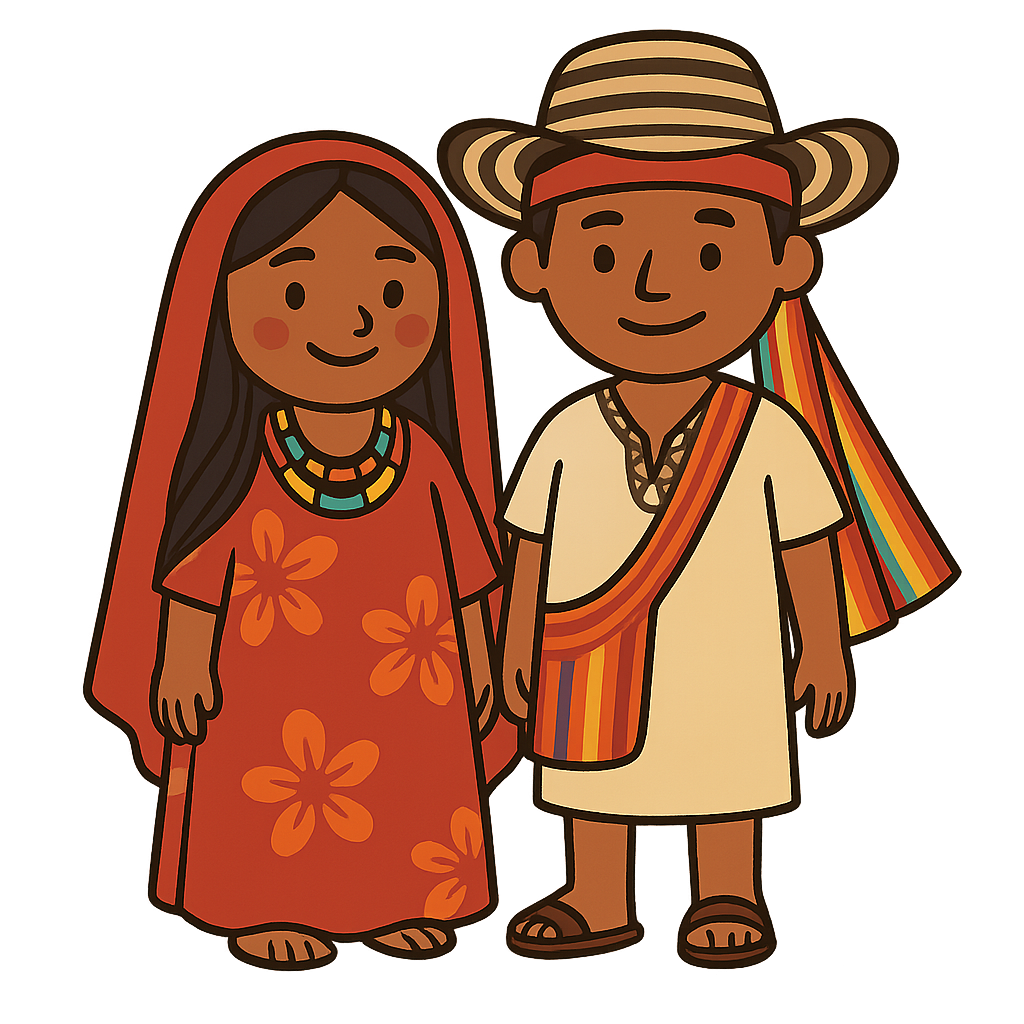
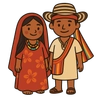
Hello! We are the Wayuu, and we are happy to share our story with you. We call ourselves the people of the sun, sand, and wind because our lives are shaped by our ancestral homeland, the beautiful Guajira Peninsula. This is a special place, a desert landscape where the sun shines brightly, the sandy earth stretches out to meet the sea, and a constant breeze whispers across the land. Living here requires strength and knowledge, and our ancestors learned how to thrive in this harsh but stunning environment. We have always built our homes, which we call rancherías, to suit our surroundings. These homes are more than just buildings; they are the centers of our family life, where generations live together and support one another.
Our families are organized in a way that might be different from yours. We have a matrilineal society, which means that our family identity and our heritage are passed down through our mothers. We trace our family lines from our mother to our grandmother, and to her mother before her, and so on, creating a strong chain of women through our history. In our communities, women hold very respected positions. They are often leaders who guide our families, make important decisions, and care for the well-being of everyone. This way of life places great value on the wisdom and strength of women, who are the heart of our Wayuu families and our culture.
Our culture is vibrant and full of color, and one of the most famous ways we express ourselves is through our weaving. If you have ever seen our art, you may know our colorful bags, which we call mochilas, or our comfortable woven hammocks, called chinchorros. Each one is a masterpiece of skill and storytelling, with patterns and colors that hold special meanings. Our traditions tell a story about how we learned this amazing skill. The story says that a clever spider named Walekerü taught the very first Wayuu weaver how to create beautiful designs by watching how she spun her own web. Walekerü showed her how to turn thread into fabric, and this sacred knowledge has been passed down from mother to daughter for many, many generations. When our women weave, they are not just making a bag or a hammock; they are weaving our stories, our dreams, and our connection to our ancestors into every single thread.
We Are the Wayuu: People of Sun, Sand, and Wind
Hello! We are the Wayuu, and we are happy to share our story with you. We call ourselves the people of the sun, sand, and wind because our lives are shaped by our ancestral homeland, the beautiful Guajira Peninsula. This is a special place, a desert landscape where the sun shines brightly, the sandy earth stretches out to meet the sea, and a constant breeze whispers across the land. Living here requires strength and knowledge, and our ancestors learned how to thrive in this harsh but stunning environment. We have always built our homes, which we call rancherías, to suit our surroundings. These homes are more than just buildings; they are the centers of our family life, where generations live together and support one another.
Our families are organized in a way that might be different from yours. We have a matrilineal society, which means that our family identity and our heritage are passed down through our mothers. We trace our family lines from our mother to our grandmother, and to her mother before her, and so on, creating a strong chain of women through our history. In our communities, women hold very respected positions. They are often leaders who guide our families, make important decisions, and care for the well-being of everyone. This way of life places great value on the wisdom and strength of women, who are the heart of our Wayuu families and our culture.
Our culture is vibrant and full of color, and one of the most famous ways we express ourselves is through our weaving. If you have ever seen our art, you may know our colorful bags, which we call mochilas, or our comfortable woven hammocks, called chinchorros. Each one is a masterpiece of skill and storytelling, with patterns and colors that hold special meanings. Our traditions tell a story about how we learned this amazing skill. The story says that a clever spider named Walekerü taught the very first Wayuu weaver how to create beautiful designs by watching how she spun her own web. Walekerü showed her how to turn thread into fabric, and this sacred knowledge has been passed down from mother to daughter for many, many generations. When our women weave, they are not just making a bag or a hammock; they are weaving our stories, our dreams, and our connection to our ancestors into every single thread.
Just as important as our weaving is our language, which is called Wayuunaiki. It is the language of our parents and grandparents, and it holds our history within its words. We do not have long books that tell our past; instead, we have storytellers who pass down our history orally, from one generation to the next. These stories teach our children about our origins, our heroes, and the important lessons we have learned from living in the Guajira Peninsula. This is how we keep our culture alive and ensure that our traditions are never forgotten. We have a long history of resilience, which means we have always found the strength to face challenges and protect our way of life. Today, we still face difficulties, such as the scarcity of water in our desert home. But we continue to adapt and persevere, just as our ancestors did. Our culture is not something of the past; it is alive and strong today, celebrated in every story we tell, every pattern we weave, and every word we speak in Wayuunaiki.
Wow facts
About
The Wayuu are an Indigenous American ethnic group inhabiting the Guajira Peninsula in northern Colombia and northwestern Venezuela. They are known for their strong matrilineal society, where family ties are traced through the mother's side, and women hold important roles, but men also take part in leadership and decision-making. The Wayuu are also famous for their vibrant, intricate textile arts.
Take a Quiz
Question 1 of 5
What does it mean that Wayuu society is matrilineal?
Want to do even more?
Go beyond exploring. Unlock tools that turn every story into real learning.

Storypie Plus for families
Full stories, quizzes, and printables. Nights and car rides, sorted.
- Unlimited audio stories
- Create Mode: your child stars in the story
- Offline downloads
- Printable worksheets & coloring pages

Why Storypie for Schools
Students engaged. Prep in seconds. Evenings back to you.
- Worksheets & Quizzes
- Classroom Management
- Formative Assessment
- Custom Curriculum & Lesson Plans
- 27 Languages

Why Storypie for Homeschool
Curriculum done. They'll ask for more. Hours back in your day.
- Worksheet Generator
- First-Person Audio Stories
- Built-in Comprehension Quizzes
- Custom Curriculum & Lesson Plans
- Print & Go Activities