English

Wixárika (Huichol) People
The Wixárika, commonly known as the Huichol…
Reads at Grades 6–8 Listens at Grades 4–8
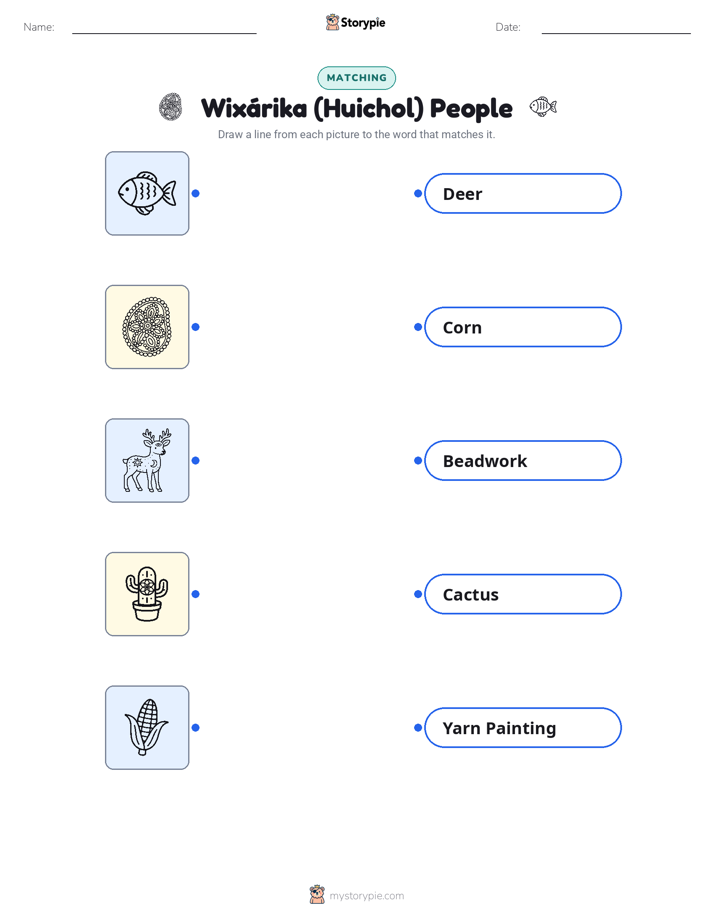
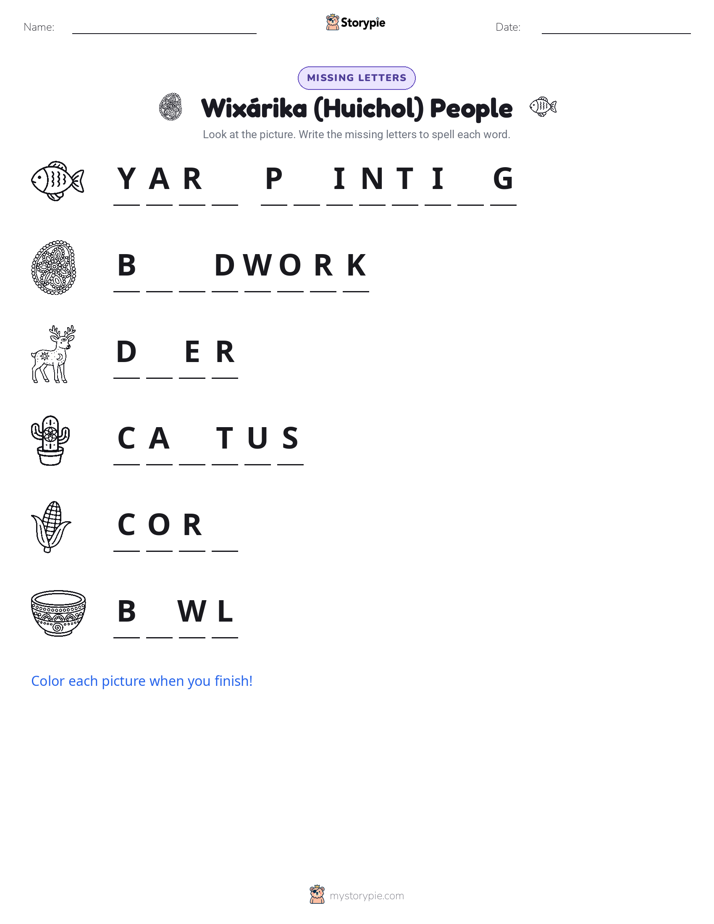
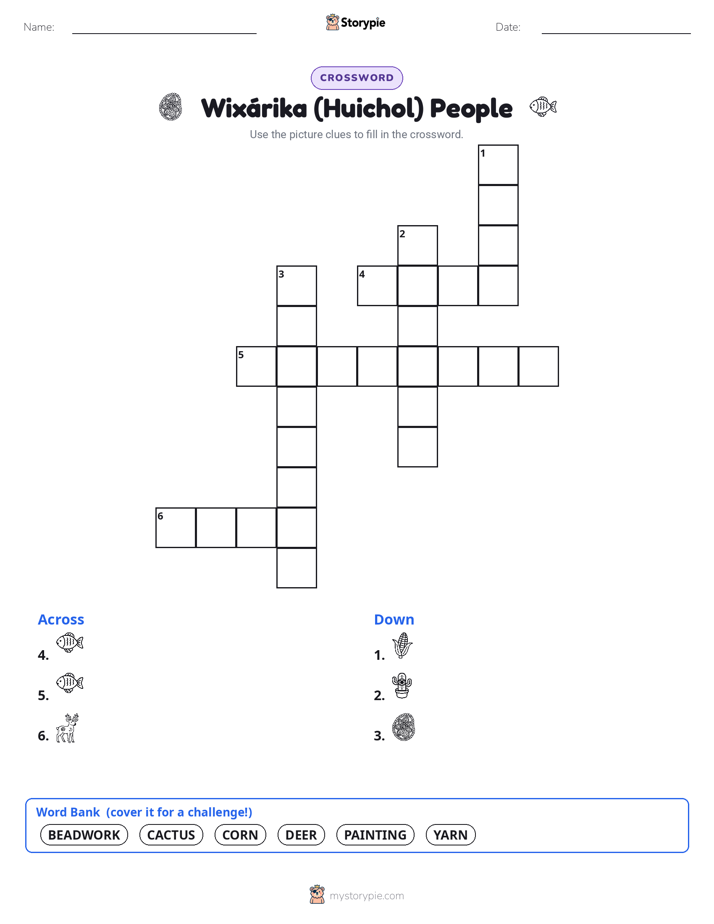
Print & create
Answer keys·No prep·Free with an account
28 worksheets · answer keys · full story · quiz · Ages 10-12 · CEFR B2
Plus adds 116,000+ more stories in 27 languages, audio for every one, and printables for all of them.
Just want Wixárika (Huichol) People?
Hello. We invite you to learn about our people. While the world often knows us by the name Huichol, we call ourselves the Wixárika. Our name is a vital part of our identity, connecting us to a history that stretches back for countless generations. Our ancestral homeland is a rugged and beautiful place: the Sierra Madre Occidental mountains of western and central Mexico. For centuries, these towering peaks and deep canyons have been our home, our sanctuary, and our teacher. Living in such a remote and challenging environment was not always easy, but it gave us a unique gift. The isolation of the mountains helped us protect and preserve our way of life.
Long after Europeans arrived in this part of the world, we were able to continue speaking our language and practicing our ancient traditions. Our spiritual beliefs, which are woven into the very fabric of the land, remained strong. The mountains shielded our communities, allowing us to pass down our knowledge from elders to children without interruption. This deep connection to our homeland is the foundation of who we are, a people shaped by the high sierras and the sacred stories that live there. It is in these mountains that our identity has been nurtured, allowing us to carry our culture forward into the present day.
Our entire spiritual worldview is built upon a sacred connection to the natural world. We do not see a separation between ourselves and the environment. For us, the earth, the sky, and all living things are filled with life and spirit. We see our deities and ancestor spirits in the power of Tau, our Father Sun, and in the life-giving waters of Tatei Werika, Mother Rain. The earth itself is a sacred being, and the animals are our relatives and guides. The deer is especially important to us; it is a central figure in our cosmology and is seen as a spiritual messenger. Our beliefs teach us that every part of creation has a purpose and a voice, and it is our responsibility to listen and live in balance with them.
The Sacred Journey of the Wixárika People
Hello. We invite you to learn about our people. While the world often knows us by the name Huichol, we call ourselves the Wixárika. Our name is a vital part of our identity, connecting us to a history that stretches back for countless generations. Our ancestral homeland is a rugged and beautiful place: the Sierra Madre Occidental mountains of western and central Mexico. For centuries, these towering peaks and deep canyons have been our home, our sanctuary, and our teacher. Living in such a remote and challenging environment was not always easy, but it gave us a unique gift. The isolation of the mountains helped us protect and preserve our way of life.
Long after Europeans arrived in this part of the world, we were able to continue speaking our language and practicing our ancient traditions. Our spiritual beliefs, which are woven into the very fabric of the land, remained strong. The mountains shielded our communities, allowing us to pass down our knowledge from elders to children without interruption. This deep connection to our homeland is the foundation of who we are, a people shaped by the high sierras and the sacred stories that live there. It is in these mountains that our identity has been nurtured, allowing us to carry our culture forward into the present day.
Our entire spiritual worldview is built upon a sacred connection to the natural world. We do not see a separation between ourselves and the environment. For us, the earth, the sky, and all living things are filled with life and spirit. We see our deities and ancestor spirits in the power of Tau, our Father Sun, and in the life-giving waters of Tatei Werika, Mother Rain. The earth itself is a sacred being, and the animals are our relatives and guides. The deer is especially important to us; it is a central figure in our cosmology and is seen as a spiritual messenger. Our beliefs teach us that every part of creation has a purpose and a voice, and it is our responsibility to listen and live in balance with them.
One of the most important ways we maintain this balance is through our annual pilgrimage to the sacred desert of Wirikuta. This is not simply a trip; it is a profound spiritual practice that lies at the heart of our culture. Each year, some of our community members walk for many weeks, following the same path our divine ancestors took at the dawn of time. This journey reenacts their original search for knowledge and spiritual life. The pilgrimage is a time of prayer, sacrifice, and deep reflection, where we connect with the spiritual world and give thanks for the gifts of life, water, and sustenance.
During this sacred journey, we travel to Wirikuta to collect the híkuri, a small, sacred cactus known to many as peyote. For us, the híkuri is a divine plant that allows us to communicate with our ancestors and deities. It is a source of spiritual guidance and vision. Collecting and consuming it in our ceremonies is an essential part of our religious life, helping our shamans, known as mara'akate, to heal the sick, ensure a good harvest, and maintain harmony between our world and the spiritual realm. The pilgrimage to find the híkuri is a journey to find ourselves and renew our covenant with the gods.
If you have seen our art, you know that it is filled with vibrant color and intricate patterns. We are known around the world for our yarn paintings, which we call nierikas, and for our detailed beadwork. These creations are far more than just beautiful decorations; they are a living language, a way for us to tell our most sacred stories. To make a nierika, an artist presses colorful yarn into a board covered with a mixture of beeswax and pine resin. For our beadwork, tiny beads are pressed one by one into the same wax mixture, forming complex and meaningful designs on objects like sculptures, bowls, and masks.
Every nierika and piece of beadwork is a window into our cosmology. They are visual records of the visions received by our mara'akate during their ceremonies. The symbols you see in our art represent the most important elements of our world. You will often see the deer, representing our spiritual guide, Kauyumari, the Deer Brother, who led the ancestors to Wirikuta. You will also see symbols for maize, the plant that sustains our bodies, and for the híkuri, the cactus that nourishes our spirits. Through this art, we document our history, map the spiritual world, and create powerful tools that our shamans use in their healing and ceremonial work.
Our lives, both in the past and today, are centered on our relationship with the land, especially through the cultivation of maize, or corn. Maize is not just our primary food source; it is a sacred gift that organizes our community life and our ceremonial calendar. We plant, grow, and harvest it with deep respect, understanding that it is a physical manifestation of the sun’s energy and the earth’s generosity. Our ceremonies often revolve around the life cycle of maize, from planting in the spring to harvesting in the fall, ensuring that we honor the spirits who help it grow.
Today, we continue to live in our mountain communities, working to keep our traditions strong. Many of us still farm, create our art, and perform the ceremonies that have been passed down for centuries. However, we also face modern challenges that threaten our way of life. One of the greatest threats is mining, which endangers our sacred lands, including the pilgrimage route to Wirikuta. Protecting these sacred sites is a constant struggle for our communities.
Despite these difficulties, we are determined to keep our culture alive for future generations. We continue to tell our stories, teach our children the Wixárika language, and practice our ceremonies. Our celebrated art has become a powerful way for us to share our worldview with others and to create economic opportunities for our families. Through our art, our ceremonies, and our unwavering commitment to the land, we ensure that the spirit of the Wixárika people will endure.
Wow facts
About
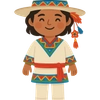
The Wixárika, commonly known as the Huichol, are an indigenous people of Mexico living primarily in the Sierra Madre Occidental range. They are renowned for their intricate beadwork and yarn paintings, as well as their deep spiritual traditions and preservation of pre-Columbian culture.
Take a Quiz
Question 1 of 5
According to the story, what is the name the Wixárika people use for themselves?
Want to do even more?
Go beyond exploring. Unlock tools that turn every story into real learning.

Storypie Plus for families
Full stories, quizzes, and printables. Nights and car rides, sorted.
- Unlimited audio stories
- Create Mode: your child stars in the story
- Offline downloads
- Printable worksheets & coloring pages

Why Storypie for Schools
Students engaged. Prep in seconds. Evenings back to you.
- Worksheets & Quizzes
- Classroom Management
- Formative Assessment
- Custom Curriculum & Lesson Plans
- 27 Languages

Why Storypie for Homeschool
Curriculum done. They'll ask for more. Hours back in your day.
- Worksheet Generator
- First-Person Audio Stories
- Built-in Comprehension Quizzes
- Custom Curriculum & Lesson Plans
- Print & Go Activities