English

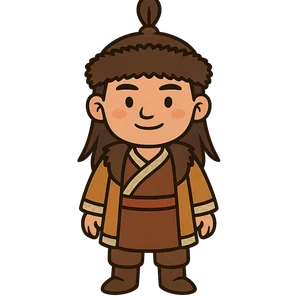
Xiongnu
The Xiongnu were a powerful tribal confederation of nomadic peoples who inhabited the eastern Eurasian Steppe…
Reads at Grades 3–5 Listens at Grades 1–5
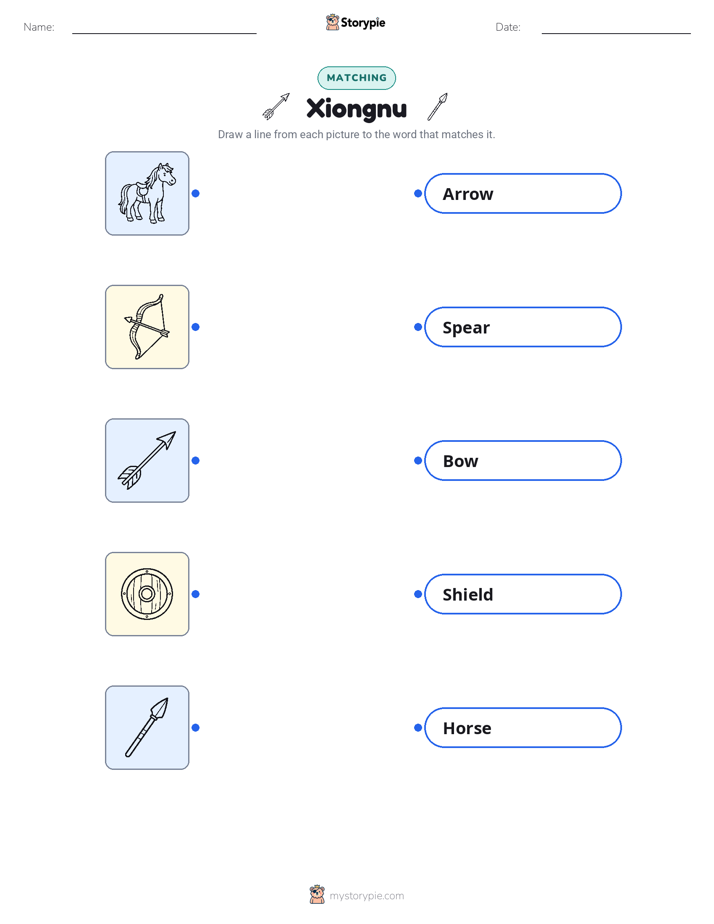
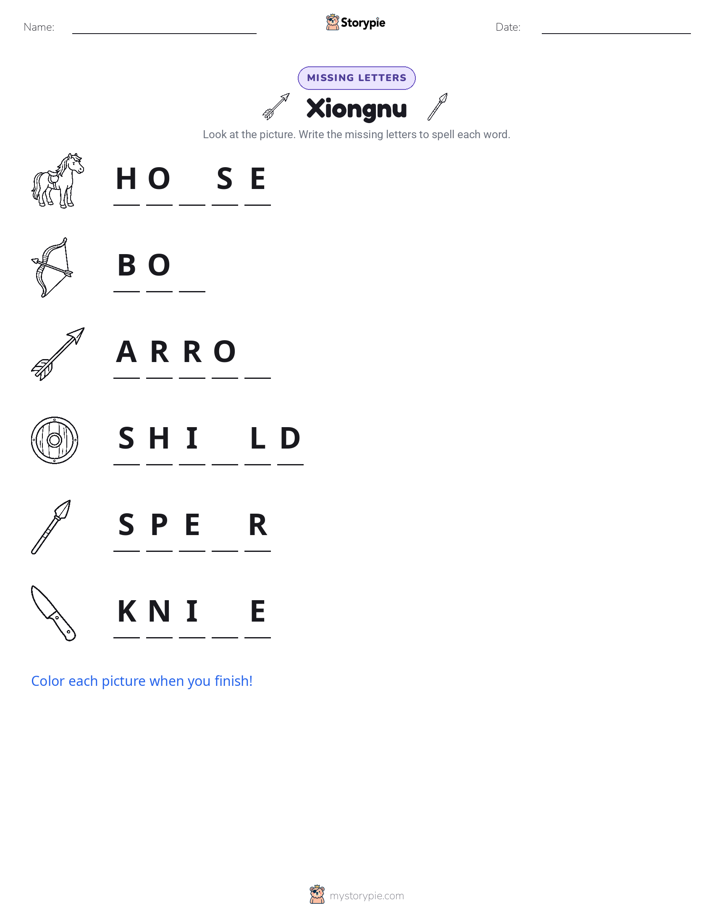
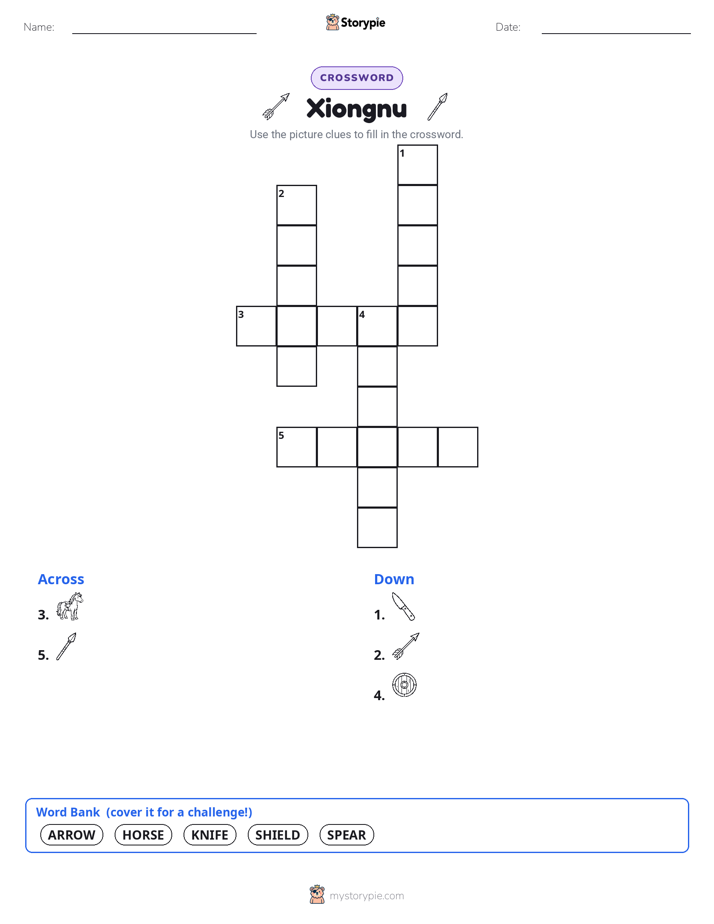
Print & create
Answer keys·No prep·Free with an account
28 worksheets · answer keys · full story · quiz · Ages 8-10 · CEFR B1
Plus adds 116,000+ more stories in 27 languages, audio for every one, and printables for all of them.
Just want Xiongnu?
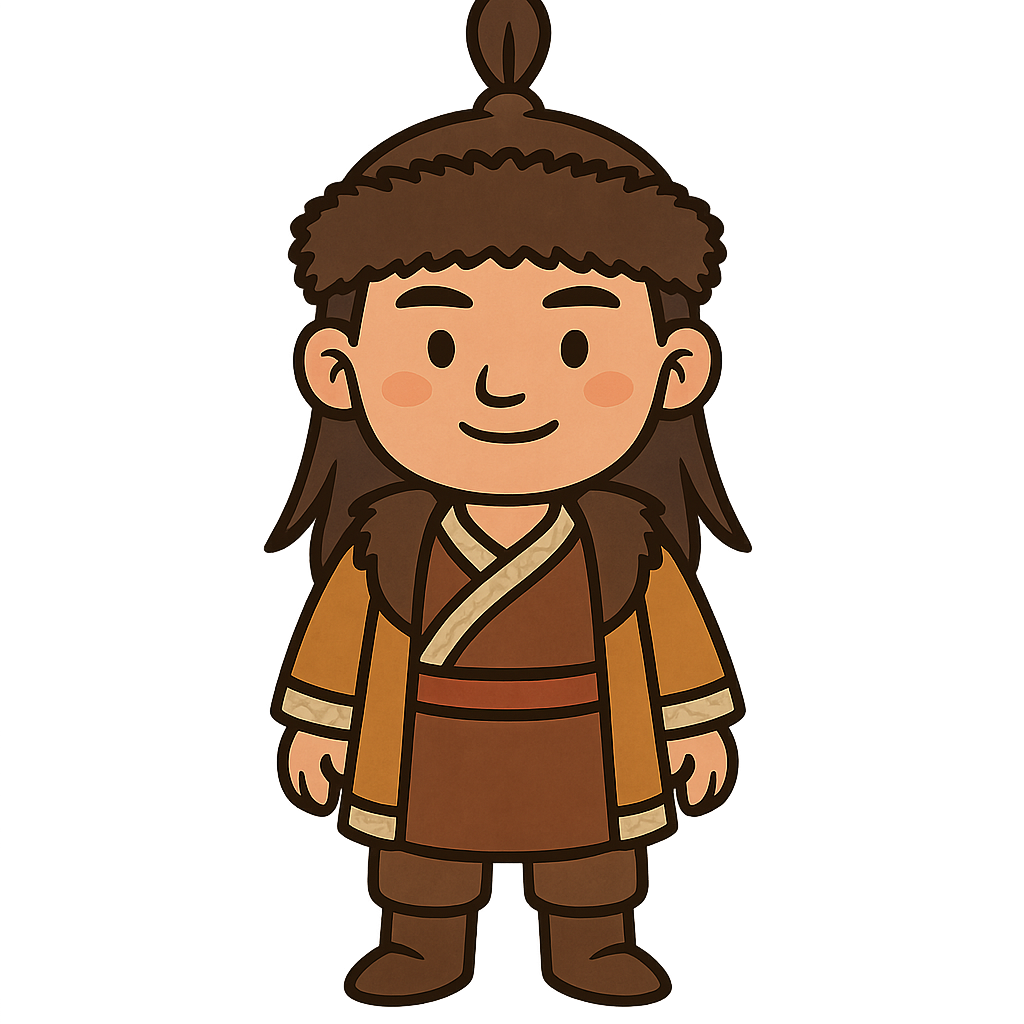
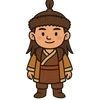
Hello. We are the Xiongnu, and our story unfolds on the vast, open grasslands of the Eurasian Steppe. For centuries, this was our home, a land of endless sky and rolling hills. We were a nomadic people, which means our lives moved with the rhythm of the seasons. We did not live in one place for long. Instead, we traveled across the plains, following the best pastures for our precious herds of animals. Our homes were perfectly suited to this life. We lived in round, felt-covered tents called yurts. These homes were warm in the winter and cool in the summer, and we could easily pack them up and carry them with us when it was time to move on.
Our whole world centered around our animals, especially our horses and sheep. They provided us with everything we needed to live. Our sheep gave us milk to drink and wool to make into felt for our yurts and warm clothing to protect us from the wind. From their skins, we made sturdy leather goods. Our horses were our partners and our pride. They carried us across the great distances of the steppe and were essential for hunting and herding. We learned to ride almost as soon as we could walk, and our connection to these animals made us strong and allowed us to thrive in the wide-open spaces we called home.
For a long time, we lived as many separate tribes scattered across the grasslands. But everything changed under a powerful leader named Modu Chanyu. Around 209 BCE, he did something extraordinary: he brought our tribes together and united us as one people. Under his leadership, we formed a great and powerful empire that stretched across the steppe. Our strength came from our skills as warriors. We were expert archers, and we were famous for our ability to ride horses with incredible speed and skill. We could even shoot arrows with deadly accuracy while galloping at full speed, a skill that made our armies feared by our neighbors.
We Are the Xiongnu: Riders of the Steppe
Hello. We are the Xiongnu, and our story unfolds on the vast, open grasslands of the Eurasian Steppe. For centuries, this was our home, a land of endless sky and rolling hills. We were a nomadic people, which means our lives moved with the rhythm of the seasons. We did not live in one place for long. Instead, we traveled across the plains, following the best pastures for our precious herds of animals. Our homes were perfectly suited to this life. We lived in round, felt-covered tents called yurts. These homes were warm in the winter and cool in the summer, and we could easily pack them up and carry them with us when it was time to move on.
Our whole world centered around our animals, especially our horses and sheep. They provided us with everything we needed to live. Our sheep gave us milk to drink and wool to make into felt for our yurts and warm clothing to protect us from the wind. From their skins, we made sturdy leather goods. Our horses were our partners and our pride. They carried us across the great distances of the steppe and were essential for hunting and herding. We learned to ride almost as soon as we could walk, and our connection to these animals made us strong and allowed us to thrive in the wide-open spaces we called home.
For a long time, we lived as many separate tribes scattered across the grasslands. But everything changed under a powerful leader named Modu Chanyu. Around 209 BCE, he did something extraordinary: he brought our tribes together and united us as one people. Under his leadership, we formed a great and powerful empire that stretched across the steppe. Our strength came from our skills as warriors. We were expert archers, and we were famous for our ability to ride horses with incredible speed and skill. We could even shoot arrows with deadly accuracy while galloping at full speed, a skill that made our armies feared by our neighbors.
Our growing power led to a complex relationship with the great empire to our south, the Han Dynasty in China. Our lives were connected through both peace and war. Sometimes, we engaged in trade, exchanging our horses and animal products for things we needed, like grains and silk. This trade was important for both of us. At other times, however, we were in conflict. Our warriors would raid their borderlands, and the Han emperors built walls to try and keep us out. Our interactions were a constant mix of cooperation and fighting, shaping the history of both our peoples for many years.
Like all great empires, our time of unity eventually came to an end. Over the years, disagreements and rivalries began to grow within our empire. Around the year 48 CE, a major split occurred, and we divided into two large groups. These were known as the Northern Xiongnu and the Southern Xiongnu. This division weakened us greatly. It became harder to defend our lands and to remain strong against our neighbors. Over time, our empire slowly faded from the historical stage.
Even though our empire is part of the past, our story did not end. Our legacy continued to shape the history of the Eurasian Steppe. We influenced many other nomadic groups who came after us. Our skills in horsemanship, our military tactics, and our ways of organizing a large nomadic empire were learned and adapted by others. Today, historians continue to study our culture and our impact. Some even think that some of our people may have migrated far to the west and are connected to the Huns, who appeared in Europe centuries later. We are remembered as a powerful people who built a great empire on the vast grasslands.
Wow facts
About
The Xiongnu were a powerful tribal confederation of nomadic peoples who inhabited the eastern Eurasian Steppe from the 3rd century BCE to the late 1st century CE. They were a nomadic people; specific records of their horsemanship skills are limited, but their nomadic lifestyle suggests they were good at riding horses. They were also known for their long-standing conflict with the Han dynasty of China.
Take a Quiz
Question 1 of 5
Who was the leader that united the Xiongnu tribes around 209 BCE?
Explore next




Want to do even more?
Go beyond exploring. Unlock tools that turn every story into real learning.

Storypie Plus for families
Full stories, quizzes, and printables. Nights and car rides, sorted.
- Unlimited audio stories
- Create Mode: your child stars in the story
- Offline downloads
- Printable worksheets & coloring pages

Why Storypie for Schools
Students engaged. Prep in seconds. Evenings back to you.
- Worksheets & Quizzes
- Classroom Management
- Formative Assessment
- Custom Curriculum & Lesson Plans
- 27 Languages

Why Storypie for Homeschool
Curriculum done. They'll ask for more. Hours back in your day.
- Worksheet Generator
- First-Person Audio Stories
- Built-in Comprehension Quizzes
- Custom Curriculum & Lesson Plans
- Print & Go Activities