English

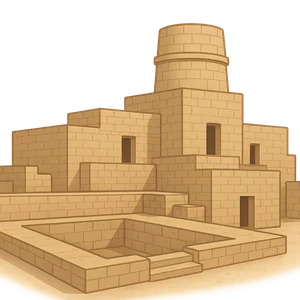
Ancient India (Indus Valley)
One of the world's earliest urban civilizations…
Reads at Grades 6–8 Listens at Grades 4–8
Print & create
Answer keys·No prep·Free with an account
28 worksheets · answer keys · full story · quiz · Ages 10-12 · CEFR B2
Plus adds 279,000+ more stories in 27 languages, audio for every one, and printables for all of them.
Just want Ancient India (Indus Valley)?
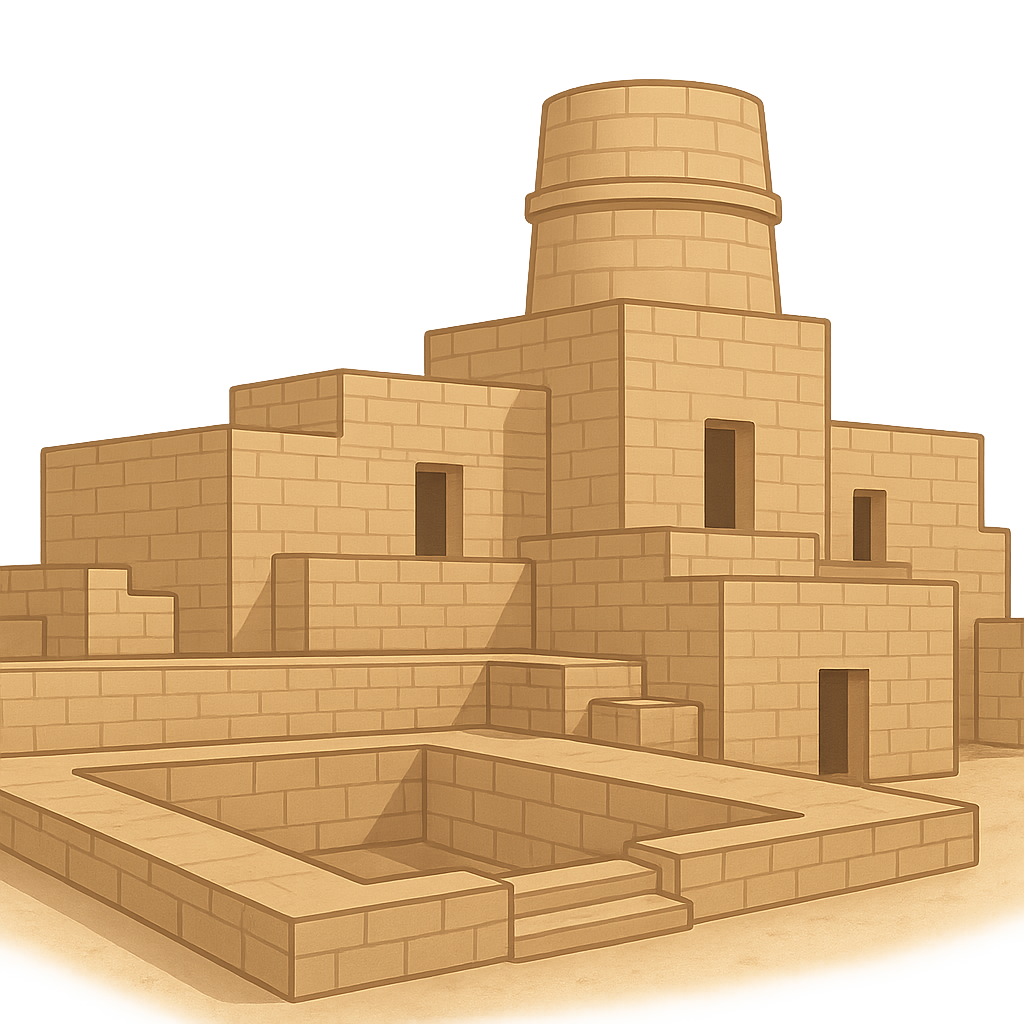
For thousands of years, I slept beneath layers of earth, a forgotten dream. The sun baked the soil above me, and the winds carried whispers of a world that had moved on without me. My bones are made of fired brick, my veins were once channels of fresh water, and my heart beat in great, organized cities along a mighty river. I am the memory of a people, a world that flourished in the Bronze Age, over five thousand years ago. I am the Indus Valley Civilization, also known as the Harappan Civilization. My home stretched along the fertile floodplains of the Indus River, in what is now modern-day Pakistan and northwest India. Before the pharaohs of Egypt built their great pyramids, my people were laying the foundations of a society so advanced that its secrets continue to puzzle the cleverest minds today. I am a whisper from the earth, a story waiting to be fully told, a testament to one of humanity’s earliest and most brilliant experiments in city living.
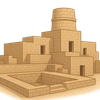
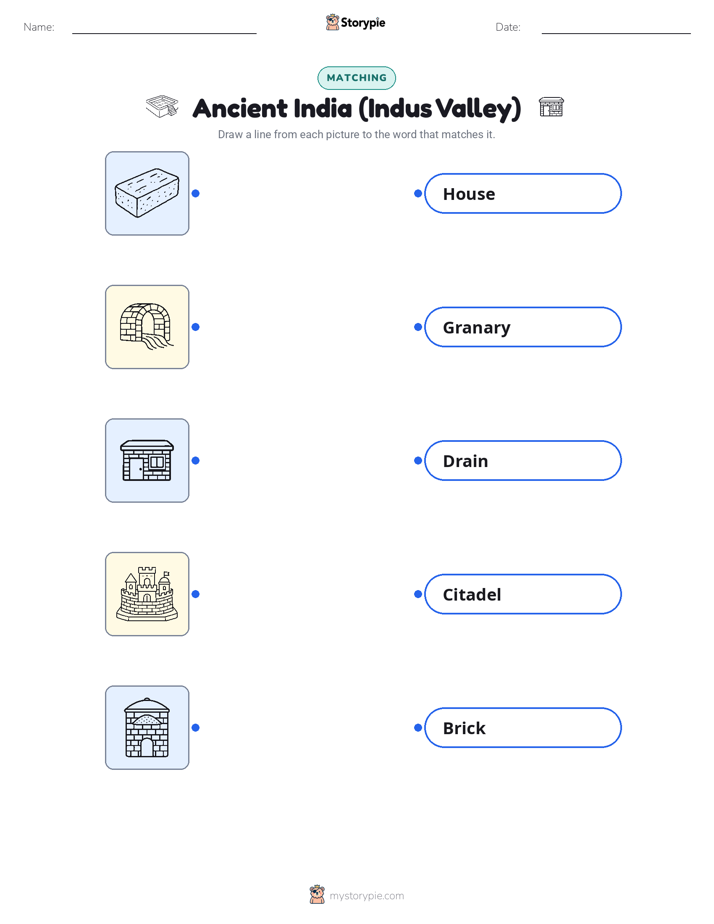
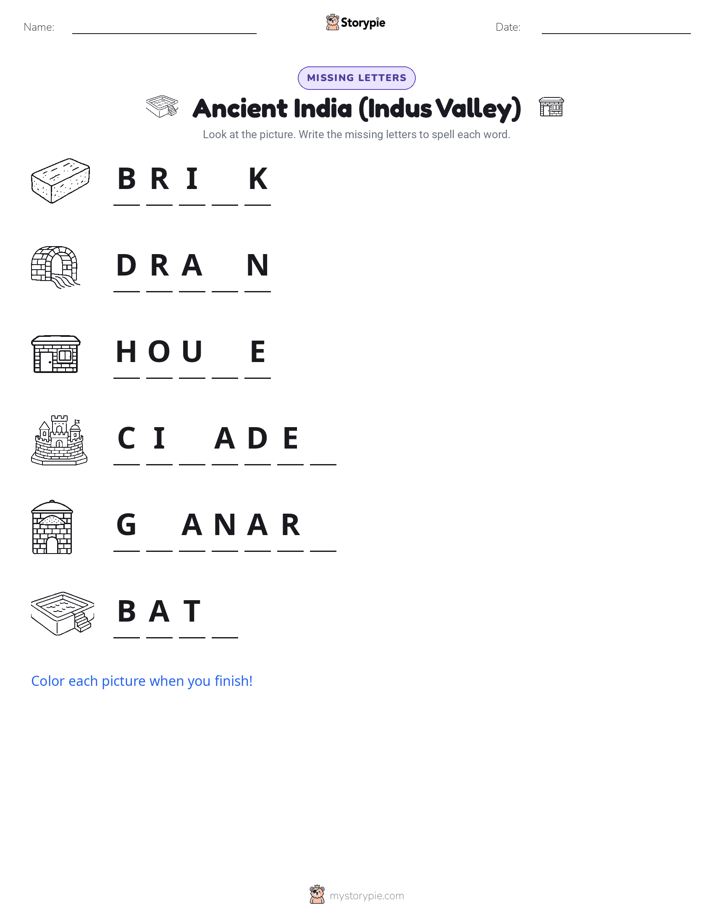
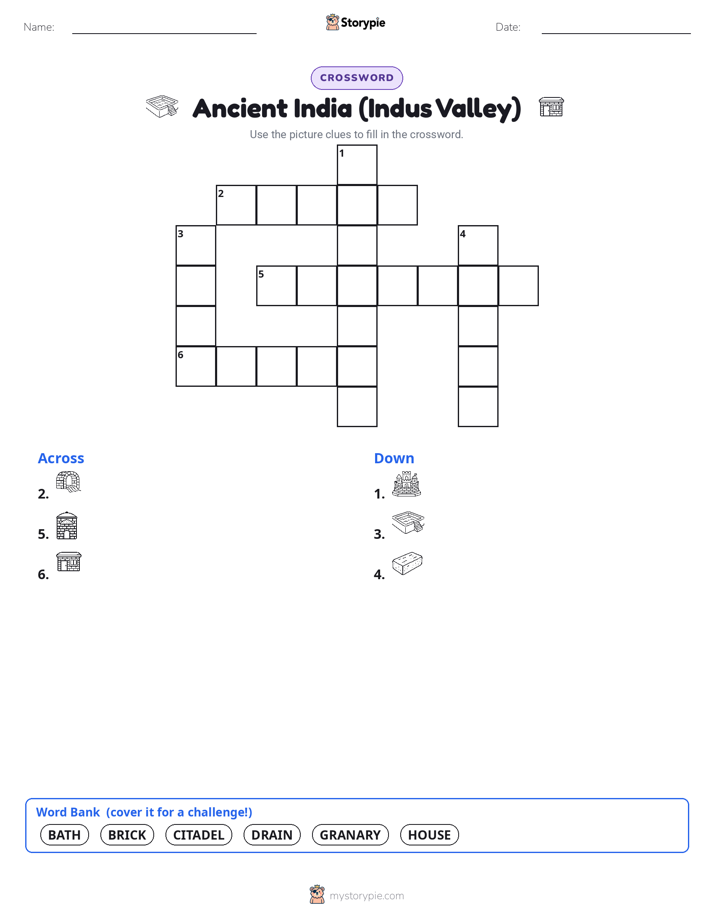
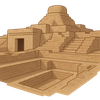
At my peak, between 2600 BCE and 1900 BCE, I was a bustling network of hundreds of towns and two magnificent cities, Mohenjo-daro and Harappa. These were not random collections of houses; they were masterpieces of urban planning. Imagine walking through streets laid out in a perfect grid, like a modern city block, with main roads running north-south and east-west. The homes and public buildings were constructed from millions of identical, fire-baked bricks—so uniform you might think they came from a single factory. My people were brilliant engineers, especially when it came to water. They built the world's first known sanitation systems, with homes that had private bathrooms connected to a city-wide network of covered drains that kept the streets clean and healthy. My cities were often divided into two parts: a lower town where most people lived and worked, and a raised, fortified area called a citadel. This high ground was home to important public buildings, granaries for storing food, and ceremonial structures. The most famous of these is the Great Bath at Mohenjo-daro, a large, waterproof brick pool that was likely used for important rituals. It stands as a silent monument to the skill and organization of my builders.
The Whispering City of the Indus
For thousands of years, I slept beneath layers of earth, a forgotten dream. The sun baked the soil above me, and the winds carried whispers of a world that had moved on without me. My bones are made of fired brick, my veins were once channels of fresh water, and my heart beat in great, organized cities along a mighty river. I am the memory of a people, a world that flourished in the Bronze Age, over five thousand years ago. I am the Indus Valley Civilization, also known as the Harappan Civilization. My home stretched along the fertile floodplains of the Indus River, in what is now modern-day Pakistan and northwest India. Before the pharaohs of Egypt built their great pyramids, my people were laying the foundations of a society so advanced that its secrets continue to puzzle the cleverest minds today. I am a whisper from the earth, a story waiting to be fully told, a testament to one of humanity’s earliest and most brilliant experiments in city living.
At my peak, between 2600 BCE and 1900 BCE, I was a bustling network of hundreds of towns and two magnificent cities, Mohenjo-daro and Harappa. These were not random collections of houses; they were masterpieces of urban planning. Imagine walking through streets laid out in a perfect grid, like a modern city block, with main roads running north-south and east-west. The homes and public buildings were constructed from millions of identical, fire-baked bricks—so uniform you might think they came from a single factory. My people were brilliant engineers, especially when it came to water. They built the world's first known sanitation systems, with homes that had private bathrooms connected to a city-wide network of covered drains that kept the streets clean and healthy. My cities were often divided into two parts: a lower town where most people lived and worked, and a raised, fortified area called a citadel. This high ground was home to important public buildings, granaries for storing food, and ceremonial structures. The most famous of these is the Great Bath at Mohenjo-daro, a large, waterproof brick pool that was likely used for important rituals. It stands as a silent monument to the skill and organization of my builders.
My existence was far more than just well-planned cities and clever plumbing. I was a civilization alive with art, industry, and a deep connection to the wider world. My merchants were great travelers, navigating rivers and seas to trade with distant lands like Mesopotamia, which is modern-day Iraq. They loaded boats with precious goods: fine cotton textiles, shimmering carnelian beads, timber, and copper. In return, they brought back materials and ideas from other cultures. My artisans were masters of their craft. They shaped clay into beautiful pottery, often painted with complex geometric designs or images of animals. From bronze, they cast remarkable figures, like the famous ‘Dancing Girl’ statue, a small sculpture full of life and confidence. But my most unique creations were my seals. These were small, square stones intricately carved with images of animals, including bulls, elephants, and even a mythical unicorn-like creature. Above these images were lines of symbols, a beautiful and complex script. This is my greatest secret. To this day, no one has been able to decipher the Indus script. The stories, laws, and names of my people are trapped in these symbols, a silent language waiting for someone to unlock its meaning.
Like a great river changing its course, my vibrant life began to slow down around 1900 BCE. The reasons are not entirely clear. Perhaps the climate changed, bringing long droughts that withered the crops. Or maybe the Indus River itself, the source of my life, shifted its path, leaving my cities stranded. Whatever the cause, my people began to abandon their great brick cities, and over time, the winds buried me in sand and silt. I fell into a deep silence that lasted for nearly four thousand years. My rediscovery began as a faint whisper. In 1826, a British traveler named Charles Masson noted the strange mounds of brick at Harappa, but the world didn't yet understand their significance. It wasn’t until the 1920s that my voice truly began to be heard again. Archaeologists, including Rai Bahadur Daya Ram Sahni and R. D. Banerji, began systematic excavations at Harappa and Mohenjo-daro. What they unearthed was astonishing. Finally, on September 24th, 1924, the director of the Archaeological Survey of India, Sir John Marshall, officially announced my existence to a stunned world. Today, I am a UNESCO World Heritage site, a fascinating puzzle that teaches us about the ingenuity and resilience of early humans. I am a reminder that even when a civilization falls silent, its story can rise again to inspire wonder and curiosity for generations to come.
Wow facts
About
One of the world's earliest urban civilizations, which flourished in the basins of the Indus River in what is now Pakistan and northwest India from around 3300 BCE to 1300 BCE, with its most advanced cities existing between 2600 BCE and 1900 BCE.
Take a Quiz
Question 1 of 5
In your own words, describe the key urban planning features of a city like Mohenjo-daro.
Explore next



Want to do even more?
Go beyond exploring. Unlock tools that turn every story into real learning.

Storypie Plus for families
Full stories, quizzes, and printables. Nights and car rides, sorted.
- Unlimited audio stories
- Create Mode: your child stars in the story
- Offline downloads
- Printable worksheets & coloring pages

Why Storypie for Schools
Students engaged. Prep in seconds. Evenings back to you.
- Worksheets & Quizzes
- Classroom Management
- Formative Assessment
- Custom Curriculum & Lesson Plans
- 27 Languages

Why Storypie for Homeschool
Curriculum done. They'll ask for more. Hours back in your day.
- Worksheet Generator
- First-Person Audio Stories
- Built-in Comprehension Quizzes
- Custom Curriculum & Lesson Plans
- Print & Go Activities