English

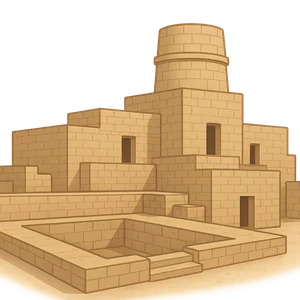
Ancient India (Indus Valley)
One of the world's earliest urban civilizations…
Reads at Grades 3–5 Listens at Grades 1–5
Print & create
Answer keys·No prep·Free with an account
28 worksheets · answer keys · full story · quiz · Ages 8-10 · CEFR B1
Plus adds 279,000+ more stories in 27 languages, audio for every one, and printables for all of them.
Just want Ancient India (Indus Valley)?
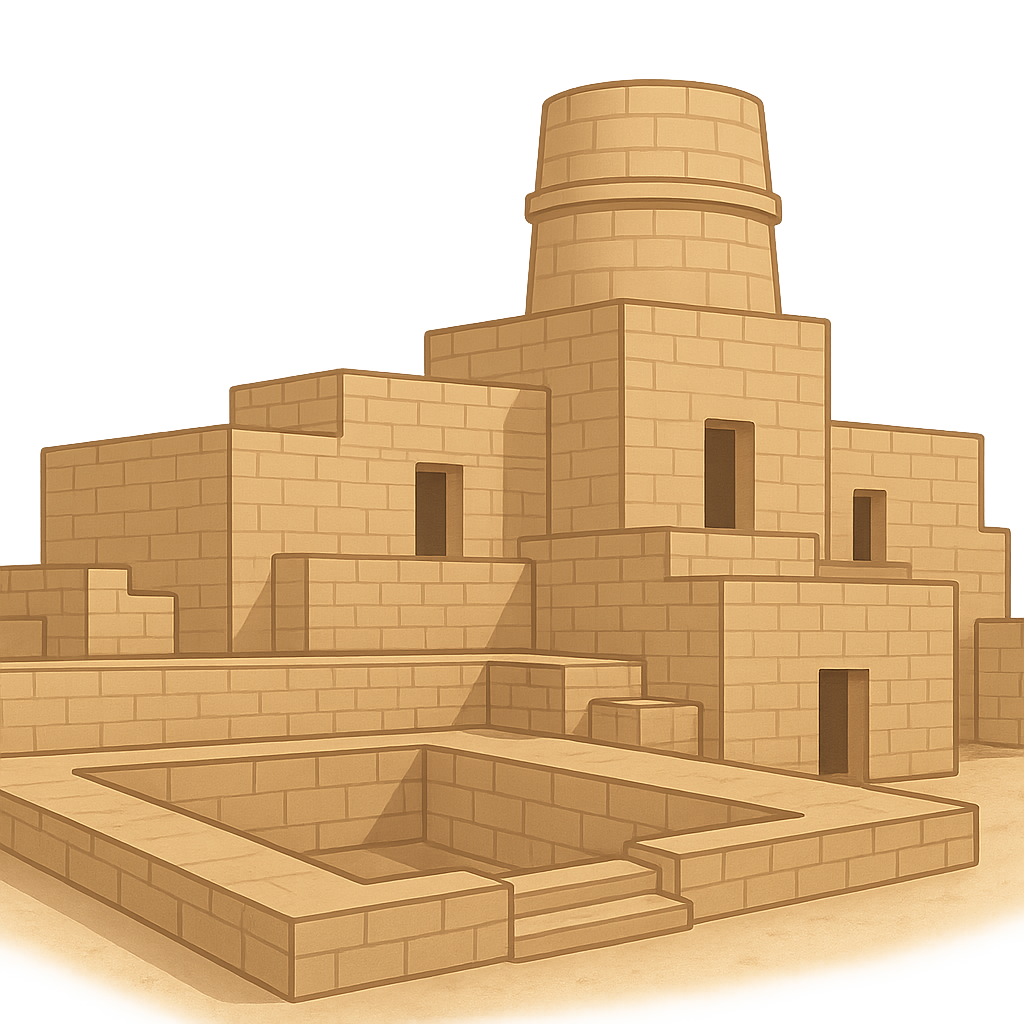
Imagine a land of wide, flowing rivers and soil so rich it could grow endless fields of wheat and barley. Picture cities built not of rough stone, but of millions of neat, reddish-brown bricks, all baked to be the exact same size. My streets were laid out in a perfect grid, like a giant checkerboard, with main roads wide enough for two carts to pass each other comfortably. For thousands of years, my people thrived in this organized world. It all began a very long time ago, around 3300 BCE, when families first started building their homes here. Who am I? I am the Indus Valley Civilization, home to some of the world's very first great cities, and my story is one of cleverness and mystery.
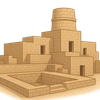
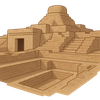
My two most famous cities, Mohenjo-Daro and Harappa, were at their busiest and most magnificent around 2500 BCE. They were not just collections of houses; they were masterpieces of planning. I had a raised area in my cities called a citadel, a bit like a fort on a hill, where my most important public buildings stood. One of these was the Great Bath at Mohenjo-Daro—a huge, waterproof pool lined with bricks and sealed with natural tar. It might have been used for special ceremonies, a place where water was celebrated. But my true marvel was hidden from sight, running beneath the streets. I had the world's first known system of urban sanitation. Almost every house had its own bathroom and a clay pipe that connected to a covered drain. These drains carried waste away, keeping my cities clean and my people healthy. Many families lived in comfortable two-story houses with their own private wells for fresh water, showing just how much they valued order and a good life.
The Whispering Bricks of the Indus Valley
Imagine a land of wide, flowing rivers and soil so rich it could grow endless fields of wheat and barley. Picture cities built not of rough stone, but of millions of neat, reddish-brown bricks, all baked to be the exact same size. My streets were laid out in a perfect grid, like a giant checkerboard, with main roads wide enough for two carts to pass each other comfortably. For thousands of years, my people thrived in this organized world. It all began a very long time ago, around 3300 BCE, when families first started building their homes here. Who am I? I am the Indus Valley Civilization, home to some of the world's very first great cities, and my story is one of cleverness and mystery.
My two most famous cities, Mohenjo-Daro and Harappa, were at their busiest and most magnificent around 2500 BCE. They were not just collections of houses; they were masterpieces of planning. I had a raised area in my cities called a citadel, a bit like a fort on a hill, where my most important public buildings stood. One of these was the Great Bath at Mohenjo-Daro—a huge, waterproof pool lined with bricks and sealed with natural tar. It might have been used for special ceremonies, a place where water was celebrated. But my true marvel was hidden from sight, running beneath the streets. I had the world's first known system of urban sanitation. Almost every house had its own bathroom and a clay pipe that connected to a covered drain. These drains carried waste away, keeping my cities clean and my people healthy. Many families lived in comfortable two-story houses with their own private wells for fresh water, showing just how much they valued order and a good life.
Life within my brick walls was busy and creative. My people were peaceful farmers who grew cotton and food, but they were also incredibly skilled artists and clever traders. They crafted beautiful jewelry from shiny red carnelian beads and made tiny, intricate seals from stone. These seals are one of my greatest treasures. They had amazing carvings of animals—like powerful bulls with curving horns, steady elephants, and even a mysterious creature that looked just like a unicorn. Alongside these animals was a beautiful script, a system of writing made of elegant symbols. But here is my biggest secret: to this day, no one has been able to read my words. The script remains a puzzle. My people used these seals to stamp clay tags on their goods, like a signature, before loading them onto boats and sailing to faraway lands like Mesopotamia to trade.
But even the greatest cities cannot last forever. Around 1900 BCE, my world began to change. Perhaps the mighty Indus River changed its course, leaving my fields dry, or maybe the climate grew hotter and the rains stopped coming. Life became harder, and slowly, my people began to leave my grand cities, moving to smaller villages. My brick buildings fell silent, and over many centuries, wind and sand buried me completely. I slept for thousands of years, a forgotten memory beneath the earth. Then, in the 1920s, archaeologists led by men like Sir John Marshall began to dig. They carefully brushed away the layers of time and were astonished by what they found. They had uncovered a lost civilization. Today, I am a UNESCO World Heritage site. Even though you cannot read my writing, my well-planned streets, my clever plumbing, and my beautiful art tell the story of a brilliant and organized society. I am a reminder of what people can achieve with teamwork and bright ideas, and I still have many secrets waiting to inspire the explorers of tomorrow.
Wow facts
About
One of the world's earliest urban civilizations, which flourished in the basins of the Indus River in what is now Pakistan and northwest India from around 3300 BCE to 1300 BCE, with its most advanced cities existing between 2600 BCE and 1900 BCE.
Take a Quiz
Question 1 of 5
In the story, I say my streets were laid out in a 'perfect grid.' What does 'grid' mean in this sentence?
Explore next



Want to do even more?
Go beyond exploring. Unlock tools that turn every story into real learning.

Storypie Plus for families
Full stories, quizzes, and printables. Nights and car rides, sorted.
- Unlimited audio stories
- Create Mode: your child stars in the story
- Offline downloads
- Printable worksheets & coloring pages

Why Storypie for Schools
Students engaged. Prep in seconds. Evenings back to you.
- Worksheets & Quizzes
- Classroom Management
- Formative Assessment
- Custom Curriculum & Lesson Plans
- 27 Languages

Why Storypie for Homeschool
Curriculum done. They'll ask for more. Hours back in your day.
- Worksheet Generator
- First-Person Audio Stories
- Built-in Comprehension Quizzes
- Custom Curriculum & Lesson Plans
- Print & Go Activities