English

Andes Mountains
The longest continental mountain range in the world…
Reads at Grades 6–8 Listens at Grades 4–8
Print & create
Answer keys·No prep·Free with an account
28 worksheets · answer keys · full story · quiz · Ages 10-12 · CEFR B2
Plus adds 280,000+ more stories in 27 languages, audio for every one, and printables for all of them.
Just want Andes Mountains?
I stretch for thousands of miles, a craggy spine holding up a continent. My peaks, crowned with brilliant white snow, pierce the clouds, while far below, deep green valleys cradle ancient secrets. The wind whispers through my high passes, a sound only the soaring condors and the sure-footed llamas truly understand. They have known me for generations, living among my rocky slopes and grassy plateaus. I have watched civilizations rise and fall, and I have felt the earth shift beneath me. I am a world of extremes, from fiery volcanic hearts to frozen, silent glaciers. For millions of years, I have been a silent observer, a home, and a challenge. I am the Andes Mountains, the backbone of South America.
My birth was not a single event but a slow, powerful dance that has lasted for millions of years. Deep beneath the ocean, two of the Earth's giant puzzle pieces, the Nazca Plate and the South American Plate, began to push against each other. Imagine one giant slab of rock slowly sliding beneath another. As the Nazca Plate moved eastward, it forced the edge of the South American continent to wrinkle, fold, and rise, like a rug being pushed from one side. This immense pressure pushed me higher and higher, creating the towering peaks and deep valleys you see today. This process never really stopped; I am still growing, inch by slow inch. Sometimes, the pressure builds up so much that the ground trembles, and molten rock from deep within the Earth bursts forth from my volcanic peaks. I am like a sleeping giant that sometimes stirs, reminding the world of the incredible power that created me and continues to shape me every single day.
The Andes Mountains: The Spine of a Continent
I stretch for thousands of miles, a craggy spine holding up a continent. My peaks, crowned with brilliant white snow, pierce the clouds, while far below, deep green valleys cradle ancient secrets. The wind whispers through my high passes, a sound only the soaring condors and the sure-footed llamas truly understand. They have known me for generations, living among my rocky slopes and grassy plateaus. I have watched civilizations rise and fall, and I have felt the earth shift beneath me. I am a world of extremes, from fiery volcanic hearts to frozen, silent glaciers. For millions of years, I have been a silent observer, a home, and a challenge. I am the Andes Mountains, the backbone of South America.
My birth was not a single event but a slow, powerful dance that has lasted for millions of years. Deep beneath the ocean, two of the Earth's giant puzzle pieces, the Nazca Plate and the South American Plate, began to push against each other. Imagine one giant slab of rock slowly sliding beneath another. As the Nazca Plate moved eastward, it forced the edge of the South American continent to wrinkle, fold, and rise, like a rug being pushed from one side. This immense pressure pushed me higher and higher, creating the towering peaks and deep valleys you see today. This process never really stopped; I am still growing, inch by slow inch. Sometimes, the pressure builds up so much that the ground trembles, and molten rock from deep within the Earth bursts forth from my volcanic peaks. I am like a sleeping giant that sometimes stirs, reminding the world of the incredible power that created me and continues to shape me every single day.
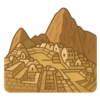
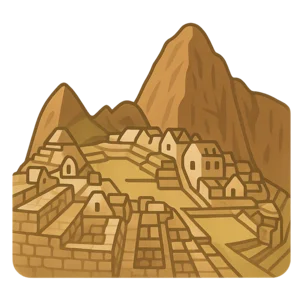
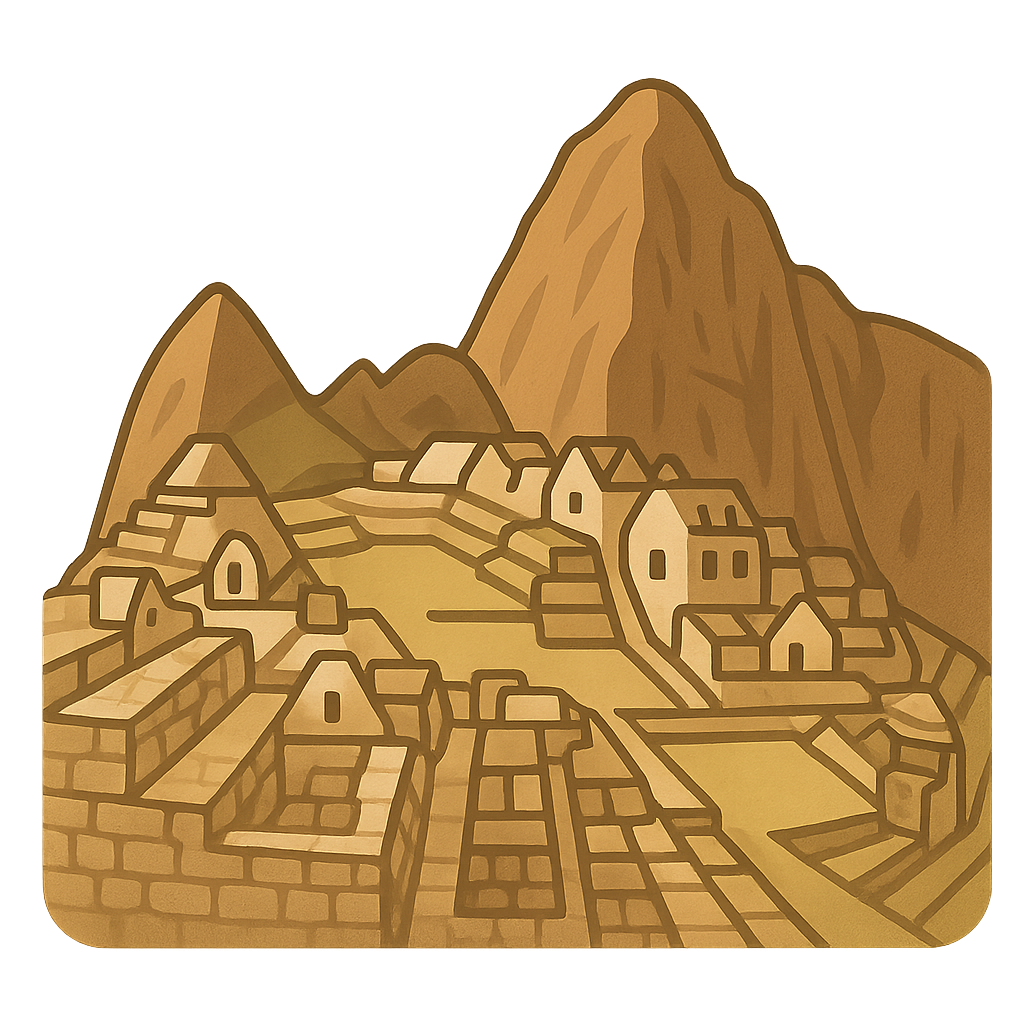
Long before modern cities existed, brave and resourceful people learned to call my steep slopes home. The most famous of these were the Incas, a civilization that saw me not as an obstacle, but as a sacred partner. They were master builders and engineers. Instead of leveling my cliffs, they worked with them, creating breathtaking cities like Machu Picchu that cling to my sides as if they grew there naturally. Their stonemasons were so skilled that they cut massive boulders to fit together perfectly without any mortar, creating walls that have withstood centuries of earthquakes and rain. To feed their vast population, the Incas carved my slopes into giant green staircases called terraces. These flat steps stopped the soil from washing away and allowed them to grow potatoes, corn, and quinoa at breathtaking altitudes. They saw my highest, snow-capped peaks as powerful spirits, or 'apus,' who watched over them and provided life-giving water. To connect their sprawling empire, they built an incredible network of roads and rope bridges, stretching for thousands of miles through my most challenging passes. Their entire world was woven into my landscape, a testament to their deep respect and remarkable ingenuity.
For centuries, the people of my mountains lived in relative isolation. But then, new faces began to arrive. In the 16th century, Spanish explorers came seeking gold, changing the course of history for the Inca Empire. However, a different kind of explorer arrived around the year 1802, a man driven not by wealth, but by an insatiable curiosity about the natural world. His name was Alexander von Humboldt. When he saw me, he was filled with awe. He didn't just want to conquer my peaks; he wanted to understand them. He climbed my mighty volcano, Mount Chimborazo, which was then believed to be the highest mountain in the world. As he ascended, he meticulously measured everything—the temperature, the air pressure, and the plants he found. He made a revolutionary discovery. Humboldt realized that life on my slopes was organized in distinct layers, just like the floors of a giant building. At my base grew tropical jungle plants, but as he climbed higher, they gave way to heartier shrubs, then grasses, and finally, only mosses and lichens could survive near the icy summit. He showed the world that I was not just a pile of rock, but a living, connected world of ecosystems, a vertical map of life that revealed how climate shapes the natural world.
Today, I continue my silent watch over the continent. My glaciers, though shrinking, still melt each spring to provide fresh water for millions of people in the cities and farms that sprawl from my foothills. I am a laboratory for scientists studying climate change, a thrilling challenge for hikers and climbers from around the globe, and a vibrant home to diverse cultures that blend ancient traditions with modern life. I am a living reminder of the Earth’s immense power and the incredible resilience of life to adapt and thrive in even the most difficult places. I will stand for ages to come, a storyteller of rock, ice, and life, inspiring all who look up at my peaks to dream bigger and climb higher.
Wow facts
About
The longest continental mountain range in the world, forming a continuous highland along the western edge of South America.
Take a Quiz
Question 1 of 5
In your own words, describe how the Inca people adapted to life in the Andes Mountains.
Explore next

Want to do even more?
Go beyond exploring. Unlock tools that turn every story into real learning.

Storypie Plus for families
Full stories, quizzes, and printables. Nights and car rides, sorted.
- Unlimited audio stories
- Create Mode: your child stars in the story
- Offline downloads
- Printable worksheets & coloring pages

Why Storypie for Schools
Students engaged. Prep in seconds. Evenings back to you.
- Worksheets & Quizzes
- Classroom Management
- Formative Assessment
- Custom Curriculum & Lesson Plans
- 27 Languages

Why Storypie for Homeschool
Curriculum done. They'll ask for more. Hours back in your day.
- Worksheet Generator
- First-Person Audio Stories
- Built-in Comprehension Quizzes
- Custom Curriculum & Lesson Plans
- Print & Go Activities