English

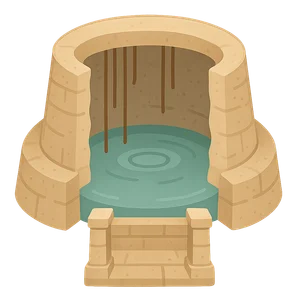
Cenotes of the Yucatán
Natural sinkholes or pits resulting from the collapse of limestone bedrock, exposing groundwater underneath.
Reads at Grades 3–5 Listens at Grades 1–5
Print & create
Answer keys·No prep·Free with an account
28 worksheets · answer keys · full story · quiz · Ages 8-10 · CEFR B1
Plus adds 164,000+ more stories in 27 languages, audio for every one, and printables for all of them.
Just want Cenotes of the Yucatán?
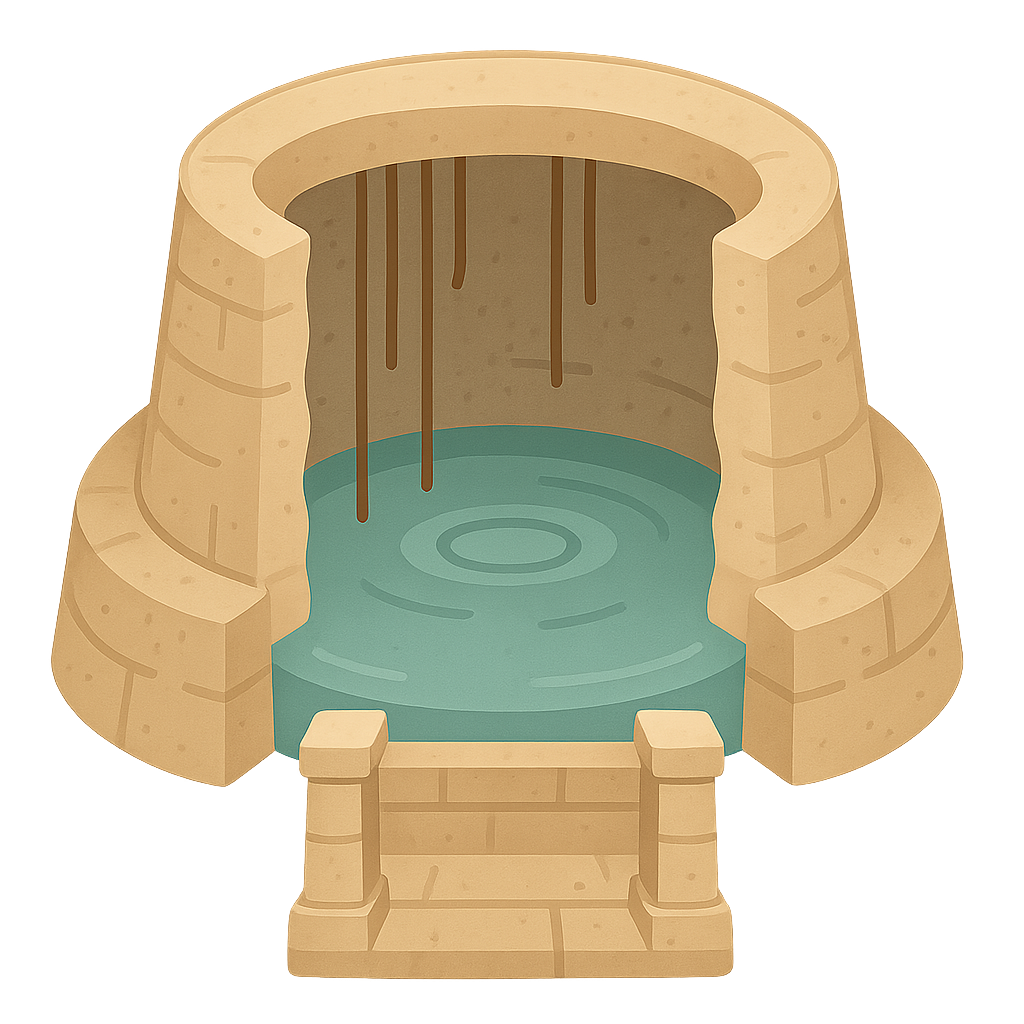
Deep beneath the jungle floor, I wait in cool, quiet darkness. I am a secret window to an underground world, a perfect circle of the clearest water you have ever seen. Long, thin tree roots hang down from the world above, touching my surface like gentle fingers. The only light is a single, bright column that shines down from an opening in the earth, making my water sparkle with shades of turquoise and emerald. The sounds of chirping birds and buzzing insects from the jungle above echo softly in my cavern. For thousands of years, I have held the sky in my reflection and guarded the secrets of the earth. I am a silent keeper of history, a pool of life in a thirsty land. I am a cenote of the Yucatán Peninsula.
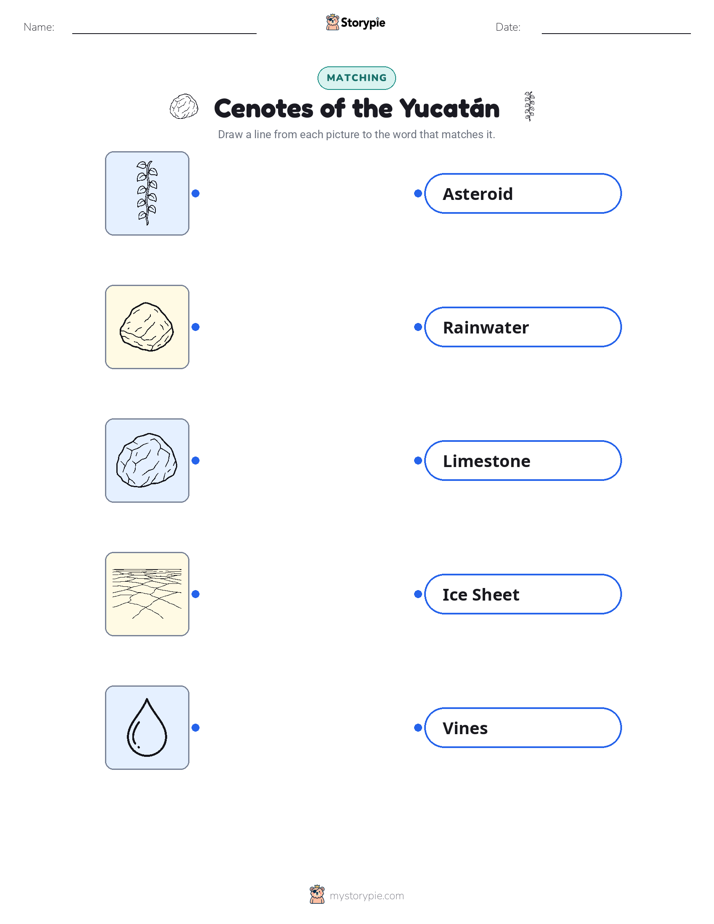
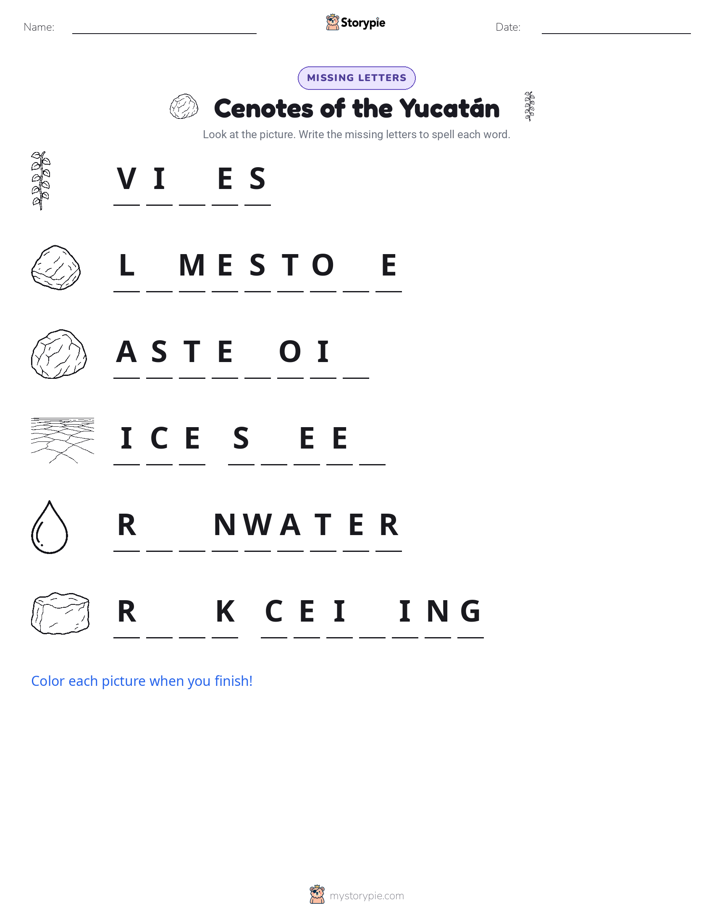
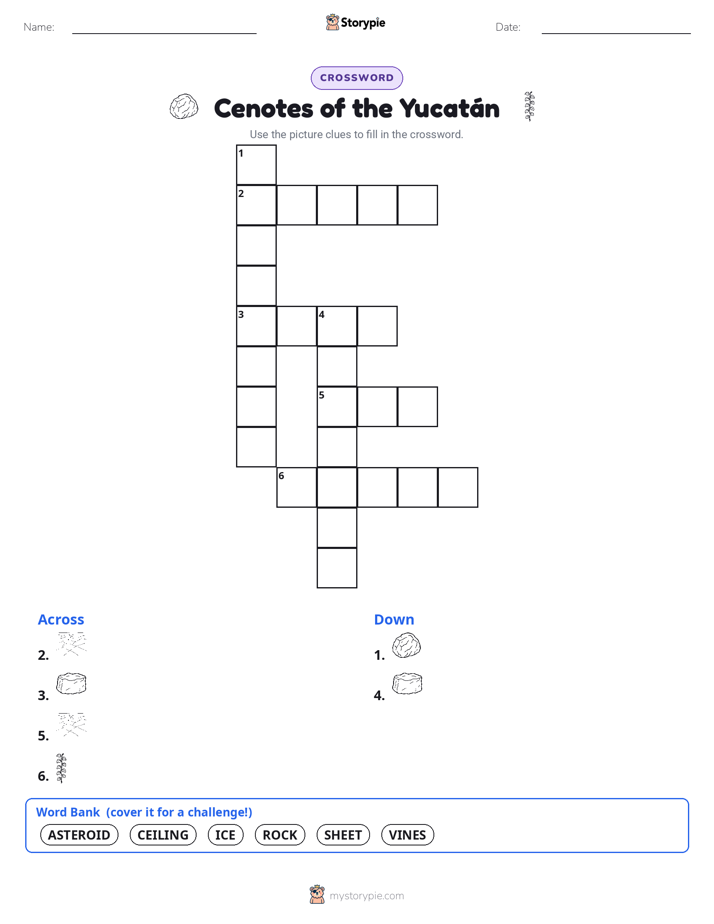
My story began with a flash of light and a deep rumble that shook the entire planet, long before any people walked the land. Around 66 million years ago, a giant rock from space, an asteroid bigger than a mountain, crashed into the Earth right here. The impact was so powerful it cracked the ground for miles and miles, like tapping a giant eggshell. For millions of years after that, rain fell from the sky, year after year. The rainwater seeped down into those tiny cracks in the limestone rock. Slowly, patiently, the water carved out huge tunnels and vast caves deep underground, creating a secret network of rivers hidden from the sun. Then, one day, the roof of one of these caves grew too thin and collapsed with a quiet whoosh, opening me to the sky for the very first time.
For a long time, only jungle animals knew I was here. Then, the first people arrived. They were the Maya, and when they found me, they found life. In this part of the world, there are no rivers running along the surface of the land, so my cool, fresh water was the most precious gift they could imagine. Starting around 2000 BCE, they began to build their homes and villages near me and my brothers and sisters. Great cities like the famous Chichen Itza, which grew powerful in the 7th century CE, were built because I was there to provide water for thousands of people. But I was more than just a well. To the Maya, I was sacred. They believed I was a gateway to the underworld, a mysterious place they called Xibalba. They would come to my edge and make offerings of pottery and precious jade, praying to their rain god, Chaac, hoping he would see their gifts and bless them with the water needed for their corn to grow tall.
The Secret Eye of the Earth
Deep beneath the jungle floor, I wait in cool, quiet darkness. I am a secret window to an underground world, a perfect circle of the clearest water you have ever seen. Long, thin tree roots hang down from the world above, touching my surface like gentle fingers. The only light is a single, bright column that shines down from an opening in the earth, making my water sparkle with shades of turquoise and emerald. The sounds of chirping birds and buzzing insects from the jungle above echo softly in my cavern. For thousands of years, I have held the sky in my reflection and guarded the secrets of the earth. I am a silent keeper of history, a pool of life in a thirsty land. I am a cenote of the Yucatán Peninsula.
My story began with a flash of light and a deep rumble that shook the entire planet, long before any people walked the land. Around 66 million years ago, a giant rock from space, an asteroid bigger than a mountain, crashed into the Earth right here. The impact was so powerful it cracked the ground for miles and miles, like tapping a giant eggshell. For millions of years after that, rain fell from the sky, year after year. The rainwater seeped down into those tiny cracks in the limestone rock. Slowly, patiently, the water carved out huge tunnels and vast caves deep underground, creating a secret network of rivers hidden from the sun. Then, one day, the roof of one of these caves grew too thin and collapsed with a quiet whoosh, opening me to the sky for the very first time.
For a long time, only jungle animals knew I was here. Then, the first people arrived. They were the Maya, and when they found me, they found life. In this part of the world, there are no rivers running along the surface of the land, so my cool, fresh water was the most precious gift they could imagine. Starting around 2000 BCE, they began to build their homes and villages near me and my brothers and sisters. Great cities like the famous Chichen Itza, which grew powerful in the 7th century CE, were built because I was there to provide water for thousands of people. But I was more than just a well. To the Maya, I was sacred. They believed I was a gateway to the underworld, a mysterious place they called Xibalba. They would come to my edge and make offerings of pottery and precious jade, praying to their rain god, Chaac, hoping he would see their gifts and bless them with the water needed for their corn to grow tall.
My life is different now, but I am still a place of wonder. The great Maya cities are now quiet ruins, but people still travel from all over the world to see me. They leap from my rocky edge and splash into my refreshing water, their laughter echoing where prayers once were. In the 20th and 21st centuries, brave divers and scientists have explored my deepest parts. With lights to guide them, they have found the ancient offerings the Maya left for Chaac, and even the bones of giant animals that fell into my depths during the Ice Age. I am no longer a secret, but a living connection to the past. I hold the memory of falling stars, ancient civilizations, and the endless patience of water, reminding everyone of the deep and beautiful mysteries hidden just beneath their feet.
Wow facts
About
Natural sinkholes or pits resulting from the collapse of limestone bedrock, exposing groundwater underneath. They were sacred to the ancient Maya and are a defining feature of Mexico's Yucatán Peninsula.
Take a Quiz
Question 1 of 5
In the story, the cenote is described as a 'gateway to the underworld.' What does the word 'gateway' mean here?
Explore next



Want to do even more?
Go beyond exploring. Unlock tools that turn every story into real learning.

Storypie Plus for families
Full stories, quizzes, and printables. Nights and car rides, sorted.
- Unlimited audio stories
- Create Mode: your child stars in the story
- Offline downloads
- Printable worksheets & coloring pages

Why Storypie for Schools
Students engaged. Prep in seconds. Evenings back to you.
- Worksheets & Quizzes
- Classroom Management
- Formative Assessment
- Custom Curriculum & Lesson Plans
- 27 Languages

Why Storypie for Homeschool
Curriculum done. They'll ask for more. Hours back in your day.
- Worksheet Generator
- First-Person Audio Stories
- Built-in Comprehension Quizzes
- Custom Curriculum & Lesson Plans
- Print & Go Activities