English

Charminar
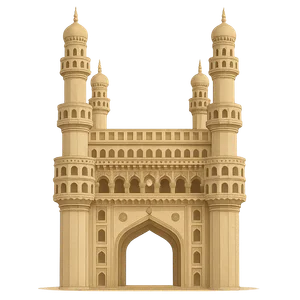
The Charminar is a 16th-century monument and mosque located in Hyderabad, India…
Reads at Grades 6–8 Listens at Grades 4–8
Print & create
Answer keys·No prep·Free with an account
28 worksheets · answer keys · full story · quiz · Ages 10-12 · CEFR B2
Plus adds 164,000+ more stories in 27 languages, audio for every one, and printables for all of them.
Just want Charminar?
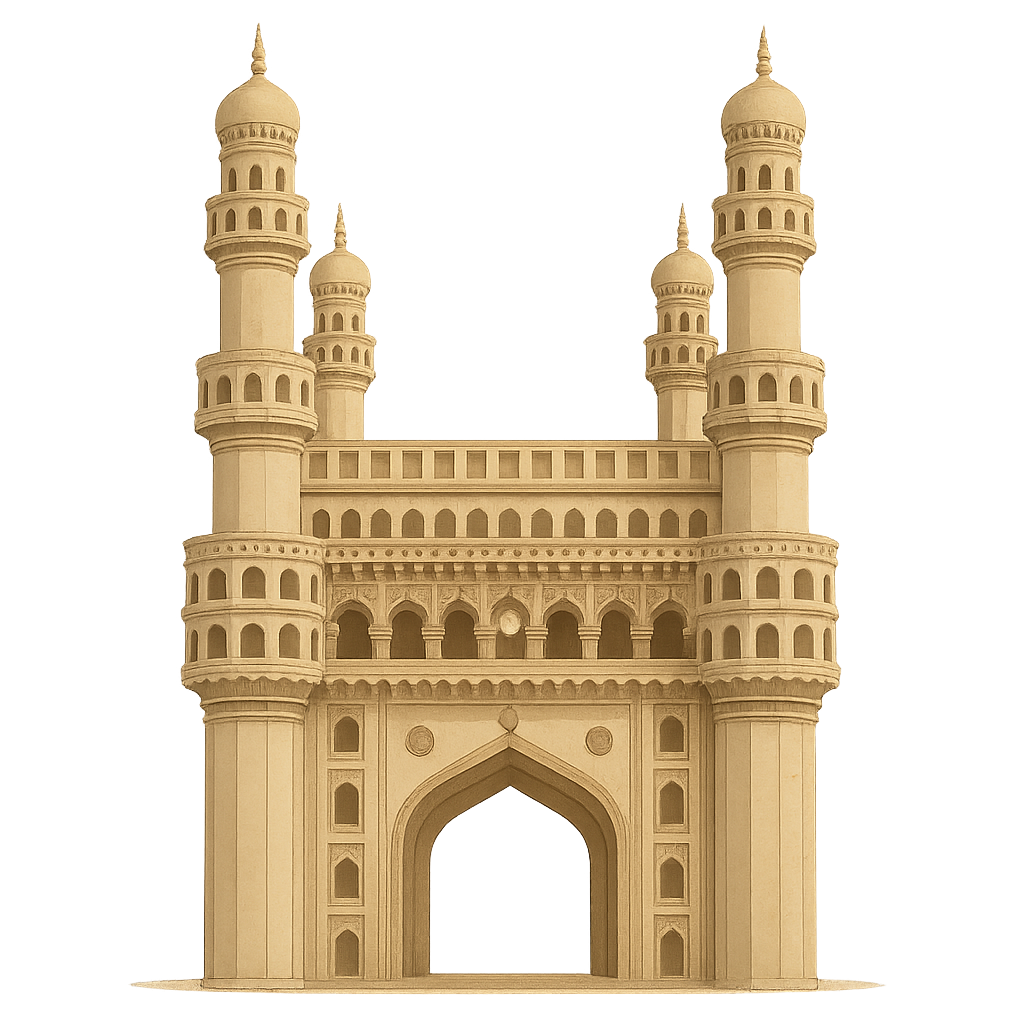
From my feet, the vibrant energy of a thousand stories spills into the streets. I hear the joyful chatter of the Laad Bazaar, where merchants call out their wares and the clinking of countless shimmering bangles creates a kind of music. The air around me is thick with the rich scent of Hyderabadi biryani, sweet perfumes, and blooming jasmine. For centuries, I have stood at the heart of a great crossroads, where four wide roads stretch out like welcoming arms. The warm Indian sun has baked my stone walls for more than four hundred years, and I have watched generations of people pass beneath my grand arches. Four magnificent towers, my namesakes, reach for the sky, each crowned with a delicate, petal-like dome. Every intricate carving on my surface holds a memory, every archway whispers a tale of the past. People look up at me in wonder, feeling the history that radiates from my very core. I am a promise kept, a prayer answered, and the soul of a city. I am the Charminar, the heart of Hyderabad.
My story begins in a time of great fear and great vision, in the year 1591 CE. My creator, the ruler Sultan Muhammad Quli Qutb Shah, was the leader of the Qutb Shahi dynasty. His capital was the mighty Golconda Fort, but it had become crowded and strained. He dreamed of a new city, a paradise on earth, planned with wide streets, beautiful gardens, and grand buildings. But before this dream could be realized, a terrible shadow fell over the land. A deadly plague swept through the region, bringing sorrow and despair to every home. The Sultan’s heart ached for his people. He knelt and prayed with all his soul, making a solemn vow to God. He promised that if the plague would lift and his people were saved, he would build a magnificent mosque and monument on the very spot where he offered his prayer. The sickness did pass, and the city slowly began to heal. True to his word, the Sultan fulfilled his promise. That same year, in 1591 CE, the first stones were laid for my foundation, marking the birth of a new city and a new hope.
The Four Towers of Hyderabad
From my feet, the vibrant energy of a thousand stories spills into the streets. I hear the joyful chatter of the Laad Bazaar, where merchants call out their wares and the clinking of countless shimmering bangles creates a kind of music. The air around me is thick with the rich scent of Hyderabadi biryani, sweet perfumes, and blooming jasmine. For centuries, I have stood at the heart of a great crossroads, where four wide roads stretch out like welcoming arms. The warm Indian sun has baked my stone walls for more than four hundred years, and I have watched generations of people pass beneath my grand arches. Four magnificent towers, my namesakes, reach for the sky, each crowned with a delicate, petal-like dome. Every intricate carving on my surface holds a memory, every archway whispers a tale of the past. People look up at me in wonder, feeling the history that radiates from my very core. I am a promise kept, a prayer answered, and the soul of a city. I am the Charminar, the heart of Hyderabad.
My story begins in a time of great fear and great vision, in the year 1591 CE. My creator, the ruler Sultan Muhammad Quli Qutb Shah, was the leader of the Qutb Shahi dynasty. His capital was the mighty Golconda Fort, but it had become crowded and strained. He dreamed of a new city, a paradise on earth, planned with wide streets, beautiful gardens, and grand buildings. But before this dream could be realized, a terrible shadow fell over the land. A deadly plague swept through the region, bringing sorrow and despair to every home. The Sultan’s heart ached for his people. He knelt and prayed with all his soul, making a solemn vow to God. He promised that if the plague would lift and his people were saved, he would build a magnificent mosque and monument on the very spot where he offered his prayer. The sickness did pass, and the city slowly began to heal. True to his word, the Sultan fulfilled his promise. That same year, in 1591 CE, the first stones were laid for my foundation, marking the birth of a new city and a new hope.
My construction was a marvel of planning and artistry, a blend of Indo-Islamic styles that was completed in just one year, by 1592 CE. My name, Charminar, literally means 'Four Minarets' in the Urdu language, and it describes me perfectly. I was designed to be the centerpiece of the new city of Hyderabad, which was laid out in a grid pattern with me at its very center. I am a perfect square, built from strong granite and smooth lime-mortar, the same material used for many of the world's most enduring structures. Four grand arches, one on each side, face the four cardinal directions—north, south, east, and west. These arches opened onto the city's main thoroughfares. My four towers are the stars of my design. Each one soars 56 meters into the air, a symbol of grace and strength. Inside each minaret, a winding spiral staircase of 149 steps leads visitors upward. At the top of each tower, a delicate double balcony offers a breathtaking view of the city I anchor. On my highest open-air floor, a small but beautiful mosque was built. It was the first mosque in the new city, a sacred space open to the sky, fulfilling the Sultan's promise. I was not just a monument; I was the central pillar around which a new world was carefully and lovingly built.
For over four centuries, I have been a silent witness to the currents of history. I watched as Hyderabad grew from a carefully planned settlement into a bustling, cosmopolitan metropolis. I have seen empires rise and fall. I stood proudly under the rule of the Qutb Shahi dynasty who built me. Then, in 1687 CE, the powerful Mughal armies arrived, and the city came under their rule. After them came the Nizams, who made Hyderabad their capital and one of the most prosperous princely states in India. Through all these changes, I remained. My purpose also evolved with the times. I have always been a place of prayer, but for a time, my upper floors served as a college, where students came to learn. More than anything, I have been a gathering place, a central point where people from all walks of life meet. The market at my base, the Laad Bazaar, has flourished alongside me, becoming world-famous for its exquisite lac bangles, sparkling pearls, and rich textiles. I have become inseparable from the identity of the people and the city itself.
Today, the world around me is a whirlwind of modern life. The sounds of cars and auto-rickshaws have replaced the clip-clop of horse-drawn carriages, but the energy is the same. I am no longer just a monument; I am a globally recognized symbol of Hyderabad, a beacon of its rich culture and history. Every day, thousands of people come to see me. Families pose for pictures beneath my arches, students sketch my intricate details, and travelers from every corner of the globe climb my 149 steps. From my balconies, they look out at the sprawling city and see the past and present woven together. I am proud to be more than just stone and mortar. I am the story of a promise kept, a symbol of resilience that has weathered storms and the passage of time. I stand as a reminder that hope, faith, and community can create something of lasting beauty that connects the past with an ever-brightening future.
Wow facts
About
The Charminar is a 16th-century monument and mosque located in Hyderabad, India, renowned for its four grand minarets and Indo-Islamic architecture. It was built in 1591 by Sultan Muhammad Quli Qutb Shah to celebrate the beginning of the second Islamic millennium.
Take a Quiz
Question 1 of 5
Which statement best summarizes why I, the Charminar, was built?
Explore next





Want to do even more?
Go beyond exploring. Unlock tools that turn every story into real learning.

Storypie Plus for families
Full stories, quizzes, and printables. Nights and car rides, sorted.
- Unlimited audio stories
- Create Mode: your child stars in the story
- Offline downloads
- Printable worksheets & coloring pages

Why Storypie for Schools
Students engaged. Prep in seconds. Evenings back to you.
- Worksheets & Quizzes
- Classroom Management
- Formative Assessment
- Custom Curriculum & Lesson Plans
- 27 Languages

Why Storypie for Homeschool
Curriculum done. They'll ask for more. Hours back in your day.
- Worksheet Generator
- First-Person Audio Stories
- Built-in Comprehension Quizzes
- Custom Curriculum & Lesson Plans
- Print & Go Activities