English

Charminar
The Charminar is a 16th-century monument and mosque located in Hyderabad, India…
Reads at Grades 3–5 Listens at Grades 1–5
Print & create
Answer keys·No prep·Free with an account
28 worksheets · answer keys · full story · quiz · Ages 8-10 · CEFR B1
Plus adds 164,000+ more stories in 27 languages, audio for every one, and printables for all of them.
Just want Charminar?
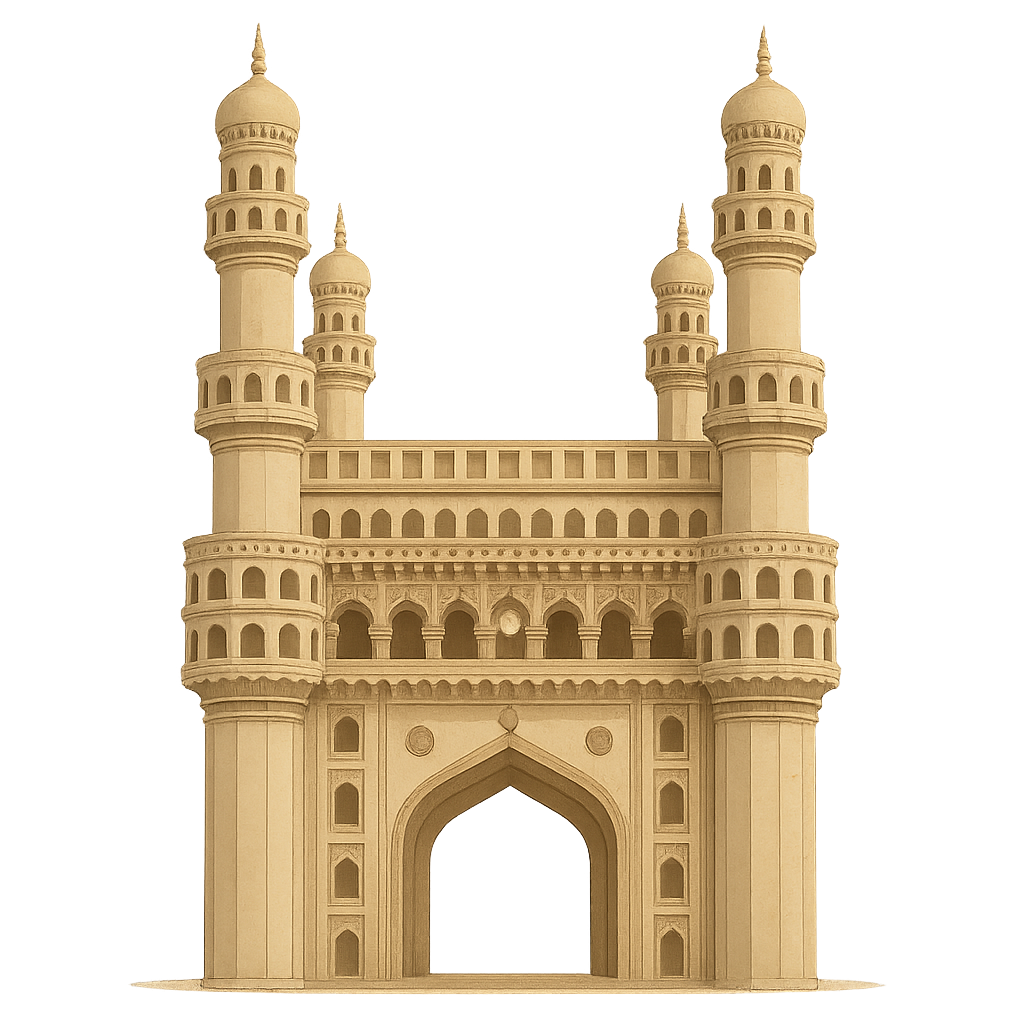
From the center of a bustling city in India, I watch the world spin around me. The air is filled with the sweet smell of jasmine flowers and the sizzling sounds of food cooking in nearby stalls. Rickshaws beep their horns, and merchants call out, selling colorful glass bangles that glitter in the sun. I stand on four enormous legs, like a giant stone table, with arches so grand that elephants could once walk through them. From my body, four tall, slender towers reach for the sky, one at each of my corners. They are my pride and my identity, the reason for my name. For I am the Charminar, the Four Towers of Hyderabad, and I have stood here for over four hundred years, watching this city grow from a dream into a vibrant home for millions.
My story begins with a promise made from a place of great sadness. Long ago, the ruler of this land, a kind and thoughtful man named Sultan Muhammad Quli Qutb Shah, saw his people suffering. A terrible sickness, a plague, had spread through his old capital city of Golconda, and many were falling ill. The Sultan was heartbroken. He moved his people to a new, healthier area and prayed with all his might. He made a solemn promise to God that if the plague ended, he would build a magnificent monument on the very spot where he prayed, a monument so beautiful it would be remembered forever. In the year 1591, his prayers were answered. The sickness vanished, and the people were safe. True to his word, the Sultan began my construction. He wanted me to be the heart of his brand new city, Hyderabad. He designed me not just as a memorial of gratitude, but also as a place for people to connect with God. That is why, hidden away on my very top floor, there is a mosque, the oldest in the city, where people have offered their prayers for centuries. I was built as a symbol of hope overcoming hardship.
The Four Towers of Hyderabad
From the center of a bustling city in India, I watch the world spin around me. The air is filled with the sweet smell of jasmine flowers and the sizzling sounds of food cooking in nearby stalls. Rickshaws beep their horns, and merchants call out, selling colorful glass bangles that glitter in the sun. I stand on four enormous legs, like a giant stone table, with arches so grand that elephants could once walk through them. From my body, four tall, slender towers reach for the sky, one at each of my corners. They are my pride and my identity, the reason for my name. For I am the Charminar, the Four Towers of Hyderabad, and I have stood here for over four hundred years, watching this city grow from a dream into a vibrant home for millions.
My story begins with a promise made from a place of great sadness. Long ago, the ruler of this land, a kind and thoughtful man named Sultan Muhammad Quli Qutb Shah, saw his people suffering. A terrible sickness, a plague, had spread through his old capital city of Golconda, and many were falling ill. The Sultan was heartbroken. He moved his people to a new, healthier area and prayed with all his might. He made a solemn promise to God that if the plague ended, he would build a magnificent monument on the very spot where he prayed, a monument so beautiful it would be remembered forever. In the year 1591, his prayers were answered. The sickness vanished, and the people were safe. True to his word, the Sultan began my construction. He wanted me to be the heart of his brand new city, Hyderabad. He designed me not just as a memorial of gratitude, but also as a place for people to connect with God. That is why, hidden away on my very top floor, there is a mosque, the oldest in the city, where people have offered their prayers for centuries. I was built as a symbol of hope overcoming hardship.
For centuries, I have been a silent witness to history. I watched as the Laad Bazaar, a famous market, grew right at my feet. It's a joyful, noisy place, famous for its countless shops selling lac bangles, sparkling with stones and colors. I've seen merchants and travelers from faraway lands walk under my arches, their eyes wide with wonder. Empires rose and fell, rulers came and went, but I remained, a constant landmark for the people of Hyderabad. My life has not always been easy. I have faced powerful storms and the slow wear of time. In 1824, a bolt of lightning struck one of my towers, damaging the delicate plasterwork. The people of the city were worried, but they did not abandon me. They lovingly repaired my broken minaret, piece by piece, showing me how much I meant to them. Their care made me feel stronger than ever, not just a structure of stone and lime, but a cherished part of their community.
Today, I am more alive than ever. I am the proud symbol of Hyderabad, a picture you might see on a postcard sent to a friend across the world. People come from every corner of the globe to walk through my arches and gaze up at my towers. During festivals like Ramadan and Eid, the entire area around me glows with excitement. The streets are filled with families laughing and celebrating, and I am decorated with thousands of twinkling lights, shining like a jewel in the night sky. It is a wonderful feeling to be part of so much joy. I am a reminder that a promise made out of gratitude can create something beautiful that lasts for centuries. I am where the city’s rich history and its busy, modern life come together, a beacon of hope for everyone who sees me.
Wow facts
About
The Charminar is a 16th-century monument and mosque located in Hyderabad, India, renowned for its four grand minarets and Indo-Islamic architecture. It was built in 1591 by Sultan Muhammad Quli Qutb Shah to celebrate the beginning of the second Islamic millennium.
Take a Quiz
Question 1 of 5
In the story, the Charminar says a 'plague' had spread through the city. What does the word 'plague' mean in this sentence?
Explore next





Want to do even more?
Go beyond exploring. Unlock tools that turn every story into real learning.

Storypie Plus for families
Full stories, quizzes, and printables. Nights and car rides, sorted.
- Unlimited audio stories
- Create Mode: your child stars in the story
- Offline downloads
- Printable worksheets & coloring pages

Why Storypie for Schools
Students engaged. Prep in seconds. Evenings back to you.
- Worksheets & Quizzes
- Classroom Management
- Formative Assessment
- Custom Curriculum & Lesson Plans
- 27 Languages

Why Storypie for Homeschool
Curriculum done. They'll ask for more. Hours back in your day.
- Worksheet Generator
- First-Person Audio Stories
- Built-in Comprehension Quizzes
- Custom Curriculum & Lesson Plans
- Print & Go Activities