English

Chiloé
The Chiloé Archipelago is a group of islands off the coast of southern Chile, famous for its unique culture…
Reads at Grades 3–5 Listens at Grades 1–5
Print & create
Answer keys·No prep·Free with an account
28 worksheets · answer keys · full story · quiz · Ages 8-10 · CEFR B1
Plus adds 164,000+ more stories in 27 languages, audio for every one, and printables for all of them.
Just want Chiloé?
Imagine a place where green hills seem to be wrapped in a soft, gray blanket of mist. The air tastes salty from the sea and smells of damp earth and ancient forests. All around me, cheerful houses painted in bright reds, blues, and yellows stand on tall, skinny legs over the water. They look like colorful, long-legged birds waiting patiently for the tide to come in. Tucked among my hills, you can also find special churches, built entirely of wood, reaching for the sky. They hold the secrets and stories of centuries. People who visit me often say I feel like a land of magic and mist, a place where legends feel real. I am a group of islands off the coast of a long, thin country called Chile. I am the Chiloé Archipelago.
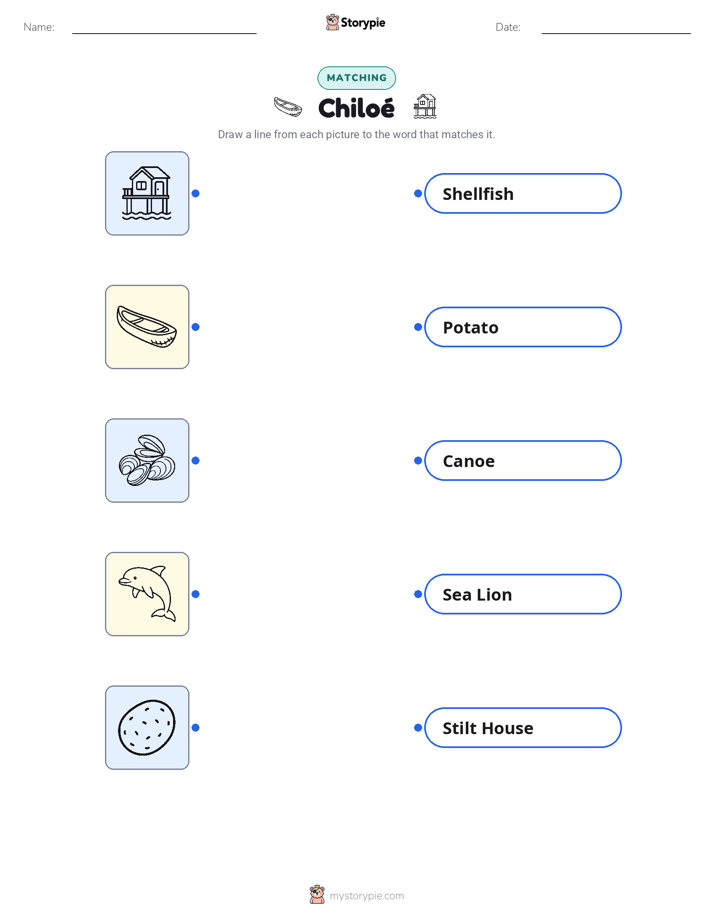
For thousands and thousands of years, my shores were home to people who understood me completely. Since as far back as 7000 BCE, the seafaring Chono people navigated my tricky channels in their canoes, fishing and gathering from the sea. They were masters of the water. On my fertile land, the Huilliche people were expert farmers, growing hundreds of different kinds of potatoes and grains. They knew the rhythm of my tides and the whispers of my forests. Their lives were deeply woven into my very soil and water. But then, one day in the year 1567, everything began to change. Tall ships with giant white sails, unlike anything my people had ever seen, appeared on the horizon. A Spanish explorer named Martín Ruiz de Gamboa stepped onto my shores and claimed my islands for the kingdom of Spain. Suddenly, two very different worlds collided right here. New ideas, a new language, and a new faith arrived, and the lives of the Chono and Huilliche people would never be the same. It was the beginning of a long and complicated story for me, one where old traditions and new ways would mix together to create something entirely new.
The Whispering Islands of Wood and Water
Imagine a place where green hills seem to be wrapped in a soft, gray blanket of mist. The air tastes salty from the sea and smells of damp earth and ancient forests. All around me, cheerful houses painted in bright reds, blues, and yellows stand on tall, skinny legs over the water. They look like colorful, long-legged birds waiting patiently for the tide to come in. Tucked among my hills, you can also find special churches, built entirely of wood, reaching for the sky. They hold the secrets and stories of centuries. People who visit me often say I feel like a land of magic and mist, a place where legends feel real. I am a group of islands off the coast of a long, thin country called Chile. I am the Chiloé Archipelago.
For thousands and thousands of years, my shores were home to people who understood me completely. Since as far back as 7000 BCE, the seafaring Chono people navigated my tricky channels in their canoes, fishing and gathering from the sea. They were masters of the water. On my fertile land, the Huilliche people were expert farmers, growing hundreds of different kinds of potatoes and grains. They knew the rhythm of my tides and the whispers of my forests. Their lives were deeply woven into my very soil and water. But then, one day in the year 1567, everything began to change. Tall ships with giant white sails, unlike anything my people had ever seen, appeared on the horizon. A Spanish explorer named Martín Ruiz de Gamboa stepped onto my shores and claimed my islands for the kingdom of Spain. Suddenly, two very different worlds collided right here. New ideas, a new language, and a new faith arrived, and the lives of the Chono and Huilliche people would never be the same. It was the beginning of a long and complicated story for me, one where old traditions and new ways would mix together to create something entirely new.
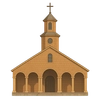
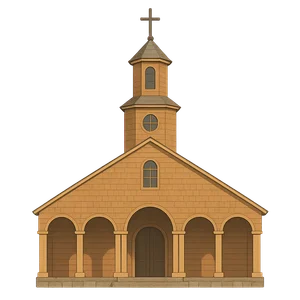
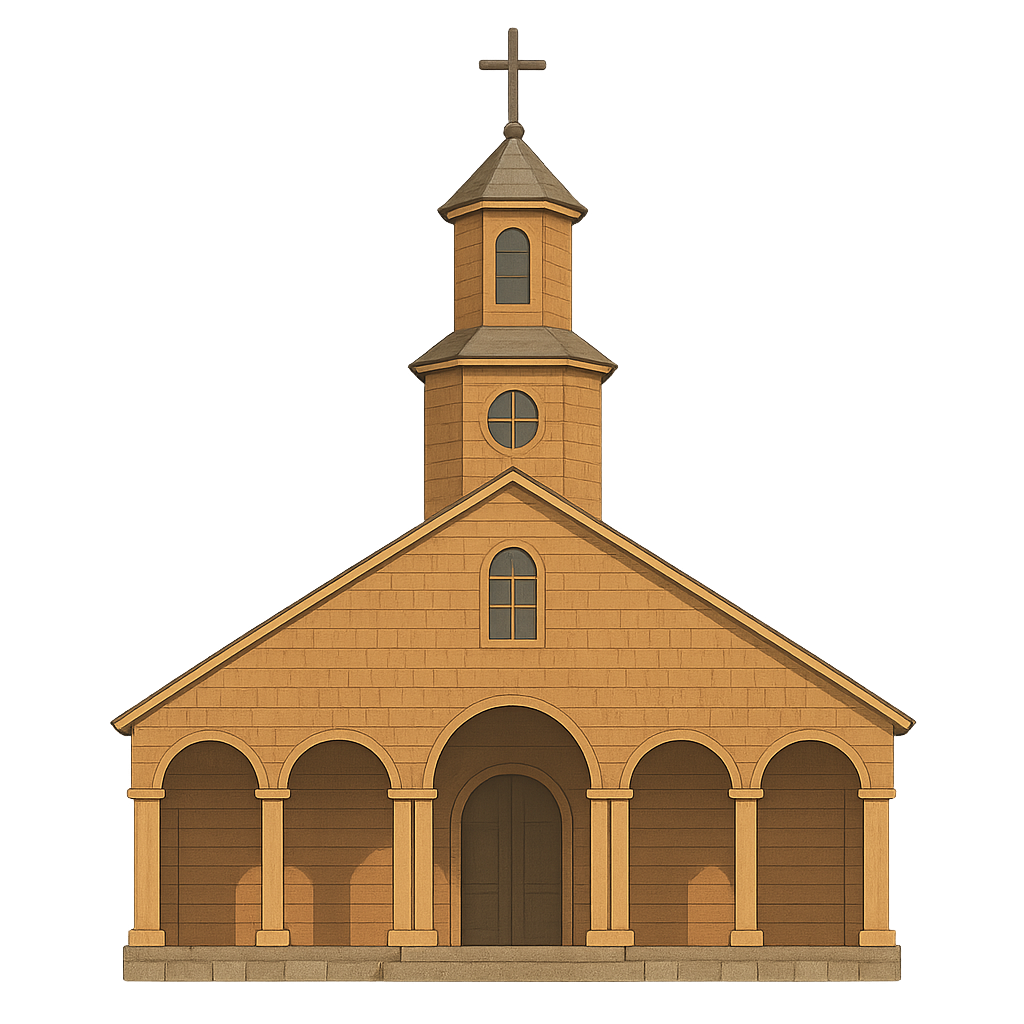
My greatest treasures are my churches, and they tell the story of this mix of cultures perfectly. Starting in the 17th century, Catholic priests called Jesuit missionaries came to live among my people. They wanted to build grand churches to share their faith, but they faced a challenge. They didn't have the stone and metal that were common for building churches in Europe. What they did have was an endless supply of strong, beautiful wood from my dense forests and the incredible skill of the local Chilote carpenters, who were masters at building boats. So, they decided to work together in a brilliant way. The Jesuits brought the European designs for churches with tall bell towers and arched ceilings, but the Chilote builders used their own amazing shipbuilding techniques to construct them. Instead of using metal nails, which were rare and would rust in my damp sea air, they carved every joint to fit together like a puzzle, securing them with strong wooden pegs. This clever method made my churches both strong and flexible, able to withstand my rainy weather and even earthquakes. They are true masterpieces of teamwork and creativity, blending two worlds into one. This special history is why, on November 30th, 2000, sixteen of my beautiful wooden churches were named a UNESCO World Heritage site. This is a very important honor that means they are considered treasures for the whole world to protect and admire forever.
But my story isn’t just about history you can see and touch; it’s also about the magic you can feel. My misty forests and swirling waters are the perfect home for myths and legends. For centuries, my people have told stories to explain the mysteries of the sea and the secrets of the woods. They whisper tales of the Caleuche, a ghostly ship that sails through the fog at night, its decks alive with music and the spirits of drowned sailors. They warn children about the Trauco, a small, powerful creature of the forest who can capture the hearts of young women with just a glance. And they look to the sea for the Pincoya, a beautiful mermaid with long golden hair. If she dances facing the sea, the fishermen know their nets will be full. If she faces the shore, the catch will be small. These aren't just spooky tales; they are a special way of understanding nature and life here. They are the heartbeat of my culture, passed down from one generation to the next, keeping the magic alive.
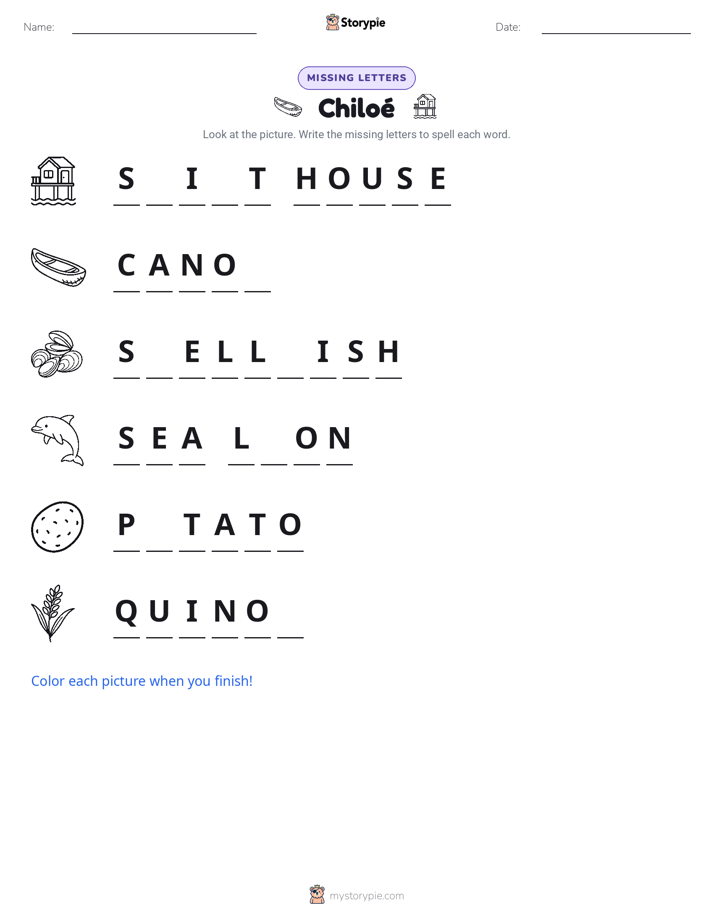
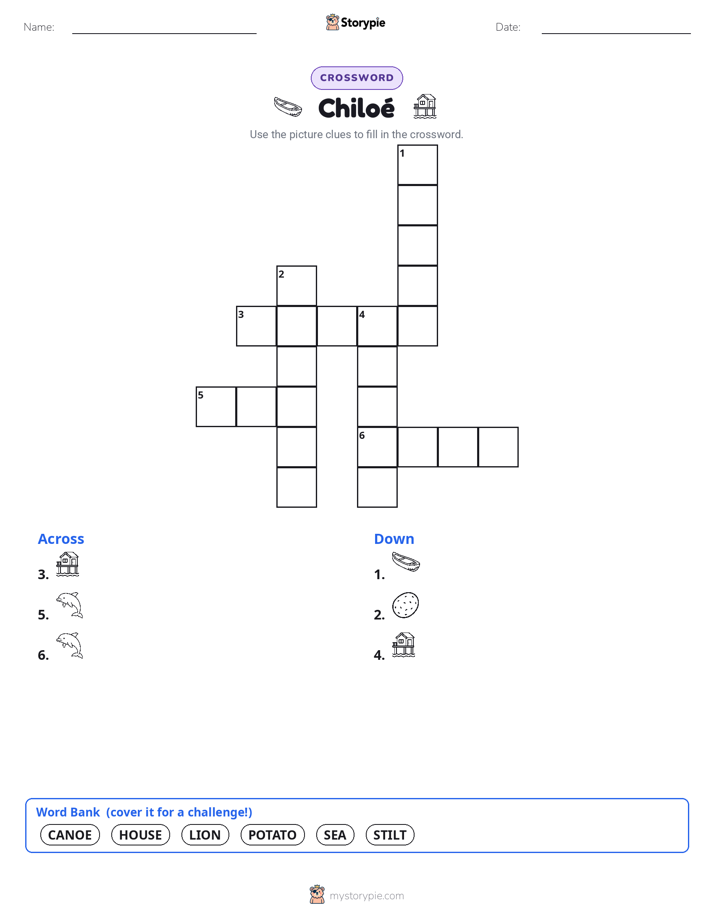
Today, my heart still beats with the same rhythm of tides and traditions. People still live in my colorful stilt houses, which are called 'palafitos,' their wooden stilts digging into the seabed. On special occasions, the delicious smell of 'curanto' fills the air. It’s a huge feast of meat, seafood, and potatoes cooked for hours in a deep pit in the earth, covered with giant leaves. I love it when visitors from all over the world come to wander through my wooden churches, marveling at the craftsmanship. I love it when they listen, wide-eyed, to the stories of the Trauco and the Pincoya. I am a place where history, magic, and nature are all tangled together. I stand as a reminder that keeping old stories and traditions alive makes the world a more wonderful and connected place for everyone, connecting the past to the future.
Wow facts
About
The Chiloé Archipelago is a group of islands off the coast of southern Chile, famous for its unique culture, mythology, and distinctive wooden churches, which are a UNESCO World Heritage Site.
Take a Quiz
Question 1 of 5
Why do you think the Chilote carpenters and Jesuit missionaries built the churches using wooden pegs instead of metal nails?
Explore next



Want to do even more?
Go beyond exploring. Unlock tools that turn every story into real learning.

Storypie Plus for families
Full stories, quizzes, and printables. Nights and car rides, sorted.
- Unlimited audio stories
- Create Mode: your child stars in the story
- Offline downloads
- Printable worksheets & coloring pages

Why Storypie for Schools
Students engaged. Prep in seconds. Evenings back to you.
- Worksheets & Quizzes
- Classroom Management
- Formative Assessment
- Custom Curriculum & Lesson Plans
- 27 Languages

Why Storypie for Homeschool
Curriculum done. They'll ask for more. Hours back in your day.
- Worksheet Generator
- First-Person Audio Stories
- Built-in Comprehension Quizzes
- Custom Curriculum & Lesson Plans
- Print & Go Activities