English

China (modern country)
Located in East Asia, China is one of the world's oldest civilizations…
Reads at Grades 6–8 Listens at Grades 4–8
Print & create
Answer keys·No prep·Free with an account
28 worksheets · answer keys · full story · quiz · Ages 10-12 · CEFR B2
Plus adds 244,000+ more stories in 27 languages, audio for every one, and printables for all of them.
Just want China (modern country)?
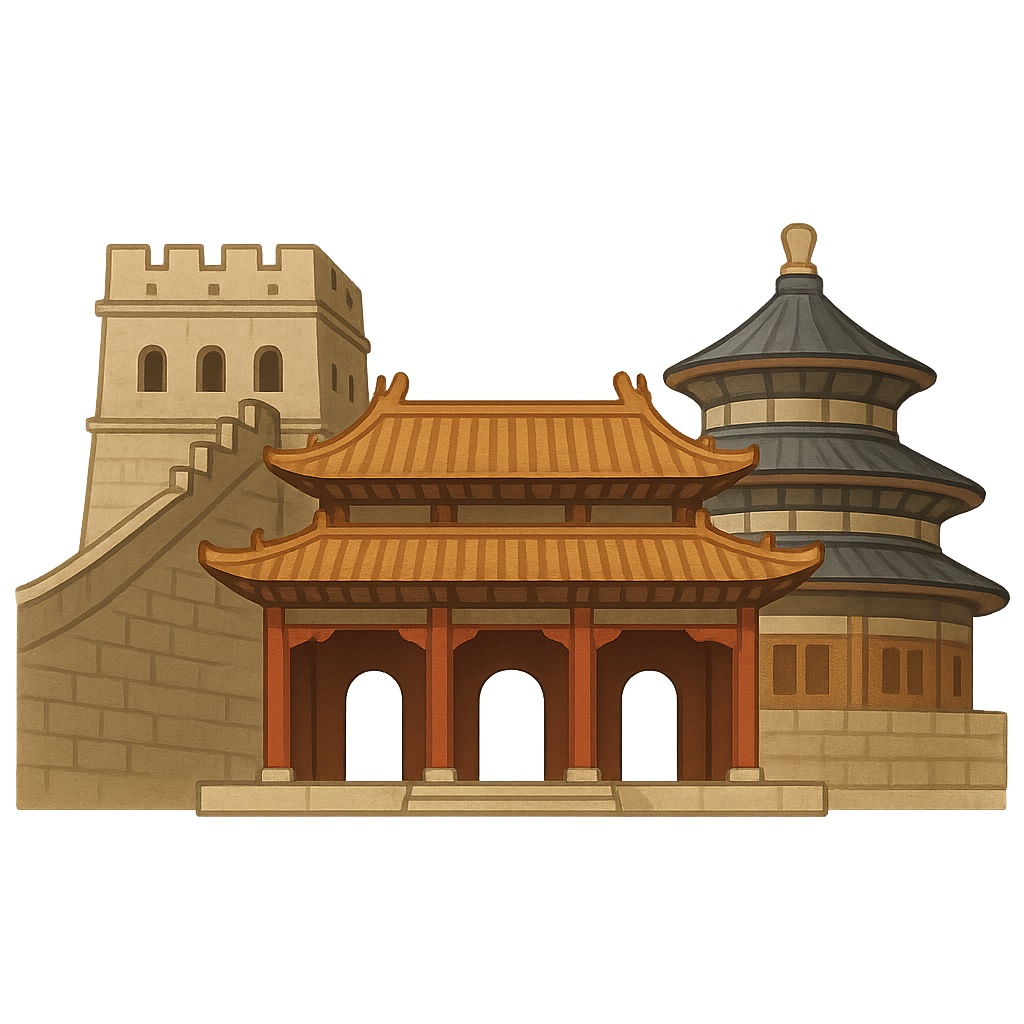
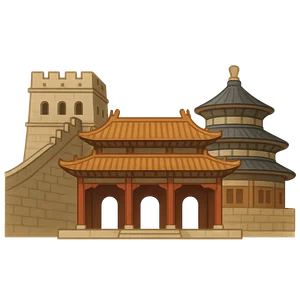
My body is a land of rivers and mountains, a vast canvas painted with every color of nature. Two great arteries, the Yellow River and the Yangtze, flow through me, carrying silt and stories as they have for thousands of years. They are the cradles where my first civilizations were born, their waters nurturing the crops that fed my people. My spine is the mighty Himalayan mountain range, a jagged crown of stone and ice that scrapes the heavens. To the north, I stretch into the windswept sands of the Gobi Desert, a place of silent, stark beauty. In my misty, green bamboo forests, the gentle giant panda lives, a symbol of my precious wildlife. My hillsides are carved into thousands of shimmering steps—terraced rice paddies that look like giant green staircases climbing toward the sky. For millennia, I have been the silent witness to history. I watched dynasties rise with great ambition and crumble into dust. I listened to the wisdom of philosophers, admired the delicate brushstrokes of artists, and cheered on the brave explorers who ventured beyond my borders. My story is as long and winding as my Great Wall and as vibrant and futuristic as my glittering cities. I am China, a country with a story etched into the very earth.
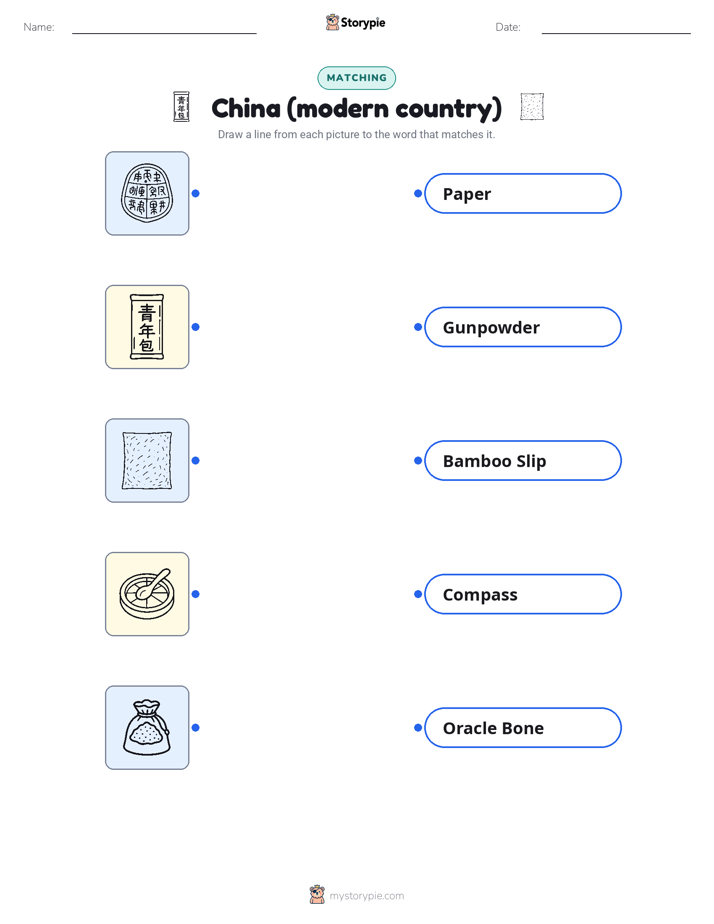
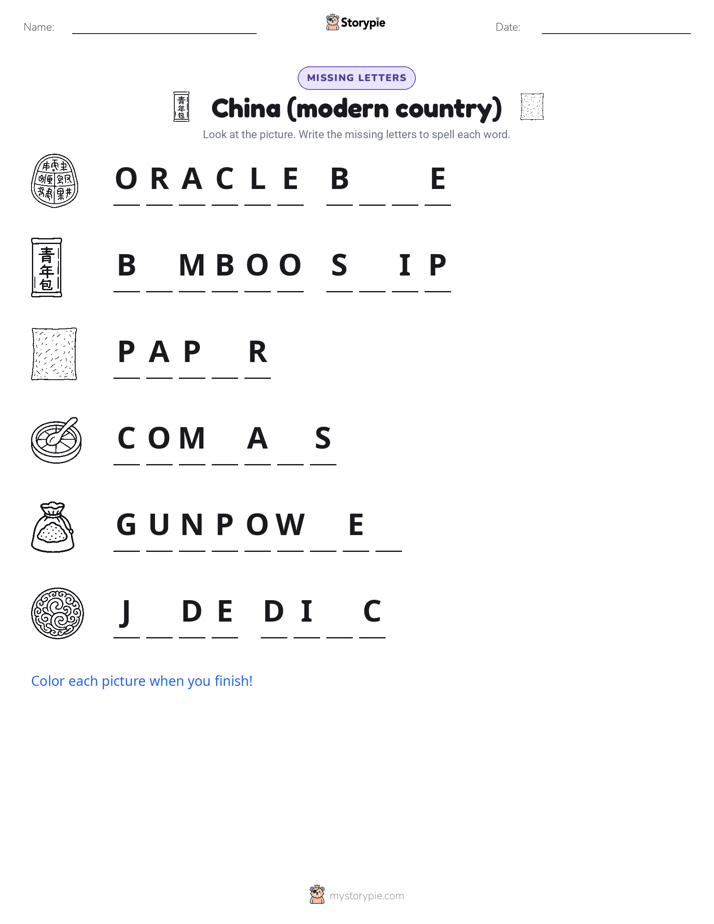
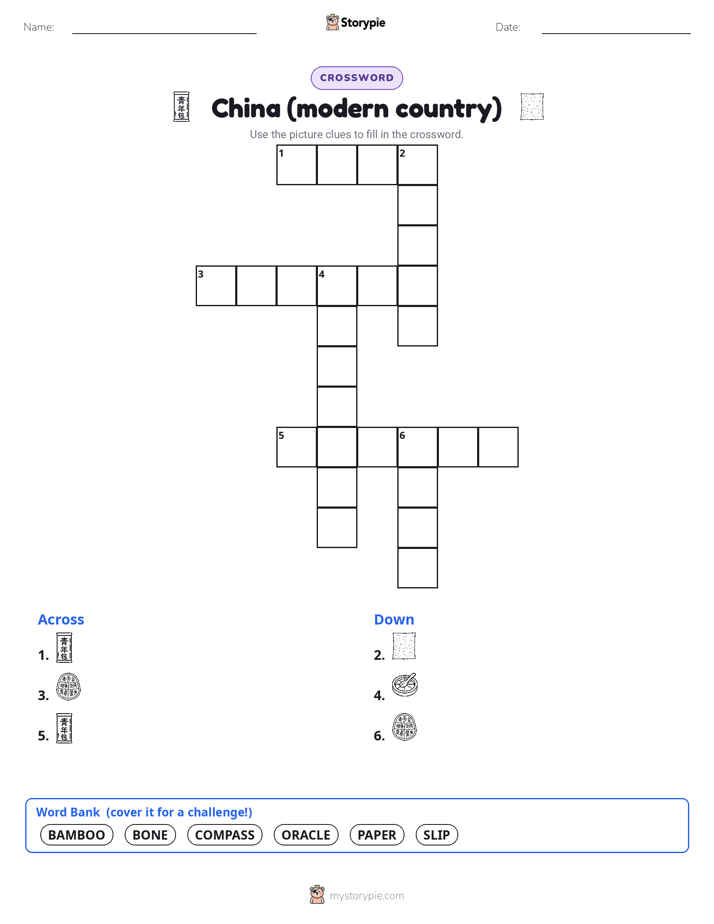
My story as a unified civilization began to take shape along the fertile banks of the Yellow River. It was here, around 1600 BCE, that the Shang Dynasty rose. My people from this time were deeply connected to the spiritual world; they sought guidance by carving questions onto turtle shells and animal bones. When heated, these oracle bones would crack, and priests would interpret the patterns, writing the answers in the earliest form of my script. Following them, the long and influential Zhou Dynasty began around 1046 BCE. This era was a time of profound thought, often called the 'Hundred Schools of Thought.' The most famous thinker, Confucius, walked my lands, teaching lessons of respect, family loyalty, and kindness that became the moral foundation of my society for centuries. But my people were not just thinkers; they were brilliant innovators. During the Han Dynasty, which began in 206 BCE, they perfected the art of making paper from mulberry bark, a revolutionary and closely guarded secret. They also created the first compass, which they used for spiritual purposes before it guided ships. Centuries later, in the vibrant Tang Dynasty of the 9th century CE, an experiment to create an elixir of immortality went spectacularly wrong—and right. An accidental mixture created gunpowder, an invention that would change warfare and celebrations forever. Not long after, they developed woodblock printing, and by the Song Dynasty in the 11th century CE, they invented movable type, revolutionizing the spread of ideas long before it appeared anywhere else.
I Am China: A Story of Dynasties and Dreams
My body is a land of rivers and mountains, a vast canvas painted with every color of nature. Two great arteries, the Yellow River and the Yangtze, flow through me, carrying silt and stories as they have for thousands of years. They are the cradles where my first civilizations were born, their waters nurturing the crops that fed my people. My spine is the mighty Himalayan mountain range, a jagged crown of stone and ice that scrapes the heavens. To the north, I stretch into the windswept sands of the Gobi Desert, a place of silent, stark beauty. In my misty, green bamboo forests, the gentle giant panda lives, a symbol of my precious wildlife. My hillsides are carved into thousands of shimmering steps—terraced rice paddies that look like giant green staircases climbing toward the sky. For millennia, I have been the silent witness to history. I watched dynasties rise with great ambition and crumble into dust. I listened to the wisdom of philosophers, admired the delicate brushstrokes of artists, and cheered on the brave explorers who ventured beyond my borders. My story is as long and winding as my Great Wall and as vibrant and futuristic as my glittering cities. I am China, a country with a story etched into the very earth.
My story as a unified civilization began to take shape along the fertile banks of the Yellow River. It was here, around 1600 BCE, that the Shang Dynasty rose. My people from this time were deeply connected to the spiritual world; they sought guidance by carving questions onto turtle shells and animal bones. When heated, these oracle bones would crack, and priests would interpret the patterns, writing the answers in the earliest form of my script. Following them, the long and influential Zhou Dynasty began around 1046 BCE. This era was a time of profound thought, often called the 'Hundred Schools of Thought.' The most famous thinker, Confucius, walked my lands, teaching lessons of respect, family loyalty, and kindness that became the moral foundation of my society for centuries. But my people were not just thinkers; they were brilliant innovators. During the Han Dynasty, which began in 206 BCE, they perfected the art of making paper from mulberry bark, a revolutionary and closely guarded secret. They also created the first compass, which they used for spiritual purposes before it guided ships. Centuries later, in the vibrant Tang Dynasty of the 9th century CE, an experiment to create an elixir of immortality went spectacularly wrong—and right. An accidental mixture created gunpowder, an invention that would change warfare and celebrations forever. Not long after, they developed woodblock printing, and by the Song Dynasty in the 11th century CE, they invented movable type, revolutionizing the spread of ideas long before it appeared anywhere else.
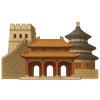
For centuries, I was a fractured land of many kingdoms constantly at war. This was my Warring States period. Then, in 221 BCE, a powerful and ambitious king, Qin Shi Huang, conquered them all. He forged me into a single empire and declared himself my very first emperor. He standardized my writing, my money, and my measurements, binding me together. To protect his new empire from northern invaders, he launched one of the most incredible construction projects in history. He connected existing defensive walls and commanded hundreds of thousands of workers to build massive new sections, creating the first version of the mighty barrier you now call the Great Wall. But his vision extended beyond life. For his tomb, he commissioned a massive, silent army to guard him in the afterlife. This breathtaking force, consisting of over 8,000 life-sized soldiers, 130 chariots, and 670 horses, was crafted from terracotta clay, each face unique. For over two millennia, this army lay hidden and forgotten, until a group of farmers digging a well made the discovery of a lifetime on March 29th, 1974. After the brief Qin Dynasty, the much longer-lasting Han Dynasty opened me up to the world. Around 130 BCE, they established the legendary Silk Road. Imagine long caravans of camels, their bells jingling in the desert air, carrying my beautiful silk, fragrant tea, and precious jade thousands of miles west to Persia, India, and the Roman Empire. In return, new goods like wool, gold, and grapes, along with new ideas and beliefs, flowed back to me. I became a vibrant crossroads of culture and commerce, connecting the East and the West.
As centuries passed, my imperial power grew, and my emperors built magnificent cities to reflect their glory. In my heart, in the city of Beijing, the Ming Dynasty emperors began constructing a vast and awe-inspiring palace complex in 1406 CE. It took over a million workers 14 years to complete. This place was called the Forbidden City because, for nearly 500 years, ordinary people were forbidden from entering its sacred grounds. It was a city within a city, with 980 buildings, golden-tiled roofs that shone like the sun, and imposing red walls. Inside were beautiful gardens, grand halls, and private quarters where the emperor and his court lived and ruled the empire. During this same remarkable Ming Dynasty, I sent one of the greatest explorers the world has ever known out onto the seas. His name was Zheng He. Starting in 1405 CE, he commanded enormous 'treasure fleets,' with ships so large they dwarfed European vessels of the time. Over seven epic voyages, he sailed to Southeast Asia, India, the Persian Gulf, and even the coast of Africa. His mission was not one of conquest but of diplomacy and trade, showing the world my amazing crafts like porcelain and silk and bringing back exotic treasures like giraffes and spices.
My long, continuous age of emperors, which lasted for more than two millennia, finally came to an end in 1912 CE with the fall of the last dynasty. The decades that followed were full of turmoil and change. A new, definitive chapter of my story began on October 1st, 1949, when the People's Republic of China was formed. Since then, I have transformed in ways my ancient emperors could never have dreamed. My quiet farm fields have given way to glittering megacities, where futuristic skyscrapers pierce the clouds. My old dirt roads and canals are now crisscrossed by the world's largest network of high-speed bullet trains, connecting my vast lands faster than ever. My people's gaze has turned from the Earth to the stars. In a moment of immense pride, on January 3rd, 2019, my Chang’e 4 spacecraft became the first in all of human history to successfully land on the far side of the Moon, a feat of incredible ingenuity. From the ancient wisdom of Confucius to the modern marvels of space travel, my story is one of resilience, invention, and boundless dreams. I continue to share my gifts with the world, a place where the deep roots of the past and the ambitious branches of the future grow together, inspiring new generations to build, create, and explore.
Wow facts
About
Located in East Asia, China is one of the world's oldest civilizations, with a continuous history stretching back thousands of years. It is known for its vast landscapes, numerous inventions, rich cultural heritage, and modern, rapidly growing cities.
Take a Quiz
Question 1 of 5
In your own words, retell the main events of the Qin Dynasty as described in the story.
Explore next



Want to do even more?
Go beyond exploring. Unlock tools that turn every story into real learning.

Storypie Plus for families
Full stories, quizzes, and printables. Nights and car rides, sorted.
- Unlimited audio stories
- Create Mode: your child stars in the story
- Offline downloads
- Printable worksheets & coloring pages

Why Storypie for Schools
Students engaged. Prep in seconds. Evenings back to you.
- Worksheets & Quizzes
- Classroom Management
- Formative Assessment
- Custom Curriculum & Lesson Plans
- 27 Languages

Why Storypie for Homeschool
Curriculum done. They'll ask for more. Hours back in your day.
- Worksheet Generator
- First-Person Audio Stories
- Built-in Comprehension Quizzes
- Custom Curriculum & Lesson Plans
- Print & Go Activities