English

Cinque Terre
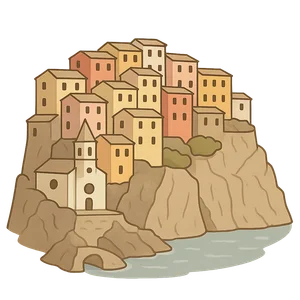
Cinque Terre is a string of five historic coastal villages on the Italian Riviera…
Reads at Grades 6–8 Listens at Grades 4–8
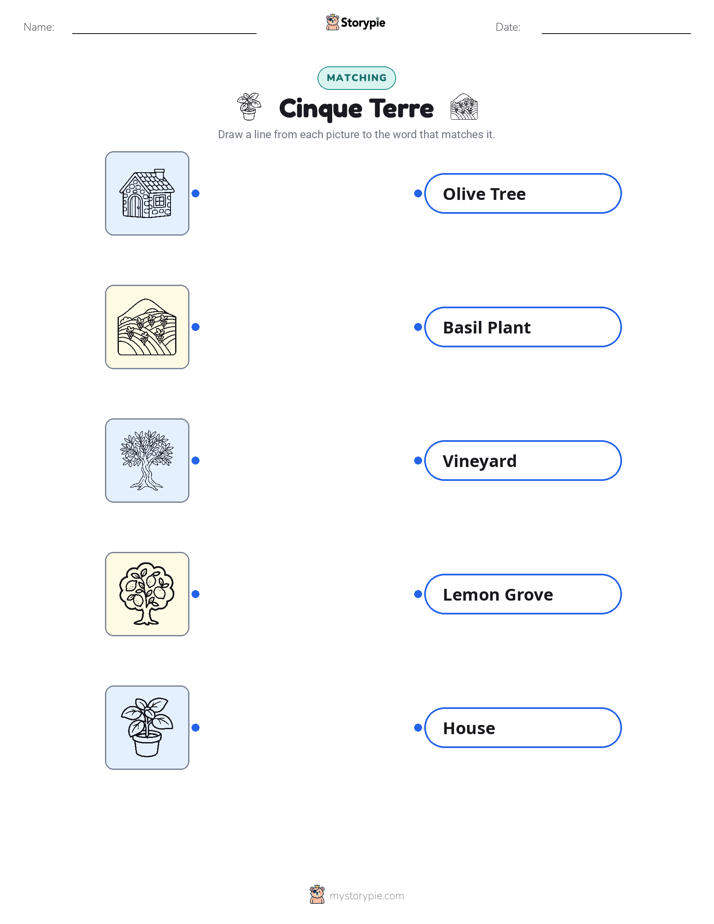
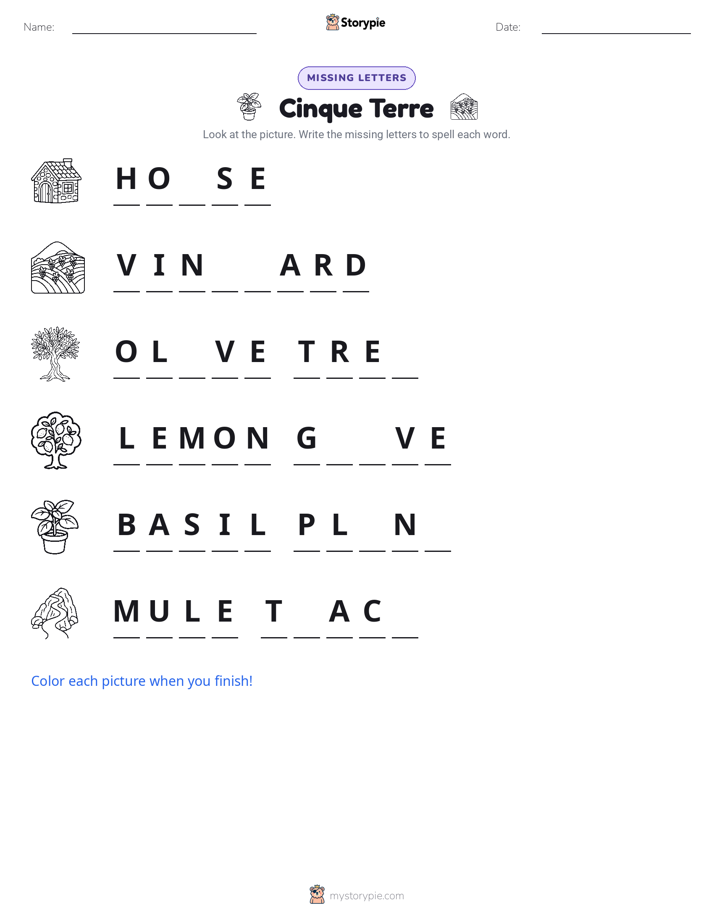
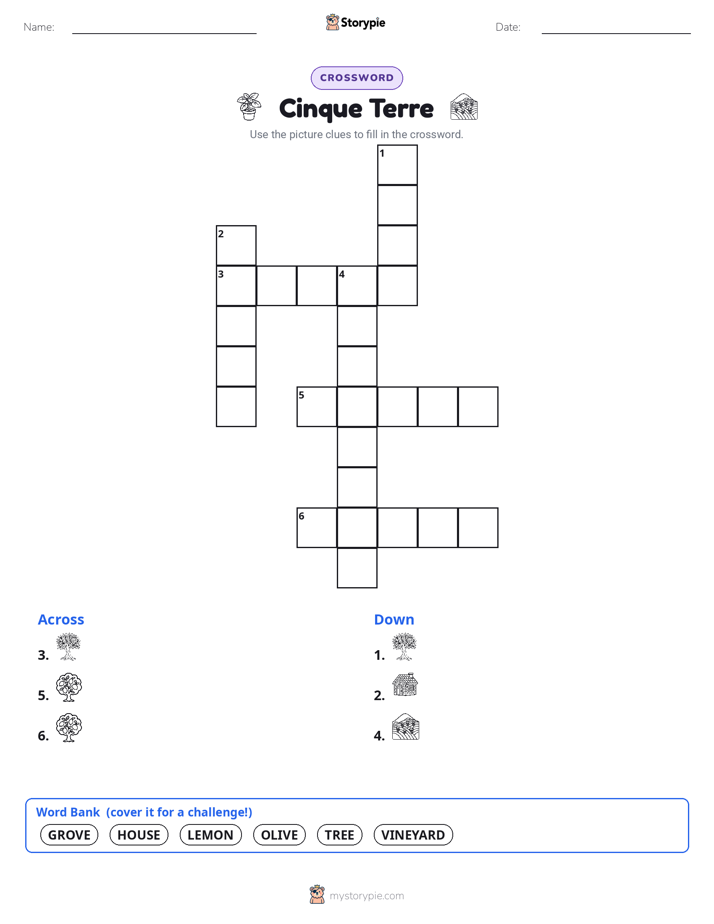
Print & create
Answer keys·No prep·Free with an account
28 worksheets · answer keys · full story · quiz · Ages 10-12 · CEFR B2
Plus adds 164,000+ more stories in 27 languages, audio for every one, and printables for all of them.
Just want Cinque Terre?
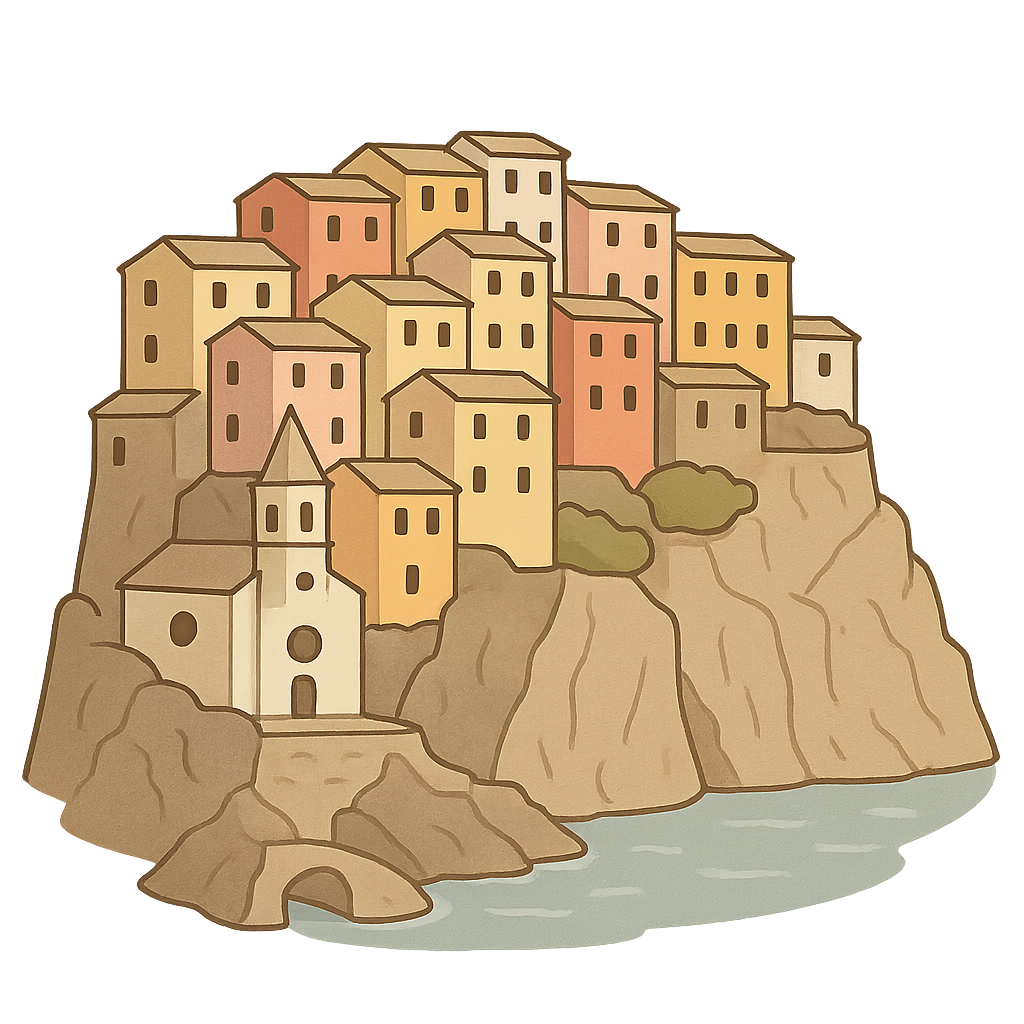
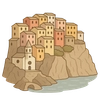
Clinging to the cliffs where the mountains plunge into the deep blue sea, I am a rainbow of houses spilling down to the shore. If you stand on one of my winding paths, you can smell the salty air mingling with the sweet scent of lemon groves and fresh basil growing in tiny gardens. You can hear the rhythmic crash of waves against the rocks below, a sound that has echoed here for a thousand years. My homes are painted in every color of the sunset—rose, ochre, lemon, and terracotta—creating a vibrant mosaic against the green hillsides and the sparkling water. For centuries, I was a secret, a string of colorful jewels hidden along the Italian Riviera. People who stumble upon me are often breathless, wondering how such a place could exist. I am Cinque Terre, the Five Lands of Italy, and this is my story.
My story began in the Middle Ages, starting around the 11th century, when the world was a very different place. Families seeking a safe harbor looked at my steep, unforgiving slopes and saw not an obstacle, but an opportunity for safety. My oldest villages, Monterosso and Vernazza, were born first from this need. Life was a constant challenge, but there was a critical reason people chose this difficult spot. The beautiful Mediterranean Sea was also a place of danger. Fierce pirates, particularly the Saracens, sailed these waters, raiding coastal towns. My sheer cliffs were a natural defense, a mighty wall against invaders. My villages were built like hidden fortresses, difficult to see and almost impossible to attack from the water. To survive and thrive here, generations of determined people had to completely reshape me. With incredible effort, farmers cut thousands of narrow terraces, which they called 'ciàn,' into my rocky hillsides. They then built more than 4,000 miles of dry-stone walls by hand, carefully fitting stones together without any mortar to hold them. It was a masterpiece of engineering and patience. On these precious slivers of flat land, they planted the things that would sustain them and define my character: fragrant grapevines for wine and hearty olive trees for oil. By the 12th century, my strategic importance was recognized by the powerful Republic of Genoa. It brought me under its watchful eye, helping to defend my harbors and allowing my communities to grow and trade. I became a living monument to human resilience, a place carved from rock and sea through courage and sheer willpower.
Cinque Terre: The Five Lands
Clinging to the cliffs where the mountains plunge into the deep blue sea, I am a rainbow of houses spilling down to the shore. If you stand on one of my winding paths, you can smell the salty air mingling with the sweet scent of lemon groves and fresh basil growing in tiny gardens. You can hear the rhythmic crash of waves against the rocks below, a sound that has echoed here for a thousand years. My homes are painted in every color of the sunset—rose, ochre, lemon, and terracotta—creating a vibrant mosaic against the green hillsides and the sparkling water. For centuries, I was a secret, a string of colorful jewels hidden along the Italian Riviera. People who stumble upon me are often breathless, wondering how such a place could exist. I am Cinque Terre, the Five Lands of Italy, and this is my story.
My story began in the Middle Ages, starting around the 11th century, when the world was a very different place. Families seeking a safe harbor looked at my steep, unforgiving slopes and saw not an obstacle, but an opportunity for safety. My oldest villages, Monterosso and Vernazza, were born first from this need. Life was a constant challenge, but there was a critical reason people chose this difficult spot. The beautiful Mediterranean Sea was also a place of danger. Fierce pirates, particularly the Saracens, sailed these waters, raiding coastal towns. My sheer cliffs were a natural defense, a mighty wall against invaders. My villages were built like hidden fortresses, difficult to see and almost impossible to attack from the water. To survive and thrive here, generations of determined people had to completely reshape me. With incredible effort, farmers cut thousands of narrow terraces, which they called 'ciàn,' into my rocky hillsides. They then built more than 4,000 miles of dry-stone walls by hand, carefully fitting stones together without any mortar to hold them. It was a masterpiece of engineering and patience. On these precious slivers of flat land, they planted the things that would sustain them and define my character: fragrant grapevines for wine and hearty olive trees for oil. By the 12th century, my strategic importance was recognized by the powerful Republic of Genoa. It brought me under its watchful eye, helping to defend my harbors and allowing my communities to grow and trade. I became a living monument to human resilience, a place carved from rock and sea through courage and sheer willpower.
For centuries, I lived in beautiful isolation. My five villages were connected to each other only by steep, winding mule tracks that crisscrossed my hillsides, or by boat when the sea was calm enough to sail. The rest of the world felt very far away. Then, in the 19th century, a great change came rumbling through my mountains. It was the sound of progress, the sound of a new age. Engineers and workers took on the incredible challenge of building a railway line right through my solid rock cliffs. It was a monumental task, requiring them to blast dozens of tunnels and construct bridges over deep ravines. Finally, in 1874, the Genoa to La Spezia railway line was completed. For the first time, a train connected my five villages—Monterosso al Mare, Vernazza, Corniglia, Manarola, and Riomaggiore—to each other and to the outside world. This invention was revolutionary. It ended my long solitude, making it easier for my residents to travel and trade. It also brought new visitors, travelers and artists who were captivated by my dramatic beauty and the tenacity of the people who called me home. The railway was more than just tracks and tunnels; it was my lifeline to the modern world, a bridge between my ancient past and my vibrant future.
As the world grew more connected, people began to realize just how special my landscape was. They saw not just pretty villages, but a unique story of human history woven into nature. In recognition of this, a great honor was given to me. On December 5th, 1997, I was named a UNESCO World Heritage site. This title declared that my terraced hillsides and colorful villages were a treasure belonging to all of humanity, a remarkable example of how people can shape their environment without destroying it. The protection didn't stop there. Just two years later, on October 6th, 1999, I officially became the Cinque Terre National Park, ensuring that my fragile beauty and traditions would be preserved for generations to come. Today, people from all over the world come to walk the famous hiking trails that link my villages, like the breathtaking Sentiero Azzurro, or 'Blue Trail.' They come to taste the wine from my ancient vineyards and see the sunset paint my houses in gold. I am more than just a beautiful destination. I am a living story of perseverance, community, and the amazing things people can create when they work in harmony with the land. I remind everyone that even the steepest challenges can lead to the most beautiful results, and I love sharing my story with all who come to walk my paths.
Wow facts
About
Cinque Terre is a string of five historic coastal villages on the Italian Riviera, famous for its colorful houses and steep, terraced vineyards built over centuries.
Take a Quiz
Question 1 of 5
Why did the first settlers choose to build their homes on my steep, difficult cliffs?
Explore next



Want to do even more?
Go beyond exploring. Unlock tools that turn every story into real learning.

Storypie Plus for families
Full stories, quizzes, and printables. Nights and car rides, sorted.
- Unlimited audio stories
- Create Mode: your child stars in the story
- Offline downloads
- Printable worksheets & coloring pages

Why Storypie for Schools
Students engaged. Prep in seconds. Evenings back to you.
- Worksheets & Quizzes
- Classroom Management
- Formative Assessment
- Custom Curriculum & Lesson Plans
- 27 Languages

Why Storypie for Homeschool
Curriculum done. They'll ask for more. Hours back in your day.
- Worksheet Generator
- First-Person Audio Stories
- Built-in Comprehension Quizzes
- Custom Curriculum & Lesson Plans
- Print & Go Activities