English

Delaware
Delaware is a U.S.
Reads at Grades 6–8 Listens at Grades 4–8
Print & create
Answer keys·No prep·Free with an account
28 worksheets · answer keys · full story · quiz · Ages 10-12 · CEFR B2
Plus adds 280,000+ more stories in 27 languages, audio for every one, and printables for all of them.
Just want Delaware?
I am a quiet place, a sliver of land tucked between a wide, winding river and a great bay that opens to the Atlantic Ocean. My shores are sandy, my inland forests are filled with the rustle of leaves, and my marshes teem with life. If you look at a map of the United States, you might almost miss me. I am the second smallest state in the entire country, a place you could drive across in just a couple of hours. But do not let my small size fool you. My story is one of the biggest and most important in the nation’s history, a tale of courage, conviction, and leading the way when it mattered most. My name is Delaware, but for a very special reason that echoes through the centuries, people proudly call me 'The First State'. My story is a reminder that you don't have to be the biggest to be the bravest or to change the world.
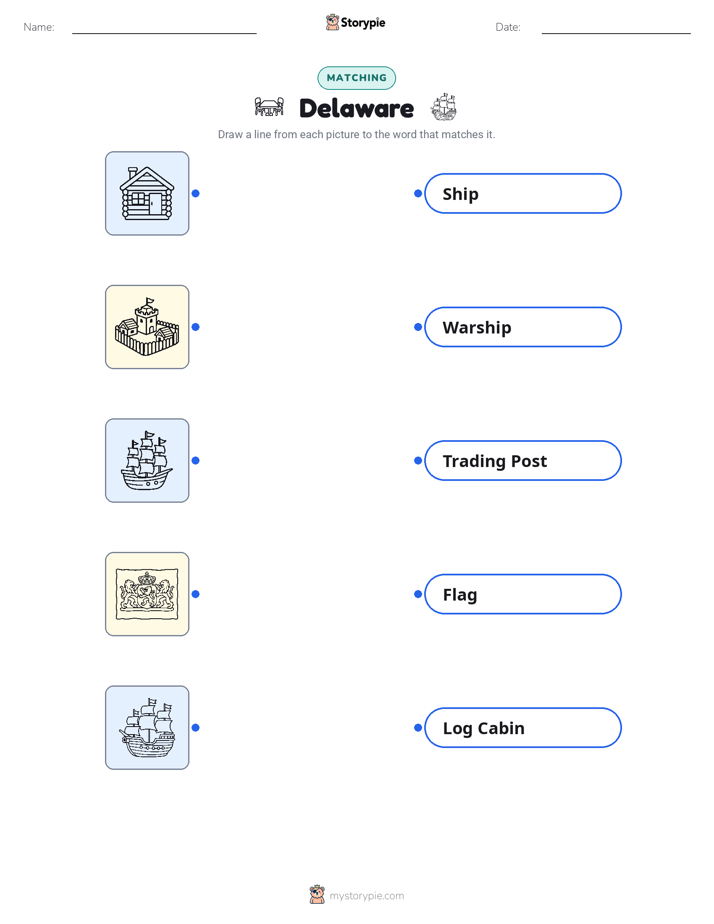
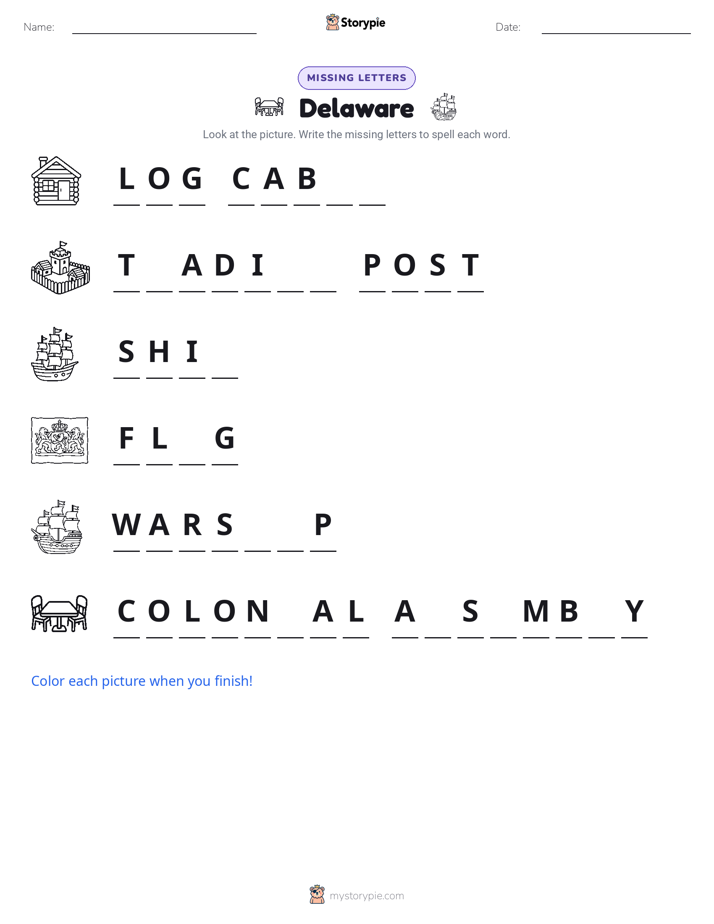
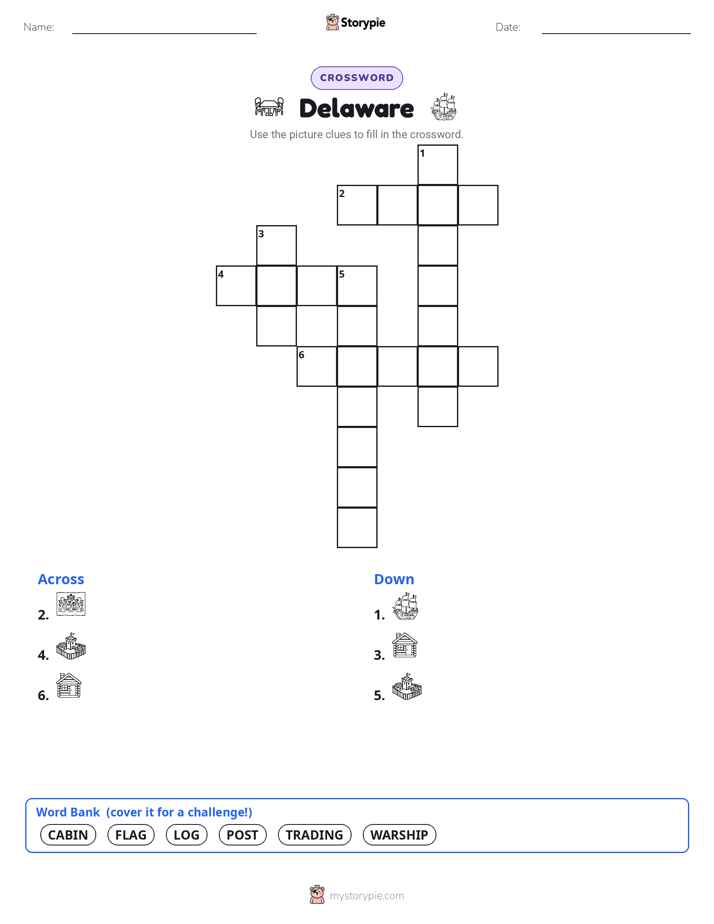
Long before the first European sails appeared on the horizon, I was home to the Lenni Lenape people. For thousands of years, they lived in harmony with my land, fishing in my rivers, hunting in my forests, and building communities along the waterways that are my lifeblood. Their story is the first and deepest layer of my own. Then, the world began to change. In 1609, an English explorer named Henry Hudson, sailing for the Dutch, guided his ship into my bay, mapping my waters for a new world of trade and settlement. The first attempt by Europeans to build a home here was a Dutch trading post called Zwaanendael, established in 1631. It was meant to be a center for trade, but it ended in tragedy and was soon abandoned. A more lasting footprint was made in 1638 when settlers from Sweden arrived. They sailed up my river and built Fort Christina, which would one day become the city of Wilmington. These Swedish settlers brought with them a new way of building, a simple but sturdy home made of interlocking logs. You know it today as the log cabin, an iconic symbol of the American frontier that first took root right here, on my soil.
The First State's Story
I am a quiet place, a sliver of land tucked between a wide, winding river and a great bay that opens to the Atlantic Ocean. My shores are sandy, my inland forests are filled with the rustle of leaves, and my marshes teem with life. If you look at a map of the United States, you might almost miss me. I am the second smallest state in the entire country, a place you could drive across in just a couple of hours. But do not let my small size fool you. My story is one of the biggest and most important in the nation’s history, a tale of courage, conviction, and leading the way when it mattered most. My name is Delaware, but for a very special reason that echoes through the centuries, people proudly call me 'The First State'. My story is a reminder that you don't have to be the biggest to be the bravest or to change the world.
Long before the first European sails appeared on the horizon, I was home to the Lenni Lenape people. For thousands of years, they lived in harmony with my land, fishing in my rivers, hunting in my forests, and building communities along the waterways that are my lifeblood. Their story is the first and deepest layer of my own. Then, the world began to change. In 1609, an English explorer named Henry Hudson, sailing for the Dutch, guided his ship into my bay, mapping my waters for a new world of trade and settlement. The first attempt by Europeans to build a home here was a Dutch trading post called Zwaanendael, established in 1631. It was meant to be a center for trade, but it ended in tragedy and was soon abandoned. A more lasting footprint was made in 1638 when settlers from Sweden arrived. They sailed up my river and built Fort Christina, which would one day become the city of Wilmington. These Swedish settlers brought with them a new way of building, a simple but sturdy home made of interlocking logs. You know it today as the log cabin, an iconic symbol of the American frontier that first took root right here, on my soil.
My early colonial years were a whirlwind of changing flags and shifting loyalties. The Swedes and the Dutch were both powerful trading nations, and they competed for control of my valuable rivers and lands. In 1655, the determined Dutch governor, Peter Stuyvesant, sailed down from his base in New Amsterdam and took control of my Swedish settlements. For a short time, the Dutch flag flew over me. But the changes weren't over. In 1664, a new power arrived when English warships sailed into the harbor and claimed the entire region for England. My destiny took another turn in 1682 when the King of England granted me to William Penn, the founder of Pennsylvania. For many years, I was known simply as the 'Three Lower Counties' of Pennsylvania. But the people who lived here had their own ideas and a strong sense of their own identity. They felt different from their neighbors to the north and wanted to govern themselves. This early spirit of independence was powerful, and in 1704, they were granted their own separate colonial assembly. It was a crucial step, a moment where I began to find my own voice, long before anyone was whispering the word 'revolution'.
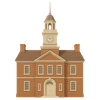
When the whispers of revolution grew into a roar, I found myself at the very heart of the struggle for freedom. My moment of truth came in the sweltering summer of 1776. The Continental Congress in Philadelphia was debating independence, but my three delegates were divided. One was for it, one was against it, and the third, Caesar Rodney, was 80 miles away, at home. The vote was deadlocked. As a thunderstorm raged on the night of July 1st, 1776, a messenger reached Rodney, who, despite being ill, immediately mounted his horse. He rode all night, through mud and rain, arriving at the State House just as the final vote was being called. Covered in mud, he cast my colony's vote in favor of independence, breaking the tie and helping to set the course for a new nation. The war itself came to my soil the following year. On September 3rd, 1777, the Battle of Cooch’s Bridge was fought, the only major battle of the Revolution within my borders. But my proudest moment arrived after the war was won. The new country needed a new set of rules, a Constitution. On December 7th, 1787, my leaders gathered and, without a single dissenting vote, I became the very first state to ratify the United States Constitution. I was the first to say 'yes' to the new union, cementing forever my place in history and my title as 'The First State'.
My story didn't end with the Revolution. It transformed. In 1802, a family named Du Pont built a gunpowder mill on the banks of my Brandywine River. That small mill grew into a giant chemical company that would change the world with its inventions, from the nylon in your clothes to the Teflon on your pans. I became a center for innovation and industry. But I also played a vital role in the fight for justice and equality. In the early 1950s, when African American children were forced to attend separate, unequal schools, brave families here challenged that system in court. My state's court cases, known as Belton v. Gebhart, were so powerful and clear that they were joined with others and went all the way to the nation's highest court. In 1954, they became a key part of the landmark Supreme Court decision in Brown v. Board of Education, which declared school segregation unconstitutional. From a daring vote for independence to a courageous stand for justice, my story proves that size has nothing to do with strength. I am Delaware, a small place with a big story, a home for natural beauty, bold ideas, and the enduring belief that even the smallest among us can be the first to lead the way.
Wow facts
About
Delaware is a U.S. state on the Atlantic coast, known as 'The First State' because it was the first of the 13 original states to ratify the U.S. Constitution.
Take a Quiz
Question 1 of 5
Which of the following best summarizes the heroic actions of Caesar Rodney as described in the story?
Explore next



Want to do even more?
Go beyond exploring. Unlock tools that turn every story into real learning.

Storypie Plus for families
Full stories, quizzes, and printables. Nights and car rides, sorted.
- Unlimited audio stories
- Create Mode: your child stars in the story
- Offline downloads
- Printable worksheets & coloring pages

Why Storypie for Schools
Students engaged. Prep in seconds. Evenings back to you.
- Worksheets & Quizzes
- Classroom Management
- Formative Assessment
- Custom Curriculum & Lesson Plans
- 27 Languages

Why Storypie for Homeschool
Curriculum done. They'll ask for more. Hours back in your day.
- Worksheet Generator
- First-Person Audio Stories
- Built-in Comprehension Quizzes
- Custom Curriculum & Lesson Plans
- Print & Go Activities